
Loading, please wait...
LOT 0499
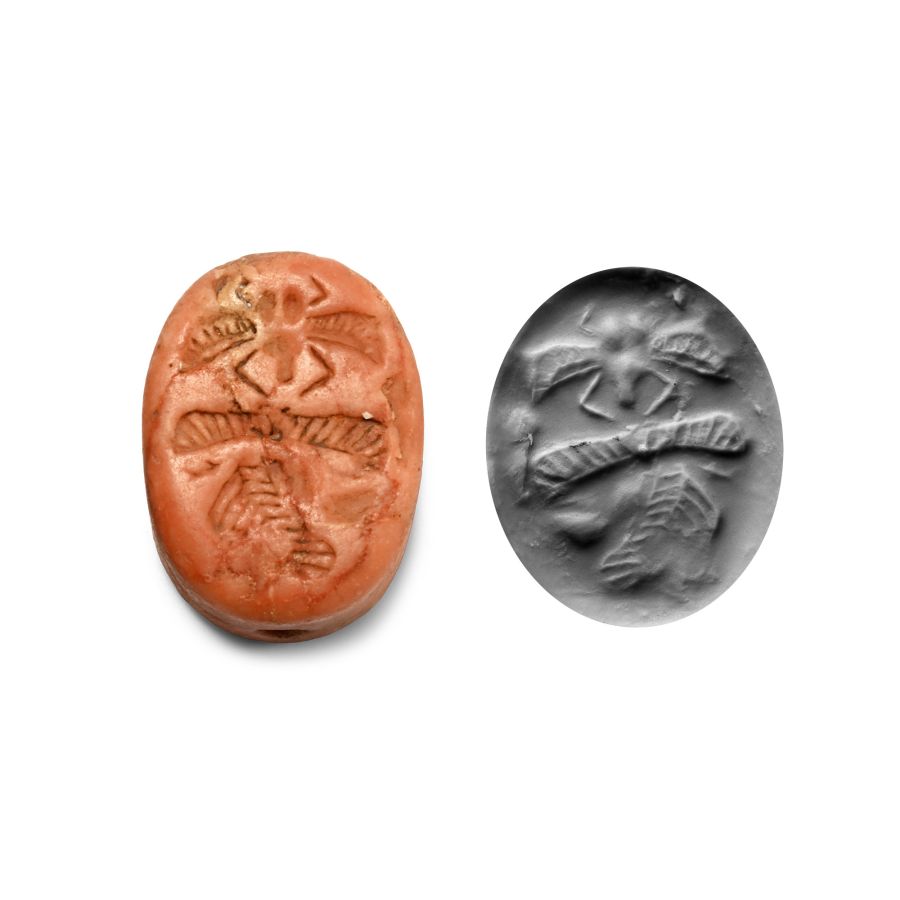
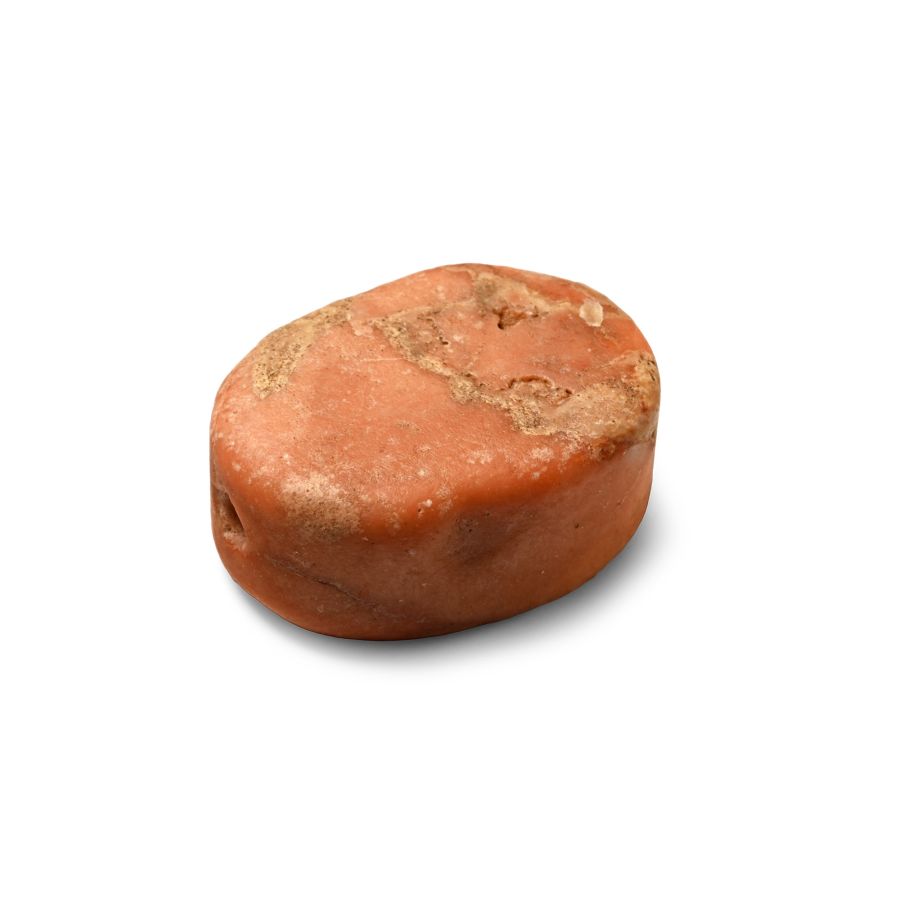
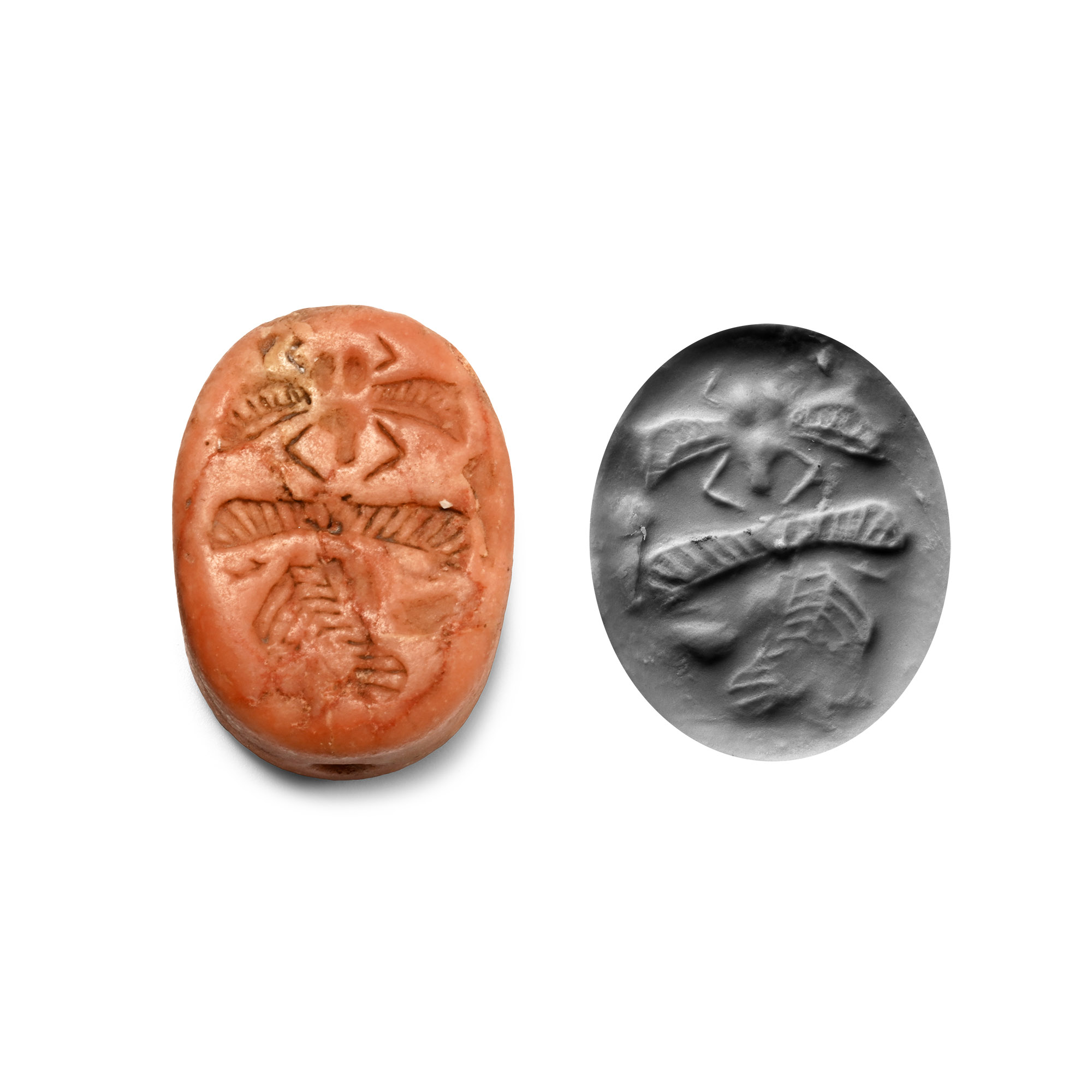
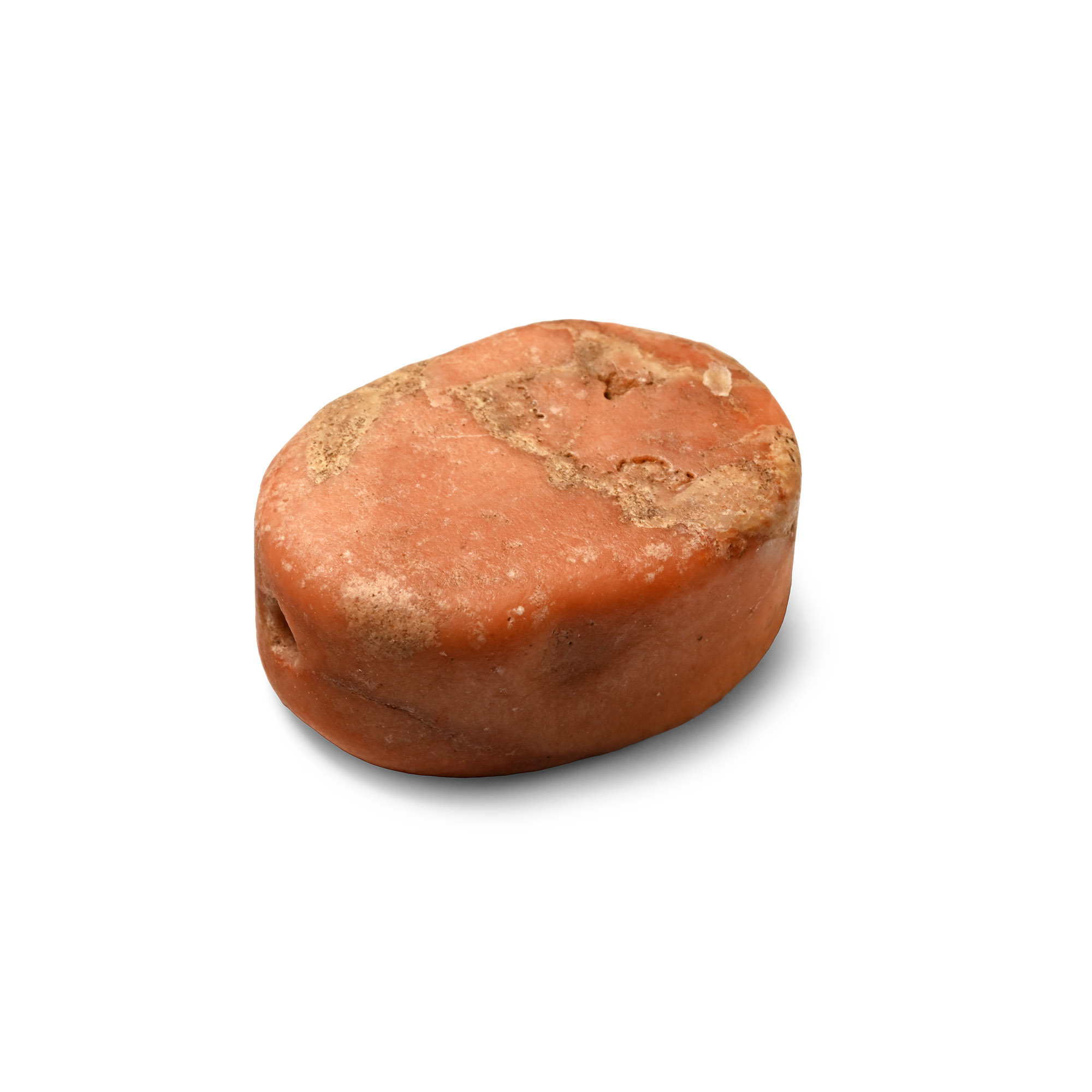
Phoenicio-Egyptian Orange Stone Scaraboid
1ST MILLENNIUM B.C.
1 in. (13 grams, 27 mm).
Ellipsoid in plan with frieze comprising a large Maat feather, a winged sun disc, and a winged Khepri beetle.
ProvenanceEx collection of the late Mr S. M., London, UK, 1970-1990s.
This lot is accompanied by an illustrated lot declaration signed by the Head of the Antiquities Department, Dr Raffaele D'Amato.
Cf. Ben-Tor, D., The Scarab: A Reflection of Ancient Egypt, Tel Aviv, 1993, p. 81, no. 28, for a scarab that employs multiple similar winged motifs.
CONDITIONTimeLine Auctions follows a vetting process to ensure the authenticity and legality of all items, reinforcing our commitment to integrity and responsible trading. Each antiquity, antique, and coin lot undergoes thorough examination by a vetting committee of at least ten external specialists, professional trade association members, scientists, and archaeologists: Our Vetting Process
AUCTIONS:
TimeLine is a leading auction house specialising in antiquities, ancient art, collectables, natural history, coins, medals, and books. Our auctions offer museums, collectors, historians, and enthusiasts the opportunity to acquire unique and historically significant pieces.
LOT 0499
Phoenicio-Egyptian Orange Stone Scaraboid
Estimate £600 - 800€700 - 930 (for guidance only)$810 - 1,080 (for guidance only)
-
Phoenician Bronze Stamp Seal
Late 1st millennium B.C.Sold for (Inc. bp): £46
With domed head and pierced rectangular shank, hatched detailing. 5.53 grams, 24.5 mm
Ex London, UK, gentleman, 1990. This lot is accompanied by an illustrated lot declaration signed by the Head of the Antiquities Department, Dr Raffaele D'Amato. -
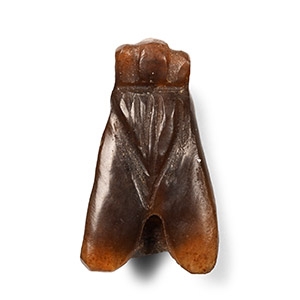
Egyptian Jasper Fly Amulet
Late Period, 664-332 B.C.Sold for (Inc. bp): £208
Carved in the round resting on an oval base, striated body; pierced longitudinally. 0.88 grams, 14 mm
Ex London and Home Counties collection, UK, 1920-1940. This lot is accompanied by an illustrated lot declaration signed by the Head of the Antiquities Department, Dr Raffaele D'Amato.
Egyptian artists often depicted fly whisks with pharaohs and officials, suggesting flies were just nuisances. In reality, Egyptians valued flies for their speed and persistence. Small fly amulets appeared around 3200 B.C. in Naqada II burials, gaining popularity and varying materials during the New Kingdom, including gold, silver, lapis lazuli, carnelian, amethyst, faience, and gemstones. These amulets were thought to protect against insect bites and troublesome creatures via apotropaic magic and possibly symbolised fecundity. Pharaohs awarded gold fly-shaped pendants to honour soldiers' bravery in battle. -
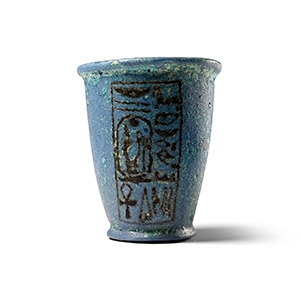
Egyptian Cobalt Blue Glazed Faience Libation Cup of Ramesses II
New Kingdom, 19th Dynasty, circa 1279-1212 B.C.Sold for (Inc. bp): £2,470
Conical in profile with flared base and rim, black glazed inscription panel bearing the dedication: 'Lord of the Two Lands, User-Maat-Re (Ramesses II) given life, beloved of Osiris, Lord of Rosetau'. 46.5 grams, 48 mm
With Jean-Phillipe Mariaud de Serres, Paris. Private collection, London, acquired from the above in 1992. This lot has been cleared against the Art Loss Register database, and is accompanied by an illustrated lot declaration signed by the Head of the Antiquities Department, Dr Raffaele D'Amato.
