
Loading, please wait...
LOT 0040
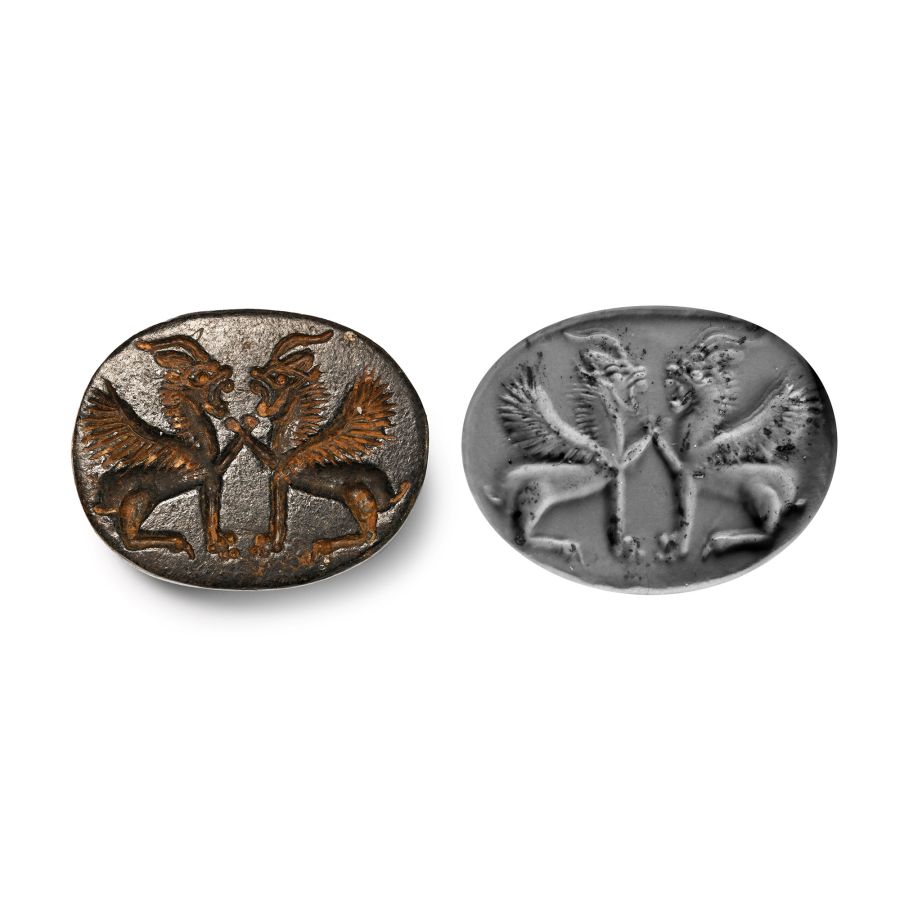
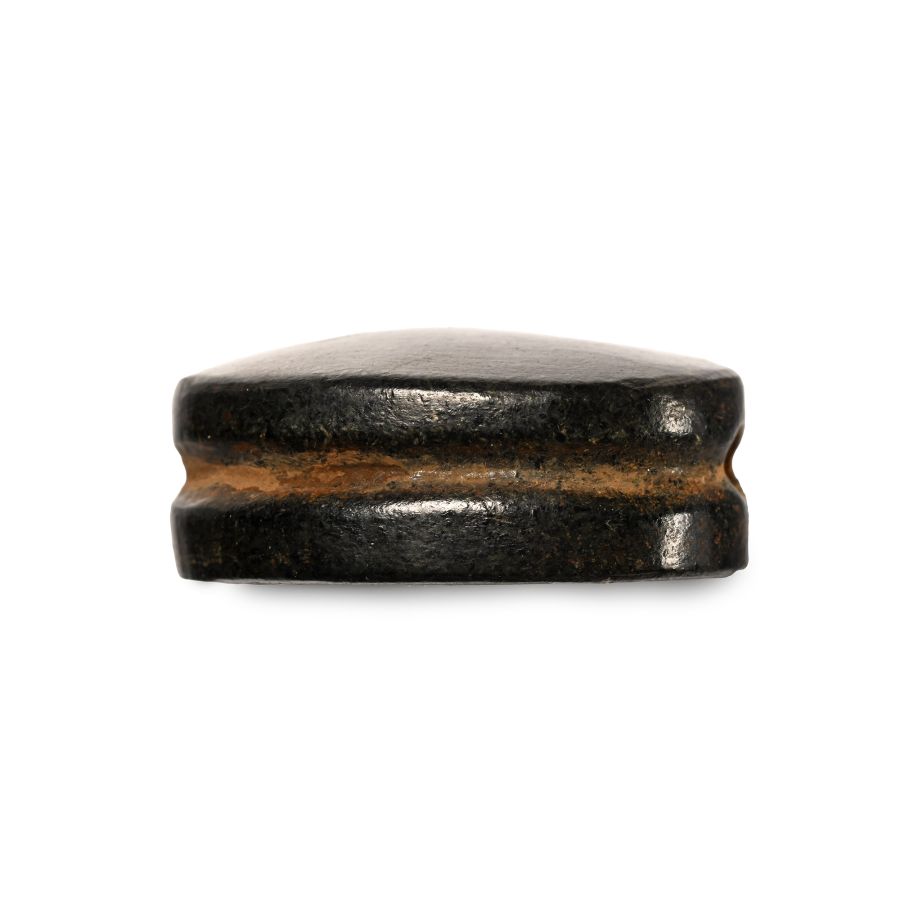
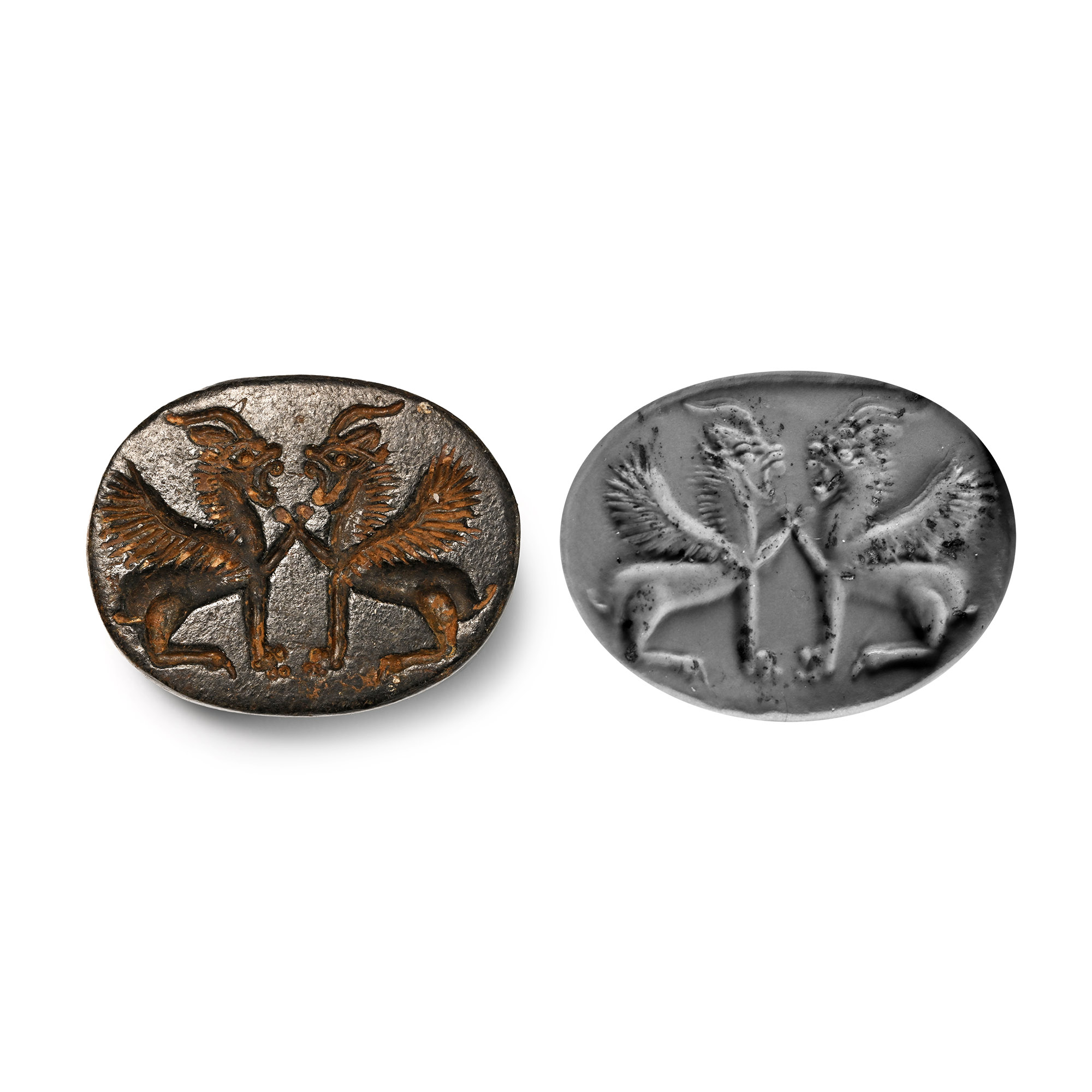
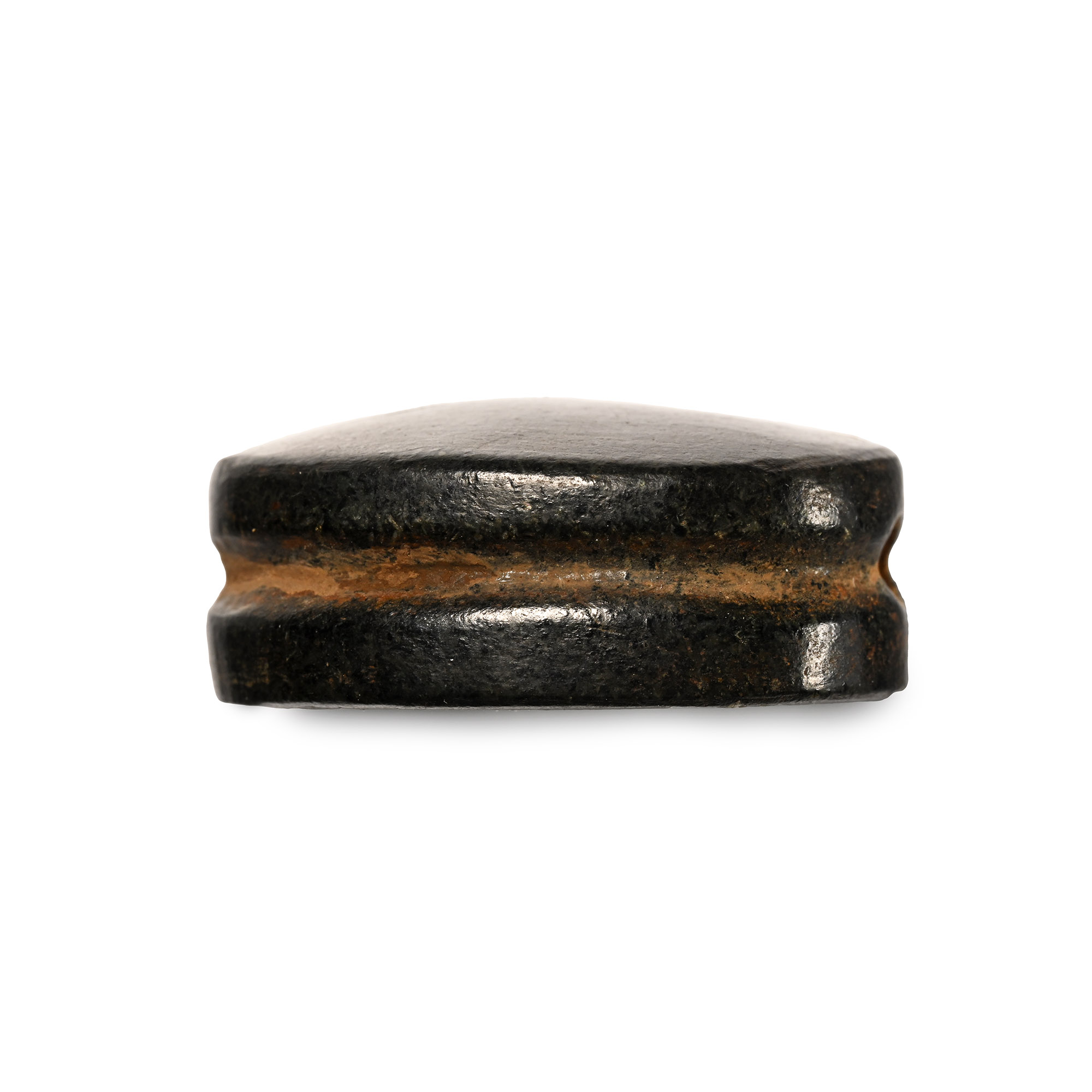
Phoenicio-Egyptian Black Stone Scaraboid with Lions
6TH CENTURY B.C.
1 1/8 in. (14.5 grams, 28 mm).
With gusset to the sidewall and incuse design to the underside of opposed winged lions each with one forepaw raised.
ProvenanceEx collection of the late Mr S. M., London, UK, 1970-1990s.
This lot is accompanied by an illustrated lot declaration signed by the Head of the Antiquities Department, Dr Raffaele D'Amato.
Phoenician scarabs with winged lions were often used as guardian figures, much like Mesopotamian lamassu or Egyptian sphinxes. On amulets and seals, they likely served as apotropaic (evil-averting) symbols. In Phoenician and Persian art, hybrid creatures like winged lions reflect a cosmopolitan visual language, blending Egyptian, Assyrian, and Achaemenid motifs. They could symbolise imperial power or transcultural authority. In some cases, winged lions are linked to deities or divine guardianship, especially when shown flanking sacred symbols like trees, thrones, or sun discs.
CONDITIONTimeLine Auctions follows a vetting process to ensure the authenticity and legality of all items, reinforcing our commitment to integrity and responsible trading. Each antiquity, antique, and coin lot undergoes thorough examination by a vetting committee of at least ten external specialists, professional trade association members, scientists, and archaeologists: Our Vetting Process
AUCTIONS:
TimeLine is a leading auction house specialising in antiquities, ancient art, collectables, natural history, coins, medals, and books. Our auctions offer museums, collectors, historians, and enthusiasts the opportunity to acquire unique and historically significant pieces.
-
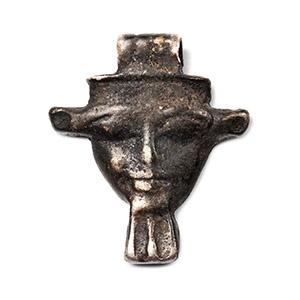
Egyptian Silver Hathor Amulet
Late-Ptolemaic Period, 664-30 B.C.Sold for (Inc. bp): £975
D-shaped mask representing the human-headed Hathor with cow ears and a short beard, a ribbed suspension loop above. 0.7 grams, 11 mm
From an early 20th century collection. This lot is accompanied by an illustrated lot declaration signed by the Head of the Antiquities Department, Dr Raffaele D'Amato. -
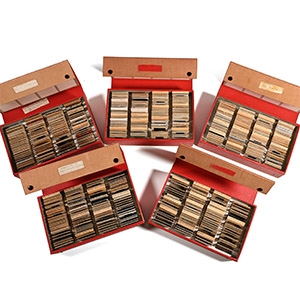
Historic Collection of 772 Slides of Archaeological Sites in Egypt
1960s-1980s A.D.Sold for (Inc. bp): £1,300
Housed in five linen-covered boxes, covering Saqqara, Step Pyramids, The Serapeum, Giza, Karnak, Tombs of the Nobles, Deir-el Medina Tombs, Ummuh Bured Tombs, Denderah and Edfu, etc. 4.17 kg total, 26.5 x 16.5 x 6.5 cm each box
Property of archaeologist Stephanie Gee, N.W. London, UK, 1960s-1980s. This lot is accompanied by an illustrated lot declaration signed by the Head of the Antiquities Department, Dr Raffaele D'Amato.
Stephanie Gee was a prominent archaeologist who took part in several expeditions in Egypt. She was a trusted assistant to the British-Australian archaeologist Veronica Seton-Williams, who excavated in Egypt, Britain, and the Near East. Stephanie also took part in the Tell El-Farâ'în expeditions of 1965-1968, and assisted Seton-Williams with preparing the 1966 expedition report. Their collaboration continued and Stephanie helped with the manuscript of Seton-Williams’ book ‘The Road to El-Aguzein’, a narrative account of her life that was first published in 1988. -
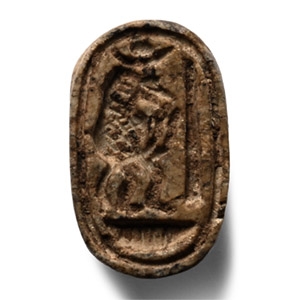
Egyptian Faience Duck Scaraboid with Hieroglyphs
Late Period, 664-332 B.C.Sold for (Inc. bp): £286
Modelled as a resting duck with its neck curved around the upper body, feather detailing on the wings, tail, and body, and delicately formed head; the underside features a baboon in a posture of adoration before an obelisk, wearing a lunar disc and crescent headdress, with a neb sign below. 2.82 grams, 19 mm
From the property of a London, UK, gentleman, 1970-2000s. This lot is accompanied by an illustrated lot declaration signed by the Head of the Antiquities Department, Dr Raffaele D'Amato.
Baboons were observed worshipping the rising sun with raised arms, a behaviour that Egyptians interpreted as divine reverence. The scarab's imagery symbolises cosmic harmony and sacred wisdom, with the baboon (a manifestation of Thoth in his lunar aspect) showing reverence to an obelisk (a symbol of the solar god, Ra). Thus, it blends moon and sun symbolism, embodying balance, cyclical renewal, divine order, and the interplay between knowledge (Thoth) and power (Ra). The neb sign indicates lordship or possession over all the celestial forces.
