
Loading, please wait...

LOT 1122
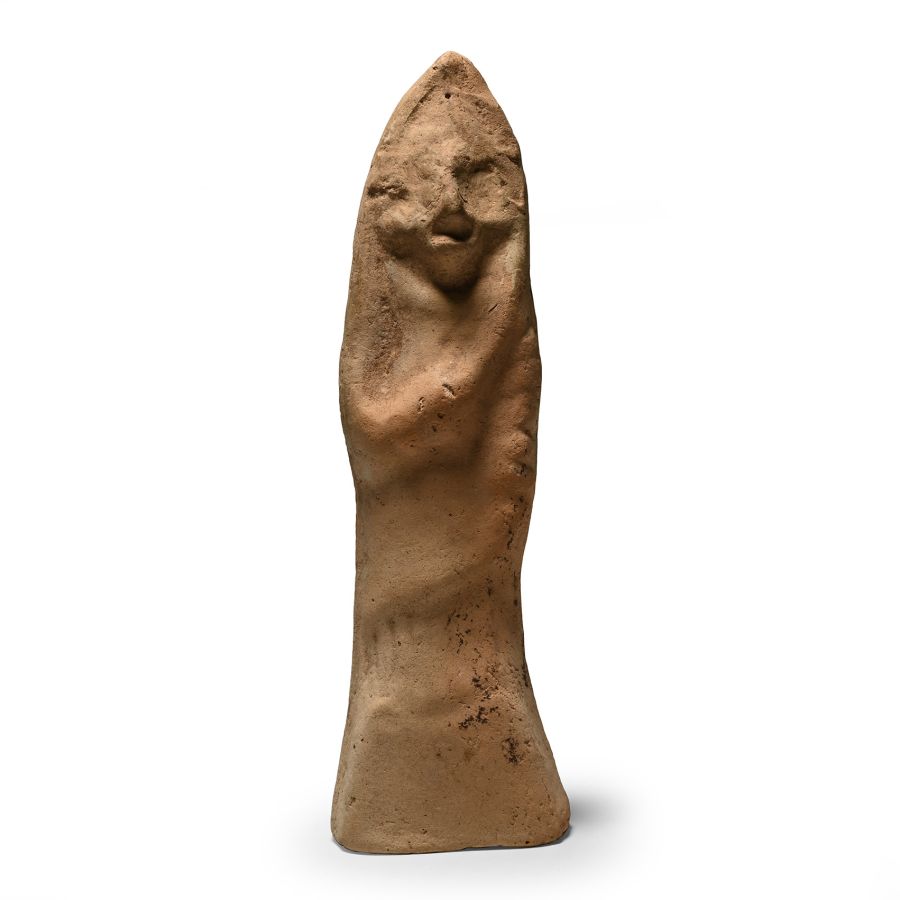
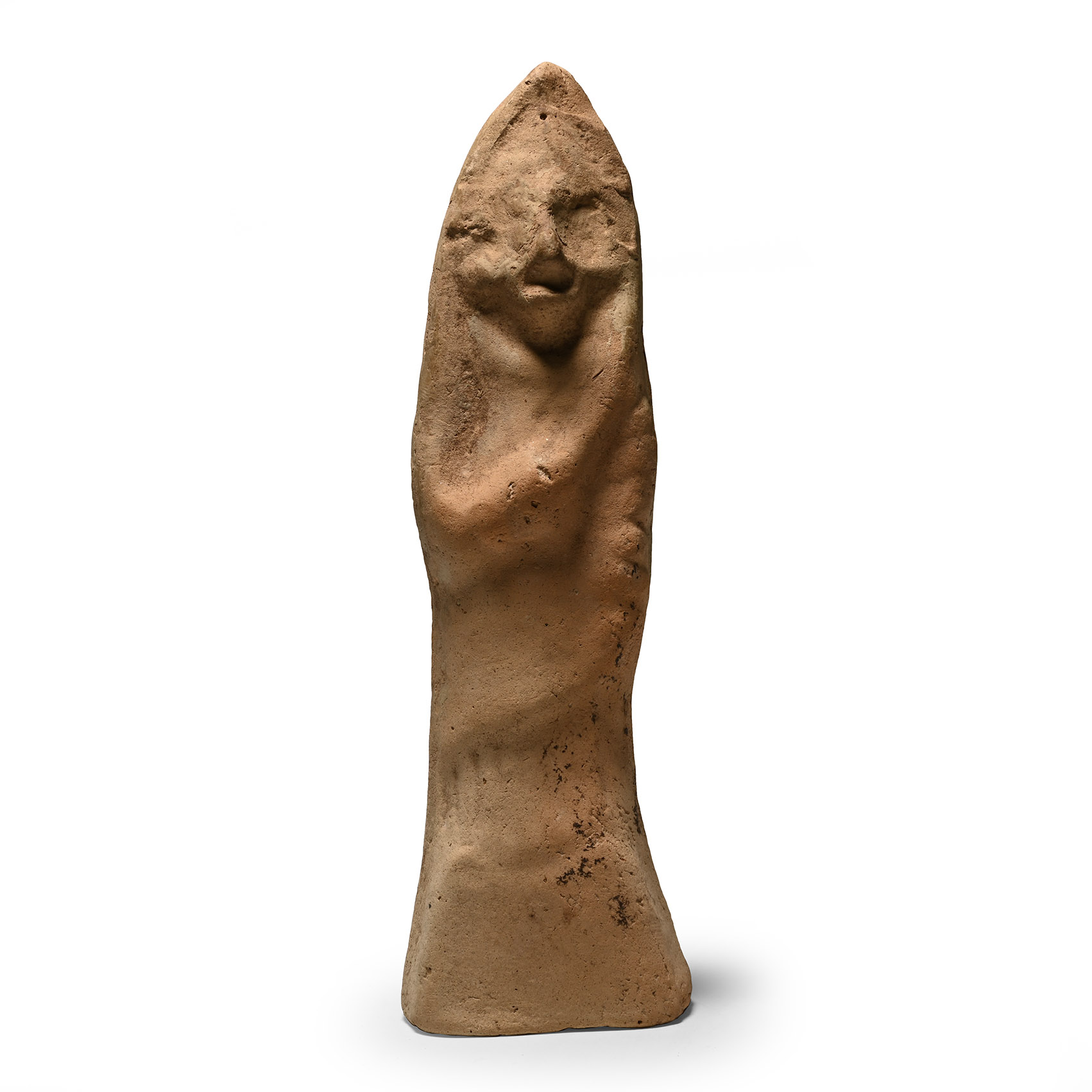
Phoenician Terracotta Goddess Astarte Figure
1ST MILLENNIUM B.C.
6 1/4 in. (135 grams, 16 cm).
Hollow-formed and wearing a peaked headdress, left hand clasping her breast, emphasised facial detailing.
ProvenanceAcquired 1980-2015.
Ex Abelita family collection.
TimeLine Auctions follows a vetting process to ensure the authenticity and legality of all items, reinforcing our commitment to integrity and responsible trading. Each antiquity, antique, and coin lot undergoes thorough examination by a vetting committee of at least ten external specialists, professional trade association members, scientists, and archaeologists: Our Vetting Process
AUCTIONS:
TimeLine is a leading auction house specialising in antiquities, ancient art, collectables, natural history, coins, medals, and books. Our auctions offer museums, collectors, historians, and enthusiasts the opportunity to acquire unique and historically significant pieces.
-
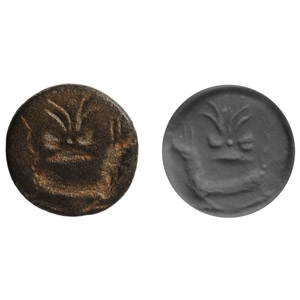
Western Asiatic Bronze Seal Matrix
2nd millennium B.C.Estimate: £100 - 140 (+bp*)
Opening Bid: £50
Pierced handle and incised starburst motif to the upper face of the matrix; intaglio motif of a recumbent beast with erect tail, foliate motif above. 9.4 grams, 19 mm
From an important collection formed before 1988, London and Geneva. -
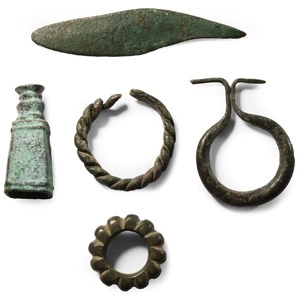
Western Asiatic Bronze Artefact Group
1st millennium B.C.Sold for (Inc. bp): £13
Including a scooped blade, twisted wire band and other items. 115 grams total, 30-86 mm
UK private collection before 2000. Acquired on the UK art market. Property of a London gentleman. -
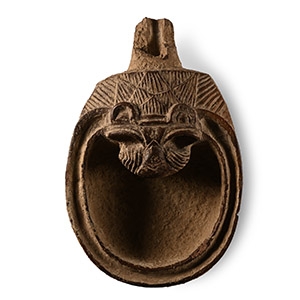
Aramean Steatite Bowl with Lion-Head Handle
9th-8th century B.C.Estimate: £3,000 - 4,000 (‡+bp*)
Opening Bid: £1,500
Carved in the round with gusseted rim, shallow bowl with carved hand and arm detail to each side and cruciform segmented bands to the underside; lion-head carved in the round to the rear with segmented mane, sockets to the eyes and gaping mouth with hole for pouring liquids through the tubular junction to the rear. 357 grams, 11.3 cm
Acquired in the mid 1980s-1990s. Private collection, Switzerland, thence by descent. Private collection, since the late 1990s. Accompanied by an academic report by Dr Raffaele D’Amato. This lot has been checked against the Interpol Database of stolen works of art and is accompanied by search certificate number no.12193-222189.
