
Loading, please wait...
LOT 1770
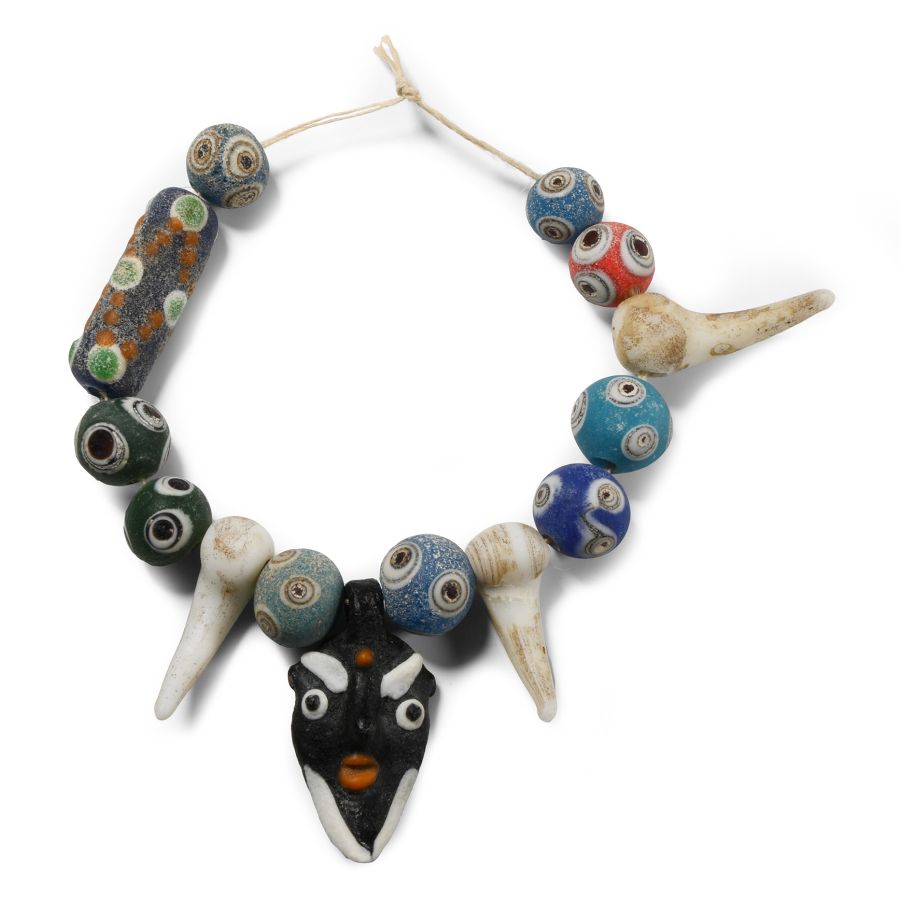
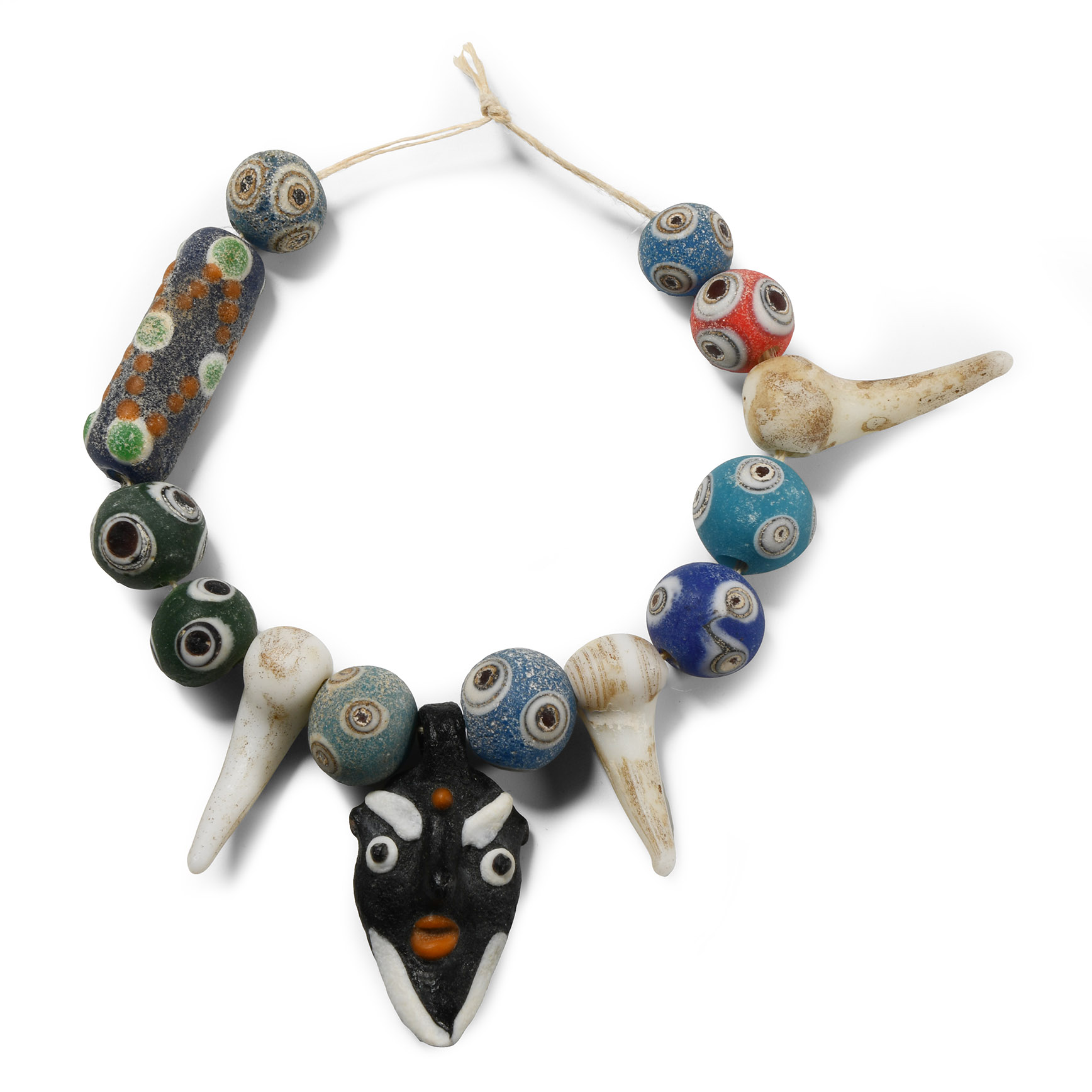
Phoenician Style Glass Bead and Pendant Necklace
20TH CENTURY A.D.
8 5/8 in. (80.5 grams, 22 cm long).
Mixed group including tubular and spherical beads, claw-shaped pendants and a mask with applied detailing. [No Reserve]
ProvenanceFrom an old English deceased estate.
Acquired on the London art market in the early 1990s.
Property of a London, UK, collector.
TimeLine Auctions follows a vetting process to ensure the authenticity and legality of all items, reinforcing our commitment to integrity and responsible trading. Each antiquity, antique, and coin lot undergoes thorough examination by a vetting committee of at least ten external specialists, professional trade association members, scientists, and archaeologists: Our Vetting Process
AUCTIONS:
TimeLine is a leading auction house specialising in antiquities, ancient art, collectables, natural history, coins, medals, and books. Our auctions offer museums, collectors, historians, and enthusiasts the opportunity to acquire unique and historically significant pieces.
-
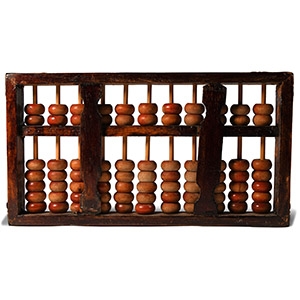
Brass Mounted Abacus
19th-20th century A.D.Sold for (Inc. bp): £13
Wooden frame with brass fittings, eleven posts each with two beads in the upper register and five beads in the lower register; varnished. 500 grams, 31 x 17 cm
Property of a North London, UK, gentleman. -
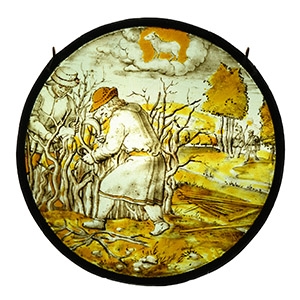
Renaissance Stained Glass Panel of The Month of March
Southern Low Countries, Antwerp, circa 1540 A.D.Sold for (Inc. bp): £3,120
Discoid panel in a lead frame showing two workmen cutting back brushwood with sickles; posts and staves to the rear and two more men in the background landscape, repaired. 296 grams, 24 cm
George Wigley, Monastery Glass, Towcester. Klaus Tiedemann Collection, inv.100. Acquired from the above, 2016. This lot has been checked against the Interpol Database of stolen works of art and is accompanied by a search certificate number no.12075-217451. -
.jpg)
Stone Weight Collection
20th century A.D. or earlierSold for (Inc. bp): £13
Composed of spherical, coin-shaped and tubular weights, together with examples of hexagonal and octagonal cross-section; carved using a veined stone. 76 grams total, 26-42 mm
Ex Simmons Gallery, London E11, UK, in the 1990s. From a North London collection.
