
Loading, please wait...

LOT 0432
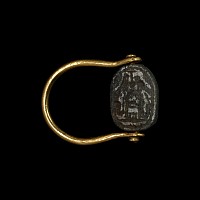
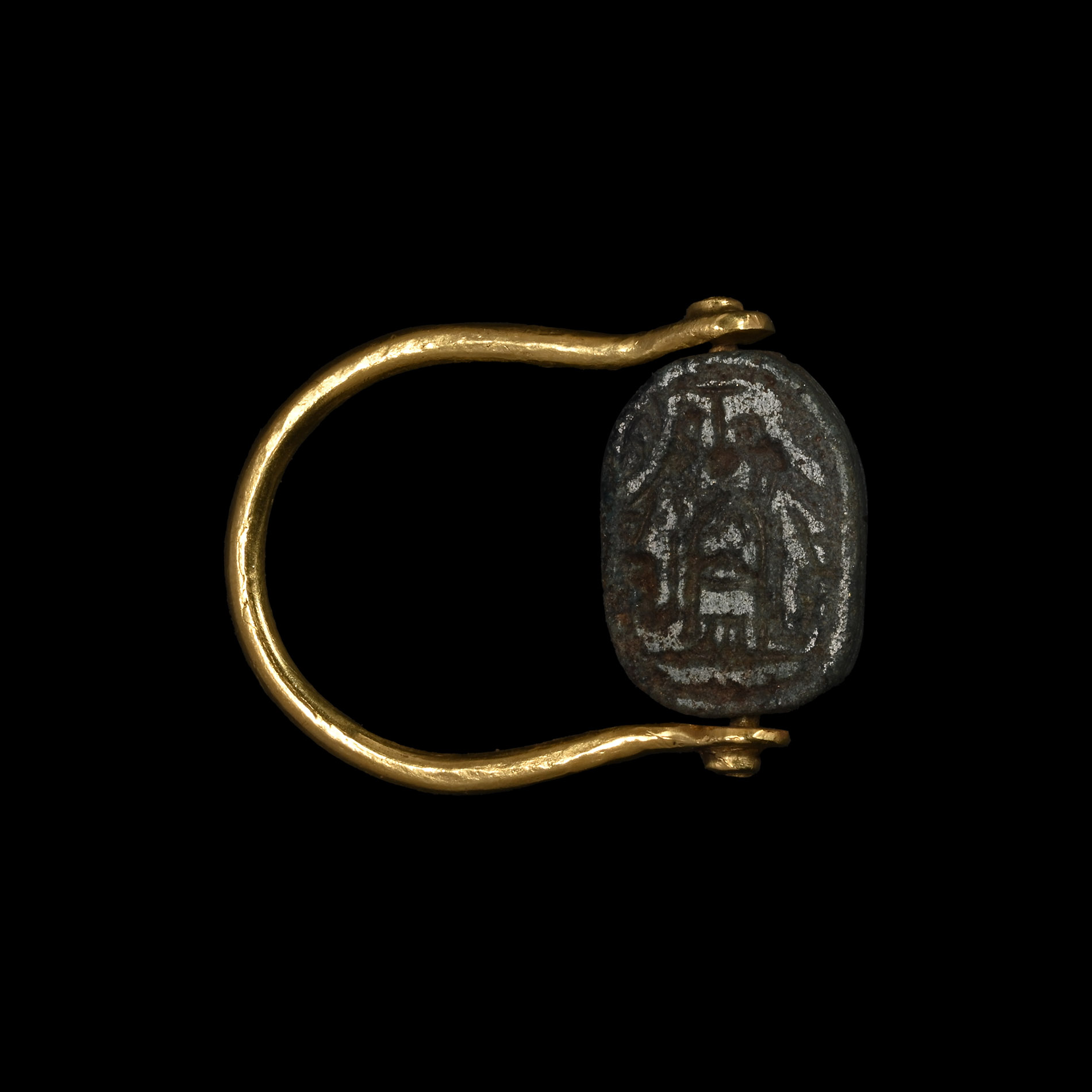
Phoenician Scarab in Gold Swivel Ring
6TH-4TH CENTURY B.C. AND LATER
1 in. (4.34 grams, 26.44 mm overall, 15.68 mm internal diameter (approximate size British J 1/2, USA 5, Europe 9.32, Japan 9)).
The scarab with lightly incised anatomical detailing, the underside with a central cartouche flanked by two rearing crowned uraei, a pair of falcons standing above the cartouche facing a smꜣ hieroglyph symbolising union (of the two lands, Upper and Lower Egypt); set into a later gold swivel ring.
Provenancewith Bonhams, London, UK, 21 October 1999, no.36.
Private collection, Europe.
This lot has been checked against the Interpol Database of stolen works of art and is accompanied by a search certificate number no.12370-226696.
Cf. Chadour, A.B., Rings. The Alice and Louis Koch Collection, volume I, Leeds, 1994, items 1,2, for earlier examples of the type.
CONDITIONTimeLine Auctions follows a vetting process to ensure the authenticity and legality of all items, reinforcing our commitment to integrity and responsible trading. Each antiquity, antique, and coin lot undergoes thorough examination by a vetting committee of at least ten external specialists, professional trade association members, scientists, and archaeologists: Our Vetting Process
AUCTIONS:
TimeLine is a leading auction house specialising in antiquities, ancient art, collectables, natural history, coins, medals, and books. Our auctions offer museums, collectors, historians, and enthusiasts the opportunity to acquire unique and historically significant pieces.
LOT 0432
Phoenician Scarab in Gold Swivel Ring
Estimate £1,200 - 1,700€1,390 - 1,970 (for guidance only)$1,620 - 2,300 (for guidance only)
-
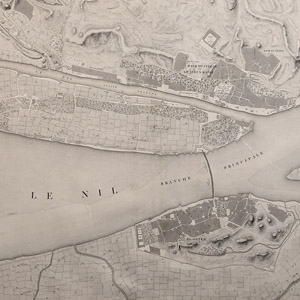
Very Large Egyptian Expedition Lithograph of the 'Environs du Kaire' (Cairo and district)
Early 19th century A.D.Estimate: £100 - 140 (+bp*)
Opening Bid: £50
Proof etching on laid paper of plate 16 from Vol .I of Description de l'Égypte : ou, Recueil des observations et des recherches qui ont été faites en Égypte pendant l'expédition de l'armée française. entitled Environs du Kaire. Plan particulier de l'île de Roudah, du vieux Kaire et du Gyzeh. 238 grams, 105.5 x 69.5 cm
From the collection of a North American priest. Acquired between 1981-1996. Property of a North American collector.
Produced between February 1802 and 1830 on the orders of Napoleon Bonaparte; published between 1809 and 1828. Just 1,000 copies were distributed to various institutions, printed on laid paper with an 'Égypte ancienne et moderne' watermark. The book is subtitled Recueil des observations et des recherches qui ont été faites en Égypte pendant l’expédition de l’Armée française, publié par les ordres de Sa Majesté l’Empereur Napoléon le Grand (Gathering of observations and discoveries which were made in Egypt during the expedition of the French army, published on the orders of His Majesty the Emperor Napoleon the Great). It was the world's first encyclopedia devoted exclusively to the remains of ancient Egypt. The plates of this book are the first to present the archaeological sites of Thebes (Luxor). The papyrus manuscript was recovered from the underground chambers (hypogea). The original papyrus is now held in the Bibliothèque Nationale (1-19), Paris (Papyrus Cadet). -
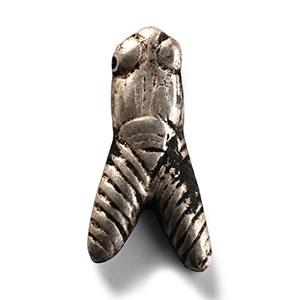
Egyptian Silver Fly Amulet
Late Period, 664-332 B.C.Sold for (Inc. bp): £143
With textured detailing to wings, body and eyes, pierced for suspension. 1.05 grams,17 mm
From a gentleman's family collection, 2000s. -
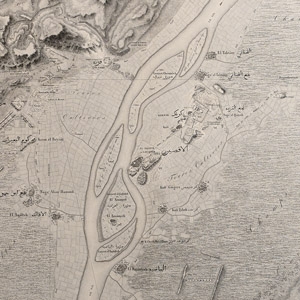
Very Large Egyptian Expedition Lithograph of Thebes
Early 19th century A.D.Estimate: £100 - 140 (+bp*)
Opening Bid: £50
Proof etching on laid paper of plate 1 entitled Thèbes. Plan général de la portion de la Vallée du Nil qui comprend les ruines, Volume II, Plate 1. 341 grams, 103.8 x 69.5 cm
From the collection of a North American priest. Acquired between 1981-1996. Property of a North American collector.
Produced between February 1802 and 1830 on the orders of Napoleon Bonaparte; published between 1809 and 1828. Just 1,000 copies were distributed to various institutions, printed on laid paper with an 'Égypte ancienne et moderne' watermark. The book is subtitled Recueil des observations et des recherches qui ont été faites en Égypte pendant l’expédition de l’Armée française, publié par les ordres de Sa Majesté l’Empereur Napoléon le Grand (Gathering of observations and discoveries which were made in Egypt during the expedition of the French army, published on the orders of His Majesty the Emperor Napoleon the Great). It was the world's first encyclopedia devoted exclusively to the remains of ancient Egypt. The plates of this book are the first to present the archaeological sites of Thebes (Luxor).
