
Loading, please wait...
LOT 0595
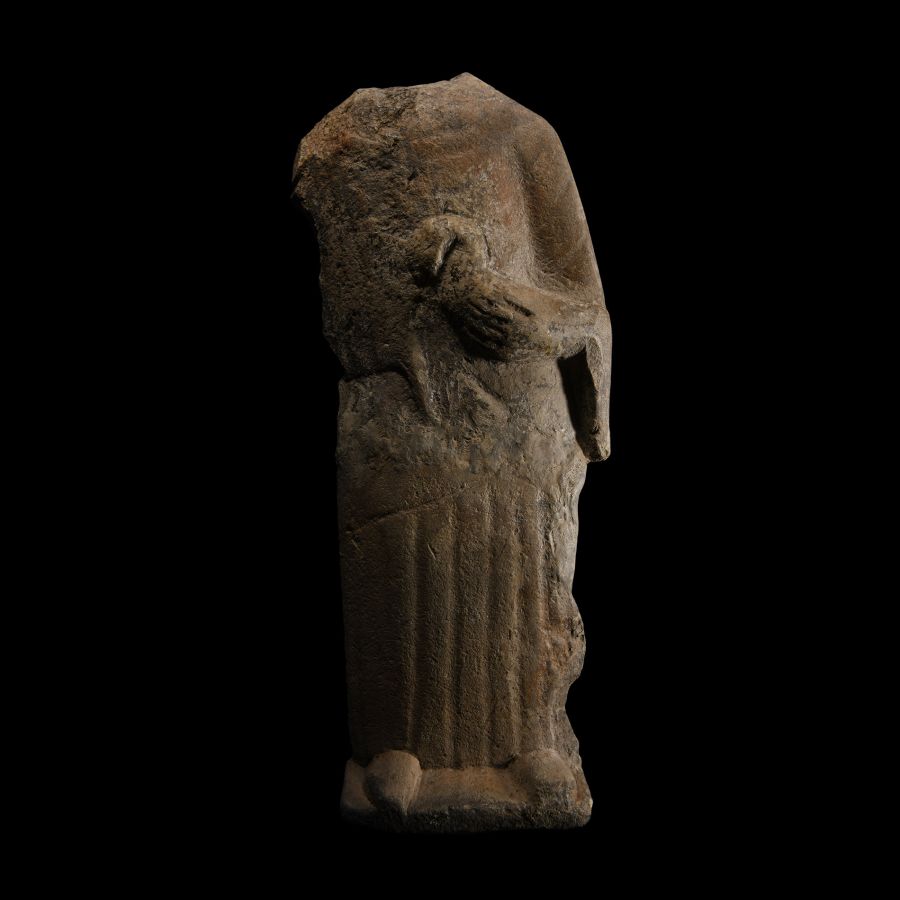
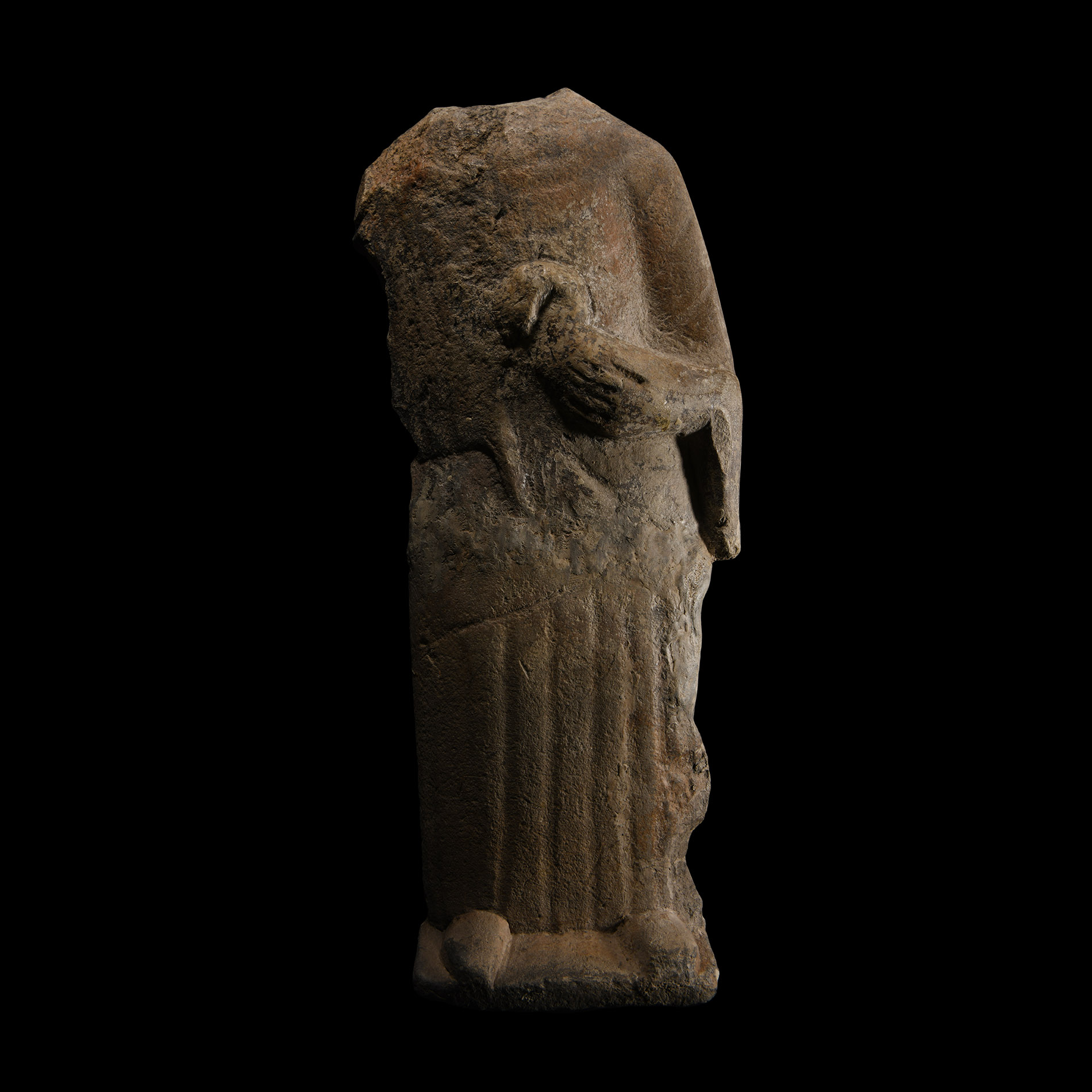
Phoenician Limestone Standing Goddess Holding a Bird
CIRCA 6TH-5TH CENTURY B.C.
13 3/8 in. (1.39 kg, 34 cm).
D-shaped plaque, depicting a female wearing a floor-length gown, standing on a rectangular base; left arm bent to support a goose against the body. [No Reserve]
ProvenanceFrom a collection acquired on the UK art market from various auction houses and collections mostly before 2000.
From an important Cambridgeshire estate; thence by descent.
TimeLine Auctions follows a vetting process to ensure the authenticity and legality of all items, reinforcing our commitment to integrity and responsible trading. Each antiquity, antique, and coin lot undergoes thorough examination by a vetting committee of at least ten external specialists, professional trade association members, scientists, and archaeologists: Our Vetting Process
AUCTIONS:
TimeLine is a leading auction house specialising in antiquities, ancient art, collectables, natural history, coins, medals, and books. Our auctions offer museums, collectors, historians, and enthusiasts the opportunity to acquire unique and historically significant pieces.
-
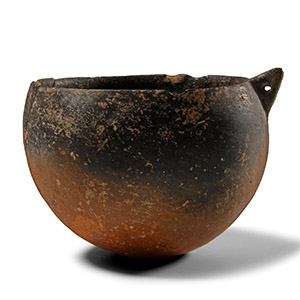
Cypriot Redware Dipper Cup
Middle Bronze Age I-II, circa 2000-1750 B.C.Sold for (Inc. bp): £312
Hemispherical in form with spur to the rim, pierced for attachment; repaired. 277 grams, 12 cm wide
Ex Peter Negus collection (1920-2012), a prolific collector who worked in the insurance industry for most of his life. His wife worked for Coutts Bank for many years and they shared an enormous passion for natural history, geology and archaeology, amassing a collection. He was a member of the Geologists’ Association for over 50 years, acting as Treasurer from 1979 to 1988. Acquired from Bonhams, London, 26 October 2007, no.354 (part). From an important Cambridgeshire estate; thence by descent. Accompanied by copies of the relevant Bonhams catalogue pages and an old identification tag. -
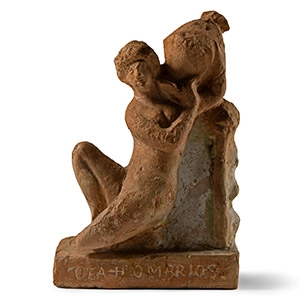
Hellenistic Terracotta Water-Carrier Figure
2nd-1st century B.C.Sold for (Inc. bp): £260
Hollow-formed on a rectangular base, nude female supporting an amphora; with possibly later enigmatic inscription to base 'ΘEA HOMBRIOS'. 478 grams, 16.1 cm
From a collection acquired on the UK art market from various auction houses and collections mostly before 2000. From an important Cambridgeshire estate; thence by descent. -

South Italian Gnathian Ware Pottery Oinochoe
Circa 4th century B.C.Estimate: £800 - 1,000 (‡+bp*)
Opening Bid: £400
Piriform bodied with U-shaped spout and high handle, polychrome painted egg, zigzag, bar, dot and laurel pattern with a flower arranged in rows to the front face. 193 grams, 20.2 cm high
Acquired in Europe before 2001. European collection.
