
Loading, please wait...
LOT 0088
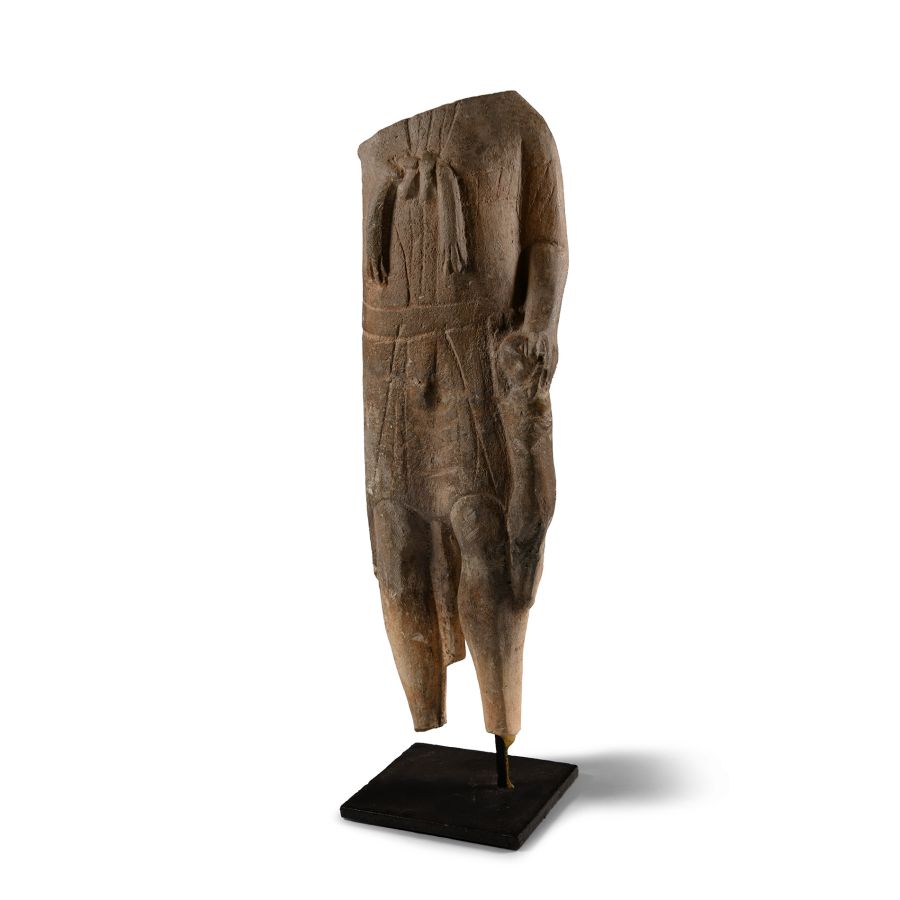
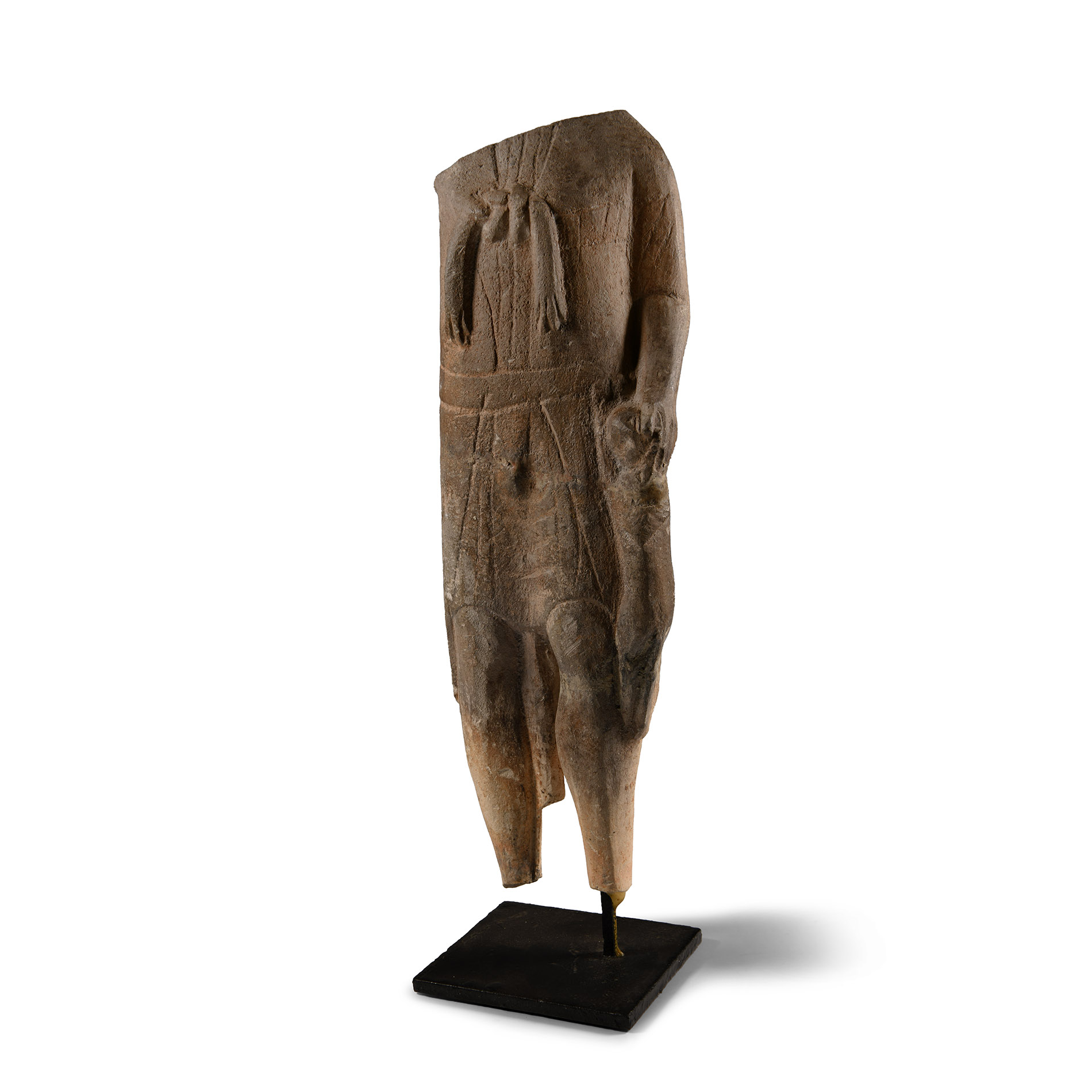
Phoenician Limestone Herakles Melqart Wearing Lionskin
CIRCA 6TH-5TH CENTURY B.C.
14 3/8 in. (1.85 kg total, 36.5 cm including stand).
Modelled in the round, standing with lionskin mantle tied around the shoulders at the chest, with girdle to the waist and knee-length tunic; left hand resting on the handle of a club; mounted on a custom-made display stand. [No Reserve]
ProvenanceFrom a collection acquired on the UK art market from various auction houses and collections mostly before 2000.
From an important Cambridgeshire estate; thence by descent.
Melqart was the Phoenician tutelary deity whose name means 'king of the city'; in the Roman interpretation, he was identified with Hercules.
CONDITIONTimeLine Auctions follows a vetting process to ensure the authenticity and legality of all items, reinforcing our commitment to integrity and responsible trading. Each antiquity, antique, and coin lot undergoes thorough examination by a vetting committee of at least ten external specialists, professional trade association members, scientists, and archaeologists: Our Vetting Process
AUCTIONS:
TimeLine is a leading auction house specialising in antiquities, ancient art, collectables, natural history, coins, medals, and books. Our auctions offer museums, collectors, historians, and enthusiasts the opportunity to acquire unique and historically significant pieces.
-
.jpg)
Cypriot Limestone Head of a Deer
Iron Age, circa late 6th-early 5th century B.C.Sold for (Inc. bp): £1,430
Carved in the round with stub antlers to the brow; mounted on a custom-made display stand. 982 grams total, 19.7 cm including stand
Acquired before 1947. Ex Wood family collection, UK; thence by descent 1970.
The deer head probably came from a larger votive terracotta sculpture, which depicted a standing doe, perhaps being led to be sacrificed. The presence of the deer could connect the original terracotta to a sanctuary of Diana, whose sacred animal was the deer. -
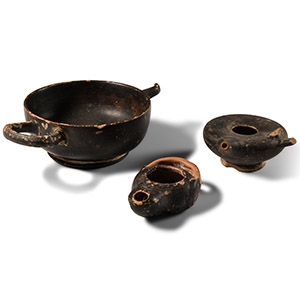
Greek Blackware Vessel Group
4th-2nd century B.C.Sold for (Inc. bp): £247
Group of three comprising: oil lamp with integral strap to rear; kylix with impressed palmettes design; guttos with tapering spout. 314 grams total, 8.6-18 cm
From a collection acquired on the UK art market from various auction houses and collections mostly before 2000. From an important Cambridgeshire estate; thence by descent. -
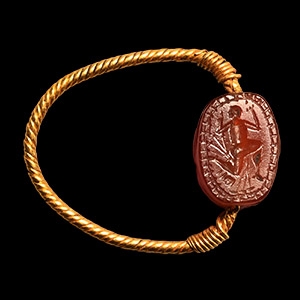
Etruscan Carnelian Scarab Gold Ring
5th-4th century B.C.Sold for (Inc. bp): £1,430
Hoop made from twisted wire with coils to the shoulders, carnelian scarab bezel with carapace detailing and intaglio kneeling figure to the reverse. 4.62 grams, 31.50 mm overall, 21.60 mm internal diameter (approximate size British W, USA 11, Europe 25, Japan 24)
Acquired from the collection of Mr K.A., a Parisian gentleman. European private collection.
