
Loading, please wait...
LOT 0485
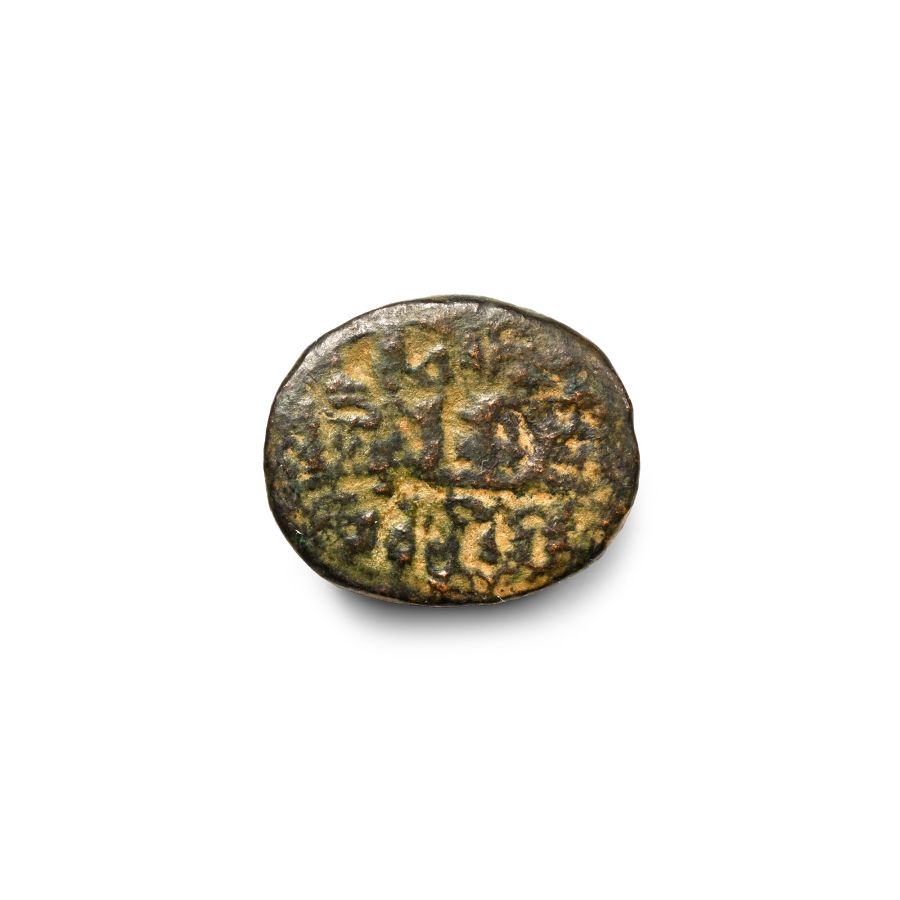
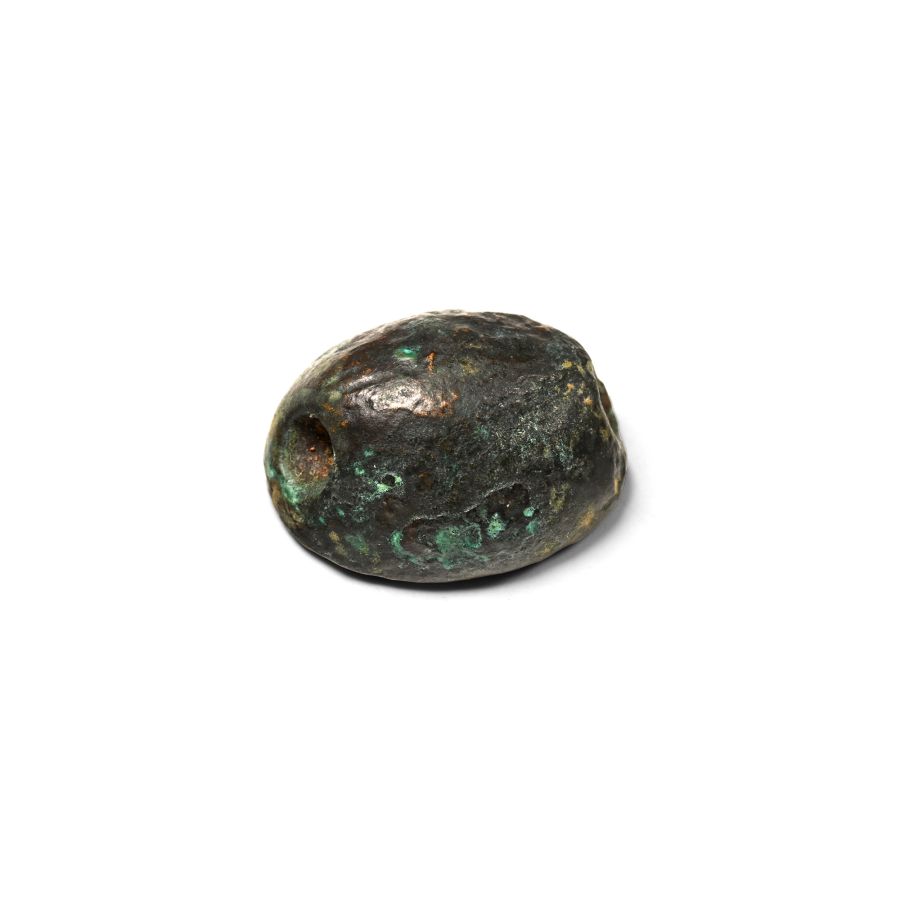
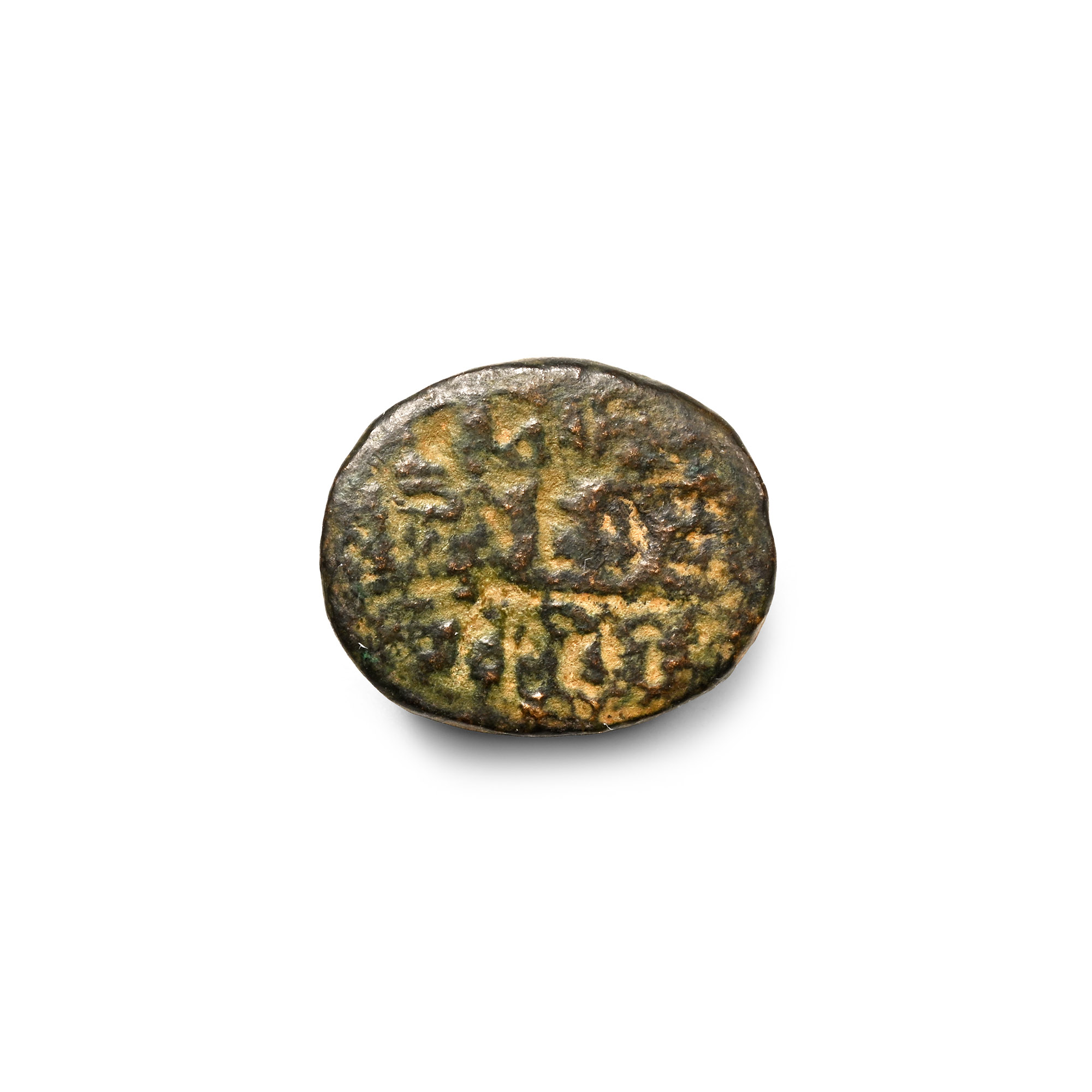
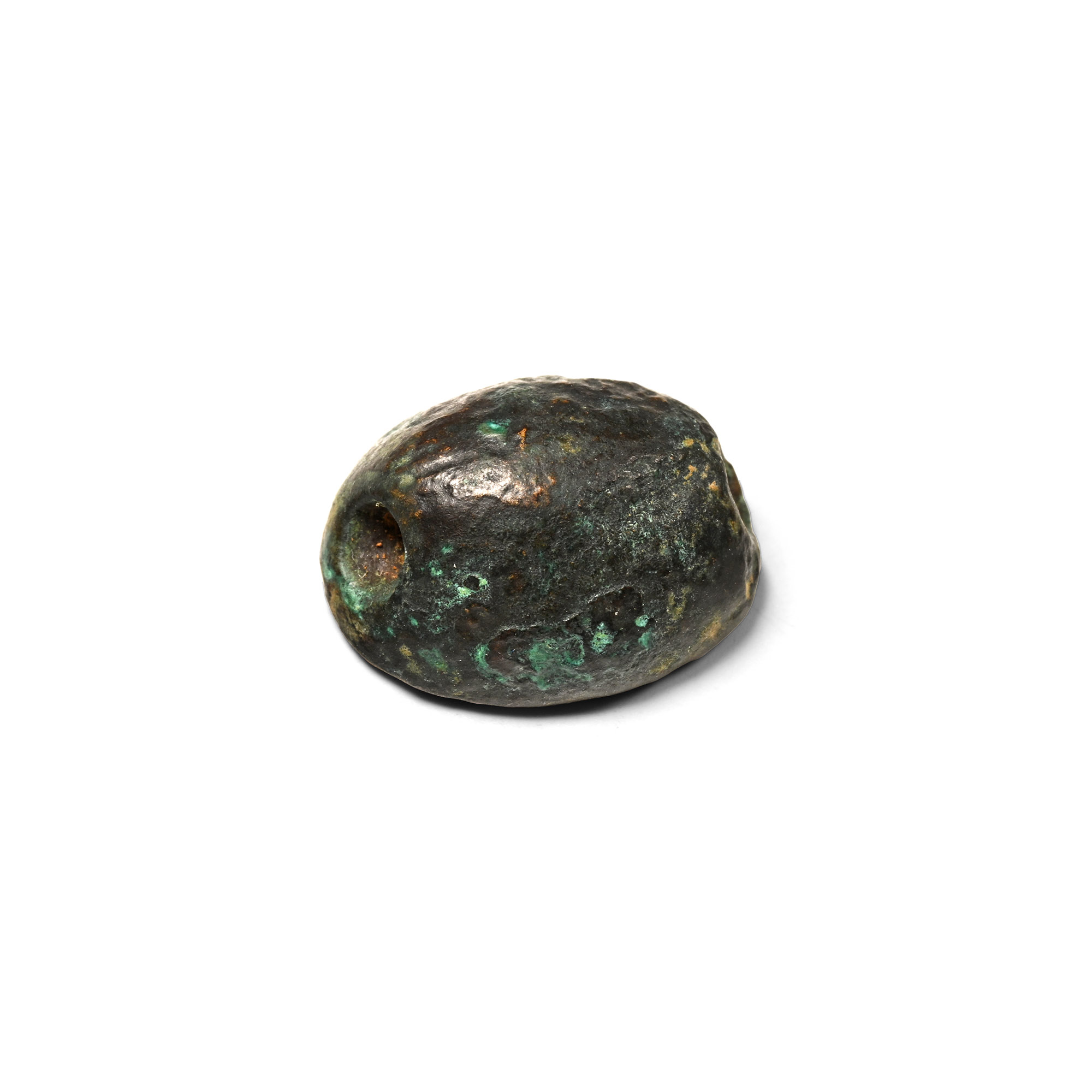
Phoenician Inscribed Bronze Scaraboid Seal
LATE 1ST MILLENNIUM B.C.
3/4 in. (8.9 grams, 17 mm).
Plain domed body pierced longitudinally, inscribed underside. [No Reserve]
ProvenanceEx London, UK, gentleman, 1990.
This lot is accompanied by an illustrated lot declaration signed by the Head of the Antiquities Department, Dr Raffaele D'Amato.
Cf. Ben-Tor, D., The Scarab: A Reflection of Ancient Egypt, Tel Aviv, 1993, p. 32, for discussion and examples of the 'a-n-r' scarab design.
FootnotesAlthough it is difficult to make out for certain, the outer design appears to be composed of the 'a-n-r' hieroglyphs. The signs do not form a word and are thought to have been a decorative device used by Asiatic scarab makers, employing recognisably Egyptian hieroglyphs.
CONDITIONTimeLine Auctions follows a vetting process to ensure the authenticity and legality of all items, reinforcing our commitment to integrity and responsible trading. Each antiquity, antique, and coin lot undergoes thorough examination by a vetting committee of at least ten external specialists, professional trade association members, scientists, and archaeologists: Our Vetting Process
AUCTIONS:
TimeLine is a leading auction house specialising in antiquities, ancient art, collectables, natural history, coins, medals, and books. Our auctions offer museums, collectors, historians, and enthusiasts the opportunity to acquire unique and historically significant pieces.
-
Phoenician Scarab in Gold Swivel Ring
6th-4th century B.C. and laterEstimate: £1,500 - 2,000 (‡+bp*)
Opening Bid: £675
The scarab with lightly incised anatomical detailing, the underside with a central cartouche flanked by two rearing crowned uraei, a pair of falcons standing above the cartouche facing a smꜣ hieroglyph symbolising union (of the two lands, Upper and Lower Egypt); set into a later gold swivel ring. 4.34 grams, 26.44 mm overall, 15.68 mm internal diameter (approximate size British J 1/2, USA 5, Europe 9.32, Japan 9)
with Bonhams, London, UK, 21 October 1999, no.36. Private collection, Europe. This lot has been checked against the Interpol Database of stolen works of art and is accompanied by a search certificate number no.12370-226696. This lot has been cleared against the Art Loss Register database, and is accompanied by an illustrated lot declaration signed by the Head of the Antiquities Department, Dr Raffaele D'Amato. -
Egyptian and Other Mosaic Glass Fragment Collection
3rd century B.C.-4th century A.D.Sold for (Inc. bp): £234
Comprising fourteen polychrome fragments displaying vibrant colours and patterns, two with a rounded lip. 58 grams total, 15-71 mm
Ex Gallery Mikazuki before 1984. London gallery, latterly Mayfair, UK, collection. This lot is accompanied by an illustrated lot declaration signed by the Head of the Antiquities Department, Dr Raffaele D'Amato. -
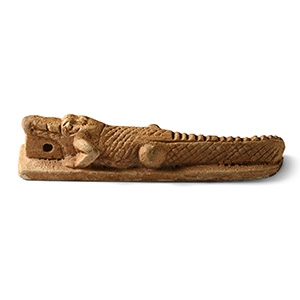
Egyptian Faience Crocodile Amulet
Late-Ptolemaic Period, 664-30 B.C.Sold for (Inc. bp): £2,600
Representing the god Sobek; detailed face and scales; standing on a rectangular plinth; pierced to the front for suspension. 13.4 grams, 74 mm
From the estate of the late Professor Dr E. Bernardo Streiff, Geneva; a distinguished collection of antiquities formed during the 1950s-1970s. with Galerie Rhéa, Zurich, Switzerland. This lot has been checked against the Interpol Database of stolen works of art and is accompanied by a search certificate number no.12629-236404. This lot has been cleared against the Art Loss Register database, and is accompanied by an illustrated lot declaration signed by the Head of the Antiquities Department, Dr Raffaele D'Amato.
Sobek is one of the most ancient and fascinating deities in the Egyptian pantheon. He is typically depicted as a crocodile or a man with the head of a crocodile, embodying various attributes related to the natural world, power, and protection. Sobek was mainly associated with water, fertility, and the Nile, along with strength and military prowess. His worship extends throughout much of ancient Egyptian history, and he was venerated not only as a force of nature but also as a god of healing, protection, and royal authority. His principal cult centres were situated in the Faiyum region, particularly the city of Crocodilopolis, and also at Kom Ombo in Upper Egypt.
