
Loading, please wait...
LOT 0417
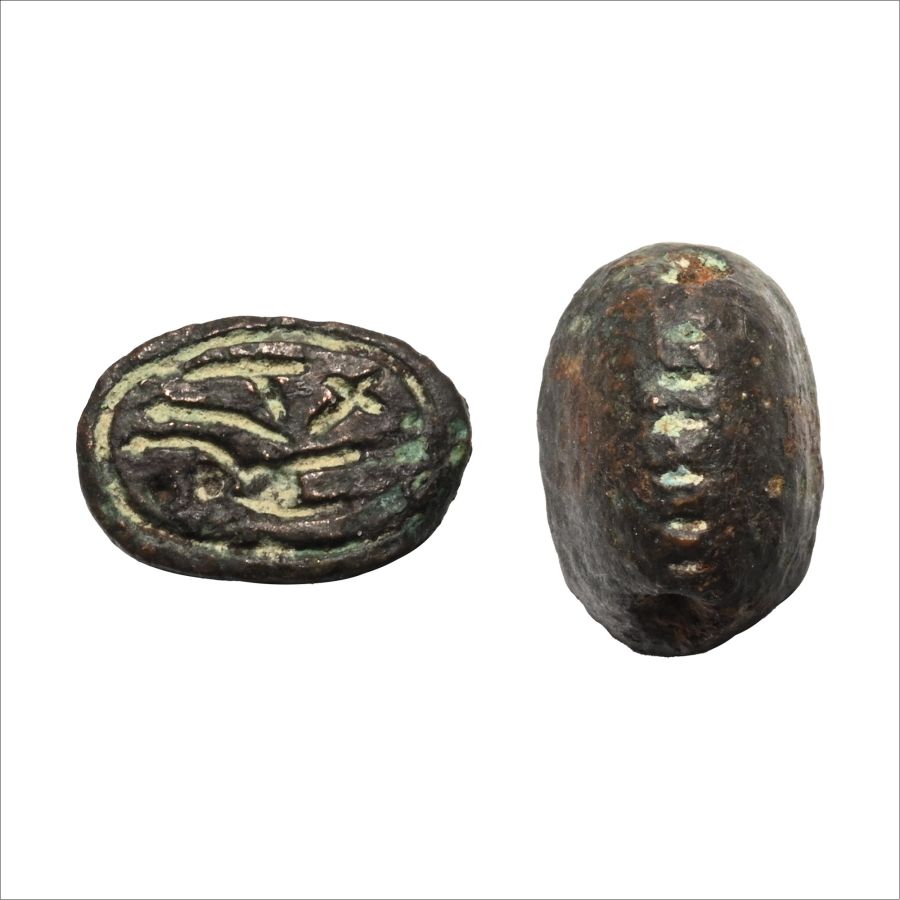
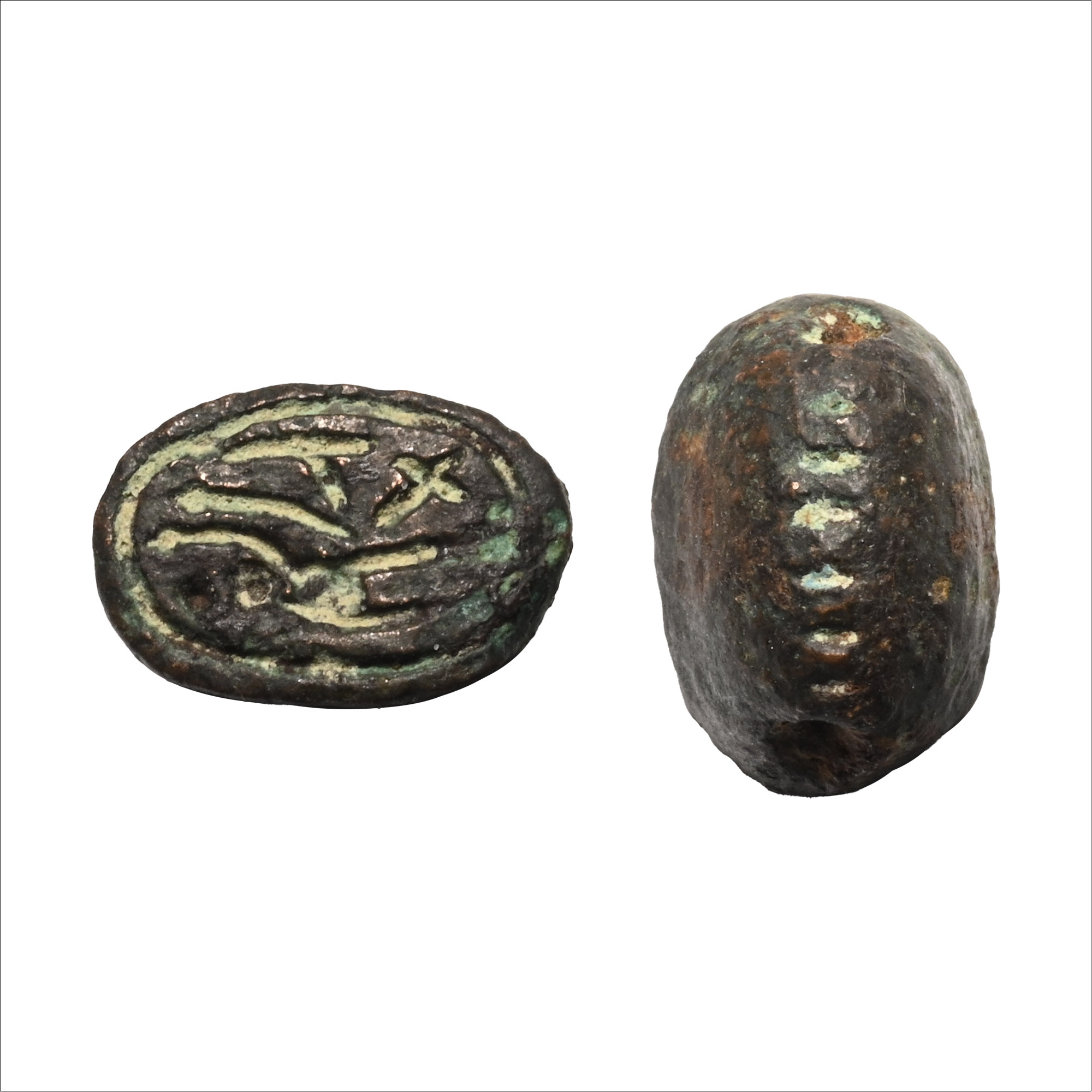
Phoenician Inscribed Bronze Scaraboid Seal
LATE 1ST MILLENNIUM B.C.
1/2 in. (3.1 grams, 13.46 mm).
Scaraboid featuring a grooved band across the upper face and an incuse schematic human figure with enigmatic symbols on the underside.
ProvenanceEx London, UK, gentleman, 1990.
This lot is accompanied by an illustrated lot declaration signed by the Head of the Antiquities Department, Dr Raffaele D'Amato.
Cf. Ben-Tor, D., Scarabs, Chronology, and Interconnections: Egypt and Palestine in the Second Intermediate Period, Fribourg/Göttingen, 2007, pl. 102, no. 36, for a similar schematic figurative representation.
CONDITIONTimeLine Auctions follows a vetting process to ensure the authenticity and legality of all items, reinforcing our commitment to integrity and responsible trading. Each antiquity, antique, and coin lot undergoes thorough examination by a vetting committee of at least ten external specialists, professional trade association members, scientists, and archaeologists: Our Vetting Process
AUCTIONS:
TimeLine is a leading auction house specialising in antiquities, ancient art, collectables, natural history, coins, medals, and books. Our auctions offer museums, collectors, historians, and enthusiasts the opportunity to acquire unique and historically significant pieces.
LOT 0417
Phoenician Inscribed Bronze Scaraboid Seal
Estimate £100 - 140€120 - 160 (for guidance only)$140 - 190 (for guidance only)
-
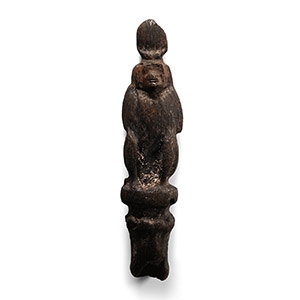
Egyptian Ebony Thoth Figure
1st millennium B.C.Estimate: £200 - 300 (+bp*)
Opening Bid: £100
Carved in the round figure of a baboon with horned sun-disc headgear, crouching on a balustered tubular shaft. 6.87 grams,74 mm
Acquired on the German art market, 1989-1995. with The Museum Gallery, 19 Bury Place, London, WC1, UK, 1998-2003. Property of a London based academic, 2003-present. This lot is accompanied by an illustrated lot declaration signed by the Head of the Antiquities Department, Dr Raffaele D'Amato.
The baboon represented an animal manifestation of the god Thoth. This deity was revered for his associations with knowledge, writing, and healing. The popularity of Thoth was also likely tied to his role as the recorder of the final judgment, which determined whether the deceased had led a virtuous life. -
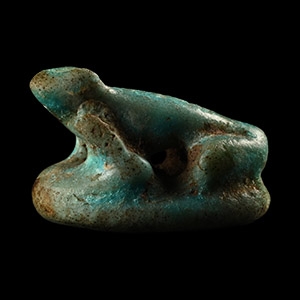
Egyptian Faience Frog Scaraboid
Ptolemaic Period, circa 300 B.C.Sold for (Inc. bp): £260
Discoid base with crouching frog pierced longitudinally for threading; underside with a solar disc and unidentified symbol. 0.56 grams, 13 mm
Ex R. Liechti (1934-2010) Geneva, Switzerland, formed between 1950-1990s. Accompanied by a copy of an old collection inventory note. This lot is accompanied by an illustrated lot declaration signed by the Head of the Antiquities Department, Dr Raffaele D'Amato. -
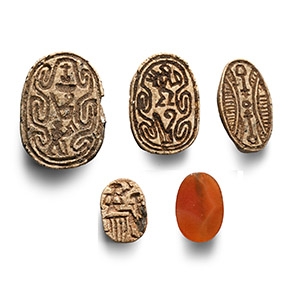
Egyptian Mixed Scarab Collection
Mostly Late Period, 664-332 B.C.Estimate: £500 - 700 (+bp*)
Opening Bid: £250
Comprising: three faience scarabs with detailed bodies and hieroglyphs on the underside; one carnelian scarab with plain base; one scaraboid with hieroglyphs to the underside. 22.75 grams total, 15-28 mm
From the collection of a gentleman, acquired on the London art market in the 1990s. This lot is accompanied by an illustrated lot declaration signed by the Head of the Antiquities Department, Dr Raffaele D'Amato.
