
Loading, please wait...
LOT 0043
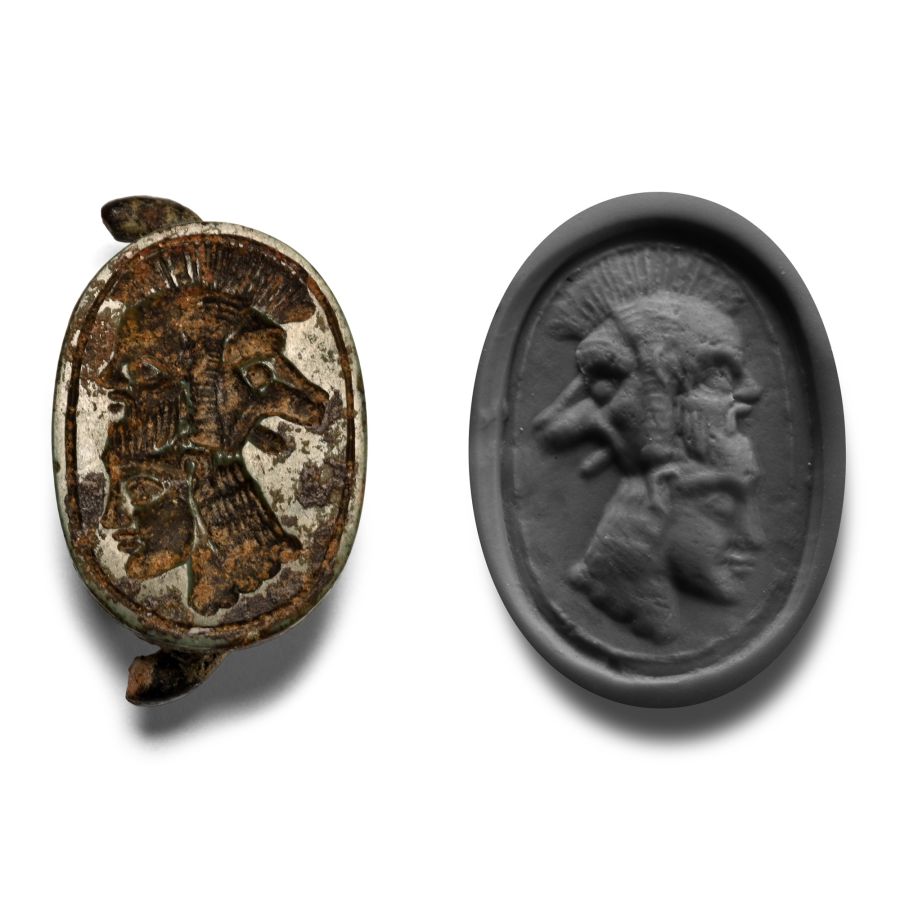
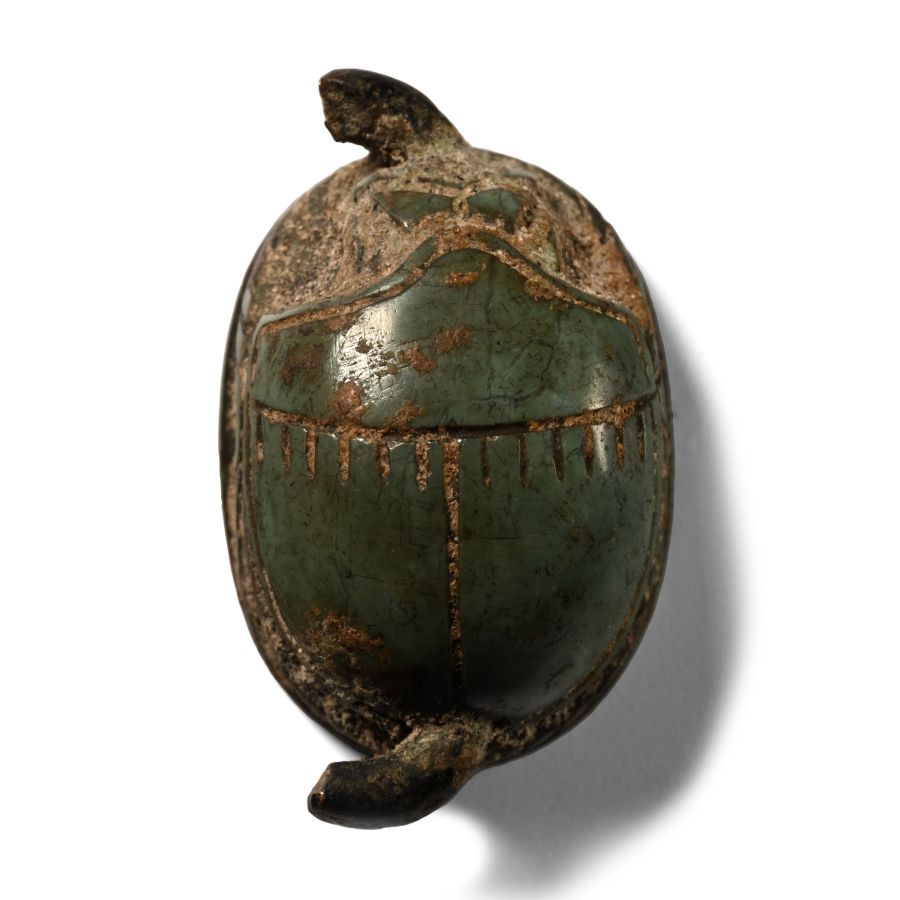
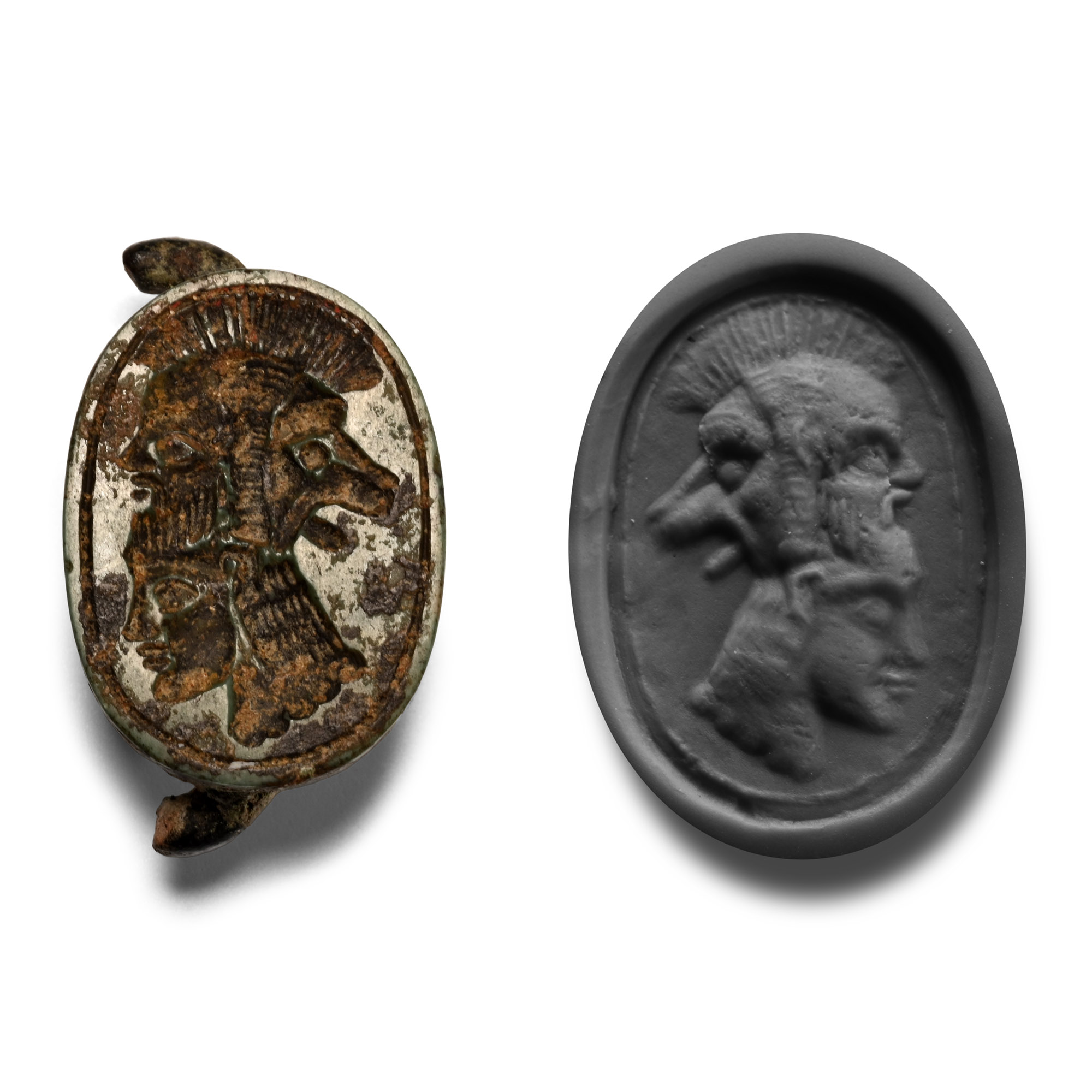
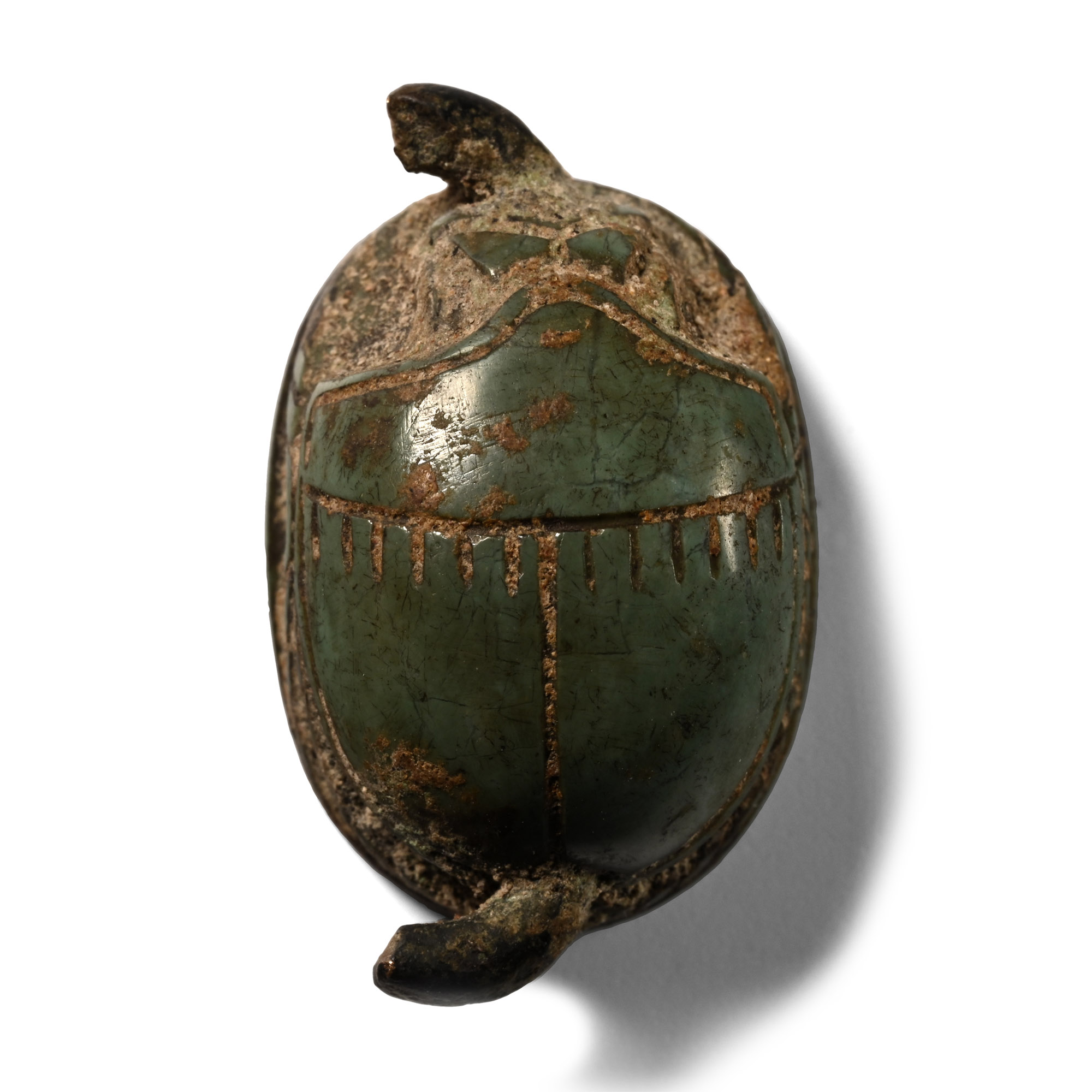
Phoenician Green Stone Scarab with Three-Headed Gryllos
6TH-4TH CENTURY B.C.
1 1/8 in. (6.94 grams, 28 mm).
With carapace detailing to the convex face; underside with gryllos of a bearded male, a slender female and a boar.
ProvenanceEx collection of the late Mr S. M., London, UK, 1970-1990s.
This lot has been checked against the Interpol Database of stolen works of art and is accompanied by a search certificate number no.12635-234910.
This lot has been cleared against the Art Loss Register database, and is accompanied by an illustrated lot declaration signed by the Head of the Antiquities Department, Dr Raffaele D'Amato.
Cf. Boardman, J., Classical Phoenician Scarabs: A Catalogue and Study, Oxford, 2003, cat. no. 37/18 Tharros pl. 59e (BM ANE 133440), London no. 407, for a similarly-themed motif of a facing bearded head, with an African head to one side over a boar forepart; Boardman, J., 'Greek Gem Engravers, Their Subjects and Style' in Ancient Art in Seals: Essays by Pierre Amiet, Nimet Özgüç, and John Boardman, edited and introduced by Porada, E., Princeton, 1980, 113-114, for discussion.
FootnotesGrylli motifs usually combine various human and animal heads, sometimes including animal legs.
CONDITIONTimeLine Auctions follows a vetting process to ensure the authenticity and legality of all items, reinforcing our commitment to integrity and responsible trading. Each antiquity, antique, and coin lot undergoes thorough examination by a vetting committee of at least ten external specialists, professional trade association members, scientists, and archaeologists: Our Vetting Process
AUCTIONS:
TimeLine is a leading auction house specialising in antiquities, ancient art, collectables, natural history, coins, medals, and books. Our auctions offer museums, collectors, historians, and enthusiasts the opportunity to acquire unique and historically significant pieces.
LOT 0043
Phoenician Green Stone Scarab with Three-Headed Gryllos
Sold for (Inc. bp): £2,730
-
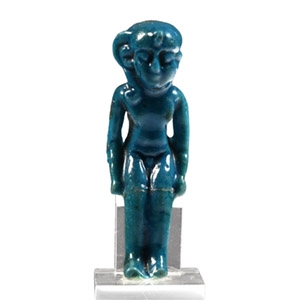
Egyptian Turquoise Glazed Seated Harpocrates
Late Period, 26th Dynasty, circa 664-525 B.C.Estimate: £500 - 700 (+bp*)
Opening Bid: £250
The god in a semi-seated pose with sidelock and uraeus; mounted on a custom-made stand. 10 grams total, 52 mm including stand
Collection de Son Excellence Mandou Riaz (1895-1963). Archéologie, François de Ricqlès, Paris, 11-12 November 2001, no.186. Private collection, London, UK, acquired from the above sale. Accompanied by a copy of the François de Ricqlès invoice. This lot is accompanied by an illustrated lot declaration signed by the Head of the Antiquities Department, Dr Raffaele D'Amato.
While the semi-seated pose of the figurine may imply that it was part of a composite statuette, possibly featuring a separately modelled throne or seated on the lap of his mother, Isis, independent amulets with suspension loops depicting the god in this pose are also prevalent. Harpocrates is the Greek rendering of the Egyptian Hor-pa-khered, which translates as ‘Horus the Child’. This designation refers to Horus as the divine infant of Isis and Osiris. Wearing the amulet of Harpocrates could grant the wearer the same protection that Isis provided to her beloved son. -
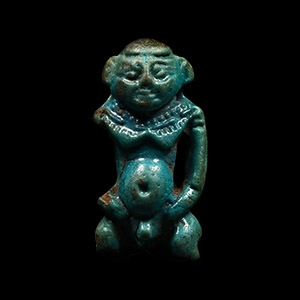
Egyptian Blue Glazed Faience Figure of Pataikos
Saite Period, 26th Dynasty, 664-545 B.C.Sold for (Inc. bp): £468
Wearing a broad collar and a stylised scarab on top of the head, elongated arms resting on the lower part of his protruding abdomen. 10.8 grams, 43 mm
Acquired in the mid 1980s-1990s. Private collection, Switzerland, thence by descent. Private collection, since the late 1990s. This lot is accompanied by an illustrated lot declaration signed by the Head of the Antiquities Department, Dr Raffaele D'Amato.
Herodotus mentions Pataikos as a dwarf-like representation of Ptah, although the ancient Egyptian name of the god remains unclear. These diminutive amulets symbolise Ptah’s immense magical power, which served to protect the wearer from dangerous creatures such as snakes and crocodiles. The role of the deity in the funerary sphere is explained in Spell 164 of the Book of the Dead, where a Pataikos is used to protect the deceased's heart from enemy attacks and the putrefaction of the body. -
.jpg)
Egyptian Brown Quartzite Baboon Animal Figurine
New Kingdom, circa 1550-1070 B.C.Estimate: £5,000 - 7,000 (‡+bp*)
Opening Bid: £2,250
Carved in a typical pose, sitting on its haunches with its tail curving around the right side, its front paws resting on its knees and protruding beneath its thick furry pelt, with incised detailing, its feet either side of the phallus, the head with bulbous, striated hair on either side, chipped, snout restored; seated on a high shrine-shaped plinth with squared front and rounded back, featuring a cavetto cornice and roll detailing on the upper part. 1.15 kg, 15 cm
From a deceased American estate, 1970-1989. with Bonham's, London, 28 October 2009, no.35. Accompanied by copies of the relevant Bonham's catalogue pages. This lot has been checked against the Interpol Database of stolen works of art and is accompanied by a search certificate number no.12368-226706. This lot has been cleared against the Art Loss Register database, and is accompanied by an illustrated lot declaration signed by the Head of the Antiquities Department, Dr Raffaele D'Amato.
The baboon was an animal manifestation of the god Thoth, the patron deity of Hermopolis Magna, who was revered for his association with knowledge, writing, and healing.
