
Loading, please wait...
LOT 0057
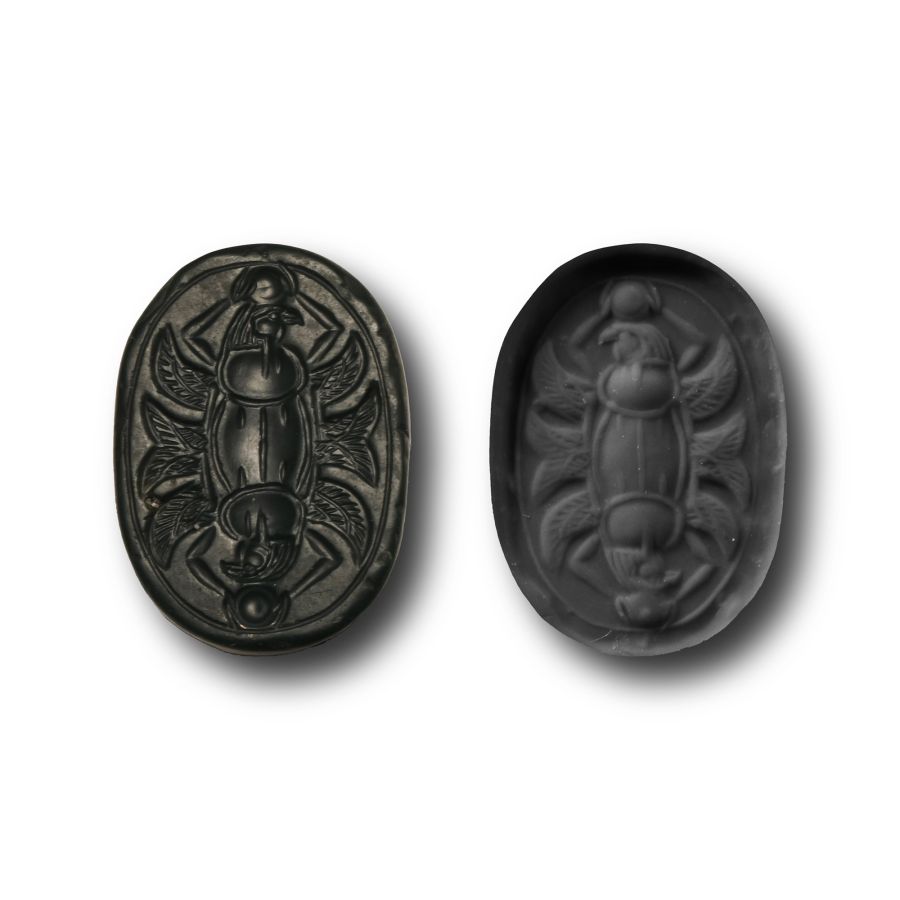
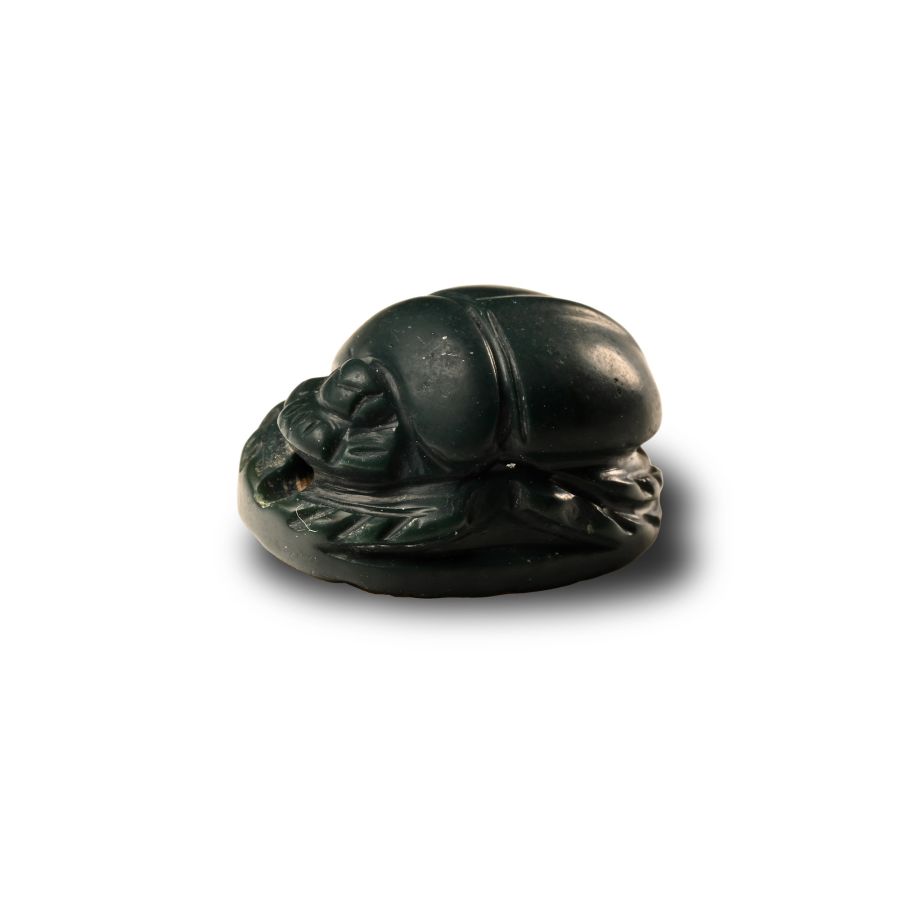
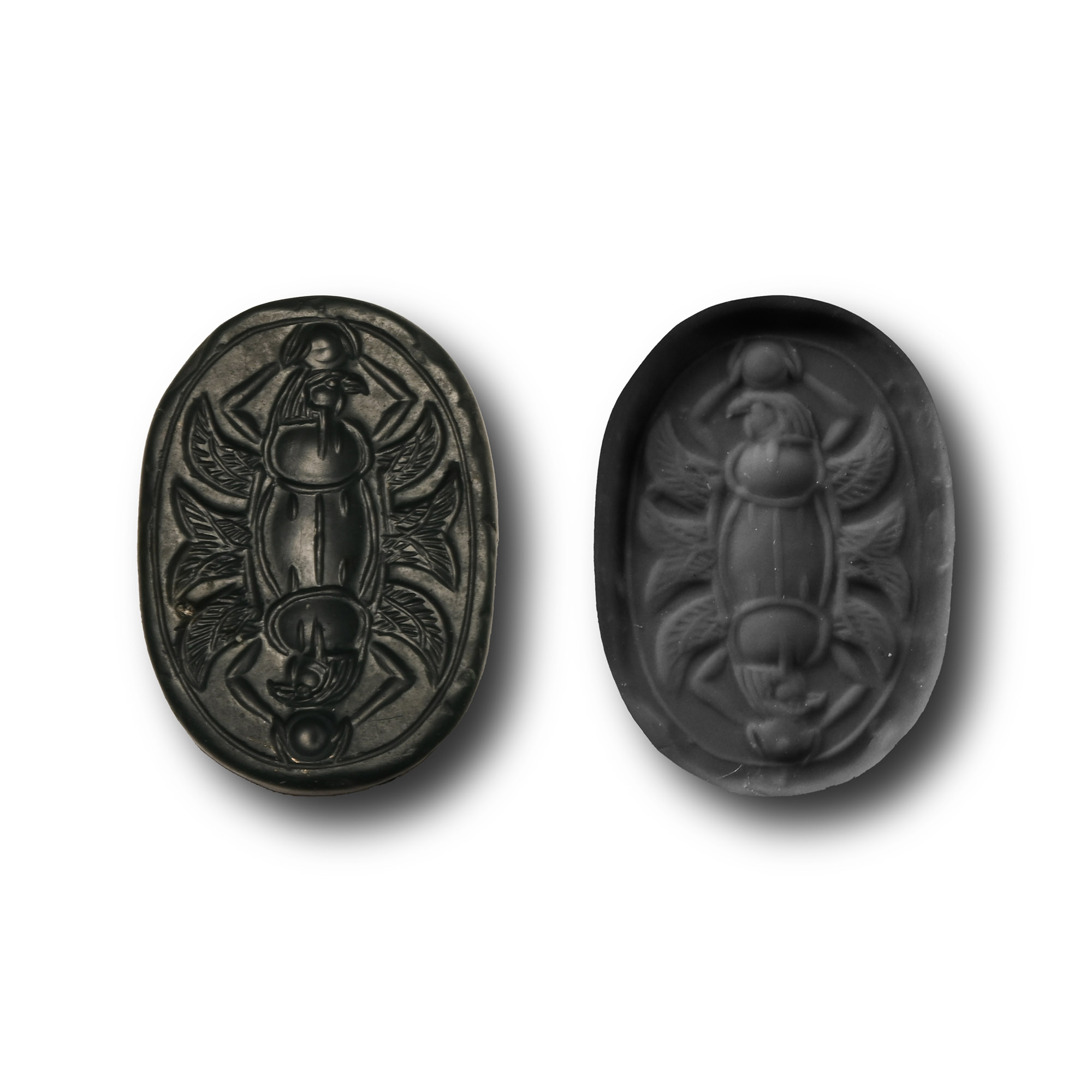
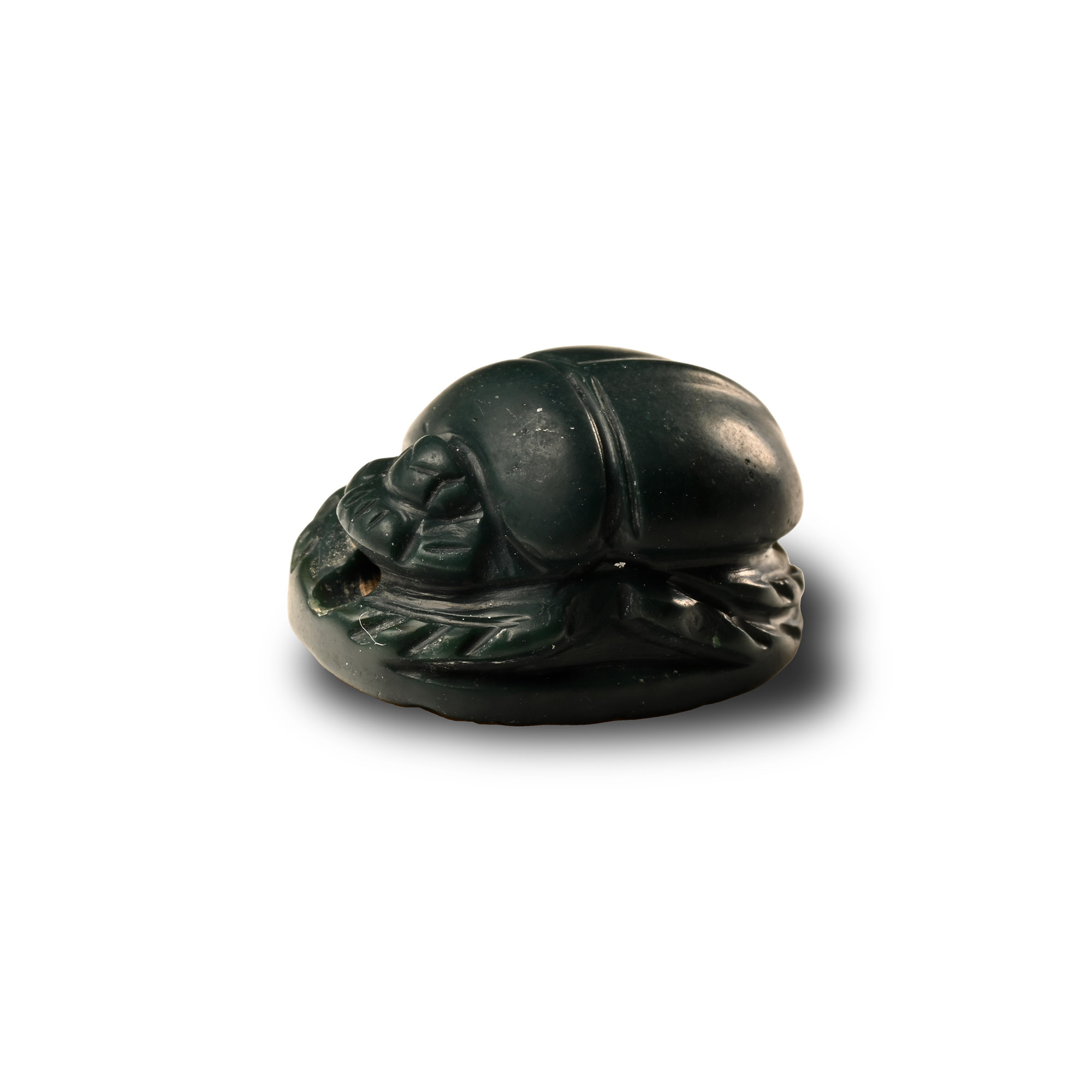
Phoenician Green Jasper Scarab with Heads of Horus
6TH-5TH CENTURY B.C.
3/4 in. (4.4 grams, 20 mm).
Scarab with detailed anatomical features, ellipsoid plaque with incuse inset motif topped at each end by the head of Horus; supplied with a museum-quality impression.
ProvenanceEx private collection of Mrs J.H., London, UK, early 1990s.
CONDITIONTimeLine Auctions follows a vetting process to ensure the authenticity and legality of all items, reinforcing our commitment to integrity and responsible trading. Each antiquity, antique, and coin lot undergoes thorough examination by a vetting committee of at least ten external specialists, professional trade association members, scientists, and archaeologists: Our Vetting Process
AUCTIONS:
TimeLine is a leading auction house specialising in antiquities, ancient art, collectables, natural history, coins, medals, and books. Our auctions offer museums, collectors, historians, and enthusiasts the opportunity to acquire unique and historically significant pieces.
-
.jpg)
Egyptian Limestone Painted Shabti Inscribed for Ir-Nu
New Kingdom, 19th-20th Dynasty, 1295-1077 B.C.Sold for (Inc. bp): £18,200
Inscribed for Ir-nu; with carefully modelled face, large eyes and unnaturally large ears, wearing a neck-strap, a long tripartite wig with incised striations and a broad three-band collar; holding a pick in his left hand, a hoe in the right and a seed bag hanging over the left shoulder; the unusual position of the hands opposed on the chest; the text beginning in the vertical column running down the front of the figure, continuing in five horizontal bands with pale red-ochre pigment colouring to the top, middle and bottom bands; the same pigment used to colour the implements and also alternates with blue striations of the wig, the neck strap and details of the collar also in blue; the inscription from the Book of the Dead Chapter 6, reading: (Vertical column:) 'The illuminated one, the Osiris' (Horizontal rows:) 1) Ir-nu, true of voice, he says: O, this shabti 2) if one is counted, if one is reckoned to do the work 3) [to do all that is to be done in] the god’s land, to cultivate the riparian lands, transport by boat 4) [sand of] the west to the east, to act 5) at any time, to serve there (you) shall say true of voice(?). 1.4 kg total, 28.4 cm high including stand
Carieau family collection, Belgium, acquired in 1952. Ex Maspero collection, Paris, 1963. Acquired from a private European collection, in 1978. Accompanied by a copy of a technical report by Edmund S. Meltzer Ph.D. Accompanied by an academic report by Egyptologist Paul Whelan. This lot has been checked against the Interpol Database of stolen works of art and is accompanied by a search certificate number no.12080-217053. -
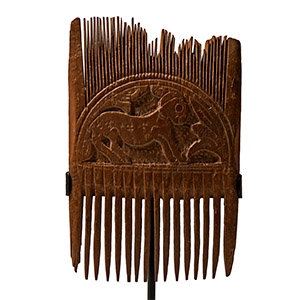
Egyptian Decorated Wooden Comb
Coptic, 3rd-7th century A.D.Estimate: £600 - 800 (+bp*)
Opening Bid: £300
Rectangular in plan with fine-cut teeth to one short edge and coarse-cut to the other; reserved low-relief image to each face of a D-shaped cell and ram running amid vegetation on a textured field; mounted on a custom-made stand. 73 grams total, 12.8 cm including stand
Ex J.P. collection, 1960s. Private collection London, UK, 1980s. From the private collection of J.L., Surrey, UK, 2000s. -
.jpg)
Egyptian Faience Shabti for Nesy-Amun
Third Intermediate Period, 21st Dynasty, 1069-943 B.C.Sold for (Inc. bp): £1,170
Modelled in deep blue faience with applied black detailing to the hair, eyes, seed bag, agricultural tools and three bands of hieroglyphs to the lower body reading giving the title and name of 'Nesy-Amun, Justified'; very rare. 75 grams, 11.1 cm
European collection, latterly in private UK collection, 1990. Read by John Taylor at the British Museum on 27 February 2009. Accompanied by a copy of a handwritten information card and a print out of the Christie's example.
Nesy-Amun was the Fourth Prophet of Amun in the 21st Dynasty. The mummy was recovered from the priest's hole, cache II, Deir el-Bahari.
