
Loading, please wait...
LOT 0426
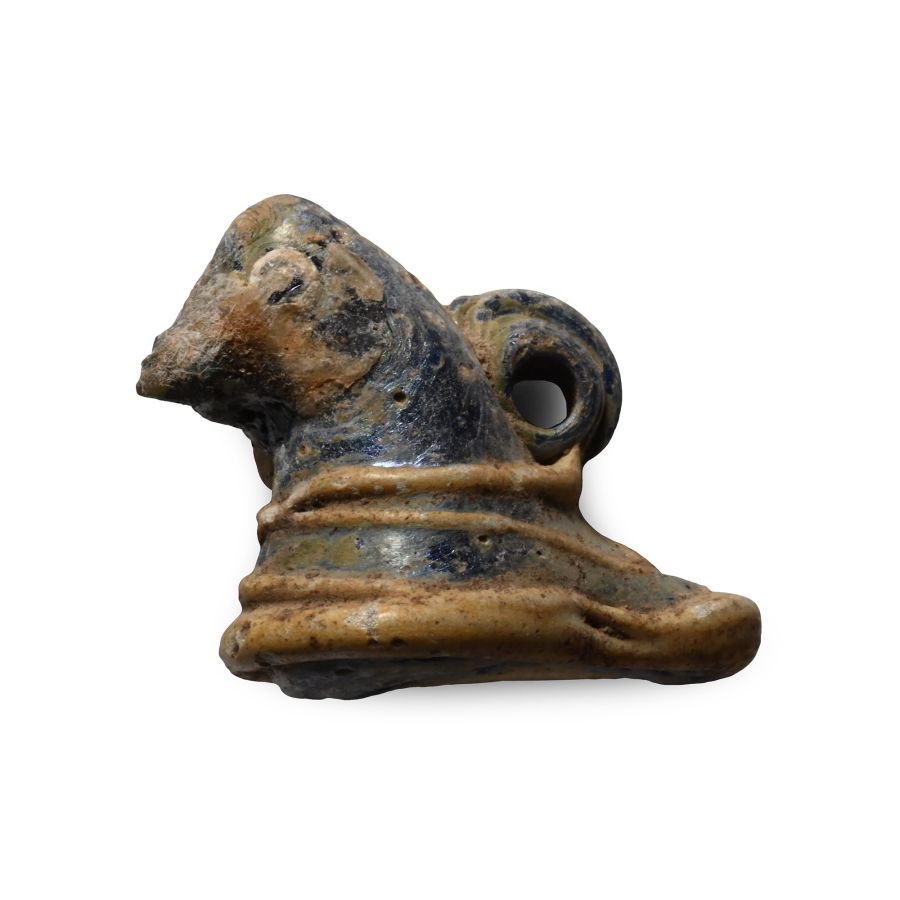
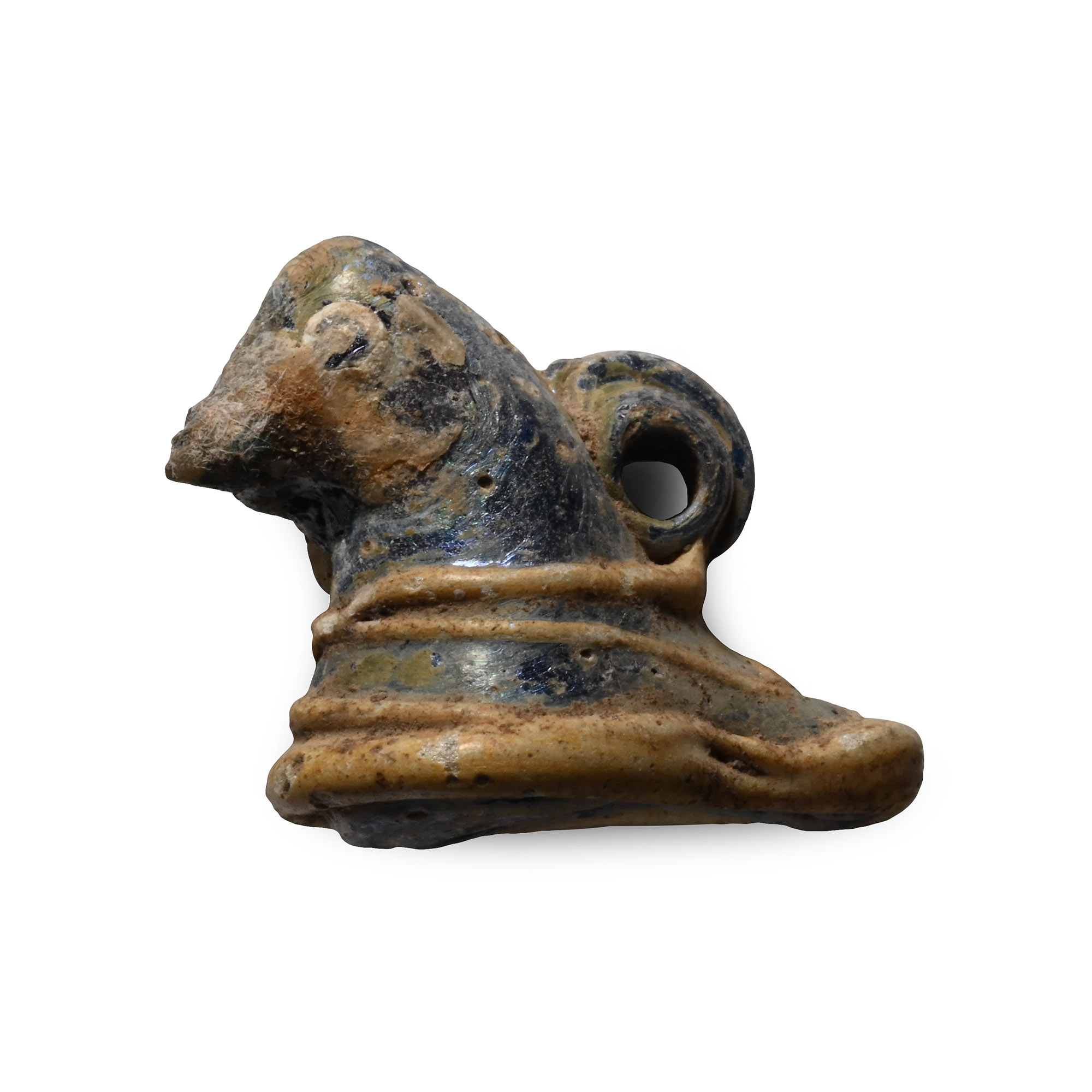
Phoenician Glass Bird Pendant
425-200 B.C.
3/4 in. (1.95 grams, 19 mm).
Hollow-formed amuletic pendant with applied trails to the body, applied eyes with white rims, suspension loop on the back.
ProvenanceEx collection of the late S.M., London, UK, 1970-1990s.
This lot is accompanied by an illustrated lot declaration signed by the Head of the Antiquities Department, Dr Raffaele D'Amato.
TimeLine Auctions follows a vetting process to ensure the authenticity and legality of all items, reinforcing our commitment to integrity and responsible trading. Each antiquity, antique, and coin lot undergoes thorough examination by a vetting committee of at least ten external specialists, professional trade association members, scientists, and archaeologists: Our Vetting Process
AUCTIONS:
TimeLine is a leading auction house specialising in antiquities, ancient art, collectables, natural history, coins, medals, and books. Our auctions offer museums, collectors, historians, and enthusiasts the opportunity to acquire unique and historically significant pieces.
LOT 0426
Phoenician Glass Bird Pendant
Estimate £150 - 200€170 - 230 (for guidance only)$200 - 270 (for guidance only)
-
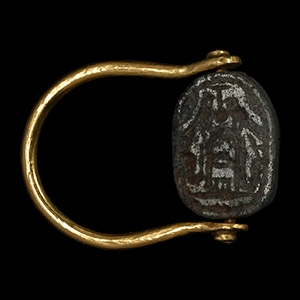
Phoenician Scarab in Gold Swivel Ring
6th-4th century B.C. and laterEstimate: £1,500 - 2,000 (‡+bp*)
Opening Bid: £675
The scarab with lightly incised anatomical detailing, the underside with a central cartouche flanked by two rearing crowned uraei, a pair of falcons standing above the cartouche facing a smꜣ hieroglyph symbolising union (of the two lands, Upper and Lower Egypt); set into a later gold swivel ring. 4.34 grams, 26.44 mm overall, 15.68 mm internal diameter (approximate size British J 1/2, USA 5, Europe 9.32, Japan 9)
with Bonhams, London, UK, 21 October 1999, no.36. Private collection, Europe. This lot has been checked against the Interpol Database of stolen works of art and is accompanied by a search certificate number no.12370-226696. This lot has been cleared against the Art Loss Register database, and is accompanied by an illustrated lot declaration signed by the Head of the Antiquities Department, Dr Raffaele D'Amato. -
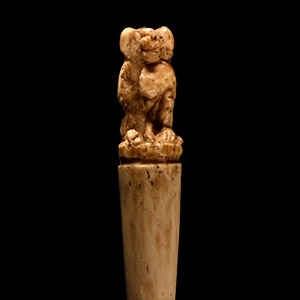
Egyptian Bone Hairpin with Thoth as a Baboon
New Kingdom, 1569-1081 B.C.Sold for (Inc. bp): £624
Tapering round-section hairpin, with a finial fashioned as a seated baboon with its tail resting along the body. 5.4 grams, 89 mm
Ex Thomas collection, UK, 1980s-1990s. This lot is accompanied by an illustrated lot declaration signed by the Head of the Antiquities Department, Dr Raffaele D'Amato.
Decorative hairpins often feature animals such as monkeys and cats, and inanimate objects such as olives. -
.jpg)
Egyptian Bronze Cobra Mount
Late Period, 6th century B.C.Estimate: £800 - 1,000 (‡+bp*)
Opening Bid: £400
Cobra-shaped mount with head raised and hood expanded, two mounting studs to the reverse; mounted on a custom-made stand. 182 grams, 22 cm
Private Israeli collection. Ex Archaeological Center, Tel Aviv, Israel, 2015. Private European collection. This lot is accompanied by an illustrated lot declaration signed by the Head of the Antiquities Department, Dr Raffaele D'Amato.
The mount quite possibly adorned the Atef crown of a statue of Osiris.
