
Loading, please wait...

LOT 1158
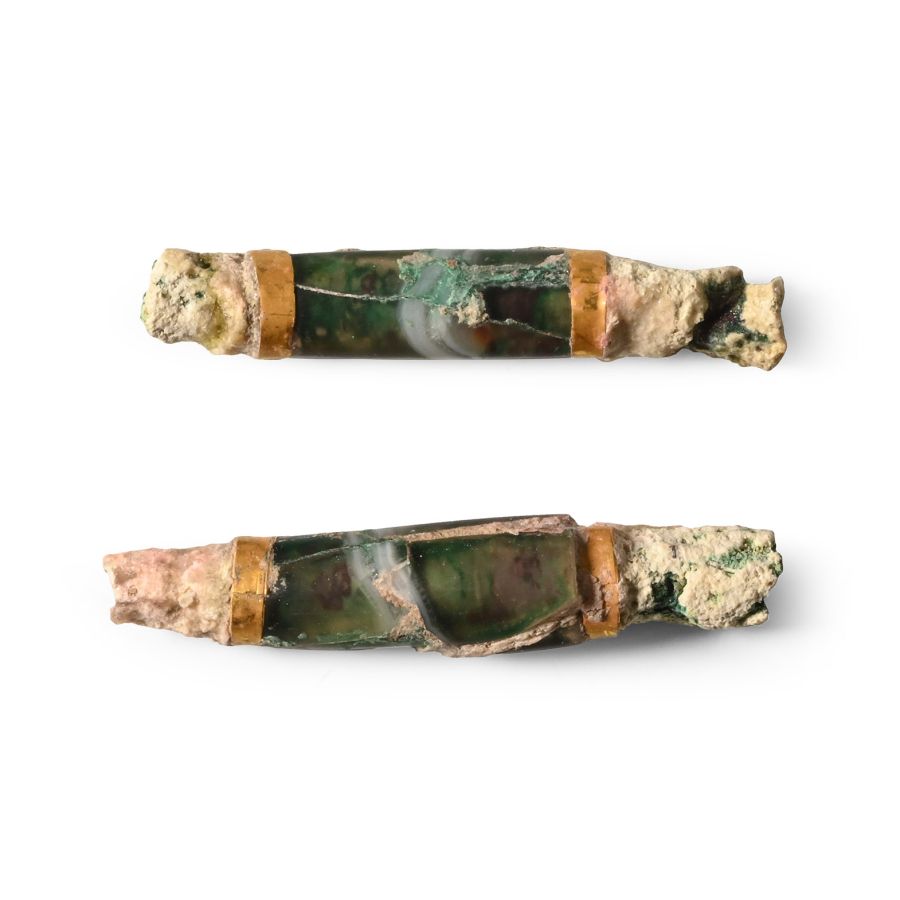
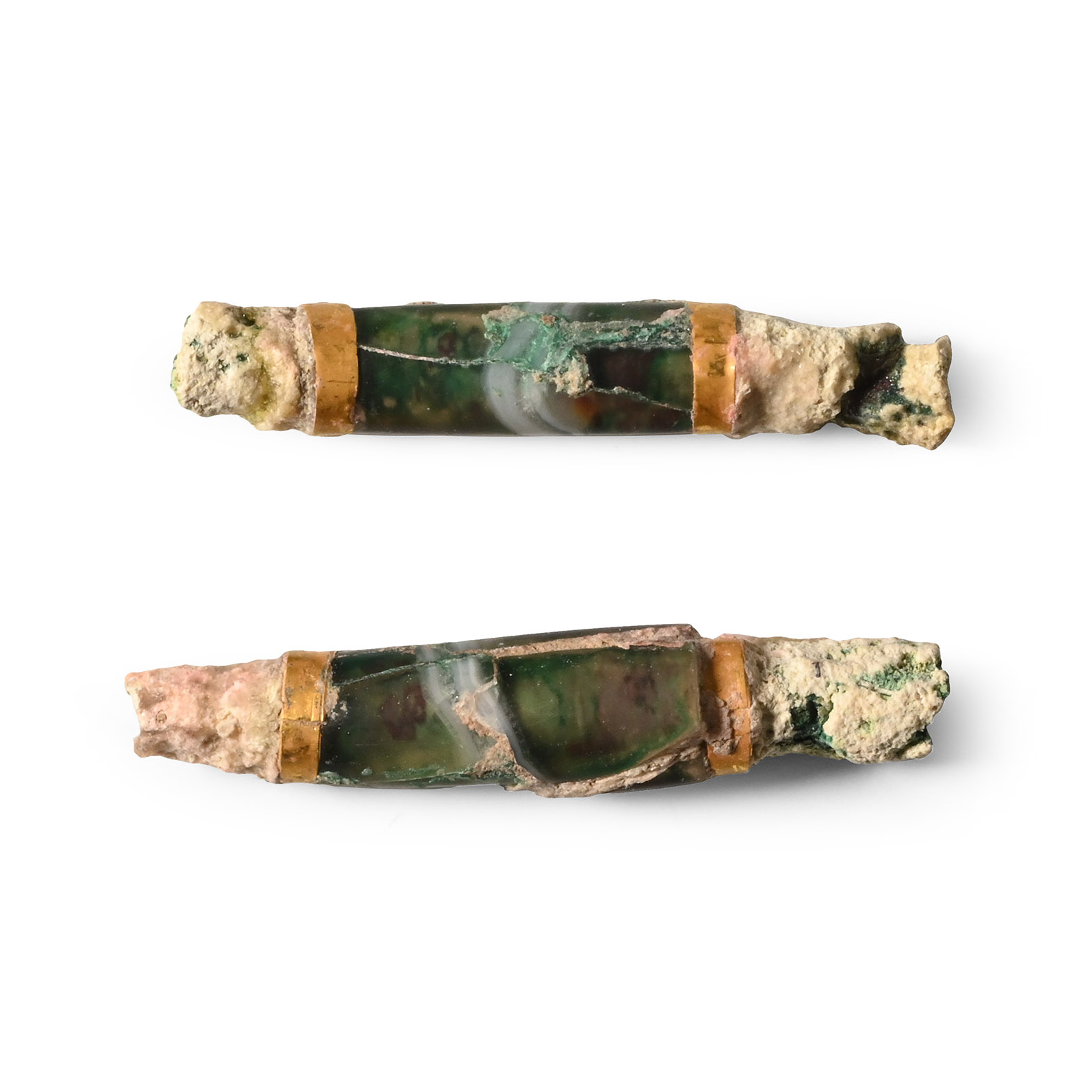
Phoenician Glass Beads with Gold Spacers
1ST MILLENNIUM B.C.
3 1/8 in. (7.05 grams, 79 mm).
Comprising two tubular banded green beads with gold collars, fused with other beads. [2, No Reserve]
ProvenanceCollected from 1970-1999.
From the collection of the late Mr S.M., London, UK.
TimeLine Auctions follows a vetting process to ensure the authenticity and legality of all items, reinforcing our commitment to integrity and responsible trading. Each antiquity, antique, and coin lot undergoes thorough examination by a vetting committee of at least ten external specialists, professional trade association members, scientists, and archaeologists: Our Vetting Process
AUCTIONS:
TimeLine is a leading auction house specialising in antiquities, ancient art, collectables, natural history, coins, medals, and books. Our auctions offer museums, collectors, historians, and enthusiasts the opportunity to acquire unique and historically significant pieces.
-
Islamic Manuscript, The Secret of Al-Azhar and the Red Sulfur by the al-Hakim Al-Khemai Dhul-Nun Uthman bin Suwavd Al-Akhmaimi
933 A.H.Estimate: £6,000 - 8,000 (+bp*)
Opening Bid: £3,000
Rebound as a hardback with leather binding to spine and fore-edge envelope flap, marbled boards, title page with triangular block of text in red and black, notes in a different hand below; text pages typically 11 lines of wide-spaced naskh script in black ink with red title and diacritics, six-pointed stars, marginal notation, red-framed numerical and other tables; damaged pages repaired and restored; dense blocks of script to both end pages. 553 grams, 15 x 20.3 cm
From an important family collection started in the late 1950s. Property of a West London, UK, gentleman. This lot has been checked against the Interpol Database of stolen works of art and is accompanied by a search certificate number no.12272-220411.
The text is 'The Secret of Al Azhar and the Red Sulphur' (known as 'The Light of Lights and the Secret of Secrets') by al-Hakim Al-Khemai Dhul-Nun Uthman bin Suwavd Al-Akhmaimi, written out by Yususf bin Yagoub Al Ashiuli in 933 A.H. (1526 A.D.). -
Luristan Bronze Phiale Mesomphalos
Early 1st millennium B.C.Sold for (Inc. bp): £65
Broad and shallow with slightly inturned rim, central repoussé dome. 173 grams, 13.5 cm
Acquired 1980-2015. Ex Abelita family collection. -
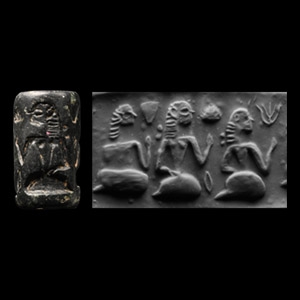
Sumerian Black Stone Cylinder Seal with Female Figures
3rd millennium B.C.Sold for (Inc. bp): £1,430
Frieze of kneeling female figures with braided hair, each supporting an item on a raised hand: a chalice, a loaf(?) and a flame; supplied with a museum-quality impression. 14 grams, 28 mm
Ex S. collection, London, UK, 1980s-2000s.
