
Loading, please wait...
LOT 0471
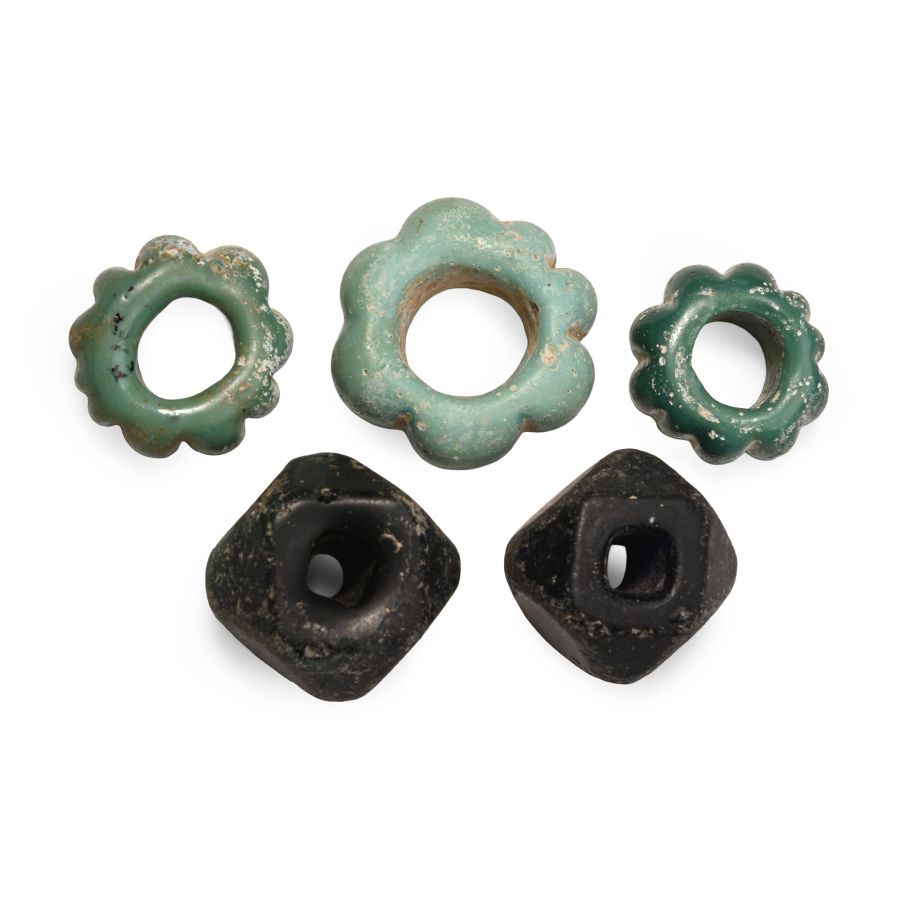
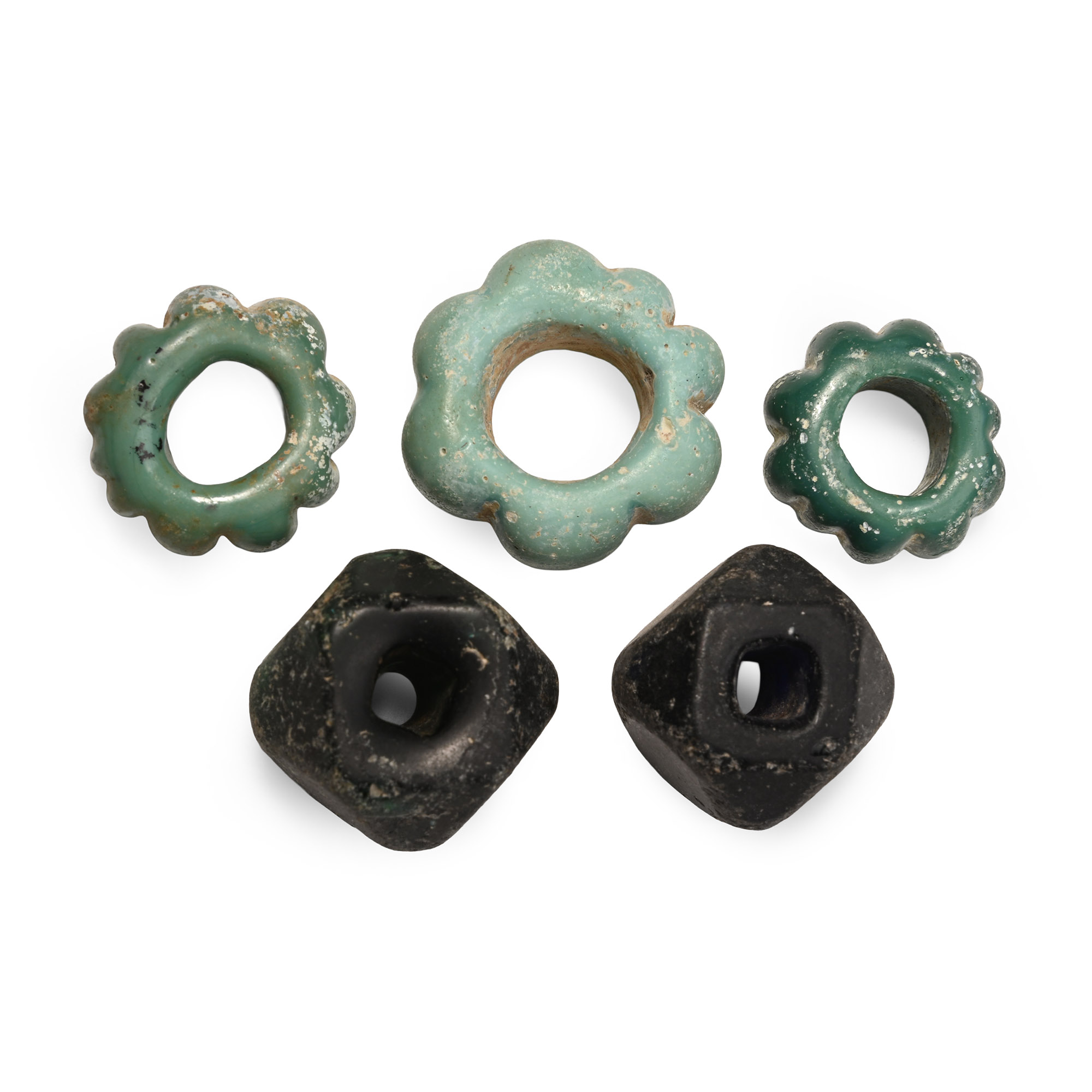
Phoenician Glass Bead Group
CIRCA 600-400 B.C.
3/4 - 1 in. (46 grams total, 18-25 mm).
Comprising: three ring-shaped with grooves and two irregular cube-shapes. [5, No Reserve]
ProvenancePrince collection, 1990s-2014.
Ex private collection 1970s-1990s.
TimeLine Auctions follows a vetting process to ensure the authenticity and legality of all items, reinforcing our commitment to integrity and responsible trading. Each antiquity, antique, and coin lot undergoes thorough examination by a vetting committee of at least ten external specialists, professional trade association members, scientists, and archaeologists: Our Vetting Process
AUCTIONS:
TimeLine is a leading auction house specialising in antiquities, ancient art, collectables, natural history, coins, medals, and books. Our auctions offer museums, collectors, historians, and enthusiasts the opportunity to acquire unique and historically significant pieces.
-
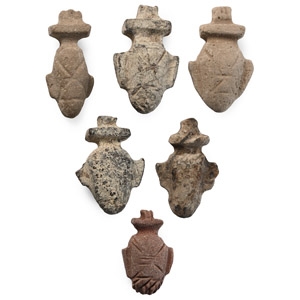
Egyptian Amulet Collection
Late Period, 664-332 B.C.Sold for (Inc. bp): £117
Mainly heart-type amulets in various materials. 14.85 grams total, 20-26 mm
with Archaeologia, Switzerland, before 1983. Ex private North American collection. London private collection, 2016. -
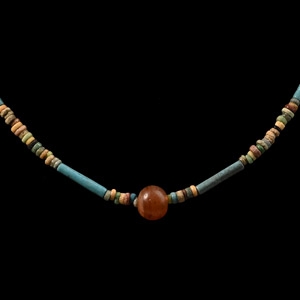
Egyptian Mummy Bead Necklace with Carnelian Feature Bead
Late Period, 664-332 B.C.Sold for (Inc. bp): £111
Restrung group of tubular and annular glazed composition beads with oblate centrepiece. 8.41 grams, 51 cm long
Previously with Astarte Gallery, London W1, UK, 1983. From the private collection of T.R. Elley, West Sussex, UK, 1980s. Accompanied by an invoice copy dated 18 October 1983. -
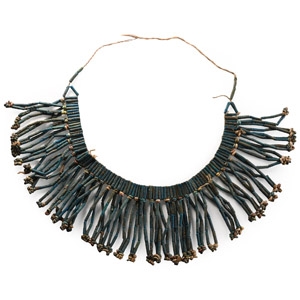
Egyptian Faience Bead Broad Collar Necklace
Late Period, 664-332 B.C.Sold for (Inc. bp): £468
Comprising: band of vertically strung faience tubular beads with integral tie at each end; below, a fringe of vertically strung groups of eight similar beads on a loop of thread with annular beads at the junction with the band and more similar at the outer end of the fringe; ancient cord. 50 grams, 33.5 cm
Ex William Ohly, 1883-1955. Ex Abbey Museum, Barnet, by descent.
