
Loading, please wait...
LOT 0492
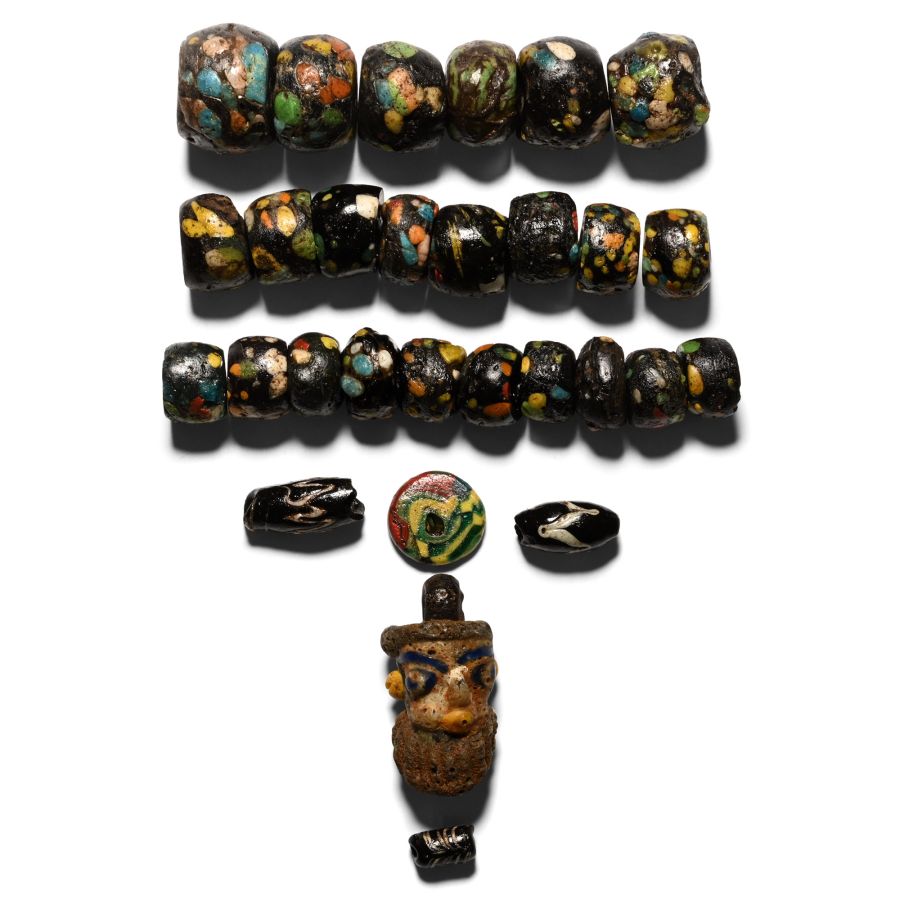
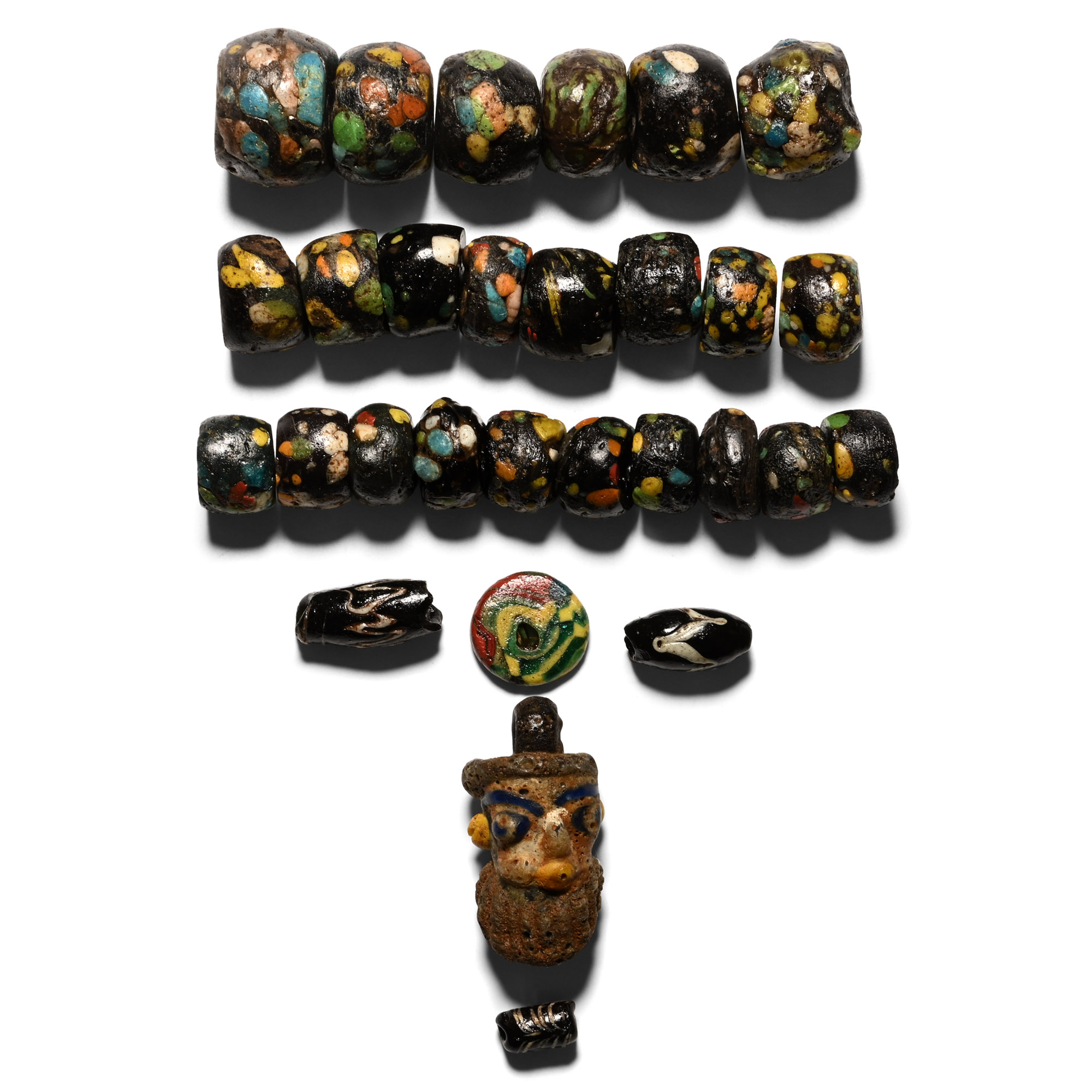
Phoenician Glass Bead Collection
6TH-3RD CENTURY B.C. OR LATER
1/2 - 1 5/8 in. (179 grams total, 12-42 mm).
Comprising a group of crumb-decorated polychrome oblate beads and a centrepiece pendant formed as a stylised bearded head. [29]
ProvenanceFrom the collection of a gentleman, acquired on the London art market in the 1990s.
This lot is accompanied by an illustrated lot declaration signed by the Head of the Antiquities Department, Dr Raffaele D'Amato.
Cf. Lightfoot, C. S., The Cesnola Collection of Cypriot Art: Ancient Glass, New York, 2017, pp. 310-328, for discussion and examples of Phoenician glass beads.
FootnotesThe Phoenicians, renowned seafarers and traders, were also skilled glassworkers. They produced a wide variety of glass beads using core-forming and winding techniques, with vivid colours and elaborate designs that reflect both technical mastery and cross-cultural influence. Among the most iconic Phoenician beads are glass 'head' beads, crafted in the form of stylised human or mythological faces. Typically, they feature exaggerated facial details like bulging eyes, large noses, beards, and headdresses, often with expressive or comic features.
They were possibly worn as amulets to ward off evil or attract protection, though they may also represent deities, ancestors, or foreigners.
These beads often incorporate Egyptian, Greek, and Near Eastern stylistic elements, reflecting the Phoenicians’ extensive trade networks.
TimeLine Auctions follows a vetting process to ensure the authenticity and legality of all items, reinforcing our commitment to integrity and responsible trading. Each antiquity, antique, and coin lot undergoes thorough examination by a vetting committee of at least ten external specialists, professional trade association members, scientists, and archaeologists: Our Vetting Process
AUCTIONS:
TimeLine is a leading auction house specialising in antiquities, ancient art, collectables, natural history, coins, medals, and books. Our auctions offer museums, collectors, historians, and enthusiasts the opportunity to acquire unique and historically significant pieces.
LOT 0492
Phoenician Glass Bead Collection
Estimate £1,200 - 1,700€1,390 - 1,970 (for guidance only)$1,620 - 2,300 (for guidance only)
-
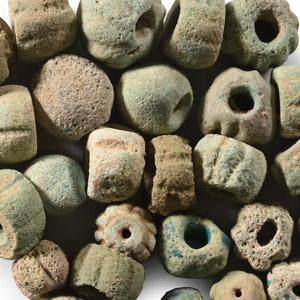
Romano-Egyptian Faience Melon Bead Collection
2nd-1st century B.C.Sold for (Inc. bp): £33
Comprising thirty green and blue beads in various sizes. 42 grams total, 8-18 mm
Ex H. Norry collection, Milton Keynes, UK, 1980s-1990s. This lot is accompanied by an illustrated lot declaration signed by the Head of the Antiquities Department, Dr Raffaele D'Amato. -
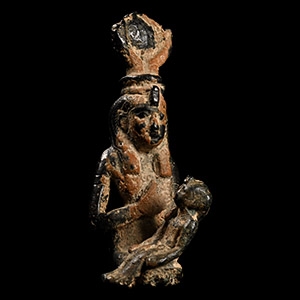
Egyptian Bronze Figure of Isis and Horus
Late Period, 664-332 B.C.Estimate: £1,000 - 1,400 (‡+bp*)
Opening Bid: £450
Isis enthroned wearing a cow's horn headdress with a solar disc fronted by uraeus, suckling the infant Horus on her lap; Horus with a side-lock of youth. 73.4 grams, 68 mm
Acquired in the mid 1980s-1990s. Private collection, Switzerland, thence by descent. Private collection, since the late 1990s. This lot is accompanied by an illustrated lot declaration signed by the Head of the Antiquities Department, Dr Raffaele D'Amato.
In ancient Egyptian mythology, Isis was the sister-wife of Osiris and the mother of the sky god Horus. She is associated with aspects of fertility and motherhood and is often depicted in various artworks seated in a nursing pose with her son Horus on her lap, as here. -
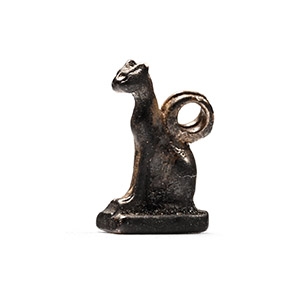
Egyptian Silver Bastet as Seated Cat Amulet
Late-Ptolemaic Period, 664-30 B.C.Sold for (Inc. bp): £715
Seated figure of a cat with pointed ears mounted on a rectangular base with a rounded end; suspension loop on the back. 0.34 grams, 8 mm
From an early 20th century collection. This lot is accompanied by an illustrated lot declaration signed by the Head of the Antiquities Department, Dr Raffaele D'Amato.
The cat was sacred to Bastet, a protective mother goddess and the daughter of the sun god Re. Amulets offered the wearer the goddess's protection. Her name means ‘she of the bast [ointment jar],’ which may have contained a substance favoured by or exclusive to royalty. Originally, Bastet was depicted as a woman with the head of a lioness, but by the late New Kingdom, she was usually shown with a cat's head. She is sometimes portrayed with kittens, emphasising her maternal role as a fierce protector of offspring.
