
Loading, please wait...
LOT 0443
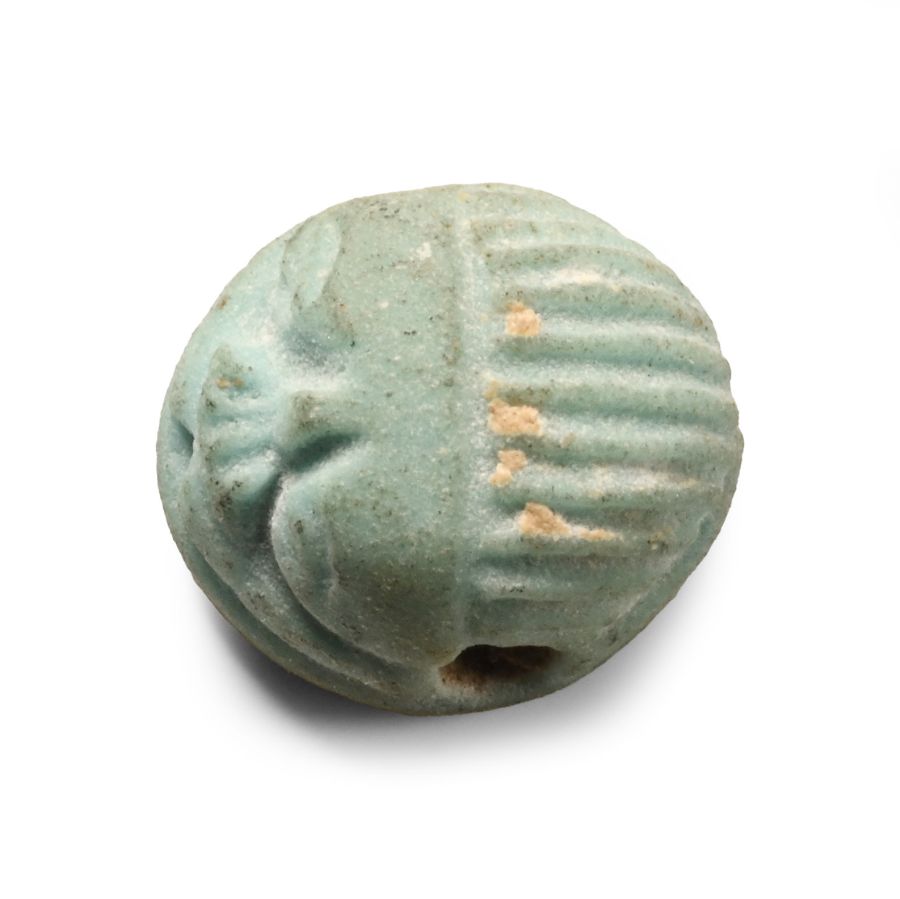
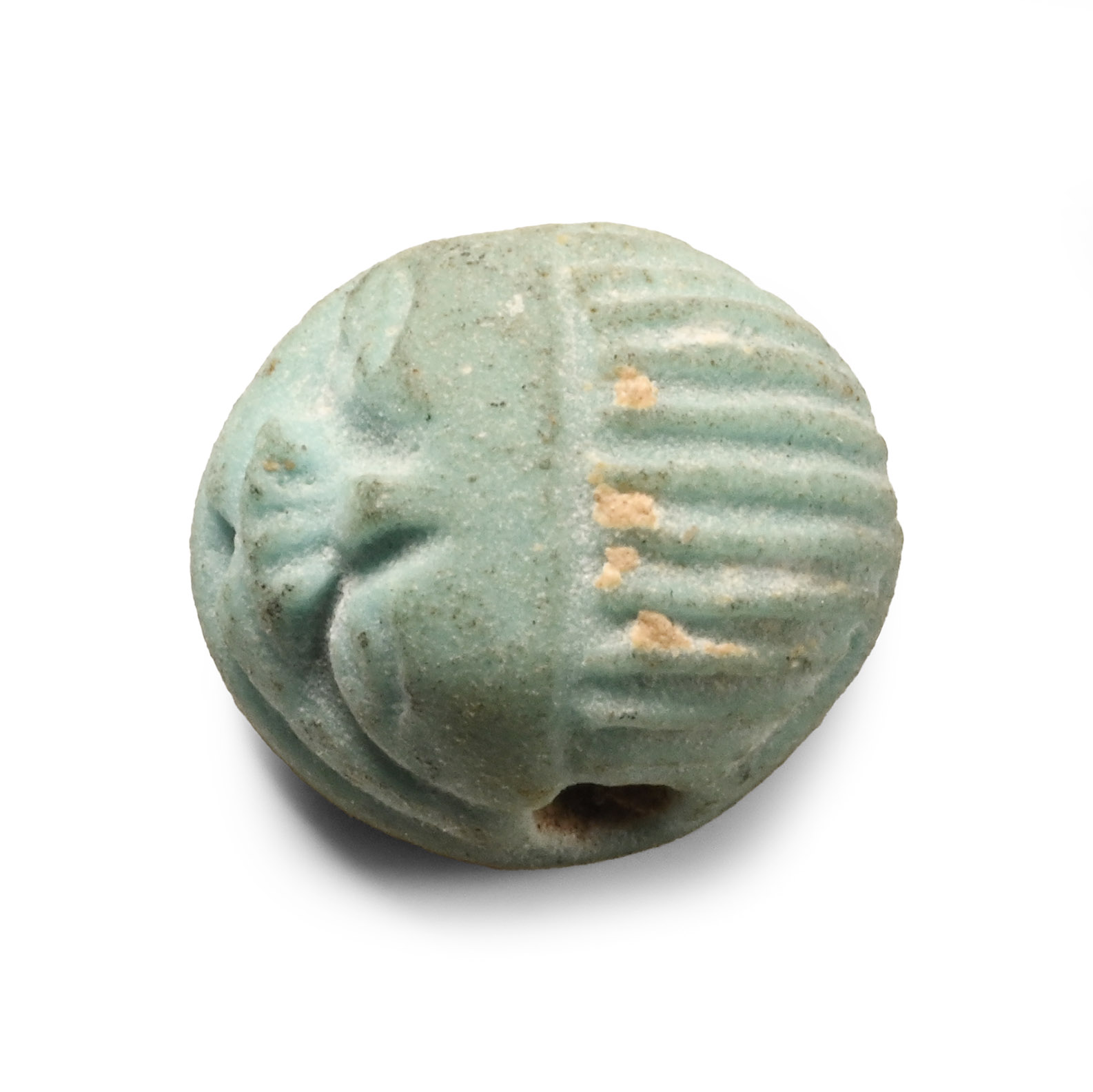
Phoenician Faience Scarab with Face
6TH-4TH CENTURY B.C.
3/8 in. (0.55 grams, 10 mm).
Discoid scarab with plain reverse, stylised human face. [No Reserve]
ProvenanceFrom the Fadel family collection, London, UK, 1970s.
LiteratureCf. Petrie, W.M.F., Button and Design Scarabs, London, 1925, pl. IX, nos. 302-304, for similar examples.
CONDITIONTimeLine Auctions follows a vetting process to ensure the authenticity and legality of all items, reinforcing our commitment to integrity and responsible trading. Each antiquity, antique, and coin lot undergoes thorough examination by a vetting committee of at least ten external specialists, professional trade association members, scientists, and archaeologists: Our Vetting Process
AUCTIONS:
TimeLine is a leading auction house specialising in antiquities, ancient art, collectables, natural history, coins, medals, and books. Our auctions offer museums, collectors, historians, and enthusiasts the opportunity to acquire unique and historically significant pieces.
-
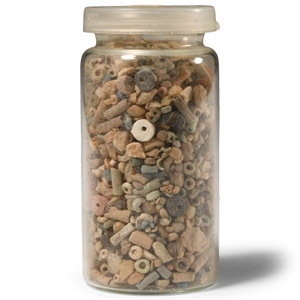
Egyptian Faience Bead Collection
New Kingdom-Late Period, circa 1550-332 B.C.Sold for (Inc. bp): £52
Mainly tubular, annular and oblate types in various colours. 61 grams total, 64 mm
Acquired from Ancient & Oriental, circa 1987. Ian Wilkinson collection, Nottinghamshire, UK, formed since 1985.
The faience of the New Kingdom period is frequently decorated with an expanded palette of red, black, and yellow. This polychrome decoration was often accomplished by inlaying one colour of paste onto another. -
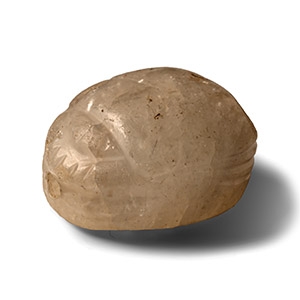
Egyptian Rock Crystal Scarab
Late Period, 664-332 B.C.Estimate: £200 - 300 (+bp*)
Opening Bid: £111
With segmented carapace, plain underside. 4.45 grams, 18 mm
From the property of the late Mr SM, London, UK, 1969-1999. -
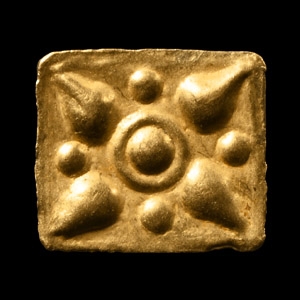
Egyptian Gold Setting with Glass Inlay
Late Period, 664-332 B.C.Sold for (Inc. bp): £169
Square sheet gold cell with repoussé quatrefoil to the underside, inset glass panel in red glass and pale turquoise faience. 1.18 grams, 10 mm
From a late Japanese specialist collector, 1970-2000s.
