
Loading, please wait...
LOT 0549
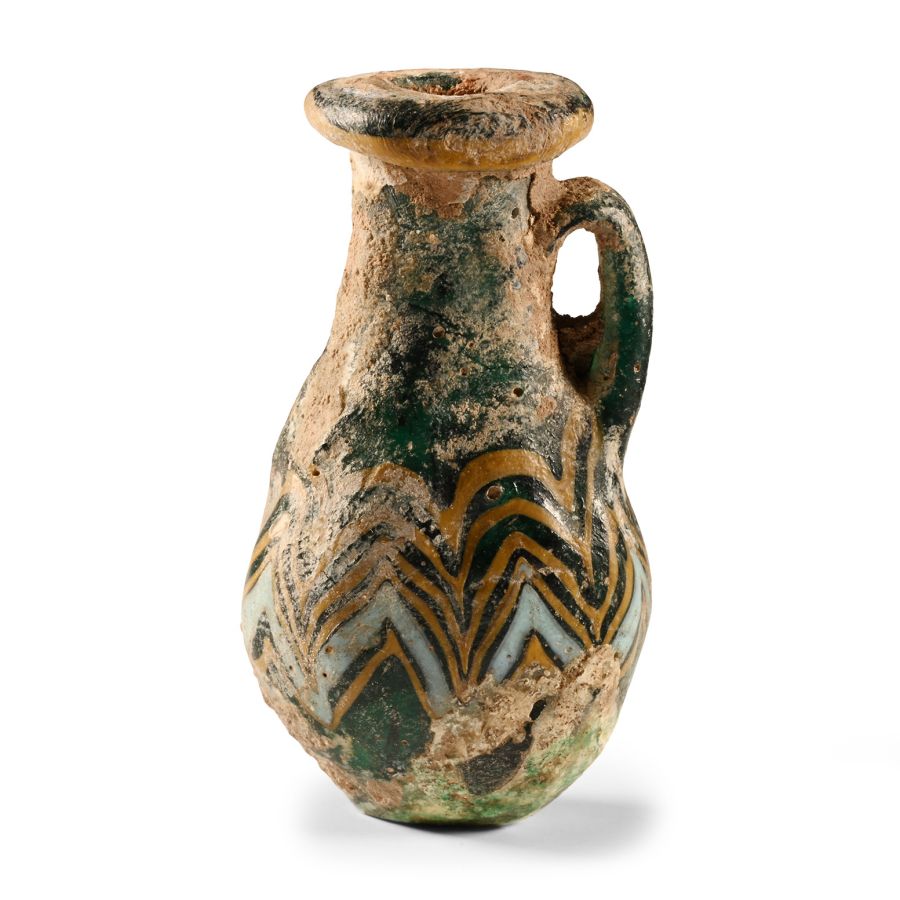
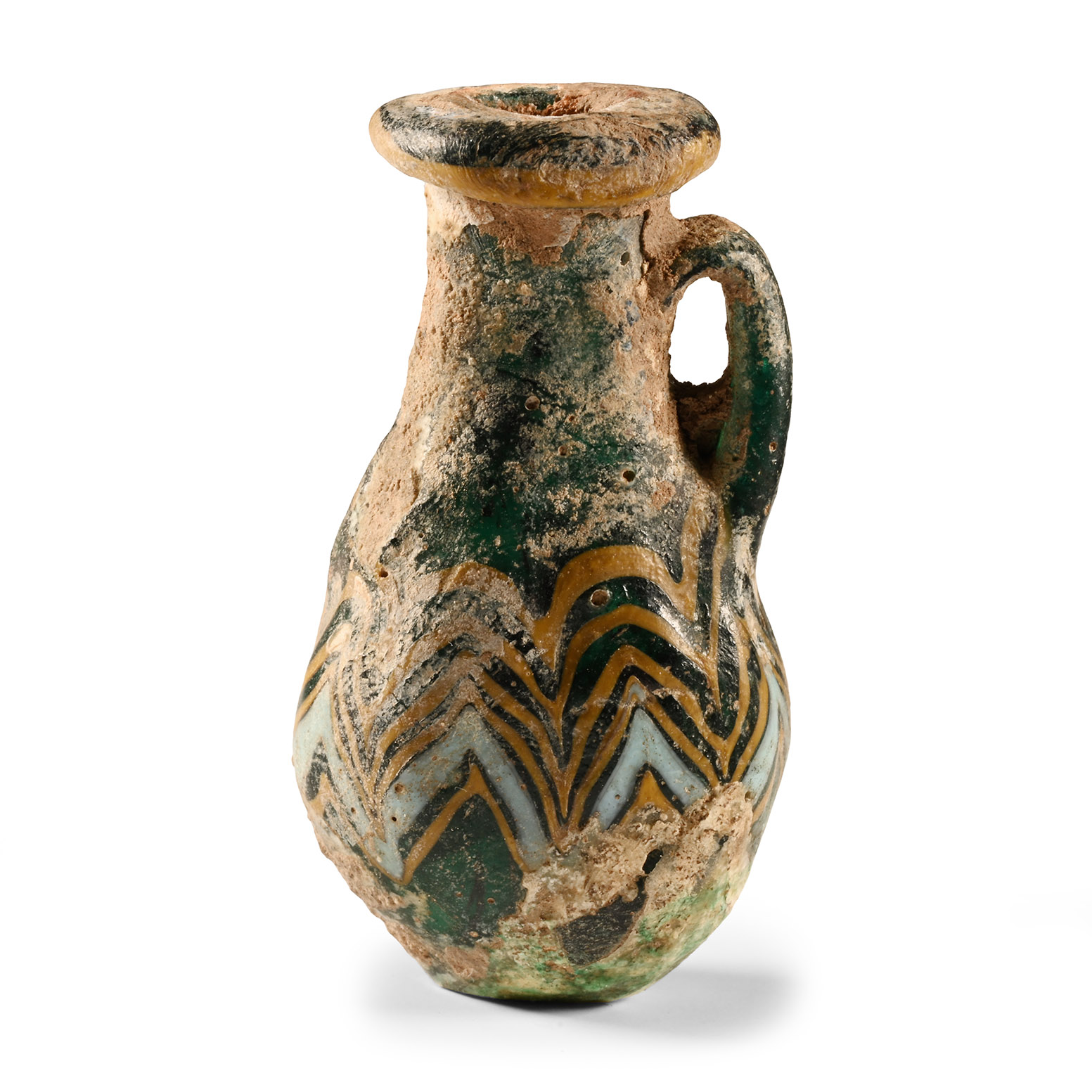
Phoenician Core-Formed Glass Juglet
6TH-4TH CENTURY B.C.
1 3/4 in. (12 grams, 44 mm).
With dragged trails to the body and applied annular rim.
ProvenanceCollected from 1969-1999.
From the collection of the late Mr S.M., London, UK.
TimeLine Auctions follows a vetting process to ensure the authenticity and legality of all items, reinforcing our commitment to integrity and responsible trading. Each antiquity, antique, and coin lot undergoes thorough examination by a vetting committee of at least ten external specialists, professional trade association members, scientists, and archaeologists: Our Vetting Process
AUCTIONS:
TimeLine is a leading auction house specialising in antiquities, ancient art, collectables, natural history, coins, medals, and books. Our auctions offer museums, collectors, historians, and enthusiasts the opportunity to acquire unique and historically significant pieces.
-
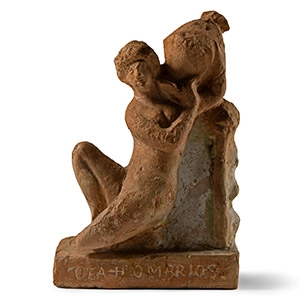
Hellenistic Terracotta Water-Carrier Figure
2nd-1st century B.C.Sold for (Inc. bp): £260
Hollow-formed on a rectangular base, nude female supporting an amphora; with possibly later enigmatic inscription to base 'ΘEA HOMBRIOS'. 478 grams, 16.1 cm
From a collection acquired on the UK art market from various auction houses and collections mostly before 2000. From an important Cambridgeshire estate; thence by descent. -
.jpg)
Greek Apulian High-Glazed Fluted Cup
4th century B.C.Estimate: £2,000 - 3,000 (‡+bp*)
Opening Bid: £1,000
Raised fluting decorating the body, broad c-section neck and everted rim, segmented openwork handle. 174 grams, 90 mm high
Acquired in the 1960s-1970s. Ex European private collection. This lot has been checked against the Interpol Database of stolen works of art and is accompanied by search certificate number no.11856-206542. -
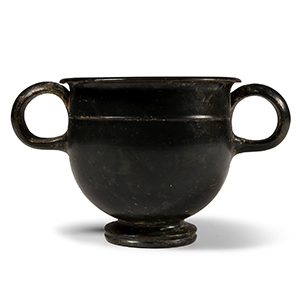
Greek High-Glazed Cup with Handles
5th-3rd century B.C.Estimate: £800 - 1,000 (‡+bp*)
Opening Bid: £400
The body with an inverted bell shape, foot with channeled sidewall, two loop handles with carinated upper faces; repaired. 96 grams, 12.8 cm wide
Acquired in Europe before 2001. European collection.
