
Loading, please wait...
LOT 0044
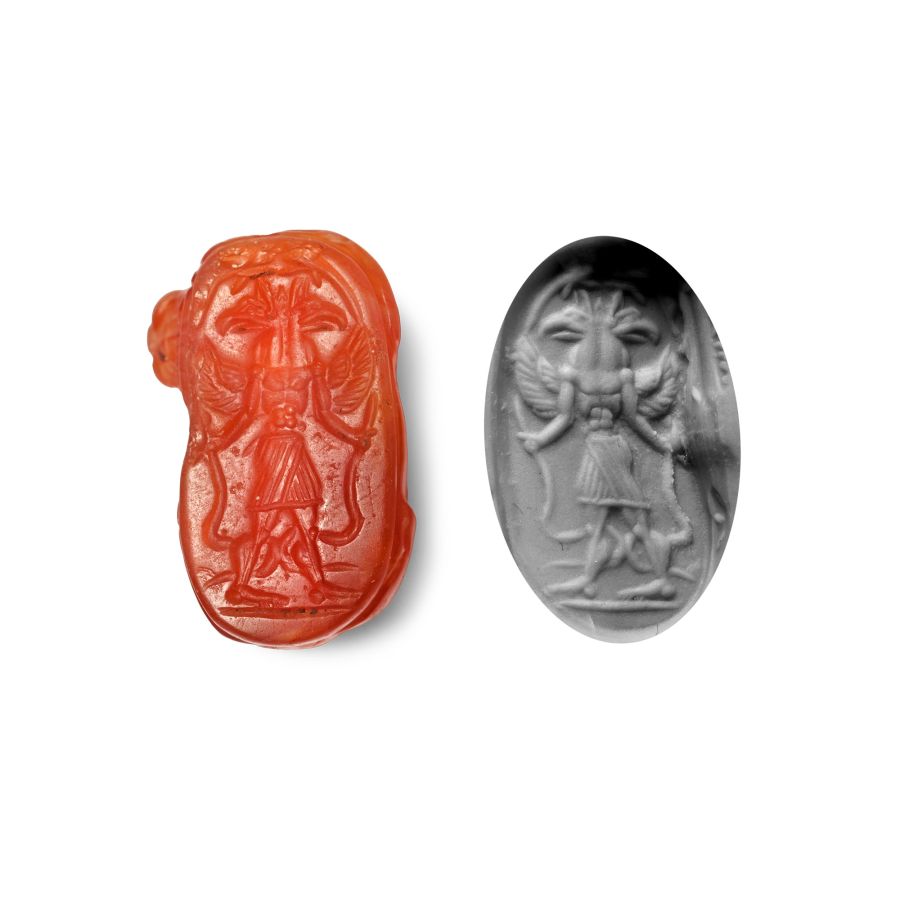
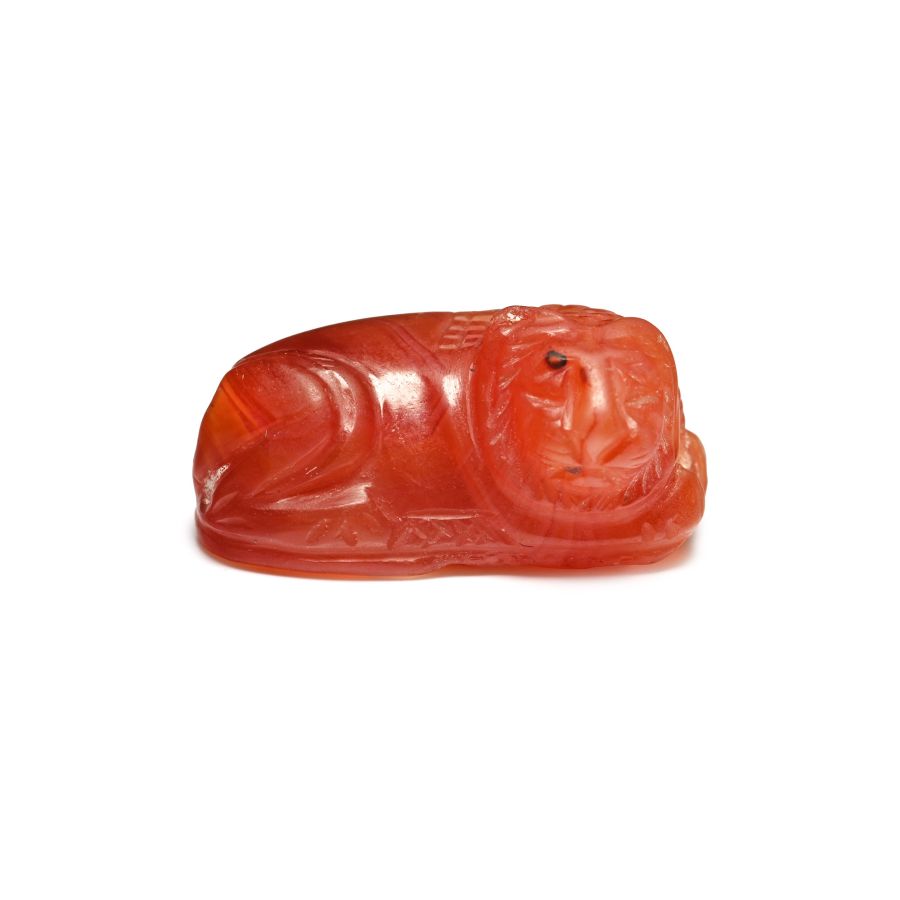
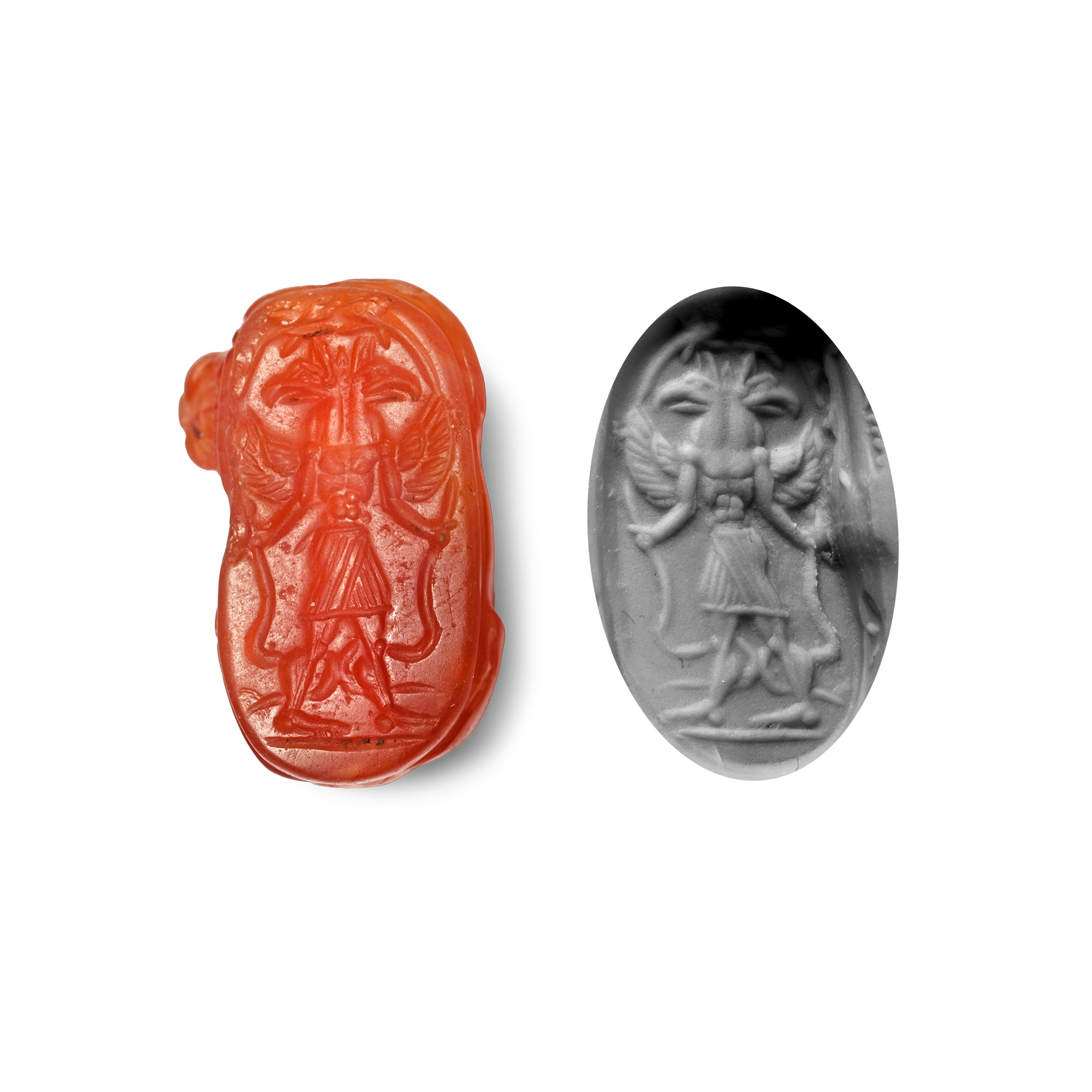
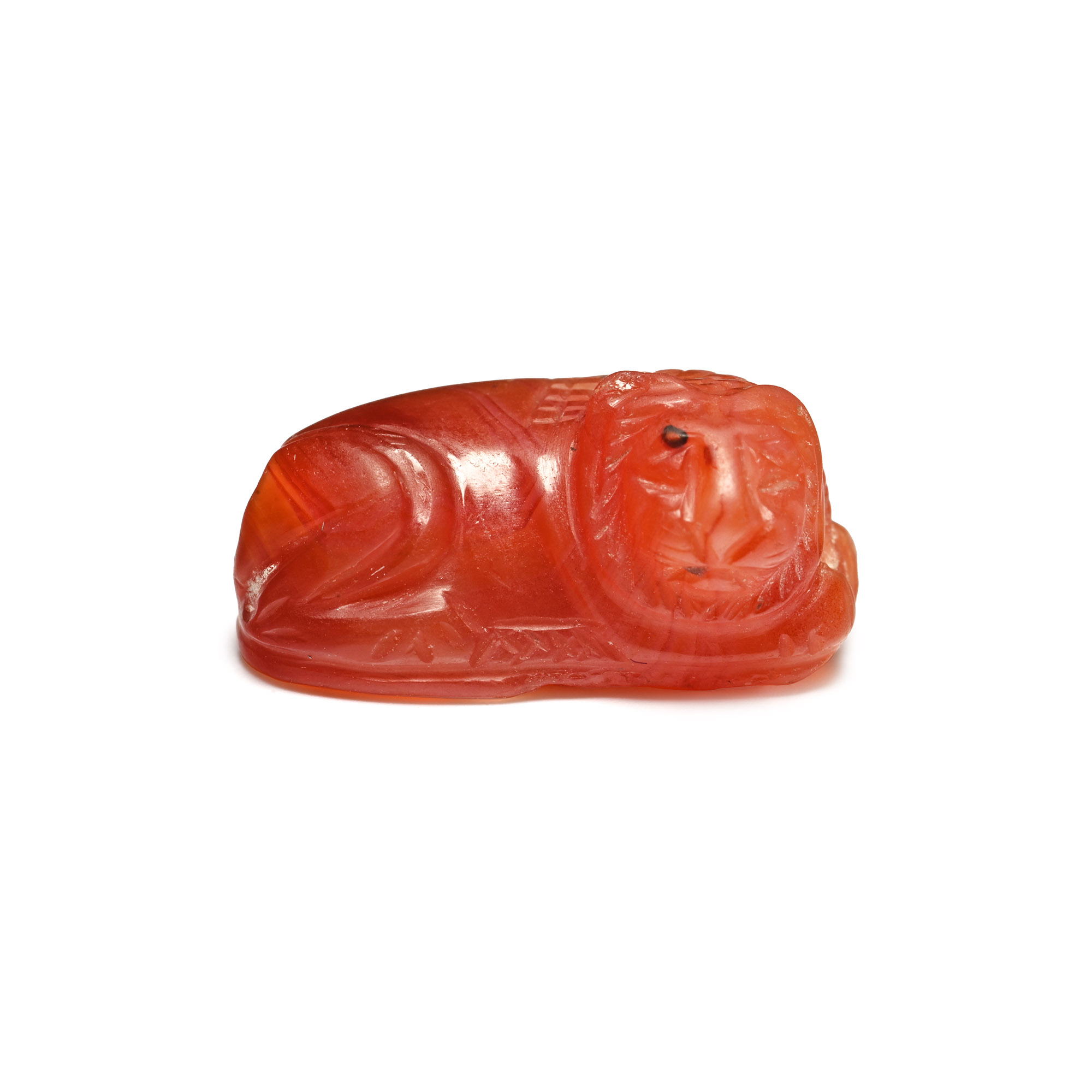
Phoenician Carnelian Scaraboid with Lion
6TH-4TH CENTURY B.C.
3/4 in. (2.55 grams, 18.65 mm).
Carved in the half-round as a recumbent lion with head turned, underside with incuse image of a gryphon-headed man holding snakes in his hands.
ProvenanceFrom the collection of a deceased London gentleman, UK, 1970-1990s.
This lot has been checked against the Interpol Database of stolen works of art and is accompanied by a search certificate number no.12636-234419.
This lot has been cleared against the Art Loss Register database, and is accompanied by an illustrated lot declaration signed by the Head of the Antiquities Department, Dr Raffaele D'Amato.
TimeLine Auctions follows a vetting process to ensure the authenticity and legality of all items, reinforcing our commitment to integrity and responsible trading. Each antiquity, antique, and coin lot undergoes thorough examination by a vetting committee of at least ten external specialists, professional trade association members, scientists, and archaeologists: Our Vetting Process
AUCTIONS:
TimeLine is a leading auction house specialising in antiquities, ancient art, collectables, natural history, coins, medals, and books. Our auctions offer museums, collectors, historians, and enthusiasts the opportunity to acquire unique and historically significant pieces.
-
Egyptian Mixed Scarab Collection
2nd-1st millennium B.C.Sold for (Inc. bp): £585
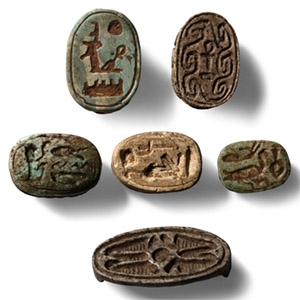
Comprising (from left to right, top to bottom): 1) a scarab with an oval border containing the throne name of the 19th Dynasty pharaoh, Seti I (Men-Maat-Re); 2) a scarab with an oval outer border containing a continuous oblong scroll border framing a neb and ankh symbol; 3) a scarab with an oval border containing a seated adorant before a sa, water, and neb symbol; 4) a scarab with an oval border containing the throne name of the 19th Dynasty pharaoh, Ramesses II (User-Maat-Re), atop a neb sign; 5) a scarab with two signs, possibly representing the word for ‘bread’ above a goose, with a beer jar in front; 6) and a scaraboid with a stretched oval border containing mirrored pairs of rearing cobras surrounding a central sun disc. 18.64 grams total, 14-27 mm
From the collection of a gentleman, acquired on the London art market in the 1990s. This lot is accompanied by an illustrated lot declaration signed by the Head of the Antiquities Department, Dr Raffaele D'Amato. -
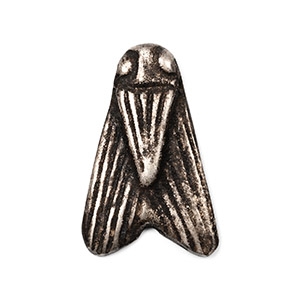
Egyptian Silver Fly Amulet
Late-Ptolemaic Period, 664-30 B.C.Sold for (Inc. bp): £143
With linear detailing to wings, raised eyes, pierced for suspension. 1.3 grams, 19 mm
From an early 20th century collection. This lot is accompanied by an illustrated lot declaration signed by the Head of the Antiquities Department, Dr Raffaele D'Amato. -
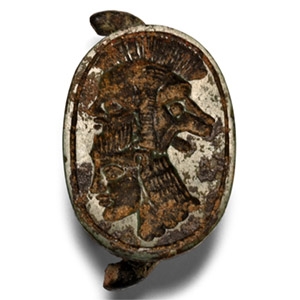
Phoenician Green Stone Scarab with Three-Headed Gryllos
6th-4th century B.C.Sold for (Inc. bp): £2,730
With carapace detailing to the convex face; underside with gryllos of a bearded male, a slender female and a boar. 6.94 grams, 28 mm
Ex collection of the late Mr S. M., London, UK, 1970-1990s. This lot has been checked against the Interpol Database of stolen works of art and is accompanied by a search certificate number no.12635-234910. This lot has been cleared against the Art Loss Register database, and is accompanied by an illustrated lot declaration signed by the Head of the Antiquities Department, Dr Raffaele D'Amato.
Grylli motifs usually combine various human and animal heads, sometimes including animal legs.
