
Loading, please wait...
LOT 0477
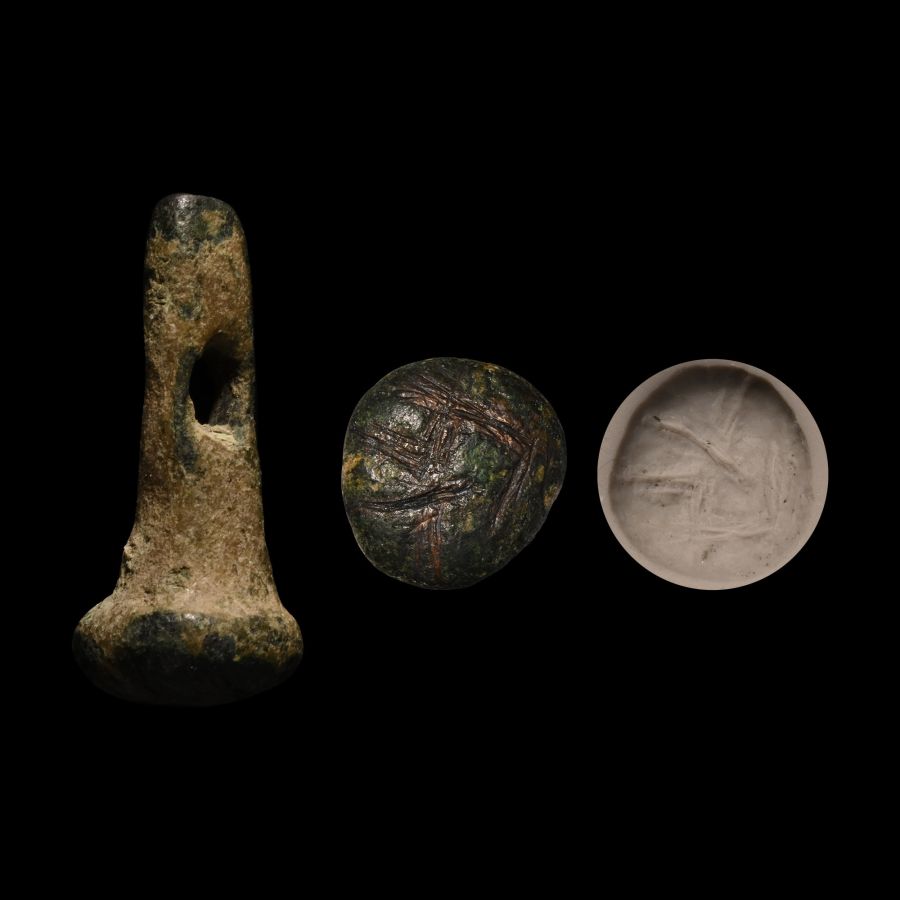
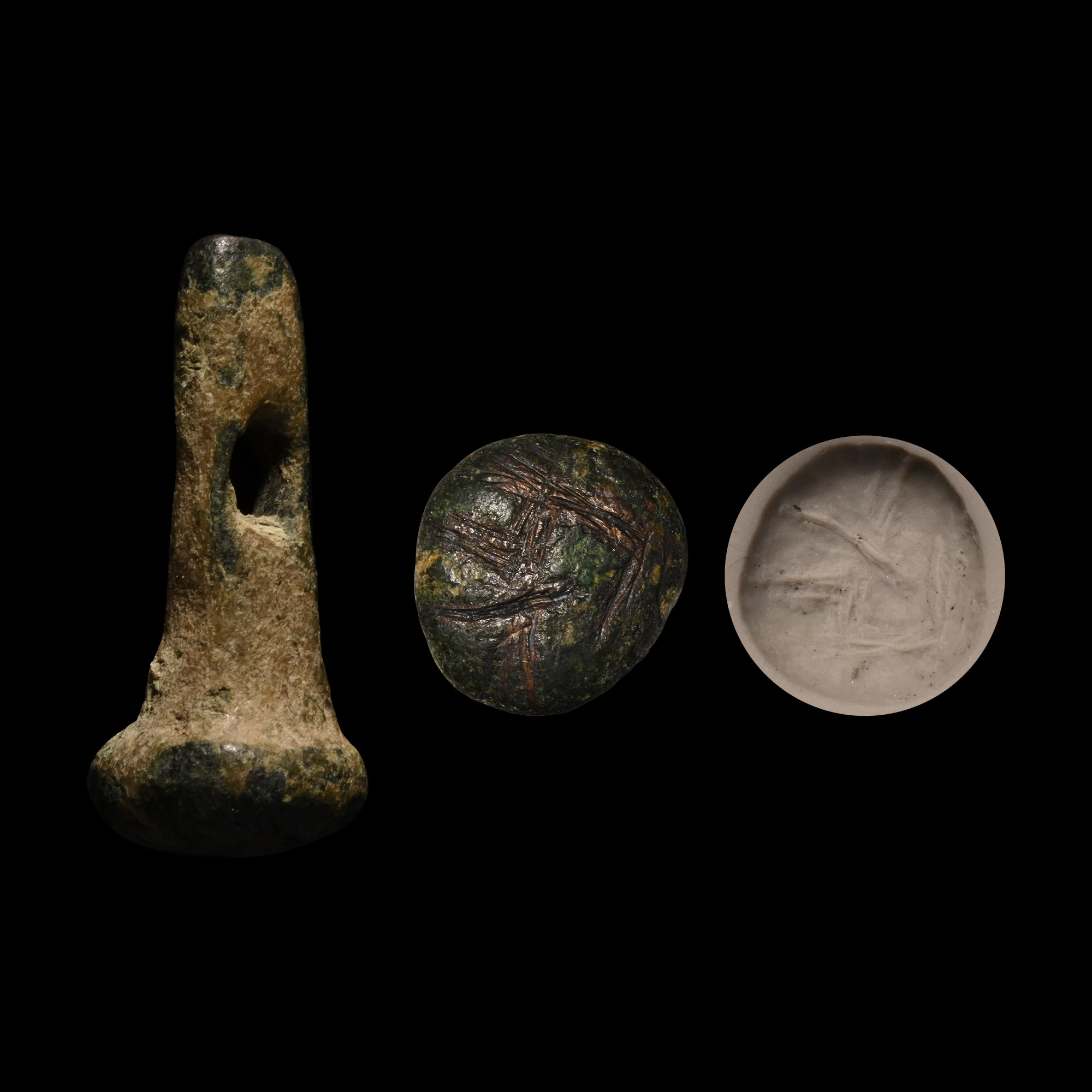
Phoenician Bronze Stamp Seal
LATE 1ST MILLENNIUM B.C.
1 in. (5.53 grams, 24.5 mm).
With domed head and pierced rectangular shank, hatched detailing. [No Reserve]
ProvenanceEx London, UK, gentleman, 1990.
This lot is accompanied by an illustrated lot declaration signed by the Head of the Antiquities Department, Dr Raffaele D'Amato.
TimeLine Auctions follows a vetting process to ensure the authenticity and legality of all items, reinforcing our commitment to integrity and responsible trading. Each antiquity, antique, and coin lot undergoes thorough examination by a vetting committee of at least ten external specialists, professional trade association members, scientists, and archaeologists: Our Vetting Process
AUCTIONS:
TimeLine is a leading auction house specialising in antiquities, ancient art, collectables, natural history, coins, medals, and books. Our auctions offer museums, collectors, historians, and enthusiasts the opportunity to acquire unique and historically significant pieces.
-
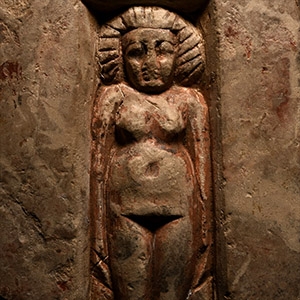
Egyptian Plaque with Fertility Figure
Late-Ptolemaic Period, 664-31 B.C.Sold for (Inc. bp): £910
Carved rectangular plaque with central recess, carved image of a nude female modelled in the half-round with a deeply striated bag wig, arms by her side; traces of red and black pigment on the body; mounted on a custom-made stand. 502 grams total, 17.1 cm including stand
From a central London collection, formed 1980-2000. From the private collection of Mr David Barker, London, UK; thence by descent. This lot is accompanied by an illustrated lot declaration signed by the Head of the Antiquities Department, Dr Raffaele D'Amato.
The rectangular limestone plaque almost certainly represents a shrine. Such plaques first appeared in Lower Egypt and became widespread in the Late Period and Ptolemaic era. They may have developed from earlier female figurines depicted on beds and are usually associated with the female goddesses Isis and Hathor, both powerful protectors of women and childbirth and associated with fertility. -
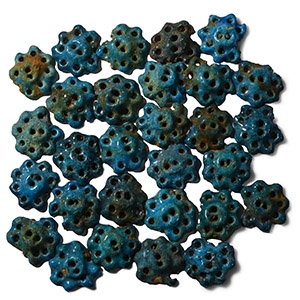
Egyptian Blue Faience Clothing Mounts
Roman Period, 30 B.C.-323 A.D.Sold for (Inc. bp): £247
Group of rosette mounts, each plano-convex in profile with two attachment holes to the centre and pierced loops to the rim. 124 grams total, 25-30 mm
UK private collection, formed in the 1980s. This lot is accompanied by an illustrated lot declaration signed by the Head of the Antiquities Department, Dr Raffaele D’Amato. This lot is accompanied by an illustrated lot declaration signed by the Head of the Antiquities Department, Dr Raffaele D'Amato. -
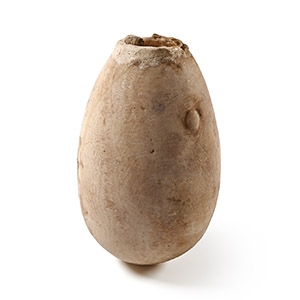
Egyptian Alabaster Alabastron
7th-6th century B.C.Sold for (Inc. bp): £156
With an ovoid body and two small lug handles to the upper body. 121 grams, 72 mm
Acquired in the mid 1980s-1990s. Private collection, Switzerland, thence by descent. Private collection, since the late 1990s. This lot is accompanied by an illustrated lot declaration signed by the Head of the Antiquities Department, Dr Raffaele D'Amato.
The name by which we know the vessel in question comes directly from its name in Greek— alábastron —which itself was derived from Egyptian, although It is difficult to say whether the name in Egyptian first applied to the type of vessel or to the stone used to make it. Pliny (NH 36.12, 37.54) includes an alabastrites or alabastritis from Alabastrum near Thebes in Egypt among his description of stones, and Theophrastus (On Stones, 1.6) an alabastrítes, also from near Thebes. Ptolemy (Geography, 4.5) even mentions an alabastrites mons, a mountain of alabaster, in the same vicinity. The prototype of the alabastron shape with two lug handles first appeared in Egypt at the end of the Middle Kingdom and continued in use with slight variations through New Kingdom times. After an apparent hiatus in the use of the shape at the end of the Late Bronze Age, it appeared again in the second half of the eighth century in a form more similar to our specimen and became common by the 26th Dynasty.
