
Loading, please wait...
LOT 0223
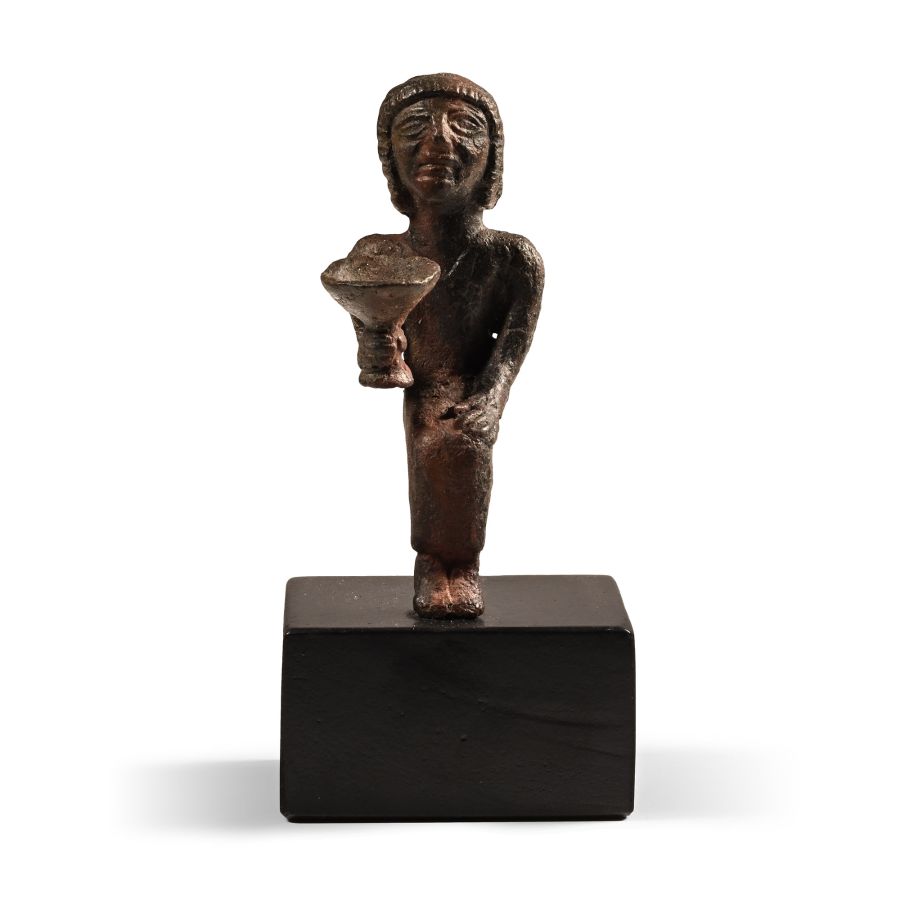
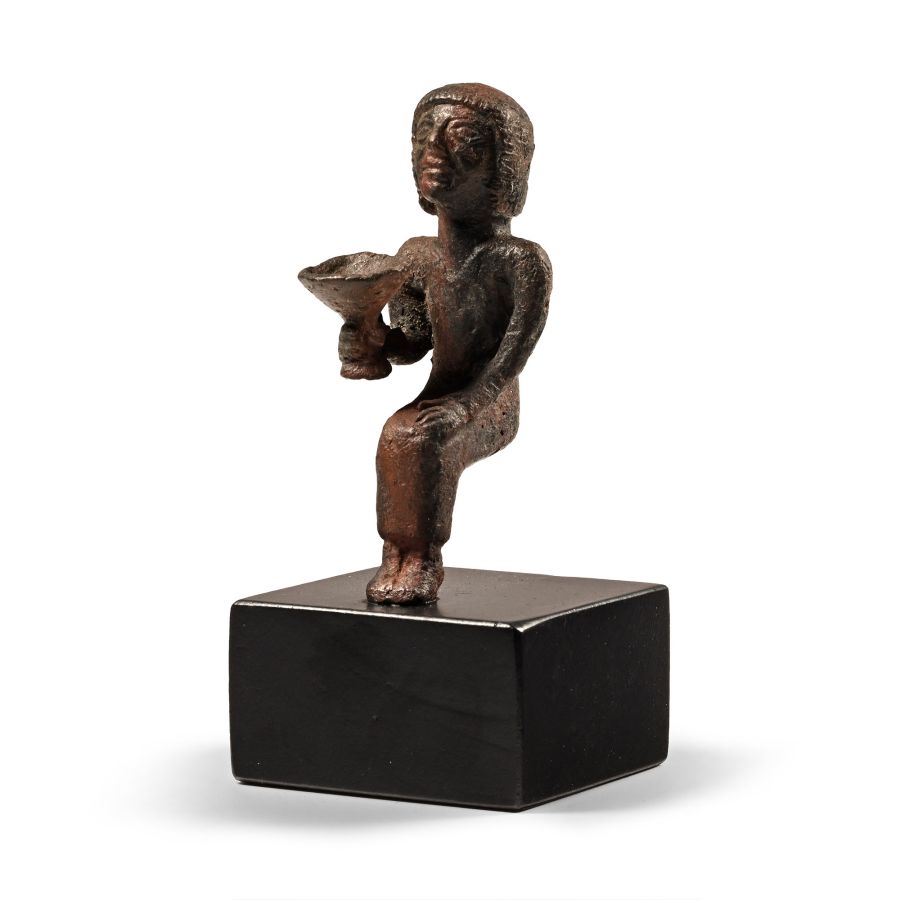
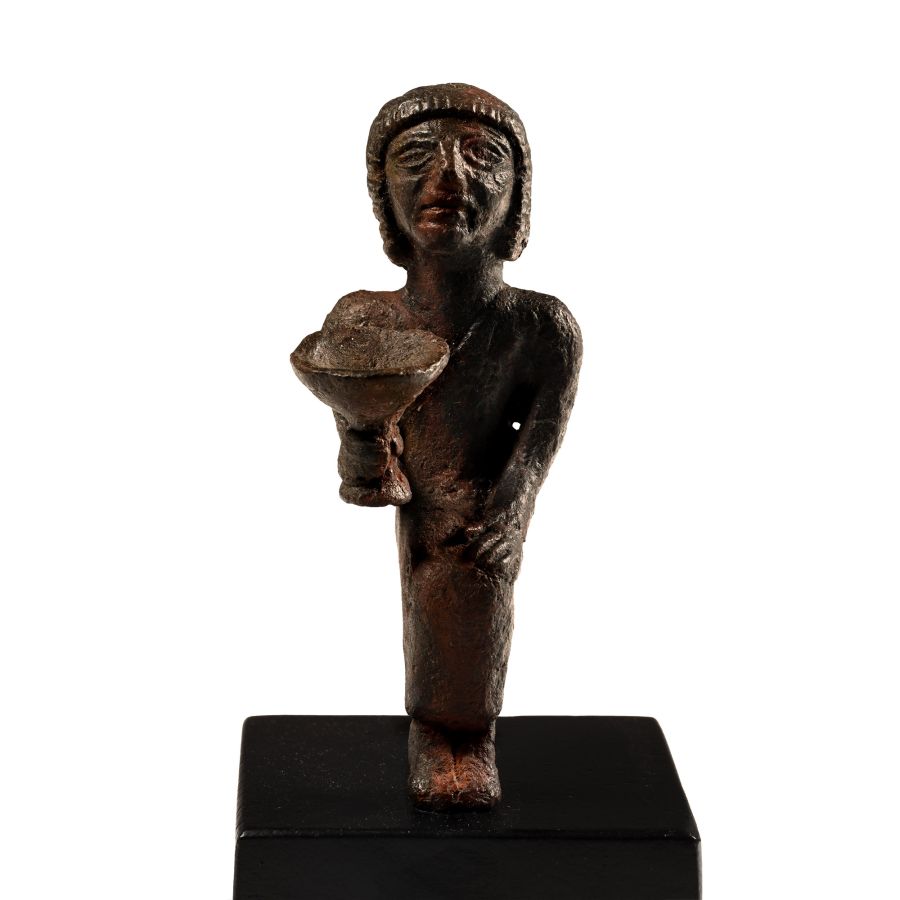
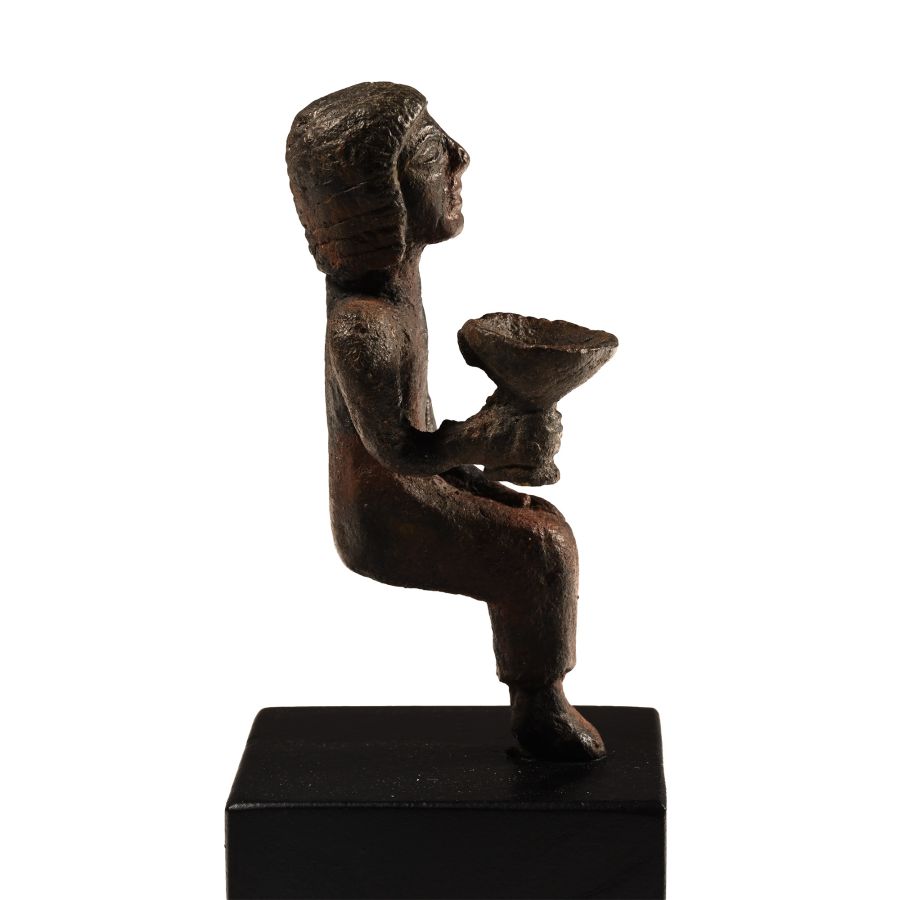
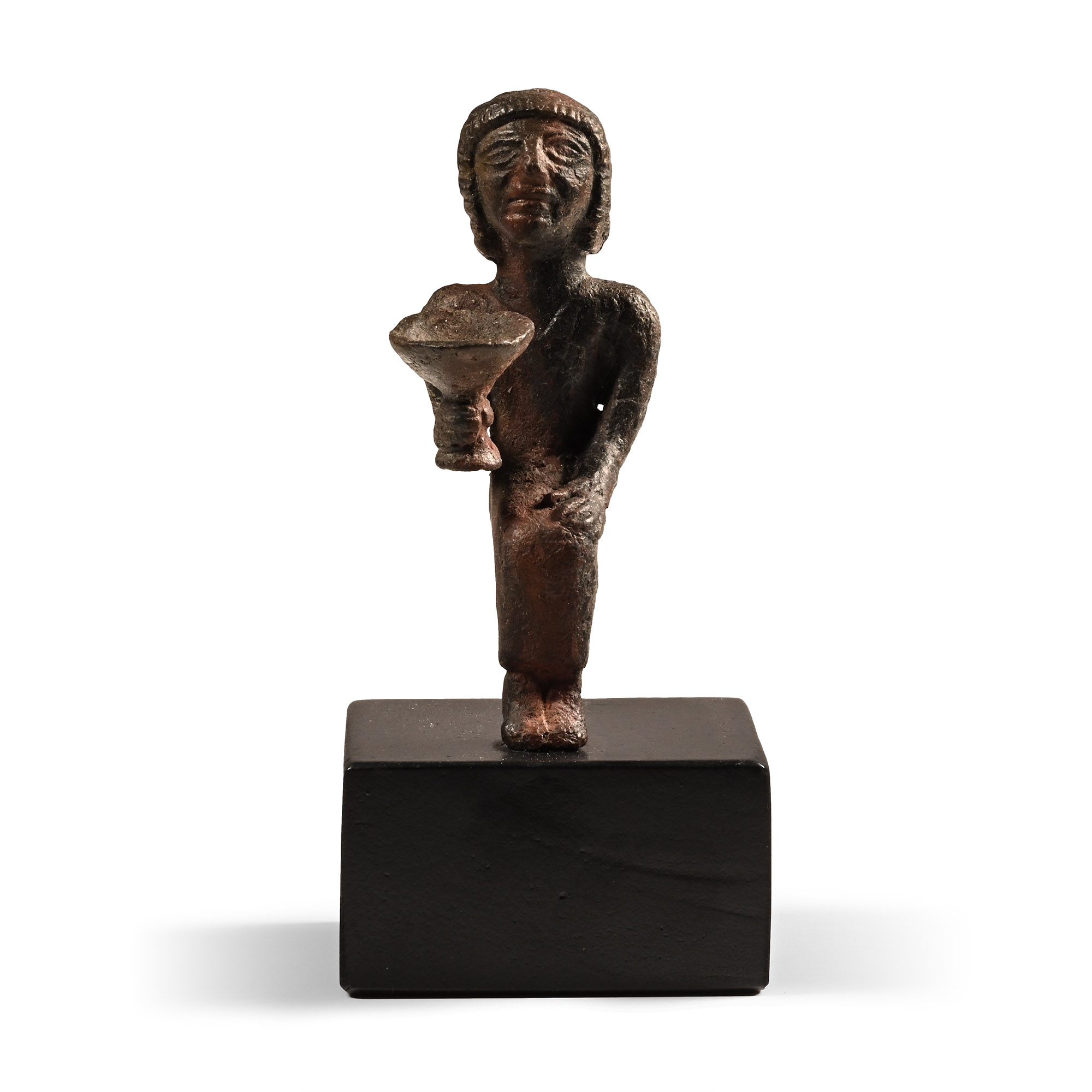
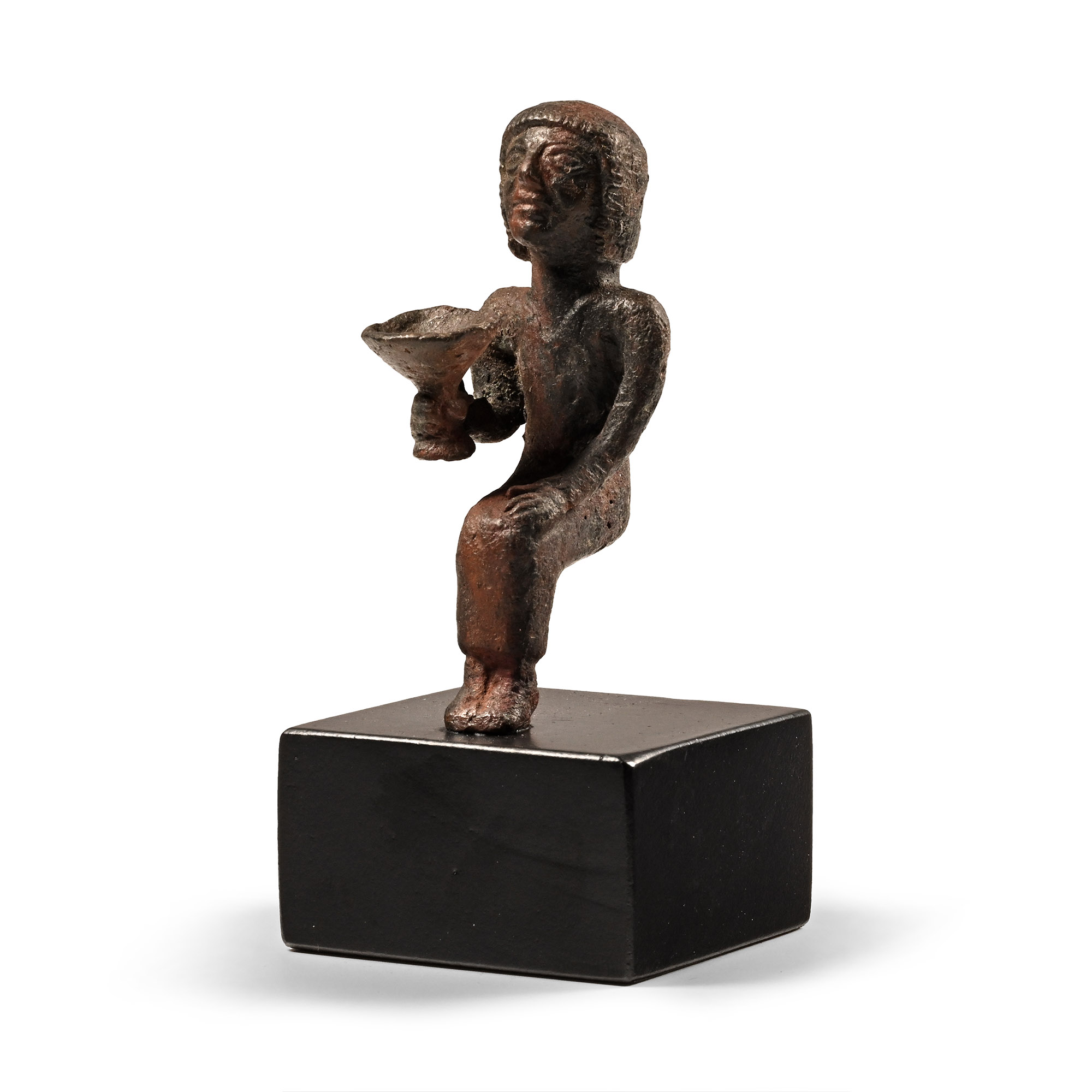
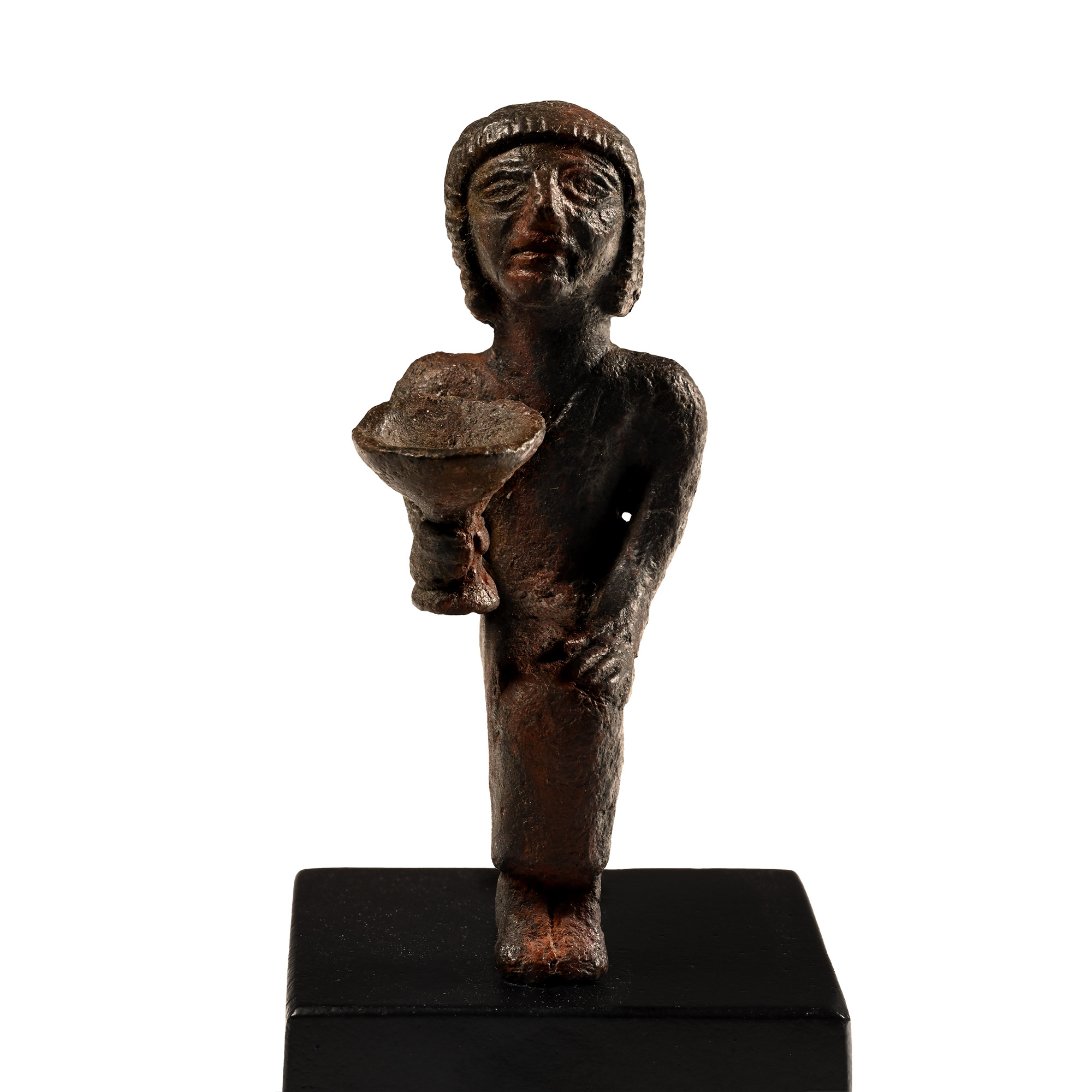
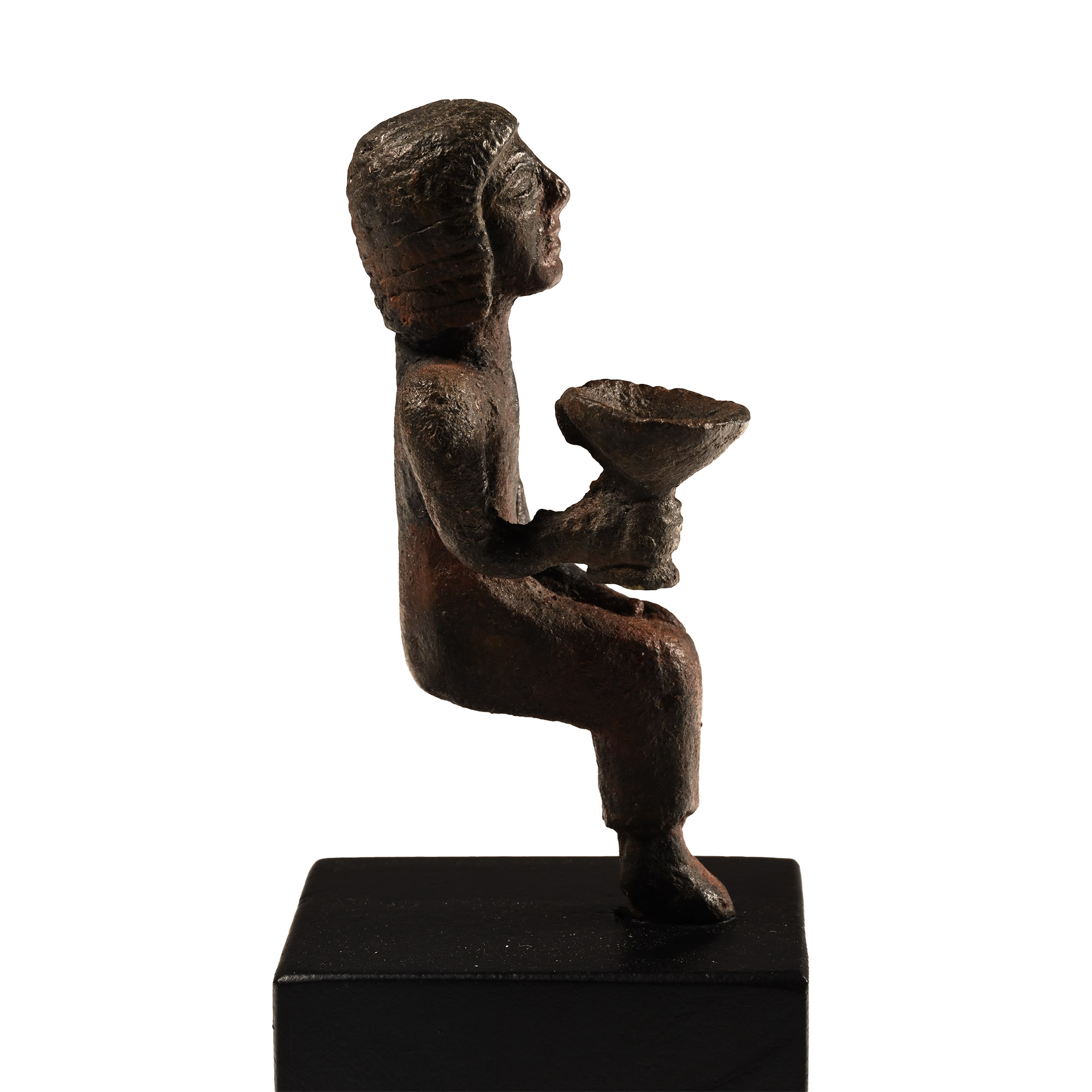
Phoenician Bronze Seated Figure Holding an Offering Cup
CIRCA 6TH CENTURY B.C.
4 3/8 in. (301 grams total, 11 cm including stand).
Modelled in the round with tight-fitting robe and carefully detailed tiered hairstyle; right hand raised to support a chalice; peg beneath the feet; mounted on a custom-made display stand. [No Reserve]
ProvenanceAcquired on the French art market.
From a collection acquired on the UK art market from various auction houses and collections mostly before 2000.
From an important Cambridgeshire estate; thence by descent.
Cf. Moscati, S., I Fenici, p.229, for a statuette in similar style.
FootnotesIberian statuettes from 6th century B.C. were produced under the influence of Greeks and Phoenicians. Small votive offerings of priests, priestesses, and deities in bronze, were found everywhere in Spain. The body of these figurines is often reduced to a rectangular plaque, but the head, as in all these types, is of plastic work, a process which reminds the prehistoric terracottas from the Argive Heraeum and elsewhere. The curve of the nose, which gives the face a Semitic appearance, is not accidental, and underlines the Phoenician influence.
CONDITIONTimeLine Auctions follows a vetting process to ensure the authenticity and legality of all items, reinforcing our commitment to integrity and responsible trading. Each antiquity, antique, and coin lot undergoes thorough examination by a vetting committee of at least ten external specialists, professional trade association members, scientists, and archaeologists: Our Vetting Process
AUCTIONS:
TimeLine is a leading auction house specialising in antiquities, ancient art, collectables, natural history, coins, medals, and books. Our auctions offer museums, collectors, historians, and enthusiasts the opportunity to acquire unique and historically significant pieces.
LOT 0223
Phoenician Bronze Seated Figure Holding an Offering Cup
Sold for (Inc. bp): £1,040
-
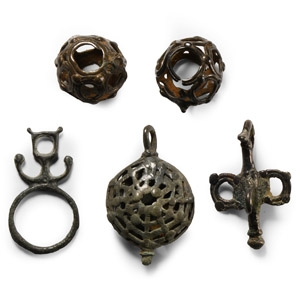
Amlash Bronze Openwork Pendant Group
2nd-1st millennium B.C.Sold for (Inc. bp): £72
Comprising: two large openwork beads; a domed cage-work pendant; an anthropomorphic pendant; an elongated pendant with four loops. 91 grams total, 33-56 mm
UK private collection before 2000. On the UK art market. Property of a London gentleman. -
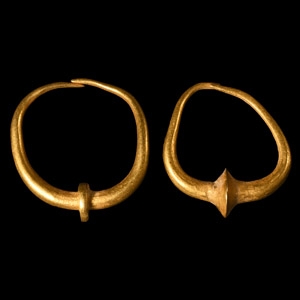
Western Asiatic Gold Earrings
1500-1000 B.C.Estimate: £200 - 300 (+bp*)
Opening Bid: £100
Each with a tapering penannular hoop and discoid ornament. 1.73 grams total, 13 mm ech
Ex property of a late Japanese collector, 1970-2000s. -
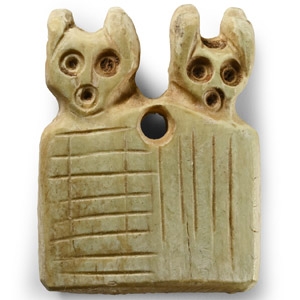
Western Asiatic Bone Twin-Headed Amulet
1st millennium B.C. or laterSold for (Inc. bp): £156
Rectangular pendant with hatched and cross-hatched panels to the body, median piercing, two feline heads with sockets for the eyes, ears and nose, to accept coloured inserts. 8.3 grams, 33 mm
From a collection acquired on the UK art market from various auction houses and collections mostly before 2000. From an important Cambridgeshire estate; thence by descent.
