
Loading, please wait...
LOT 0269
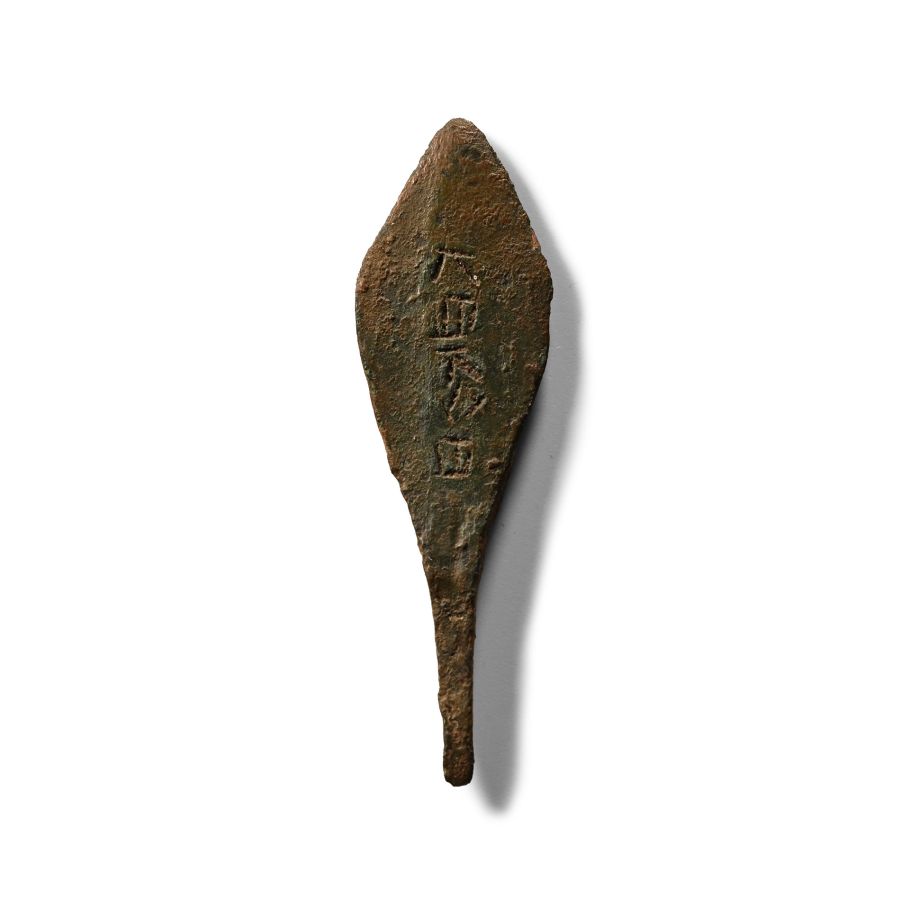
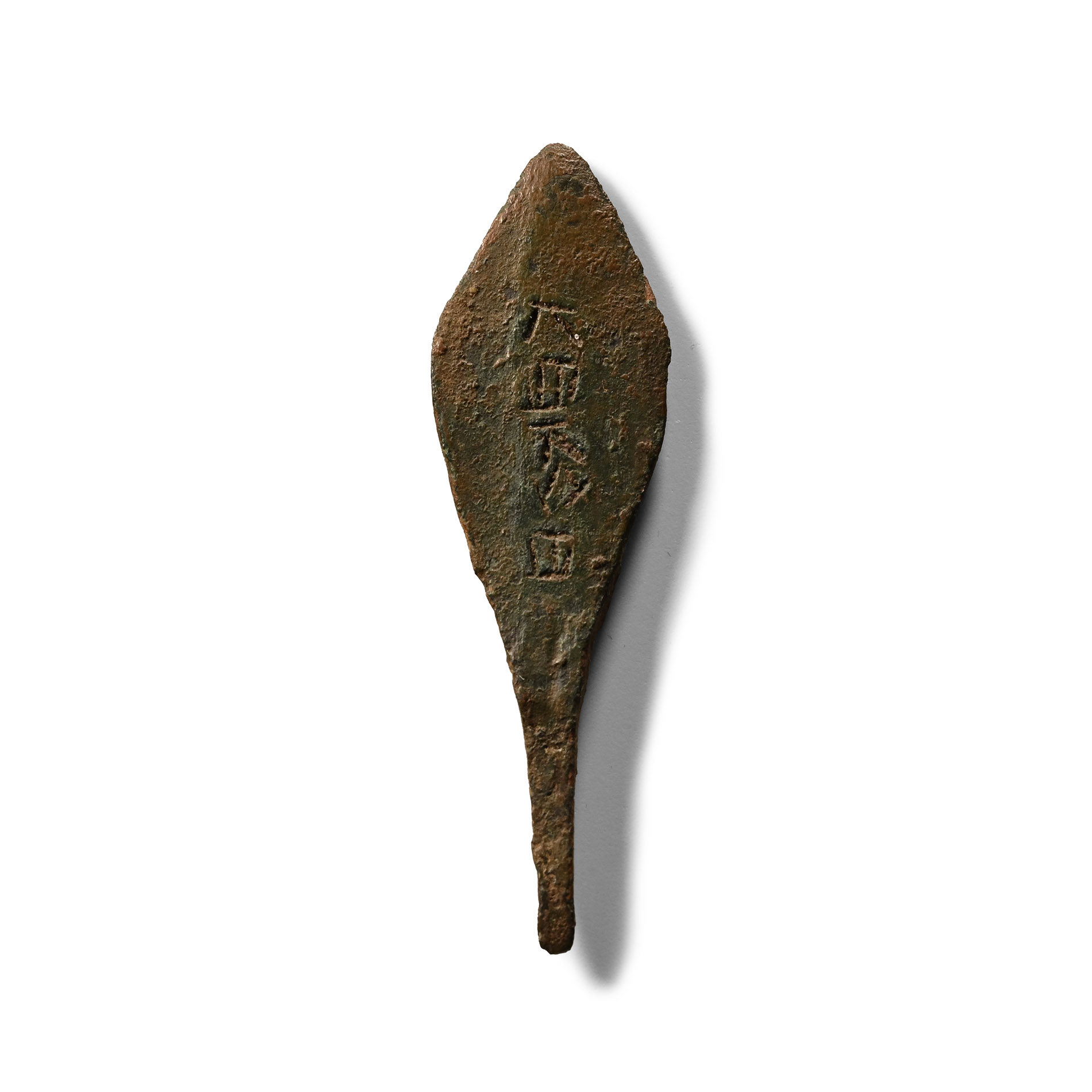
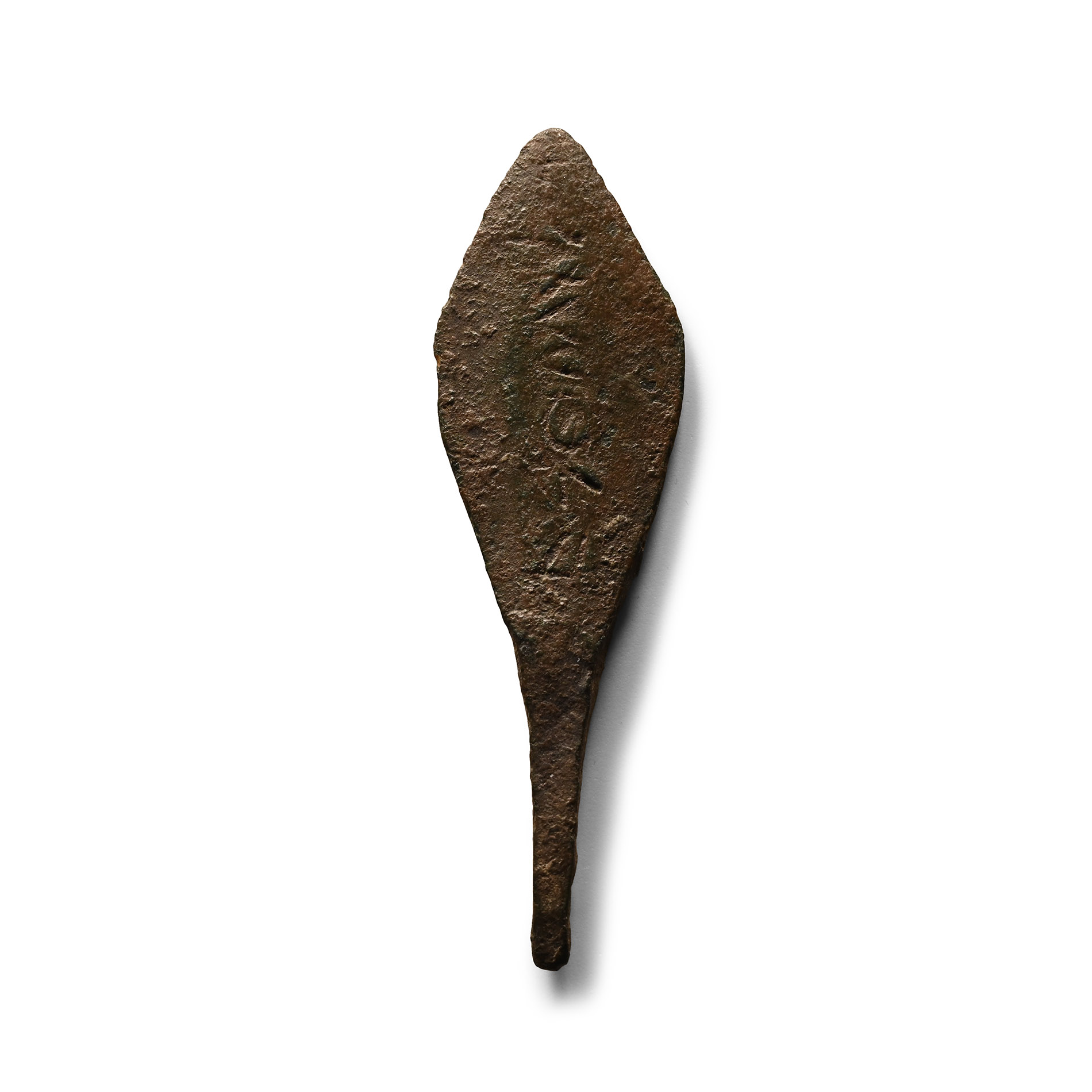
Phoenician Bronze Arrowhead with Inscription
CIRCA 12TH-11TH CENTURY B.C.
2 1/2 in. (9.2 grams, 63 mm).
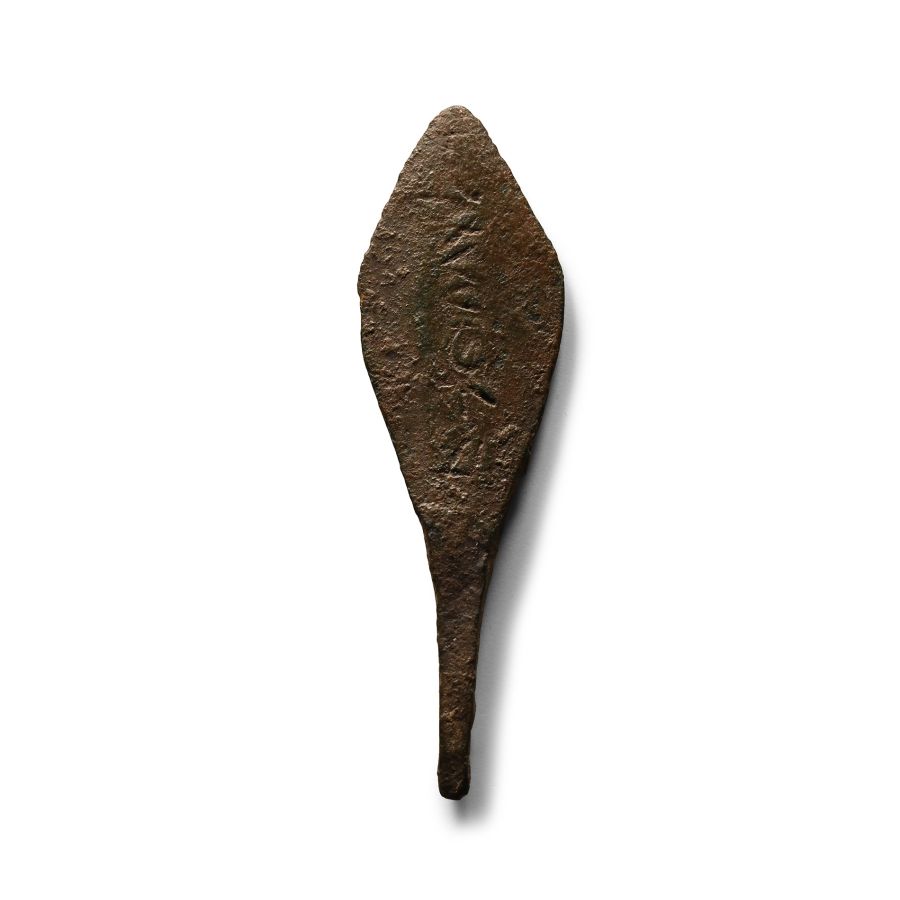
With incised text to the midrib on one face, less well-defined characters to the reverse.
ProvenanceFrom the collection of a gentleman, acquired on the London art market in the 1990s.
LiteratureCf. Röllig, W., ‘Onomastic and Palaeographic Considerations on Early Phoenician Arrow-Heads’ in Fantar, M. (ed.), Actes du IIIe Congrès International des Études Phéniciennes et Puniques, Tunis, 11-16 November 1991, Vol. II (1995), pp. 348-355; Elayi J., ‘Four New Inscribed Phoenician Arrowheads’ in SEL, 22, 2005, pp.33-45, pl.IV.
FootnotesThe arrowhead seems to carry a Proto-Aramaic or Phoenician inscription like many arrows found in the Levant and Israel. They are usually reporting proper names like ‘Suwar, retainer of Abday’. As far as the function of these arrowheads is concerned, we know that the name inscribed on them was the owner's because successive owner's names were incised on two palimpsest examples. The letters engraved upon our arrow seem to be in the Phoenician alphabet and read ḤŞ’Ḥ’ (arrow of…) on the reverse, and ’Š I Š Q (?) (man of…) on the obverse.
CONDITIONTimeLine Auctions follows a vetting process to ensure the authenticity and legality of all items, reinforcing our commitment to integrity and responsible trading. Each antiquity, antique, and coin lot undergoes thorough examination by a vetting committee of at least ten external specialists, professional trade association members, scientists, and archaeologists: Our Vetting Process
AUCTIONS:
TimeLine is a leading auction house specialising in antiquities, ancient art, collectables, natural history, coins, medals, and books. Our auctions offer museums, collectors, historians, and enthusiasts the opportunity to acquire unique and historically significant pieces.
-
Greek Bronze Socketted Arrowhead
Circa 4th-2nd century A.D.Sold for (Inc. bp): £59
Triangular in section with barbed blades and shallow socket. 1.5 grams, 32 mm
Acquired from Red House Antiques, York, UK, in 2008. Ian Wilkinson collection, Nottinghamshire, UK. -
Western Asiatic Iron Axehead
Circa 14th-16th century A.D.Sold for (Inc. bp): £26
With swept blade and triangular socket with extension to the rear; accompanied by a custom-made display stand. 659 grams total including stand, axehead: 24.5 cm
Acquired 1980-2015. Ex Abelita family collection. -
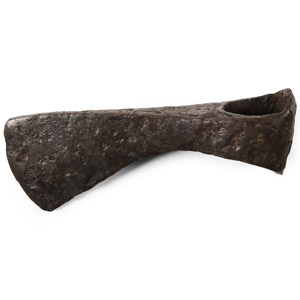
Viking Age Iron Long-Bladed Axehead
9th-11th century A.D.Sold for (Inc. bp): £91
With triangular-section narrow blade widening to a bevelled edge, socket with rounded extension to the rear. 723 grams, 19 cm
From the private collection of a London gentleman, from his grandfather's collection formed before the early 1970s.
