
Loading, please wait...
LOT 0017
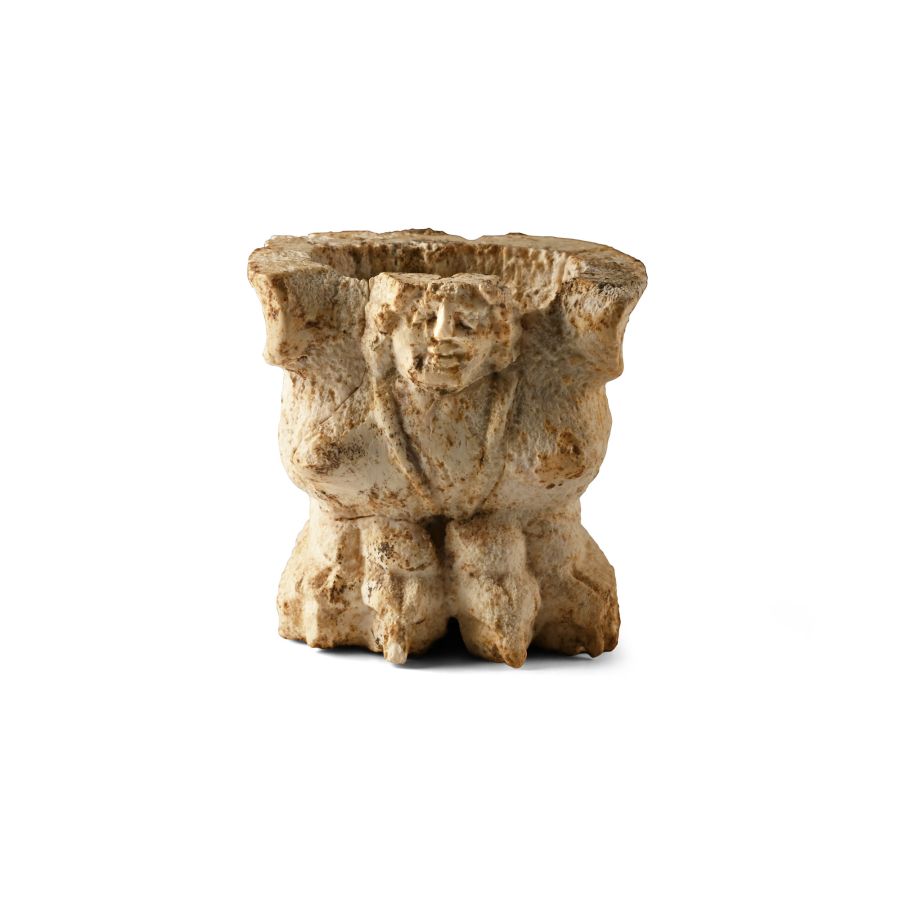
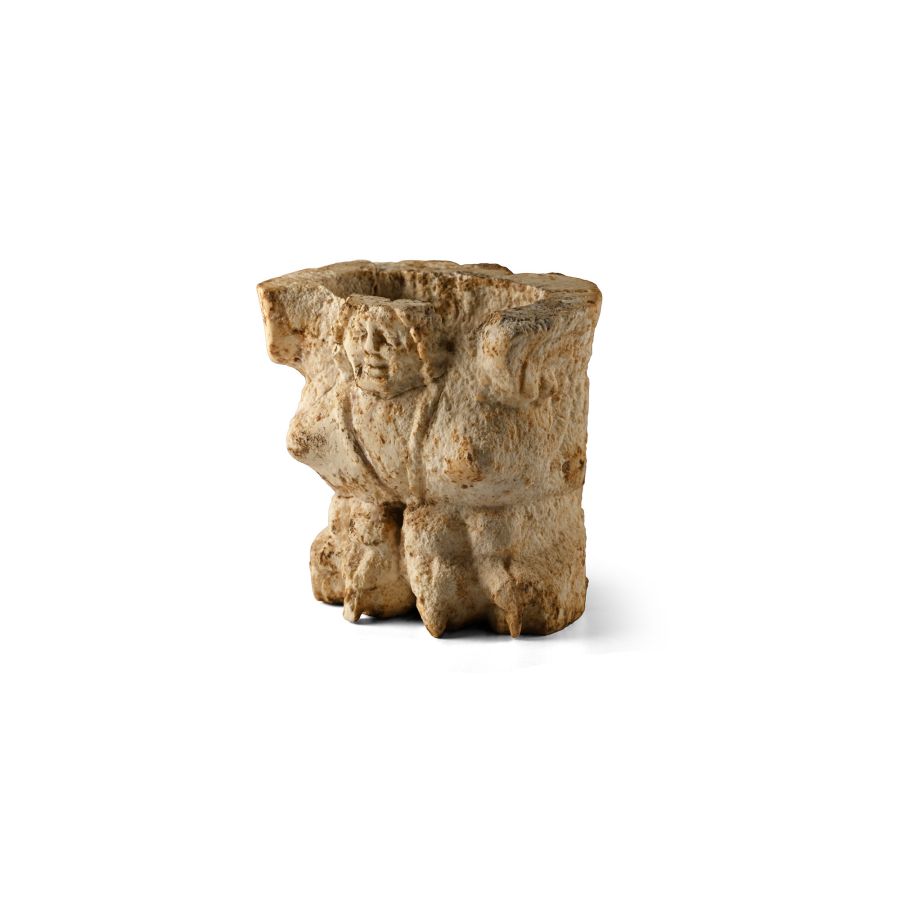
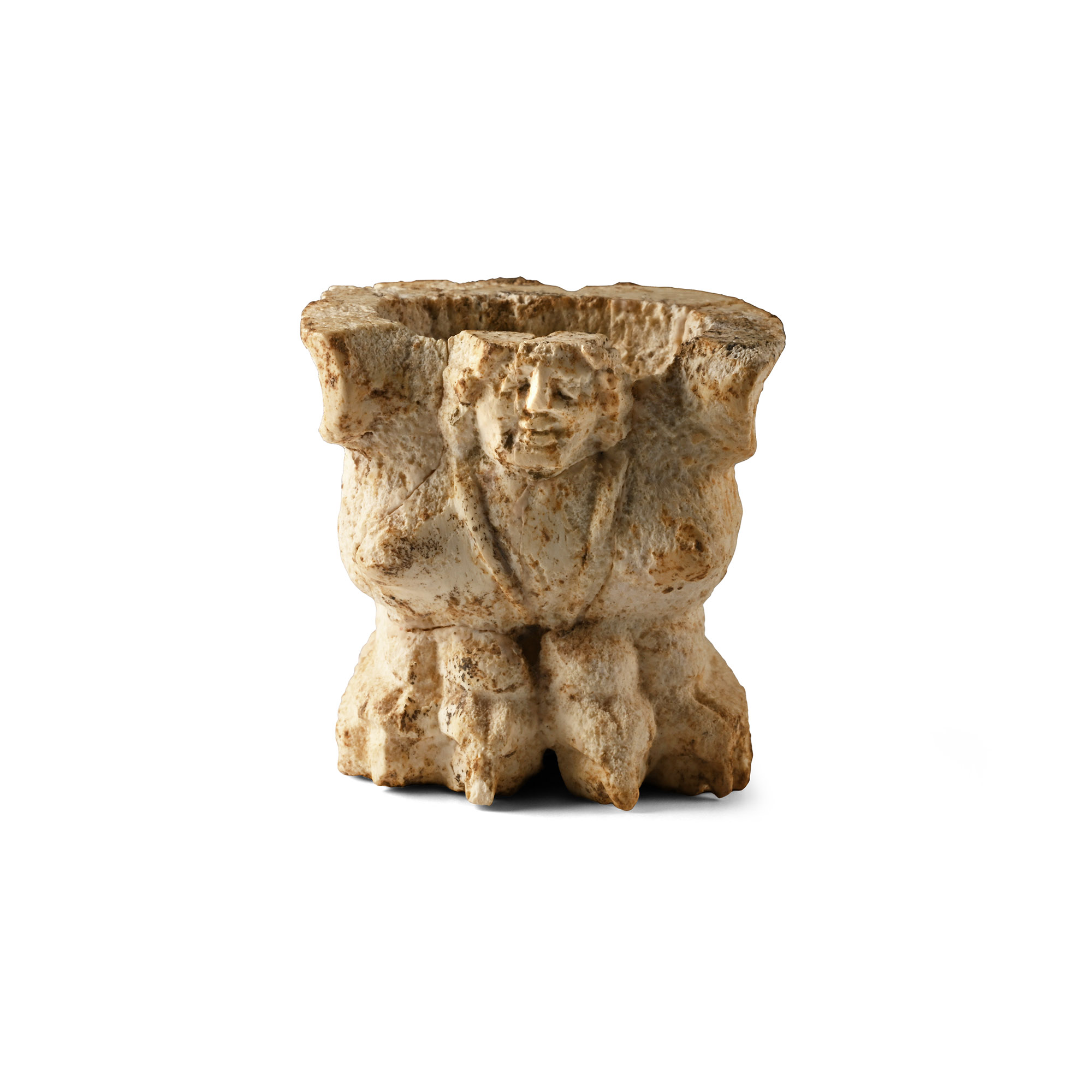
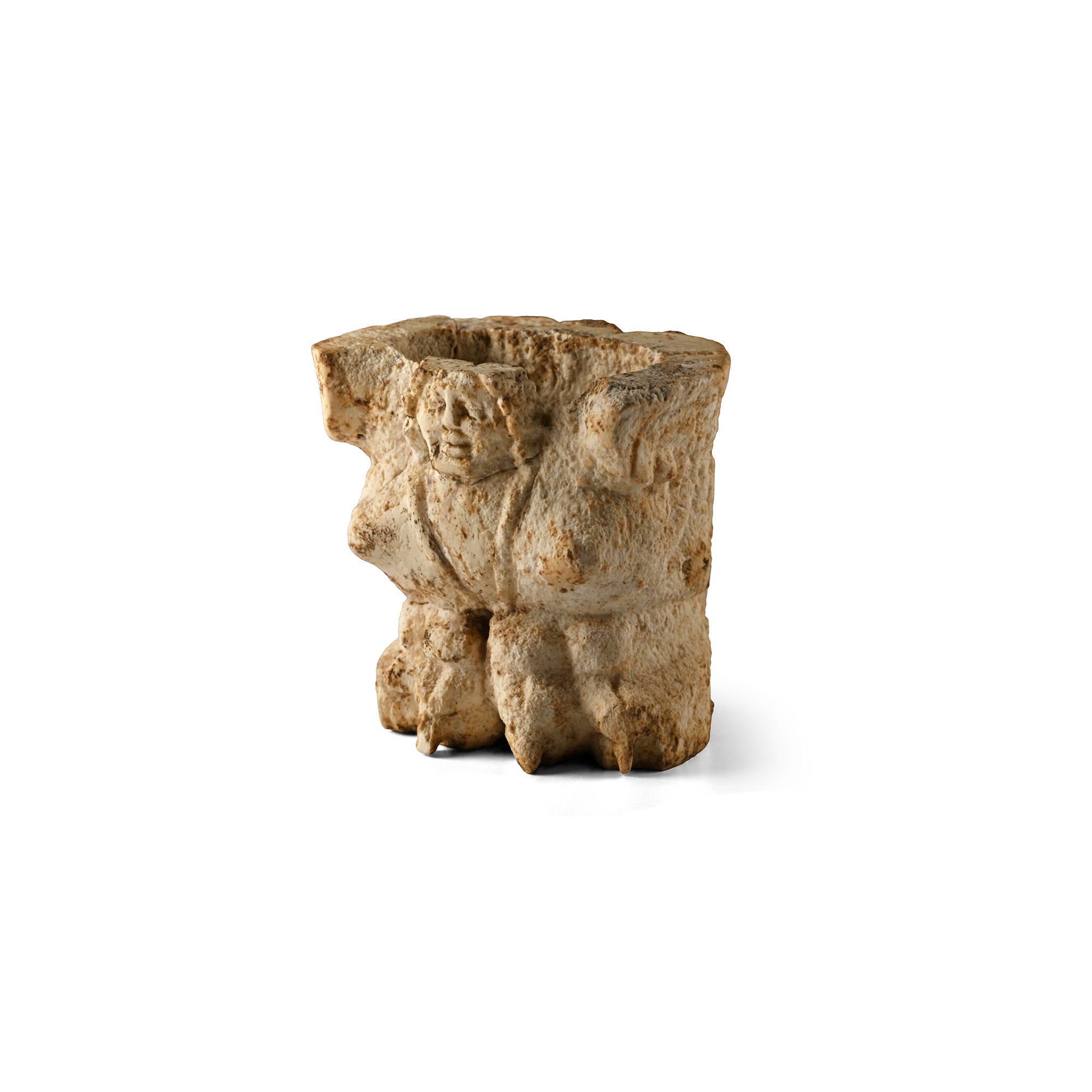
Phoenician Bone Sphinx
5TH CENTURY B.C.
1 3/8 in. (21.2 grams, 35 mm).
Seated with curving wings flanking the body and stocky body resting on over-sized lion-paws, small female head with rounded facial features and curly hair; hollow inside.
ProvenanceEx Dr Leo Mildenberg, Zurich, 1990s.
with Galerie Rhéa, Zurich, Switzerland.
This lot is accompanied by an illustrated lot declaration signed by the Head of the Antiquities Department, Dr Raffaele D'Amato.
Leo Mildenberg (1913–2001) was a distinguished numismatist and antiquities collector, widely recognised for his deep passion for ancient art, especially animal figures. Born in Germany and later based in Switzerland, Mildenberg built a renowned private collection that reflected his keen eye for craftsmanship and historical significance. His collection spanned cultures and periods, including Egyptian, Near Eastern, Greek, and Roman artefacts, with a particular emphasis on zoomorphic sculptures and votive figures.
Portions of Mildenberg’s collection have been exhibited in major museums and featured in auction catalogues that remain important reference sources for scholars and collectors alike.
TimeLine Auctions follows a vetting process to ensure the authenticity and legality of all items, reinforcing our commitment to integrity and responsible trading. Each antiquity, antique, and coin lot undergoes thorough examination by a vetting committee of at least ten external specialists, professional trade association members, scientists, and archaeologists: Our Vetting Process
AUCTIONS:
TimeLine is a leading auction house specialising in antiquities, ancient art, collectables, natural history, coins, medals, and books. Our auctions offer museums, collectors, historians, and enthusiasts the opportunity to acquire unique and historically significant pieces.
LOT 0017
Phoenician Bone Sphinx
Estimate £800 - 1,000€930 - 1,160 (for guidance only)$1,080 - 1,350 (for guidance only)
-
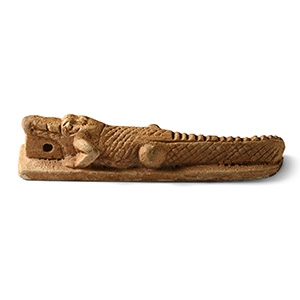
Egyptian Faience Crocodile Amulet
Late-Ptolemaic Period, 664-30 B.C.Sold for (Inc. bp): £2,600
Representing the god Sobek; detailed face and scales; standing on a rectangular plinth; pierced to the front for suspension. 13.4 grams, 74 mm
From the estate of the late Professor Dr E. Bernardo Streiff, Geneva; a distinguished collection of antiquities formed during the 1950s-1970s. with Galerie Rhéa, Zurich, Switzerland. This lot has been checked against the Interpol Database of stolen works of art and is accompanied by a search certificate number no.12629-236404. This lot has been cleared against the Art Loss Register database, and is accompanied by an illustrated lot declaration signed by the Head of the Antiquities Department, Dr Raffaele D'Amato.
Sobek is one of the most ancient and fascinating deities in the Egyptian pantheon. He is typically depicted as a crocodile or a man with the head of a crocodile, embodying various attributes related to the natural world, power, and protection. Sobek was mainly associated with water, fertility, and the Nile, along with strength and military prowess. His worship extends throughout much of ancient Egyptian history, and he was venerated not only as a force of nature but also as a god of healing, protection, and royal authority. His principal cult centres were situated in the Faiyum region, particularly the city of Crocodilopolis, and also at Kom Ombo in Upper Egypt. -
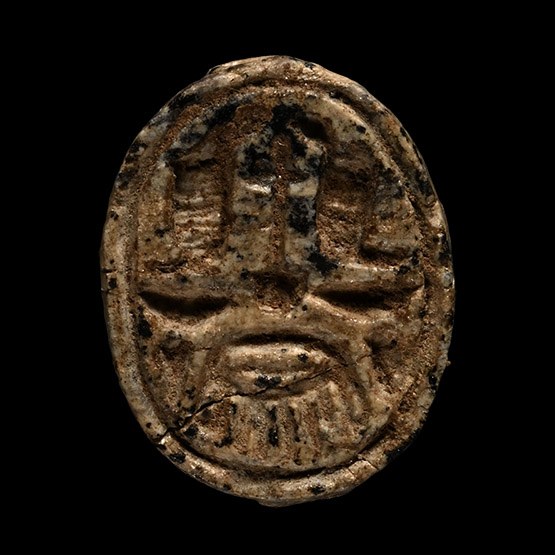
Egyptian Faience Scarab with Hieroglyphs
Late Period, 664-332 B.C.Estimate: £180 - 240 (+bp*)
Opening Bid: £90
Modelled as a scarab resting on a textured base with a tubular extension behind and before the head forming part of the piercing, the underside features two rearing cobras atop neb signs flanking a nefer sign, with a large nwb sign (meaning 'gold') below. 2.66 grams, 18 mm
From the property of a London, UK, gentleman, 1970-2000s. This lot is accompanied by an illustrated lot declaration signed by the Head of the Antiquities Department, Dr Raffaele D'Amato. -
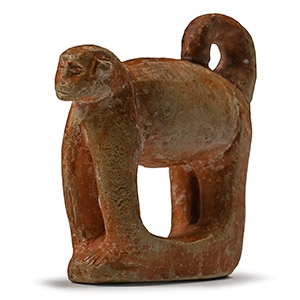
Egyptian Statuette of a Standing Monkey
Ptolemaic Period, 4th-1st century B.C. or laterEstimate: £800 - 1,000 (‡+bp*)
Opening Bid: £400
Standing on a rectangular plinth with head raised and tail curled above the hindquarters, barrel-shaped body with incised detailing at the shoulders and hips, traces of a white and reddish brown coating; partially restored; old collector's labels to underside '51' and 'N13234'. 42.8 grams, 60 mm
Ex Baden-Württemberg, Germany, formed since ca.1930. Private collection Saarland, Germany. Thereafter, Michael Schrôder, Germany. Consigned to DAWO Auktion, 18 February 2017, no.824. Accompanied by a copy of an Art Loss Register certificate no.S00123279. This lot is accompanied by an illustrated lot declaration signed by the Head of the Antiquities Department, Dr Raffaele D’Amato. This lot is accompanied by an illustrated lot declaration signed by the Head of the Antiquities Department, Dr Raffaele D'Amato.
