
Loading, please wait...
LOT 0024
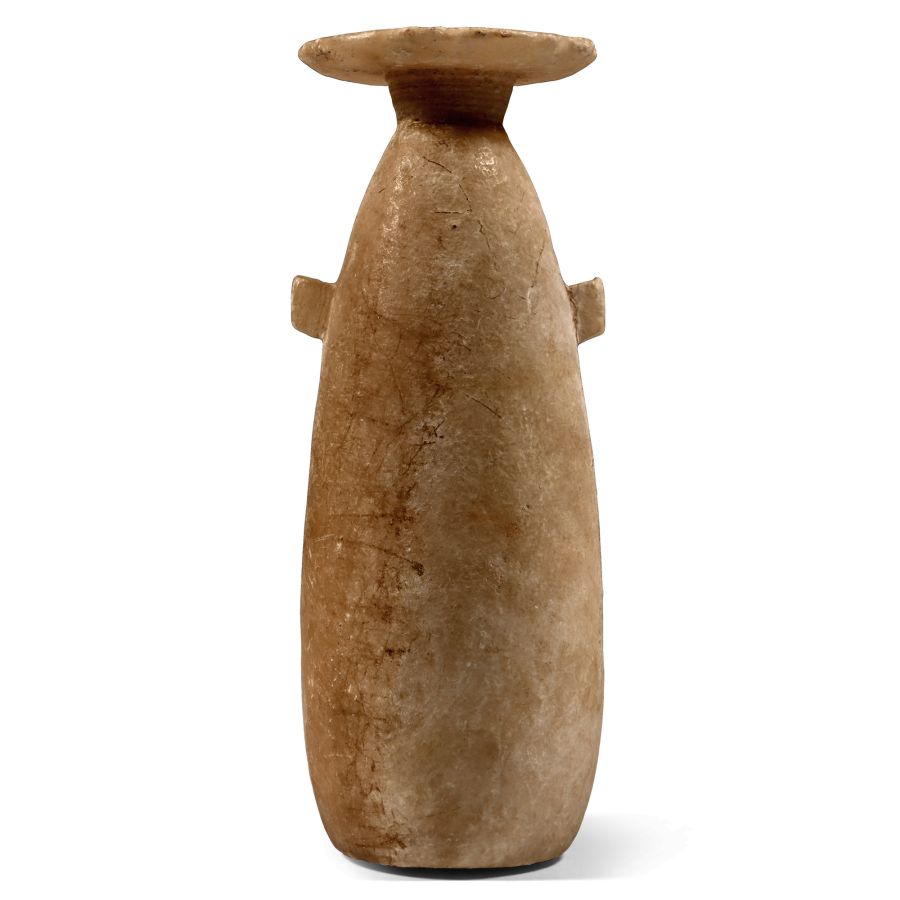
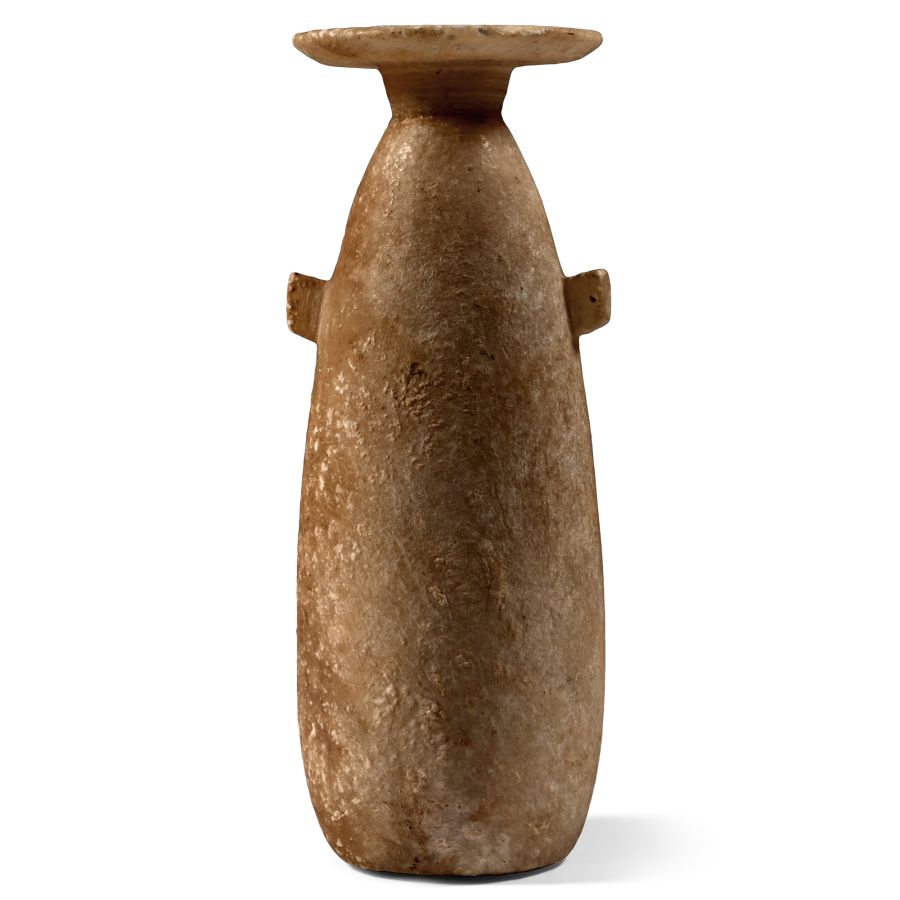
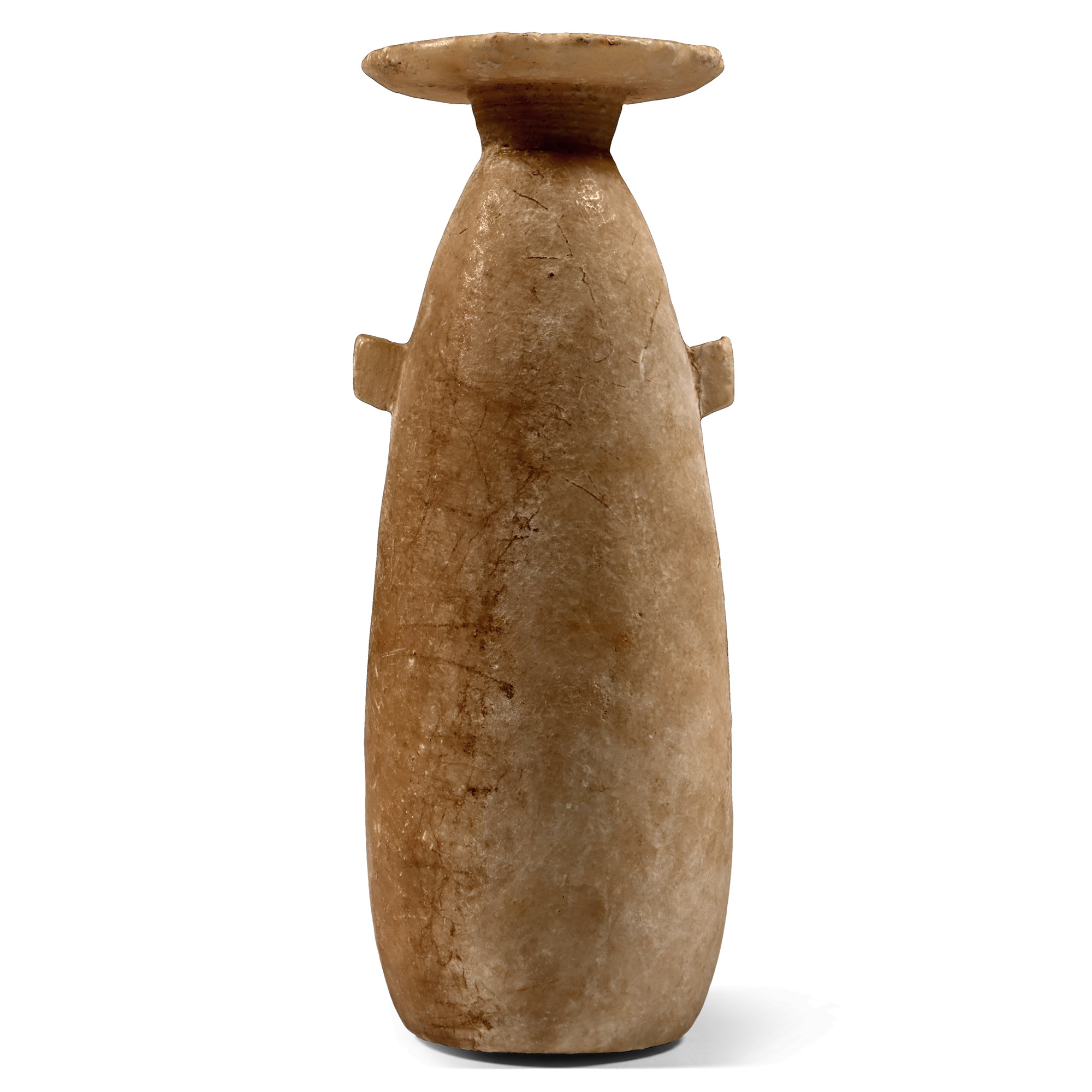
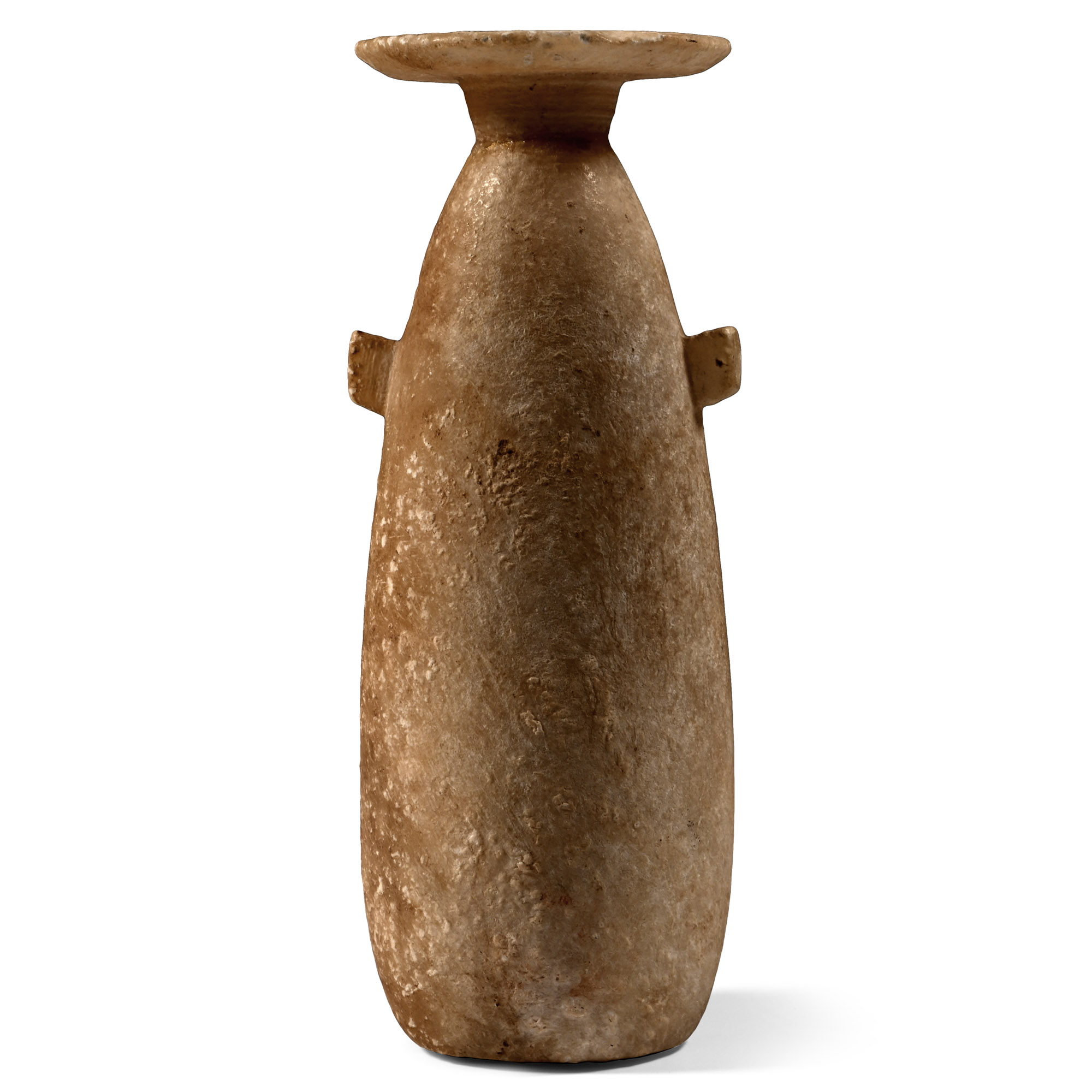
Phoenician Alabastron with Handles
6TH-5TH CENTURY B.C.
7 3/4 in. (650 grams, 19.7 cm high).
Comprising a slender alabaster piriform body and two lateral lug handles, conical neck with broad everted rim.
ProvenanceGiusfredi collection, 1980s.
Swiss private collection, acquired May 1999.
This lot is accompanied by an illustrated lot declaration signed by the Head of the Antiquities Department, Dr Raffaele D'Amato.
Cf. The Metropolitan Museum of Art, New York, accession no.74.51.5120, for similar; cf. also Bissing, F.W., Studien zur ältesten Kultur Italiens. IV. Alabastra. Studi Etruschi 13, pp.131-78, pls.XII-XIII, for similar examples.
CONDITIONTimeLine Auctions follows a vetting process to ensure the authenticity and legality of all items, reinforcing our commitment to integrity and responsible trading. Each antiquity, antique, and coin lot undergoes thorough examination by a vetting committee of at least ten external specialists, professional trade association members, scientists, and archaeologists: Our Vetting Process
AUCTIONS:
TimeLine is a leading auction house specialising in antiquities, ancient art, collectables, natural history, coins, medals, and books. Our auctions offer museums, collectors, historians, and enthusiasts the opportunity to acquire unique and historically significant pieces.
-
.jpg)
Egyptian Steatite Scarab
1st millennium B.C.Sold for (Inc. bp): £260
With detailed carapace and mouth, hieroglyphs to the underside depicting a pharaoh-headed sphinx, with hes-vase in front and the crowns of Lower and Upper Egypt behind. 0.80 grams, 12 mm
Ex R. Liechti (1934-2010) Geneva, Switzerland, formed between 1950-1990s. This lot is accompanied by an illustrated lot declaration signed by the Head of the Antiquities Department, Dr Raffaele D'Amato. -
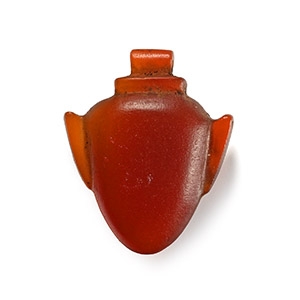
Egyptian Carnelian Heart Amulet
New Kingdom, 1550-1070 B.C.Sold for (Inc. bp): £780
A large heart, ib, amulet of classic egg-form with shallow lugs on either side with short flared top and tubular suspension loop. 5.27 grams, 26 mm
From an early 20th century collection London and Home Counties, UK. This lot is accompanied by an illustrated lot declaration signed by the Head of the Antiquities Department, Dr Raffaele D'Amato.
According to ancient Egyptian beliefs, the heart (ib) was considered to be the centre of intelligence, emotions, and behaviour. The heart was also believed to store an individual's memories. During the Weighing of the Heart ceremony in the afterlife, the heart could speak up for the deceased and account for their lifetime of actions before Osiris. For this reason, heart amulets were placed on the mummy to safeguard the organ and ensure a favourable outcome during judgment. -
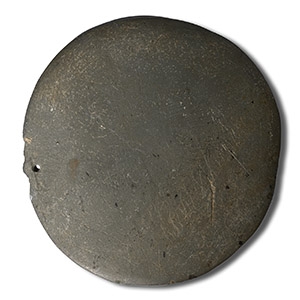
Egyptian Pre-Dynastic Greywacke Palette
Predynastic Period, Naqada III, circa 3300–2960 B.C.Sold for (Inc. bp): £468
Circular in plan with smoothed faces, pierced through the edge. 238 grams, 13.3 cm
Acquired in the mid 1980s-1990s. Private collection, Switzerland, thence by descent. Private collection, since the late 1990s. This lot is accompanied by an illustrated lot declaration signed by the Head of the Antiquities Department, Dr Raffaele D'Amato.
Palettes were utilitarian objects used in the Predynastic Period to grind and mix mineral-based eye pigments (including ochre, malachite, and haematite). Greywacke cosmetic palettes were easily carved in various shapes and sizes, including zoomorphic representations and geometric forms. The symbolism of this circular palette may be connected to the sun disc, which featured prominently in ancient Egyptian culture. The palette was so significant in Predynastic society that purely ceremonial versions, often impractically large for their original purpose, were produced for use in temple rituals. The most famous is the highly decorated Narmer Palette discovered at Hierakonpolis.
