Loading, please wait...

Use mousewheel to zoom in and out, click to enlarge

Details

LOT 2012

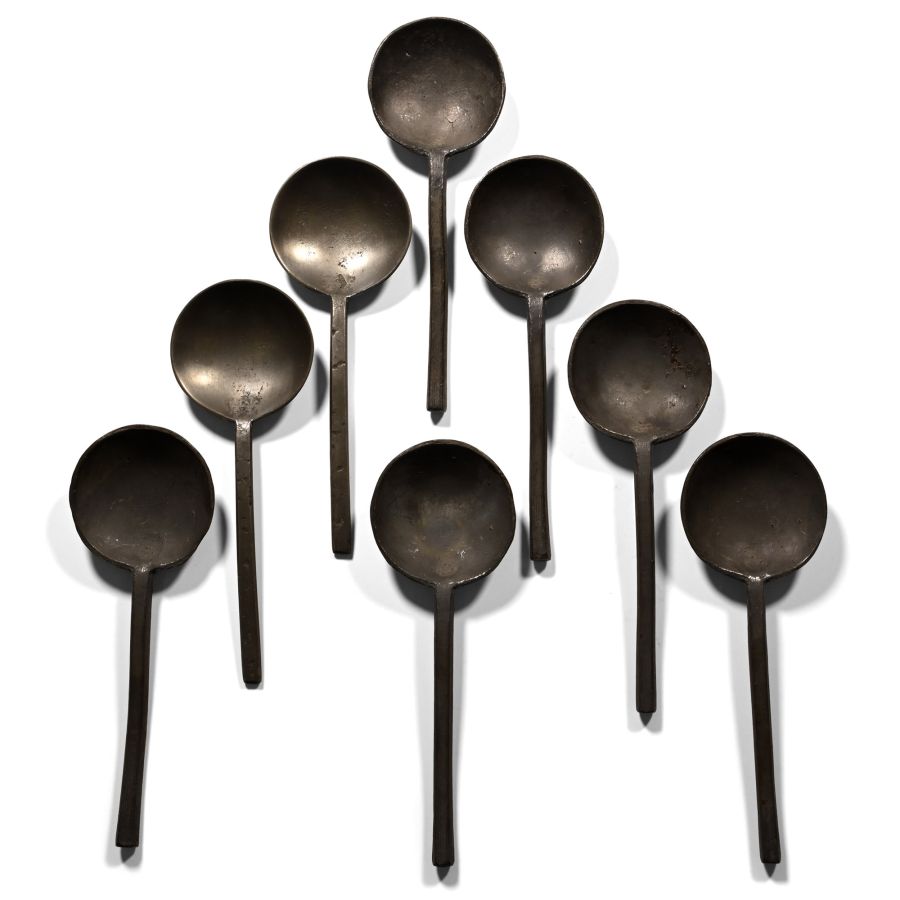
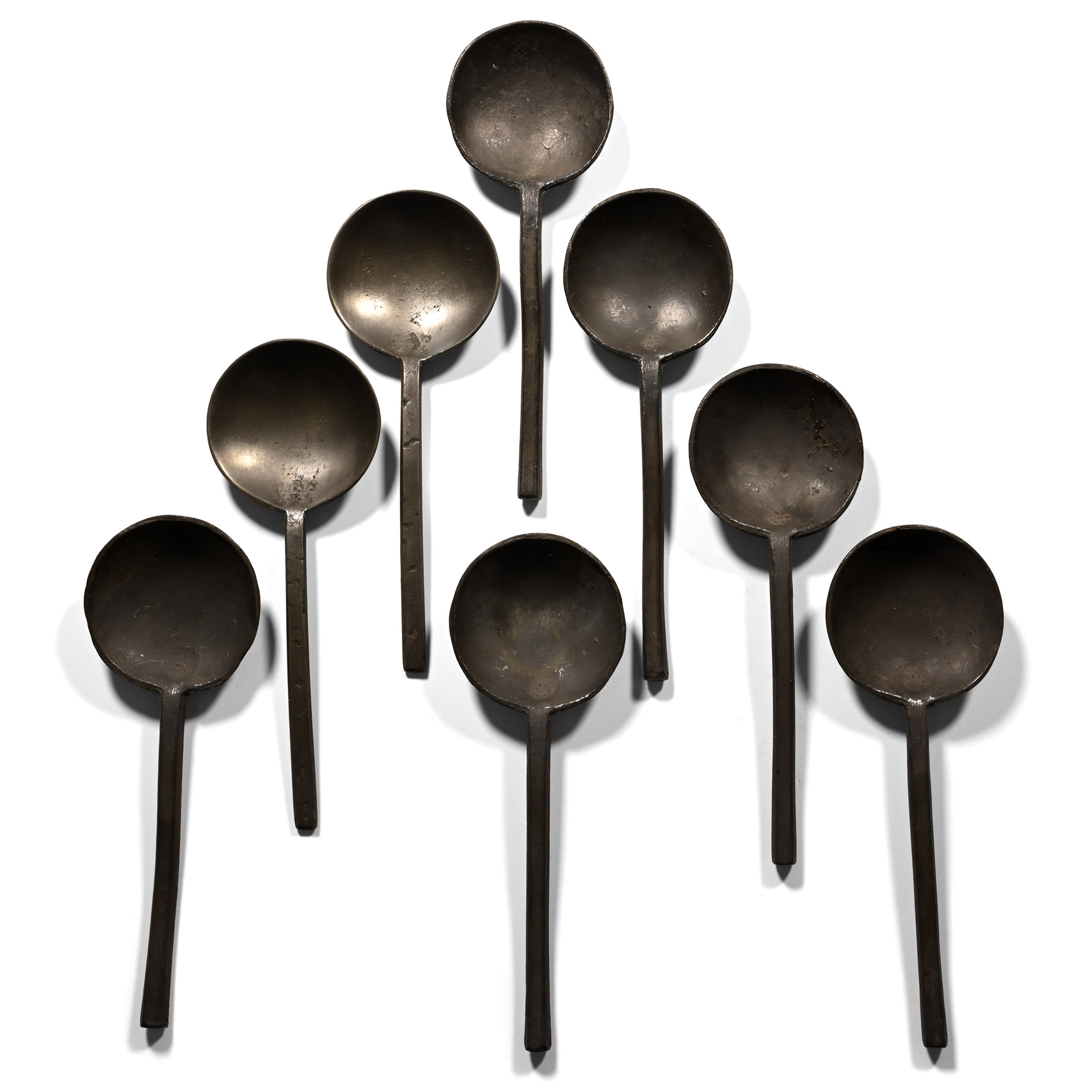
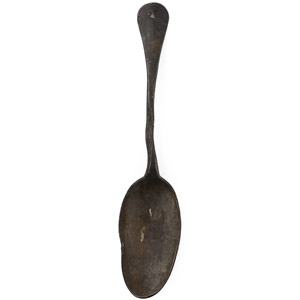
Pewter Spoon Collection

CIRCA 17TH-18TH CENTURY A.D.

6 1/2 in. (839 grams total, 16.5 cm).

Each with a shallow circular bowl and sturdy stem, six with a stamped X-motif within pelletted border to the bowl, and two with three stamped rosettes above letters(?). [8]

Provenance

Acquired in the Netherlands in the 1990s.
Ex Cambridgeshire, UK, gentleman.
This lot is accompanied by an illustrated lot declaration signed by the Head of the Antiquities Department, Dr Raffaele D'Amato.

CONDITION

VETTING:

TimeLine Auctions follows a vetting process to ensure the authenticity and legality of all items, reinforcing our commitment to integrity and responsible trading. Each antiquity, antique, and coin lot undergoes thorough examination by a vetting committee of at least ten external specialists, professional trade association members, scientists, and archaeologists: Our Vetting Process


AUCTIONS:

TimeLine is a leading auction house specialising in antiquities, ancient art, collectables, natural history, coins, medals, and books. Our auctions offer museums, collectors, historians, and enthusiasts the opportunity to acquire unique and historically significant pieces.

LOT 2012

Pewter Spoon Collection

Estimate £100 - 140€120 - 160 (for guidance only)$140 - 190 (for guidance only)

Print page

RELATED LOTS

  • Roman Style Bronze Bull-Headed Phallic Pendant
    Roman Style Bronze Bull-Headed Phallic Pendant
    20th century A.D. or earlier

    Sold for (Inc. bp): £65

    An undated archaistic pendant comprising a facing bull-head with addorsed phalloi with loops and scrotum below, suspension loop above. 46.2 grams, 58 mm


    Ex Morris collection, Buckinghamshire, UK; acquired in the 1990s.

    Lot Details

  • Renaissance Bronze Glove Ring with an Inkwell
    Renaissance Bronze Glove Ring with an Inkwell
    Italian, 17th-18th century A.D.

    Estimate: £700 - 900 (+bp*)

    Opening Bid: £350

    Flat-section hoop with raised rim to each edge, tubular shank with frieze of robed figures between decorated arches and with pendant fronds above; domed lid with hinge and catch, stepped rim and chamber. 115 grams, 64.40 mm overall, 22.38 mm internal diameter (approximate size British Y 1/2, USA 12 1/4, Europe 28.2, Japan 27)


    Private collection, UK.

    Lot Details

  • Russian Wooden Icon with St John the Baptist
    Russian Wooden Icon with St John the Baptist
    19th century A.D.

    Estimate: £1,500 - 2,000 (+bp*)

    Opening Bid: £800

    Comprising a painted board with mounting panel and slots to the reverse, gessoed surface with painting of St John the Baptist standing nimbate with wings spread behind him, left hand supporting a bowl containing his severed head and holding an unfurled scroll with Cyrillic text 'Repent ye, for the Kingdom of Heaven is at hand,' (Matthew 3:2); right hand raised in blessing; landscape with sand-dunes and trees; gilded title above; the upper border with gilt Slavonic inscription reading 'Holy John the Forerunner'; from the Palekh Icon School, probably made in Mstera circa 1890. 1.02 kg, 31 cm high

    Fine condition.

    Ex property of a London lady, part of her family's collection. This lot has been checked against the Interpol Database of stolen works of art and is accompanied by a search certificate no.11546-196366.

    The Palekh icon school emerged in the 17th century, inspired by the Moscow and Suzdal traditions of icon painting. Although preserving many features of traditional Russian iconography, the school created its own style that remained active into the 18th century. The hallmarks of the school include the frequent use of gold on the clothes of the saints and a rich palette. Bodies are shown as tall and slender and abrupt transitions between light and shadow are distinctive features of Palekh icons. The wings of Saint John derive from the double meaning of the Greek word used to describe him in Mark 1:2 - Angelos, meaning both messenger and angel. John is often called a 'Heavenly Man' and 'Earthly Angel' in Orthodoxy. At his feet is shown a small tree with an axe cutting into it, illustrating Luke 3:9, 'And now also the axe is laid unto the root of the tree...'

    Lot Details

Stay up-to-date with the latest from TimeLine Auctions by joining our mailing list