
Loading, please wait...
LOT 1173
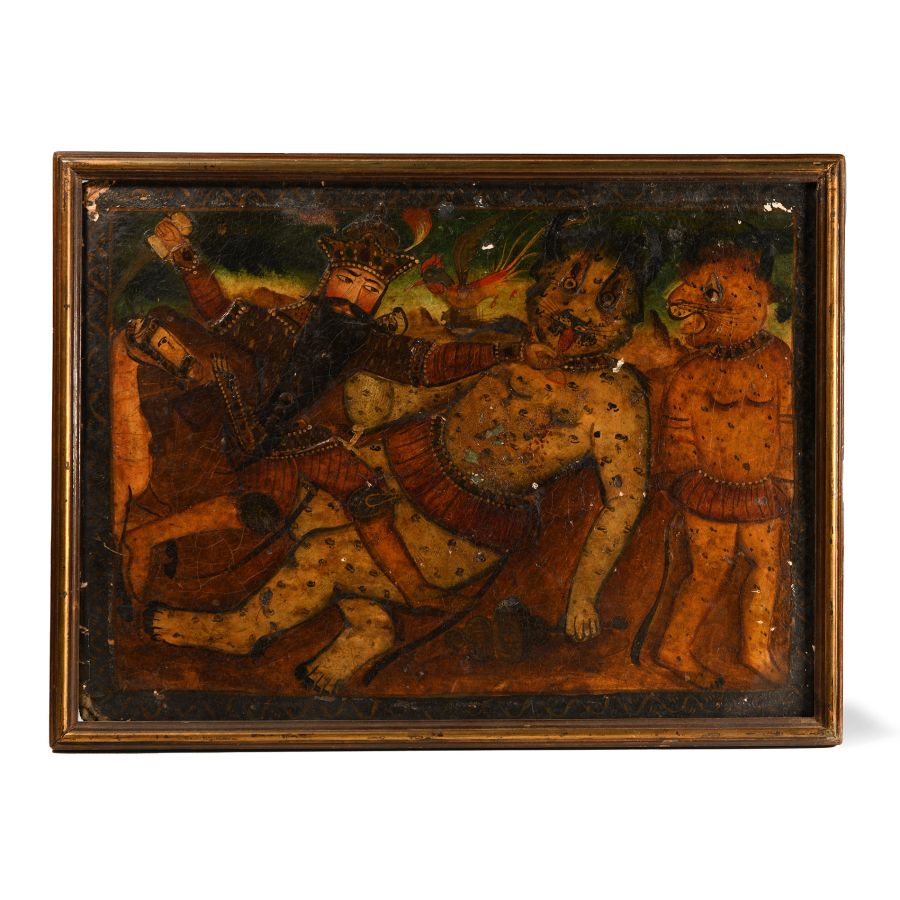
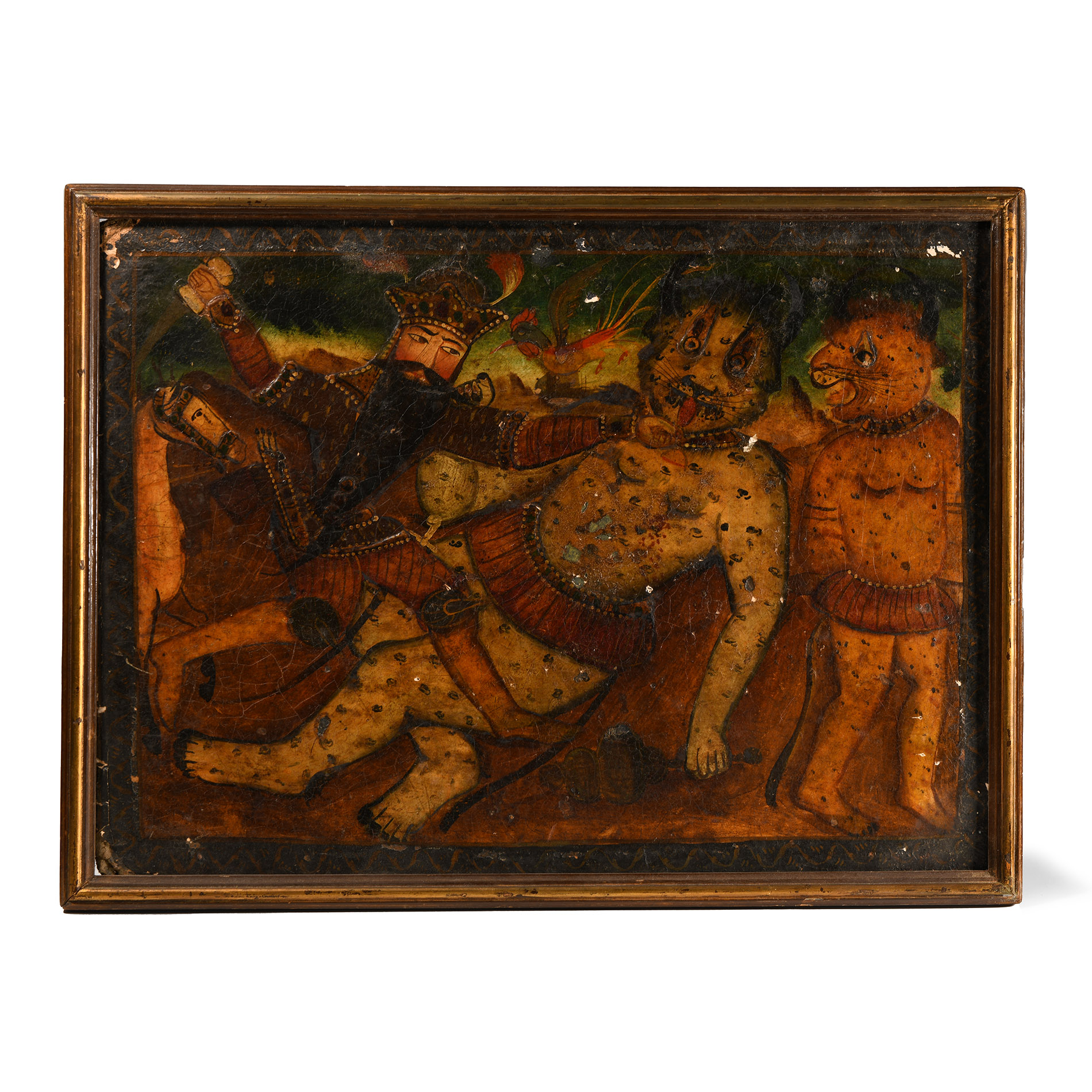
Persian Painting Depicting Nader Shah Slaying Deve
LATE 18TH-EARLY 19TH CENTURY A.D.
18 7/8 x 14 1/8 in. (512 grams, 48 x 36 cm).
Dynamic scene depicting an armed warrior attacking a demon with a khanjar dagger; the demon with leopard-spots to his skin, clutching a mace in his left hand; second demon looking on from the rear; oil on paper mâché mounted in a wooden frame.
ProvenanceProperty of K.P., a Cornish lady collector, UK.
CONDITIONTimeLine Auctions follows a vetting process to ensure the authenticity and legality of all items, reinforcing our commitment to integrity and responsible trading. Each antiquity, antique, and coin lot undergoes thorough examination by a vetting committee of at least ten external specialists, professional trade association members, scientists, and archaeologists: Our Vetting Process
AUCTIONS:
TimeLine is a leading auction house specialising in antiquities, ancient art, collectables, natural history, coins, medals, and books. Our auctions offer museums, collectors, historians, and enthusiasts the opportunity to acquire unique and historically significant pieces.
-
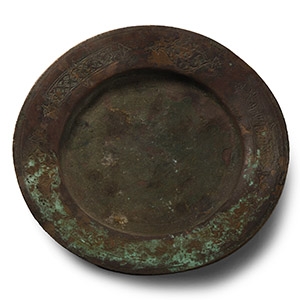
Western Asiatic Decorated Bronze Dish with Inscription
12th-13th century A.D.Sold for (Inc. bp): £52
Broad dish with carinated profile, blocks of reserved interlace to the rim and calligraphic panel. 323 grams, 19.5 cm
Collected from 1969-1999. From the collection of the late Mr S.M., London, UK. -
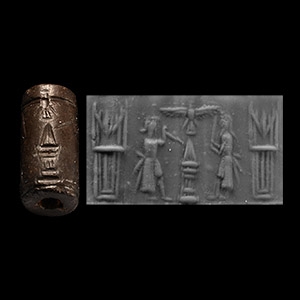
Mesopotamian Haematite Cylinder Seal with Altar
2nd-1st millennium B.C.Sold for (Inc. bp): £910
With intaglio frieze depicting two worshippers addressing an altar with faravahar above, heavy barred door to the side; supplied with a museum-quality impression. 2.83 grams, 17 mm
Ex S collection, London, UK, 1980-1990s. -
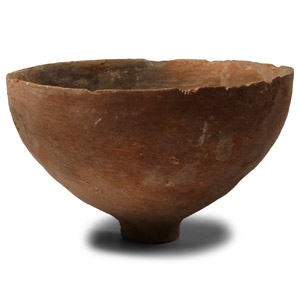
Trans-Jordan Polished Terracotta Bowl
Early Bronze Age, 3rd-2nd millennium B.C.Sold for (Inc. bp): £46
Hemispherical n profile with small foot, dimple to the underside; rim chipped. 145 grams, 65 mm high
From a family collection pre 1988.
