
Loading, please wait...
LOT 1988
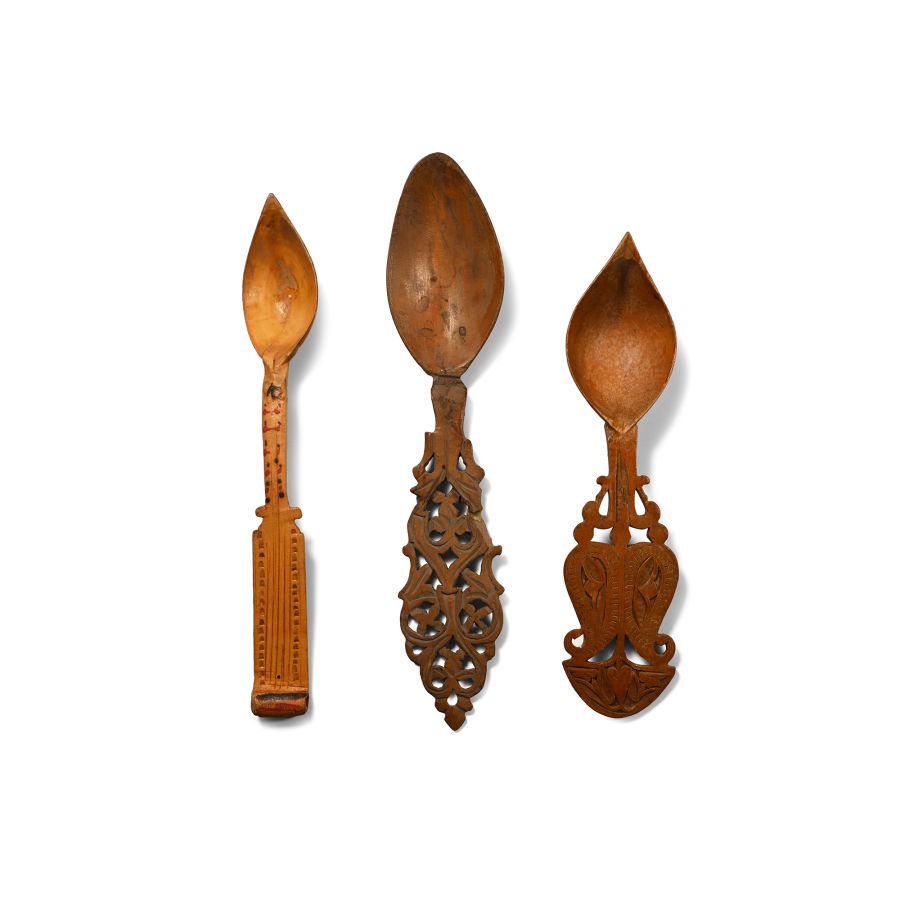
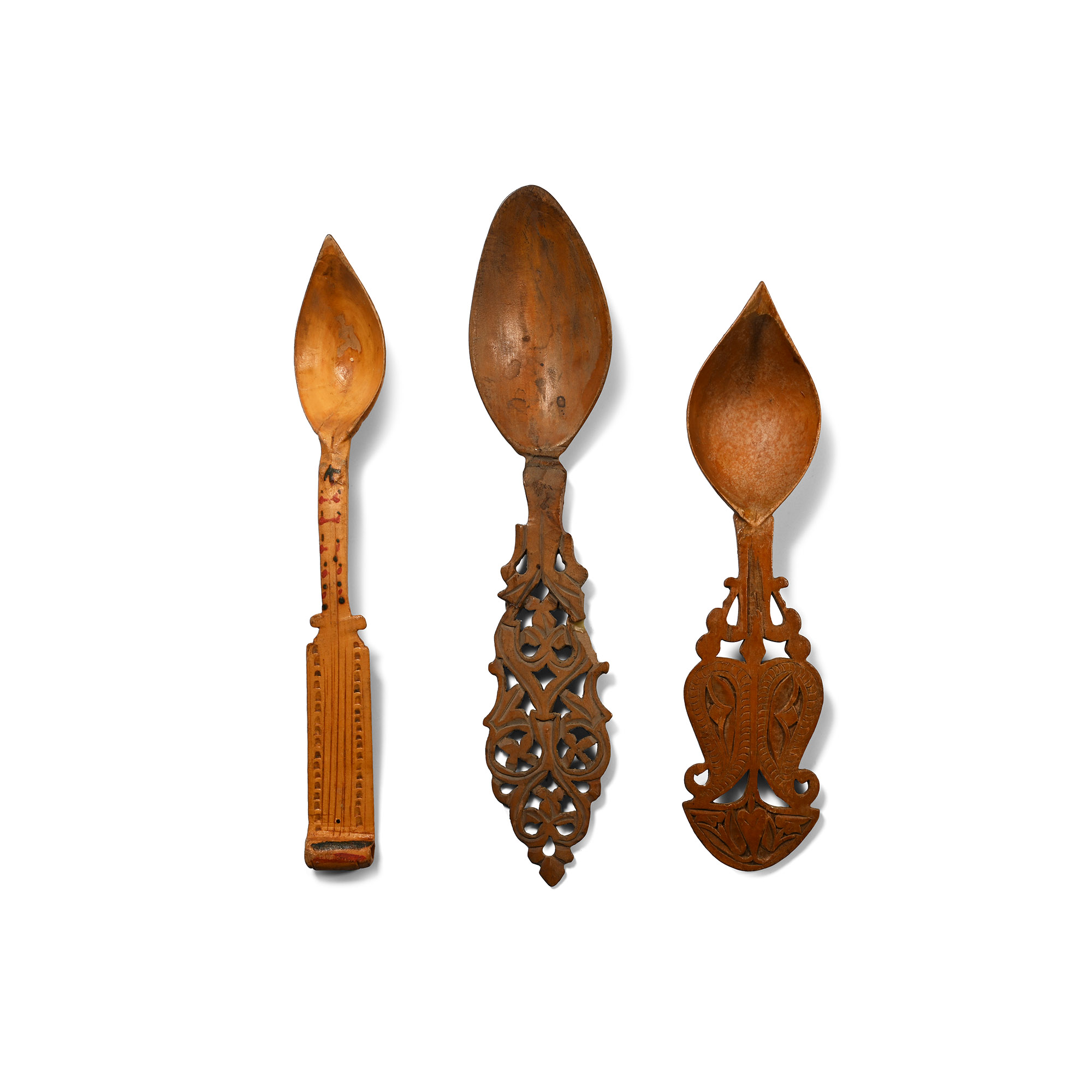
Persian Fruit Wood Sherbet Spoons
LATE 19TH CENTURY A.D.
7 - 8 3/8 in. (24 grams total, 18-21.4 cm).
Three carved wooden spoons comprising: one with scaphoid bowl and openwork handle with tulip-shaped flowers and foliage; one with shallow scooped bowl, openwork handle with looped tendrils; one with scaphoid bowl and rectangular handle with chip-carved detailing, black and red ornament. [3]
ProvenanceAcquired in the late 1980s-early 1990s.
Private collection, London.
This lot is accompanied by an illustrated lot declaration signed by the Head of the Antiquities Department, Dr Raffaele D'Amato.
TimeLine Auctions follows a vetting process to ensure the authenticity and legality of all items, reinforcing our commitment to integrity and responsible trading. Each antiquity, antique, and coin lot undergoes thorough examination by a vetting committee of at least ten external specialists, professional trade association members, scientists, and archaeologists: Our Vetting Process
AUCTIONS:
TimeLine is a leading auction house specialising in antiquities, ancient art, collectables, natural history, coins, medals, and books. Our auctions offer museums, collectors, historians, and enthusiasts the opportunity to acquire unique and historically significant pieces.
-
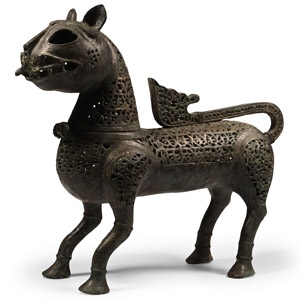
Western Asiatic Style Bronze Lion Incense Burner
20th century AD.Sold for (Inc. bp): £494
With openwork body and hinged neck, standing on all fours with its tail resting on the back. 3.25 kg, 40 cm wide
From the family collection of a Hampstead gentleman; formerly acquired in the 1980s. This lot is accompanied by an illustrated lot declaration signed by the Head of the Antiquities Department, Dr Raffaele D'Amato. -
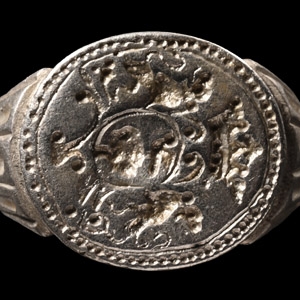
Post Medieval Silver Armorial Ring
17th-18th century A.D.Sold for (Inc. bp): £845
Comprising a D-section hoop with expanding, fluted shoulders, oval bezel bearing arms, two rearing lions flanking a crowned shield bearing an image of a bird standing on a flower. 4.95 grams, 20.86 mm overall, 17.78 mm internal diameter (approximate size British M, USA 6, Europe 12.46, Japan 12)
Ex German art market, 2000s. Acquired from an EU collector living in London. From the collection of a Surrey, UK, gentleman. This lot is accompanied by an illustrated lot declaration signed by the Head of the Antiquities Department, Dr Raffaele D'Amato. -
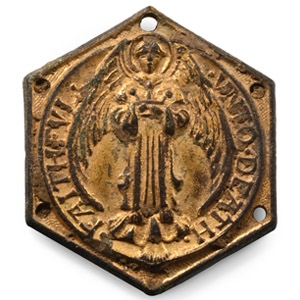
Post Medieval Gilt Bronze Religious Mount
18th-19th century A.D.Sold for (Inc. bp): £39
Hexagonal with a central roundel, a standing nimbate saint to the centre surrounded by an inscription 'Faithful unto death' from book of Revelations: 2:8-11; pierced through the angles. 7.05 grams, 27 mm
Found at Winterbourne, Berkshire, UK, in 1987. Property of a Berkshire, UK, gentleman collector. This lot is accompanied by an illustrated lot declaration signed by the Head of the Antiquities Department, Dr Raffaele D'Amato.
