
Loading, please wait...
LOT 1152
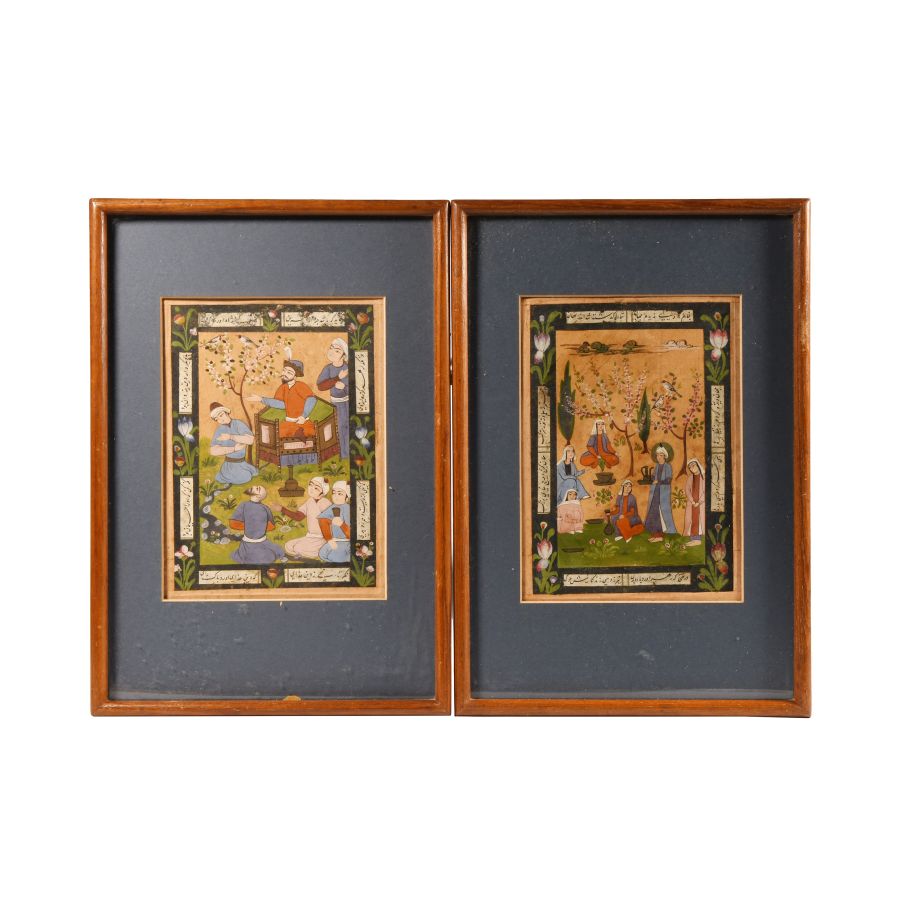
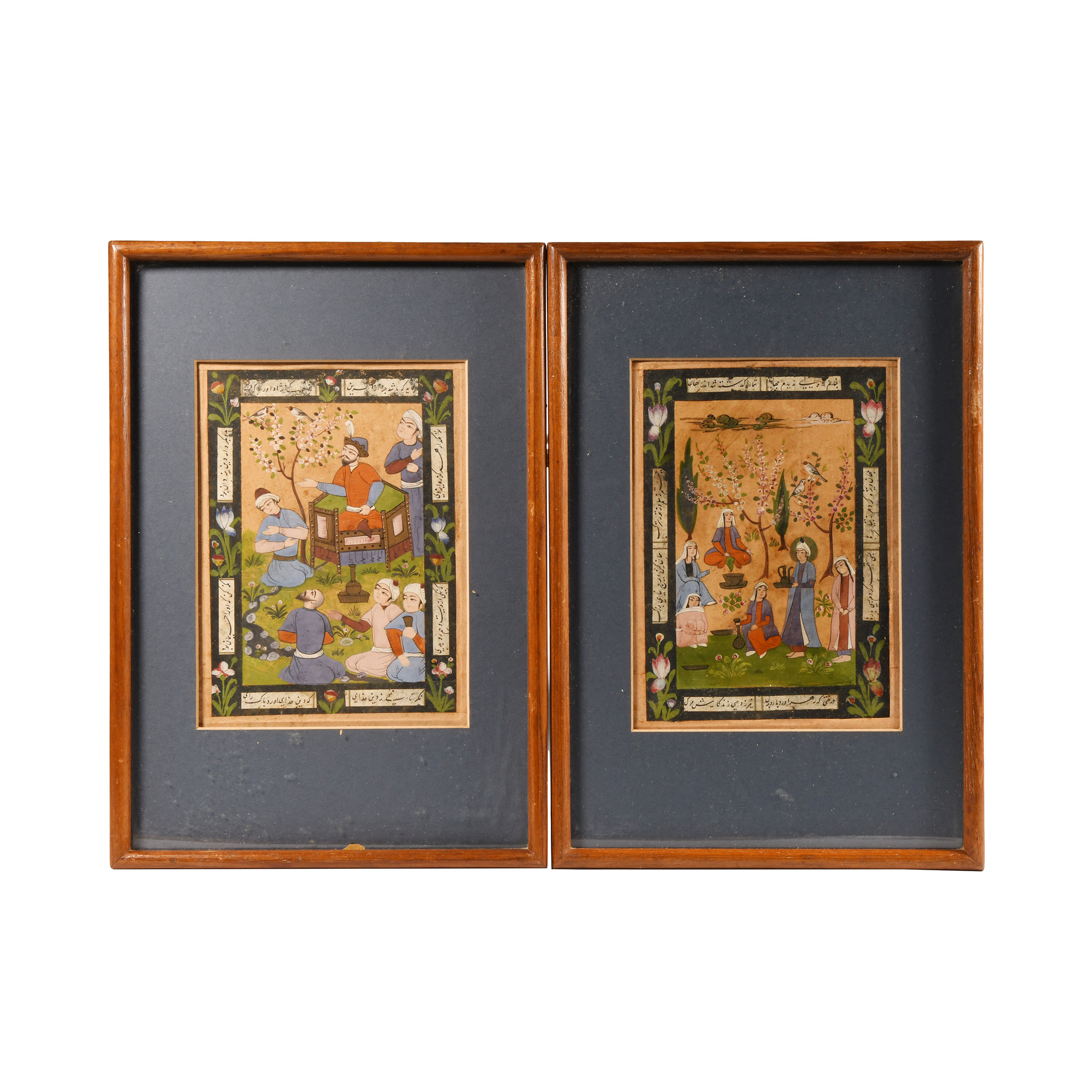
Persian Framed Watercolour Painting Group
LATE 19TH-EARLY 20TH CENTURY A.D.
12 1/4 x 8 1/2 in. (932 grams total, 31 x 21.5 cm each).
Framed and glazed and displaying polychrome figural scenes bordered by flowering plants and panels of script: one depicting a tea(?) ceremony set in a landscape featuring blossoming trees and birds; a prince or other figure seated on a bolster, in a landscape featuring a brook and blossoming trees, surrounded by attendants. [2]
ProvenanceAcquired by the vendor's father on the UK art market, before 1990.
CONDITIONTimeLine Auctions follows a vetting process to ensure the authenticity and legality of all items, reinforcing our commitment to integrity and responsible trading. Each antiquity, antique, and coin lot undergoes thorough examination by a vetting committee of at least ten external specialists, professional trade association members, scientists, and archaeologists: Our Vetting Process
AUCTIONS:
TimeLine is a leading auction house specialising in antiquities, ancient art, collectables, natural history, coins, medals, and books. Our auctions offer museums, collectors, historians, and enthusiasts the opportunity to acquire unique and historically significant pieces.
LOT 1152
Persian Framed Watercolour Painting Group
Estimate £100 - 140€120 - 160 (for guidance only)$140 - 190 (for guidance only)
-
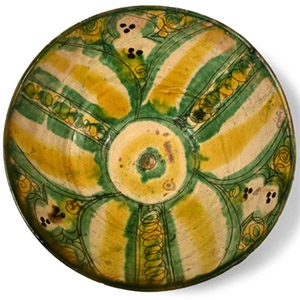
Nishapur Terracotta Glazed Bowl
10th century A.D.Estimate: £800 - 1,000 (+bp*)
Opening Bid: £344
Hemispherical in profile with basal ring, painted rim and trefoil motif on a textured field. 651 grams, 25 cm wide
Acquired before 1978. Private collection, UK. -
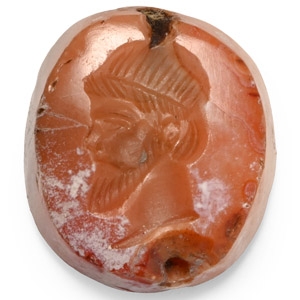
Parthian Stone Seal with Bearded Bust
1st century B.C.-1st century A.D. or laterSold for (Inc. bp): £78
Carved from opaque stone, upper face with a bearded profile bust wearing a headdress, occluded piercing. 4.52 grams, 21 mm
From the collection of a gentleman, acquired on the London art market in the 1990s. -
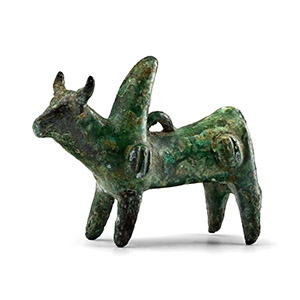
Bactrian Bronze Zebu Statuette
2nd-1st century B.C.Sold for (Inc. bp): £351
Modelled in the round and hollow to the underside with loop behind the hump. 138 grams, 80 mm
UK collection, 1990s. Acquired on the UK art market, before 2000. Private collection, Mr M.V., a London-based businessman.
