
Loading, please wait...
LOT 1462
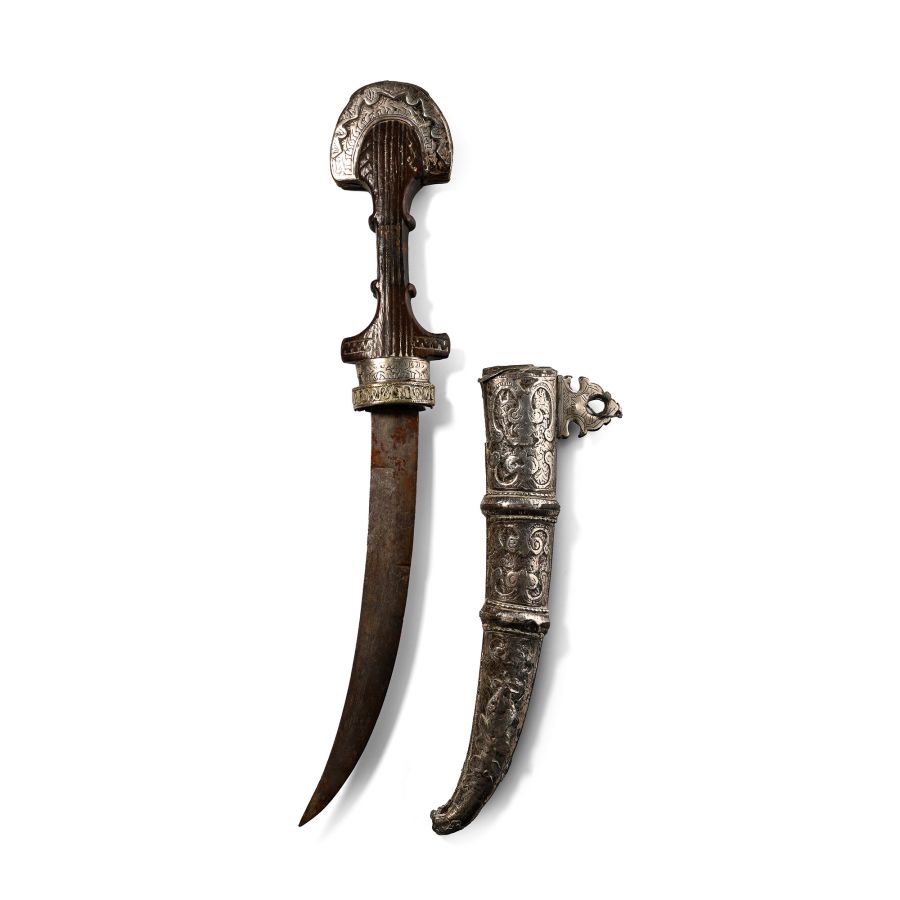
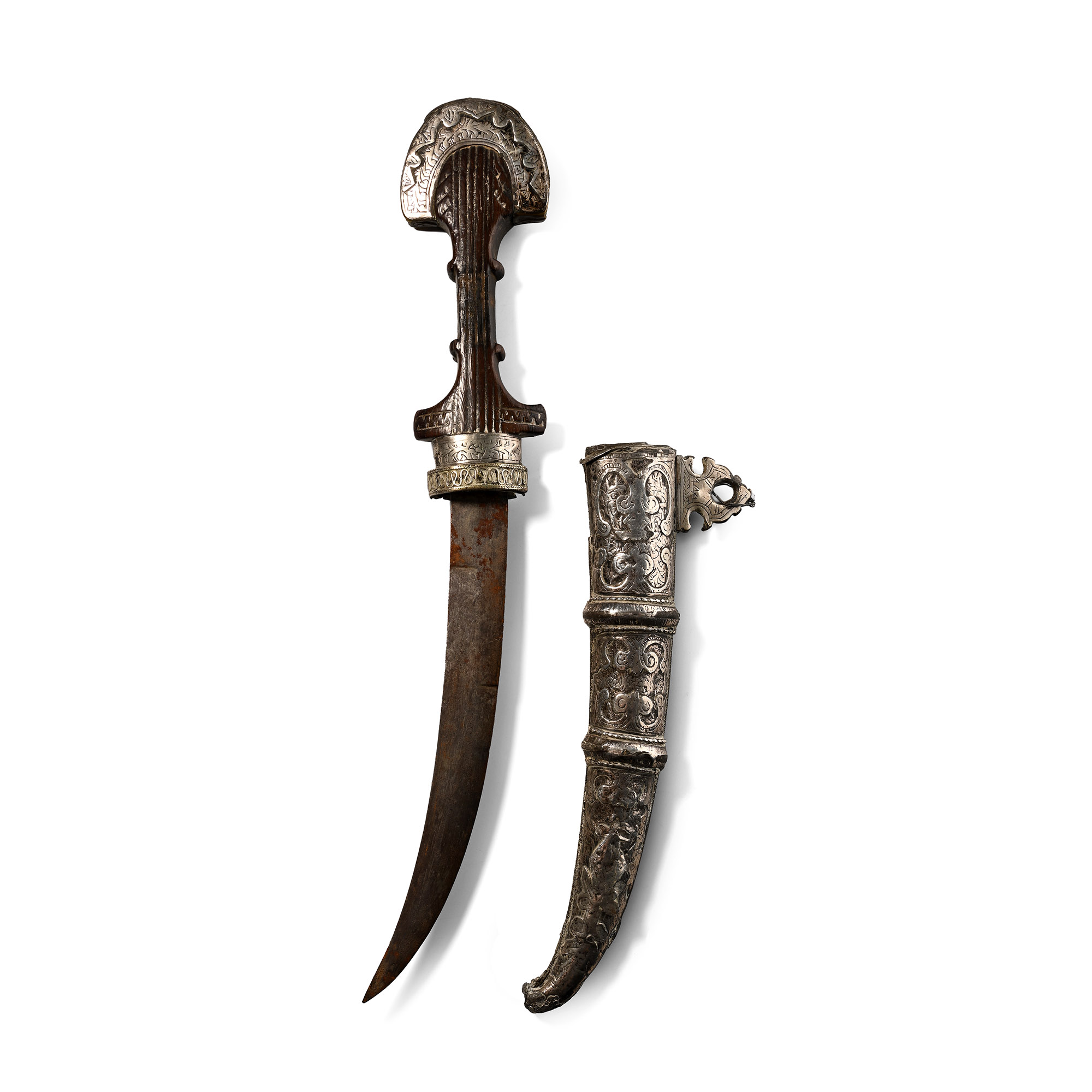
Persian Dagger in White Metal and Copper Scabbard
19TH CENTURY A.D.
15 3/8 in. (393 grams, 39 cm).
Two-edged jambiya with narrow curved blade, brass bolster with silver facing and applied undulating band; hardwood grip, silver facing to pommel; silver-cased brass sheath with raised foliage ornament, pierced D-shaped suspension lug. [No Reserve]
ProvenanceAcquired during the 1960s.
From an old North London oriental and ethnographical collection.
From the property of a late Lincolnshire, UK, gentleman.
TimeLine Auctions follows a vetting process to ensure the authenticity and legality of all items, reinforcing our commitment to integrity and responsible trading. Each antiquity, antique, and coin lot undergoes thorough examination by a vetting committee of at least ten external specialists, professional trade association members, scientists, and archaeologists: Our Vetting Process
AUCTIONS:
TimeLine is a leading auction house specialising in antiquities, ancient art, collectables, natural history, coins, medals, and books. Our auctions offer museums, collectors, historians, and enthusiasts the opportunity to acquire unique and historically significant pieces.
-
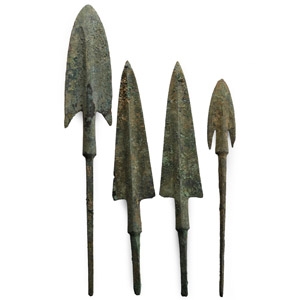
Luristan Bronze Arrowhead Collection
2nd-1st millennium B.C.Sold for (Inc. bp): £117
Mainly triangular-headed barbed and tanged types with midrib. 139 grams total, 13.5-18.2 cm
Ex London, UK, collection, 1990s. -
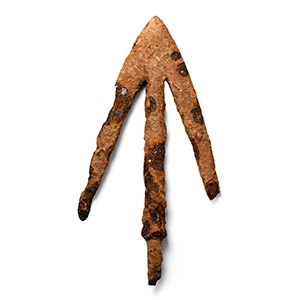
Medieval Iron Swallow-Tailed Arrowhead
10th-14th century A.D.Sold for (Inc. bp): £26
With narrow curved edges and stepped tang. 17.6 grams, 84 mm
From the private collection of author and historian Dr DeWitt Bailey, one of the global authorities on the confederate army in the US civil war; thence by descent to his grandson. -
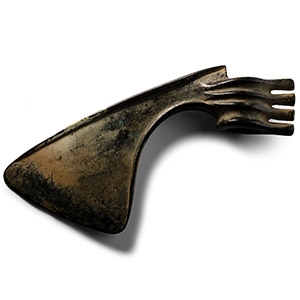
Luristan Comb-Backed Axehead
2nd-1st millennium B.C.Estimate: £250 - 350 (+bp*)
Opening Bid: £125
With ribbed openwork socket terminating in a butt formed of four cones, the blade expanding from the socket. 400 grams, 21 cm
From a London collection, early 2000s.
