
LOT 2861
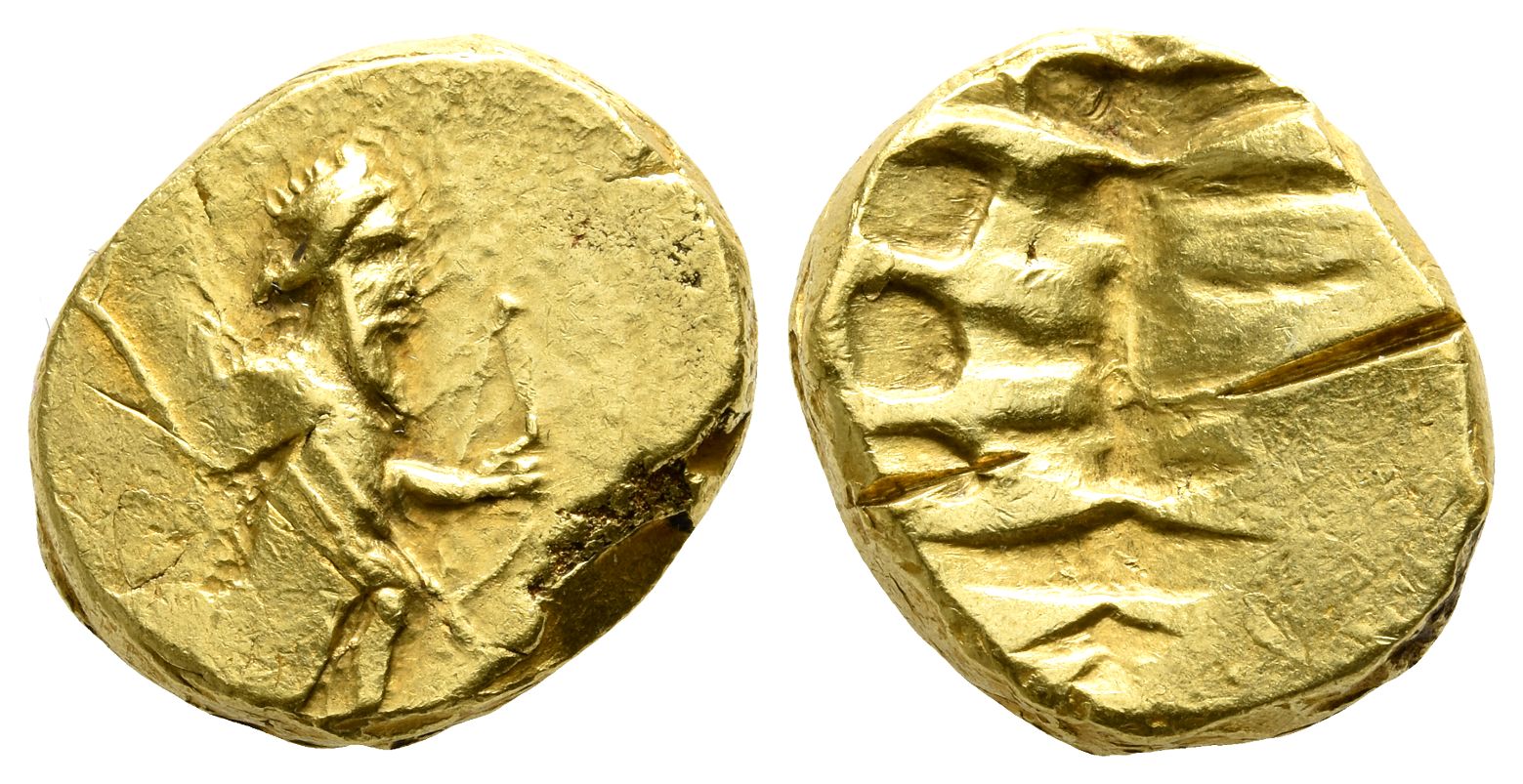
Persia, Alexandrine Empire. Uncertain Satrap AV Double Daric. After 315 BC.
Babylon mint. The Great King, wearing kidaris and kandys, quiver over shoulder, in kneeling-running stance to right, holding transverse spear with right hand and bow with left / Wavy stripes patterned incuse punch. Cf. Nicolet-Pierre, Travaux Le Rider, p. 298, 6 and pl. 30, 6. Good Very Fine. Test cut on reverse. Areas of weakness. Rare.(16.72gr, 20mm.).
ProvenanceEx Fritz Rudolf Künker GmbH & Co. KG, Auction 182, 14 March 2011, lot 362.
Ex Numismatica Ars Classica, Auction 123, 9 May 2021, lot 873.
TimeLine Auctions follows a vetting process to ensure the authenticity and legality of all items, reinforcing our commitment to integrity and responsible trading. Each antiquity, antique, and coin lot undergoes thorough examination by a vetting committee of at least ten external specialists, professional trade association members, scientists, and archaeologists: Our Vetting Process
AUCTIONS:
TimeLine is a leading auction house specialising in antiquities, ancient art, collectables, natural history, coins, medals, and books. Our auctions offer museums, collectors, historians, and enthusiasts the opportunity to acquire unique and historically significant pieces.
LOT 2861
Persia, Alexandrine Empire. Uncertain Satrap AV Double Daric.
Estimate £3,000 - 4,000€3,480 - 4,640 (for guidance only)$4,050 - 5,400 (for guidance only)
-
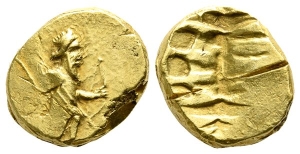
Persia, Alexandrine Empire. Uncertain Satrap AV Double Daric. After 315 BC.
Estimate: £3,000 - 4,000 (‡+bp*)
Opening Bid: £1,350
Babylon mint. The Great King, wearing kidaris and kandys, quiver over shoulder, in kneeling-running stance to right, holding transverse spear with right hand and bow with left / Wavy stripes patterned incuse punch. Cf. Nicolet-Pierre, Travaux Le Rider, p. 298, 6 and pl. 30, 6. 16.72gr, 20mm.
Good Very Fine. Test cut on reverse. Areas of weakness. Rare.
Ex Fritz Rudolf Künker GmbH & Co. KG, Auction 182, 14 March 2011, lot 362. Ex Numismatica Ars Classica, Auction 123, 9 May 2021, lot 873. -
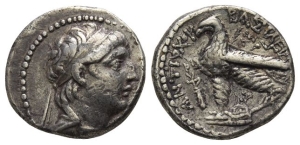
Seleukid Empire, Antiochos VII Euergetes (Sidetes) AR Didrachm. 138-129 BC.
Sold for (Inc. bp): £182
Tyre mint. Dated SE 174 (139/8 BC). Phoenician standard. Diademed and draped bust to right / ΒΑΣΙΛΕΩΣ ΑΝΤΙΟΧΟΥ, eagle standing to left on prow, palm frond in background, to left, [I]EP[A] above club surmounted by Tyre monogram, to right, ΑΣΥ above ΔOP (date), AΣ between legs. SC 2110.2c; DCA 201; HGC 9, 1077. 7.02gr, 21mm, 12h.
Very Fine. Circular inscription in Phoenician on cheek.
From the collection of a gentleman, acquired on the London art market in the 1990s. -
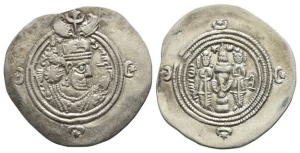
Sasanian Kingdom, Husrav (Khosrau) II AR Drachm. AD 591-628.
Sold for (Inc. bp): £33
LYW (Rēv-Ardaxšir) mint. Dated RY 21 (AD 611/2). Draped bust to right, wearing mural crown with two wings, frontal crescent and star-in-crescent; stars and legends flanking, ribbon on shoulders; all within double border with star-in-crescents in margin / Fire altar with ribbons flanked by attendants; star and crescent flanking flames; date to left, mint to right; all within triple border, with star-in-crescents in margin. SC Tehran -. 4.03gr, 32mm, 3h.
Good Very Fine.
Acquired on the UK market before 2000. Property of a London, UK, gentleman.
