
Loading, please wait...
LOT 0294
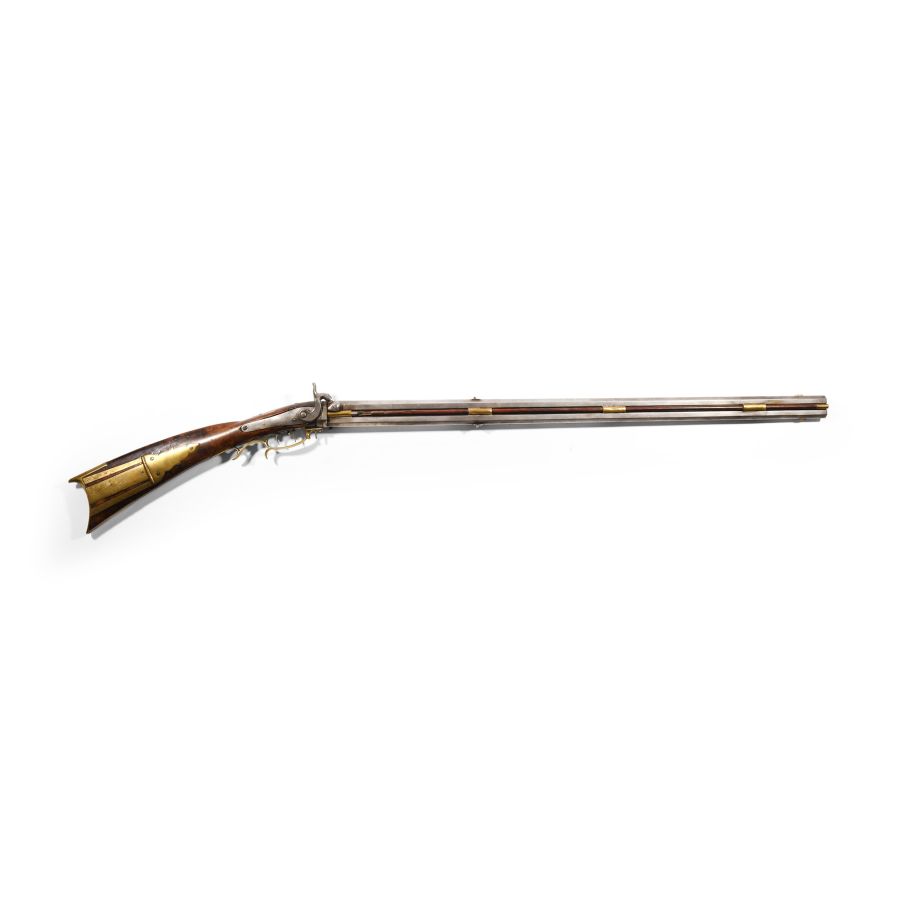
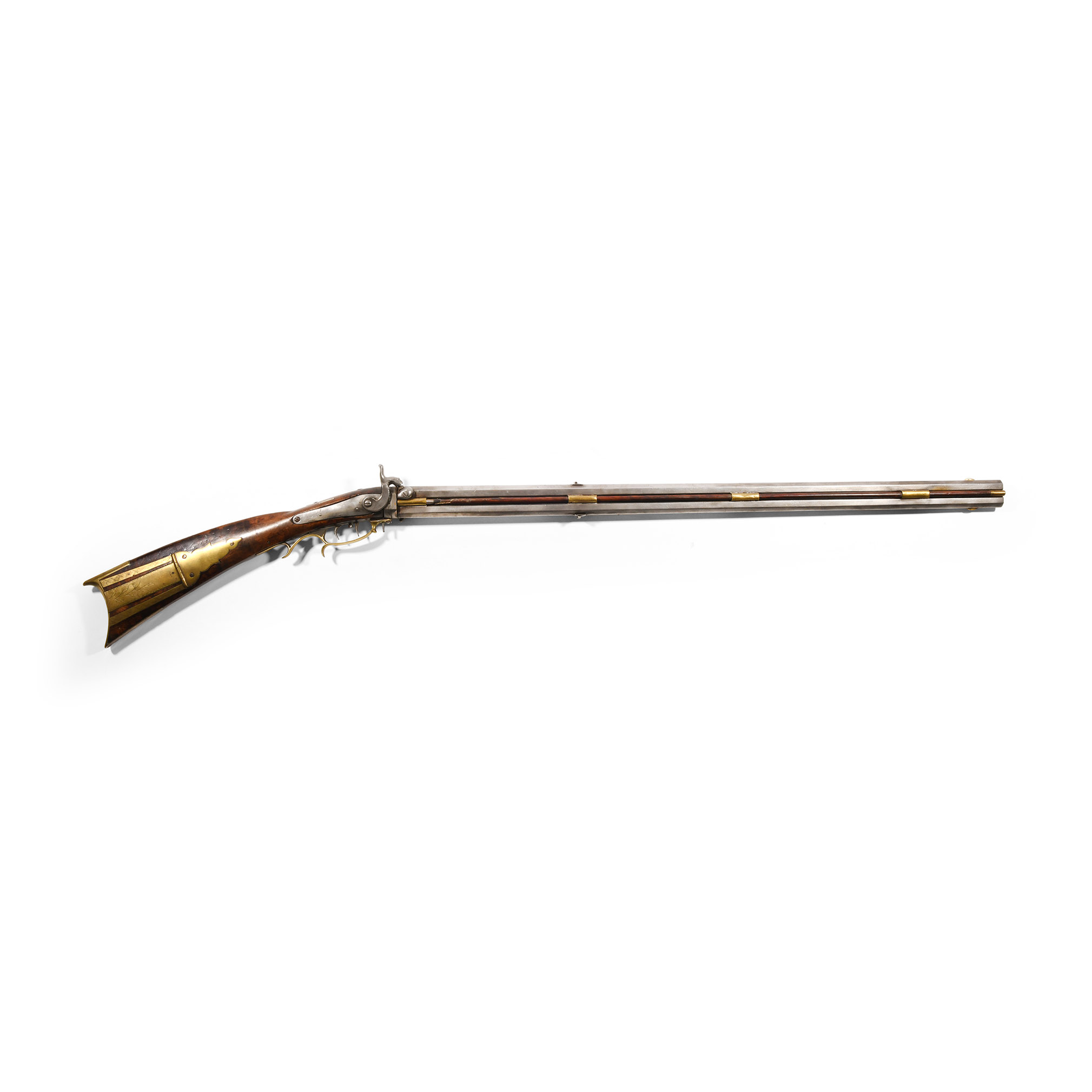
Percussion Swivel Breech Kentucky Rifle
1836 A.D.
48 3/4 in. (4.10 kg, 124 cm).
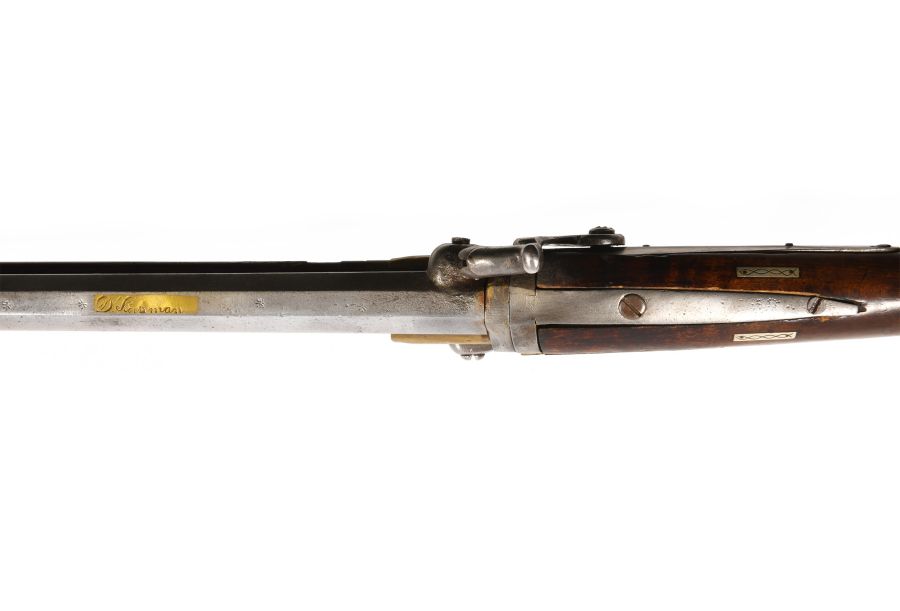
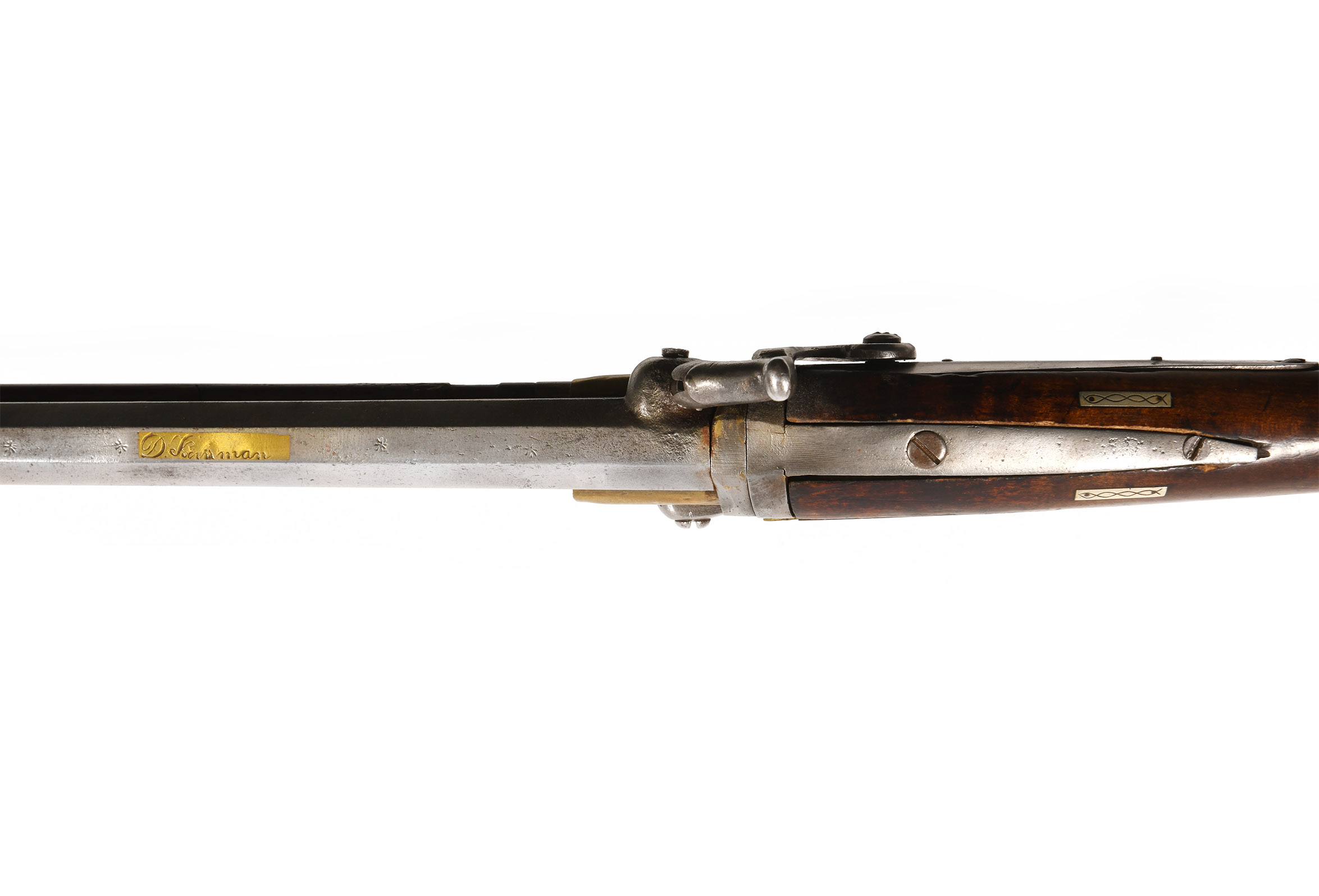
Over and under turnover rifle with 82cm (32¼") barrel with brass insert inscribed 'D Kornman' to top, double set trigger, fitted with one (of two) ramrod in brass ferrules at side and characteristically curved wood stock with brass butt and side plates, trigger guard and patch container with hinged lid; left of stock with inset silver(?) of a fish or whale which might suggest that this was carried on a whaling ship; action working.
ProvenanceAcquired from Andrew Spencer Bottomley, UK, 2016.
The Kusmirek Collection, UK.
Accompanied by copies of the purchase invoice and listing.
See Flayderman, N., Guide to Antique American Firearms, 9th edition, 2007, p.670, no.11-032, for a very similar example.
FootnotesSold as an exempt item under Section 58 (2) of the Firearms Act, 1968, to be held as a curiosity or ornament. No license required but buyer must be over 18 years of age. Overseas bidders should note that, due to UK regulations governing export of all firearms, overseas buyers will need to make arrangements for shipping this lot out of the UK directly, by air freight, with a specialist company or agent.
CONDITIONTimeLine Auctions follows a vetting process to ensure the authenticity and legality of all items, reinforcing our commitment to integrity and responsible trading. Each antiquity, antique, and coin lot undergoes thorough examination by a vetting committee of at least ten external specialists, professional trade association members, scientists, and archaeologists: Our Vetting Process
AUCTIONS:
TimeLine is a leading auction house specialising in antiquities, ancient art, collectables, natural history, coins, medals, and books. Our auctions offer museums, collectors, historians, and enthusiasts the opportunity to acquire unique and historically significant pieces.
-
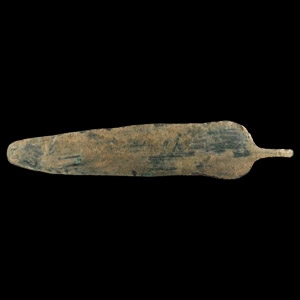
Luristan Bronze Spearhead
14th-10th century B.C.Estimate: £120 - 170 (+bp*)
Opening Bid: £60
Lanceolate profile with rounded tip and deep shoulders, short tang. 223 grams, 40 cm
Ex German collection, Cologne, 1980-1990s.
The metalworking techniques used in making bronze weapons in Luristan were very complex. Surfaces were often finished in repoussé work, and some of the weapons were chased, others engraved. The spearhead seems to belong to the type V (heavy spearheads) of the Khorasani's classification, having ovate blade with rounded and gently curved shoulders. Unfortunately the original mid-rib is today completely effaced. -
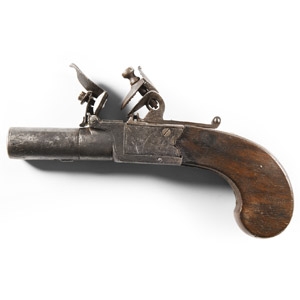
Flintlock Pocket Pistol
18th century A.D.Estimate: £400 - 600 (+bp*)
Opening Bid: £150
With 40mm (1½") turn-off barrel, box-lock with sliding safety marked 'CLARK' left and 'LONDON' right; fitted with plain wood butt and octagonal escutcheon; action working. 280 grams, 16 cm
Acquired on the UK market. Property of a Kent collector.
Sold as an exempt item under Section 58 (2) of the Firearms Act, 1968, to be held as a curiosity or ornament. No license required but buyer must be over 18 years of age. Overseas bidders should note that, due to UK regulations governing export of all firearms, overseas buyers will need to make arrangements for shipping this lot out of the UK directly, by air freight, with a specialist company or agent. -
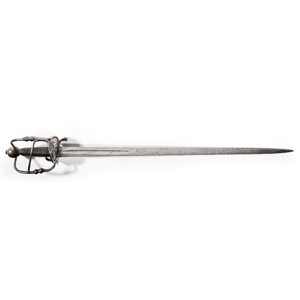
Dutch Thumb Ring Sword
Mid 16th century A.D.Estimate: £1,000 - 1,400 (+bp*)
Opening Bid: £472
The blade composed of a straight, double edge with single fuller and clear running wolf marks; signed 'S AH A GOM' in both fullers with 'shooting star' below and with punched crown mark just below the hilt; twisted wire grip, thumb ring, leaf-shaped guard to hilt, bulbous pommel. 826 grams, 84 cm
Acquired from West Street Antiques, Dorking, Surrey, UK, 2015. The Kusmirek Collection, UK. Accompanied by copy of a previous listing and item ticket.
