
![Parthian Dynasty AR Drachm Groups [5].](https://timelineauctions.com/upload/images/items/220619a.jpg "Parthian Dynasty AR Drachm Groups [5].")
![Parthian Dynasty AR Drachm Groups [5].](https://timelineauctions.com/upload/images/items/220619.jpg "Parthian Dynasty AR Drachm Groups [5].")
LOT 2978
Parthian Dynasty AR Drachm Groups [5]. 1st century BC.
Five silver Drachms of the Parthian dynasty. (20.55gr total). [No Reserve]
ProvenanceAcquired on the UK market before 2000;
Property of a London, UK, gentleman.
TimeLine Auctions follows a vetting process to ensure the authenticity and legality of all items, reinforcing our commitment to integrity and responsible trading. Each antiquity, antique, and coin lot undergoes thorough examination by a vetting committee of at least ten external specialists, professional trade association members, scientists, and archaeologists: Our Vetting Process
AUCTIONS:
TimeLine is a leading auction house specialising in antiquities, ancient art, collectables, natural history, coins, medals, and books. Our auctions offer museums, collectors, historians, and enthusiasts the opportunity to acquire unique and historically significant pieces.
-
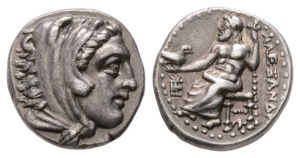
Kingdom of Macedon, Philip III Arrhidaios AR Drachm. 323-317 BC.
Sold for (Inc. bp): £260
Sardeis mint. Struck under Menander or Kleitos, circa 323-319 BC. In the name and types of Alexander III of Macedon. Head of Herakles to right, wearing lion skin headdress, paws tied beneath chin / ΑΛΕΞΑΝΔΡ[ΟΥ], Zeus seated left on backless throne, holding long sceptre in his left hand and, in his right, eagle standing to right with closed wings; EY monogram in left field. Price 2597; Müller 839. 4.24gr, 15mm, 12h
Extremely Fine. Attractive old cabinet tone; well struck and in high relief.
From a London, UK, collection, 1990s. -
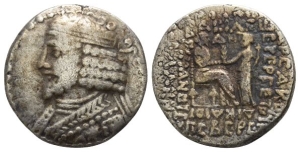
Kings of Parthia, Vardanes I AR Tetradrachm. Circa AD 40-45.
Estimate: £120 - 170 (+bp*)
Opening Bid: £60
Seleukeia on the Tigris mint. Dated Hyperberetaios SE 354 (September AD 43). Diademed and draped bust to left, wearing short beard / ΒΑΣΙΛΕΩΣ ΒΑΣΙΛΕΩΝ ΑΡΣΑΚΟY EYEPΓETOY ΔΙΚΑΙΟY ΕΠΙΦΑΝΟYΣ ΦΙΛΕΛΛΗΝΟΣ, Vardanes enthroned to right, receiving palm from Tyche standing to left and holding cornucopia with left hand; ΔNT (year) in field above, ΥΠΕΡΒΕΡΕΤΑΙΟΥ (month) in exergue. Sellwood 64.19. 11.41gr, 27mm, 12h
Near Very Fine.
From a UK private collection. -
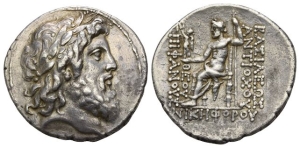
Seleukid Empire, Antiochos IV Epiphanes AR Tetradrachm. 175-164 BC.
Sold for (Inc. bp): £2,275
Antioch mint; struck 168-164 BC. Laureate and bearded head of Zeus to right / BAΣIΛEΩΣ ANTIOXOY ΘEOY EΠIΦANOYΣ NIKHΦOPOY, Zeus seated to left on throne, holding Nike with his right and sceptre with his left hand. HGC 9, 620a; Jameson 1700 (same dies); Mørkholm 14, dies A25/P103; SC 1398; SMA 63. 16.38gr, 31mm, 1h
Good Very Fine. Lightly toned. Some scratches.
Ex Bonhams, 24-25 March 2021, lot 559; Ex Nomos AG, Auction 23, 30 November 2021, lot 164 (dealer's ticket included).
