
Loading, please wait...
LOT 1155
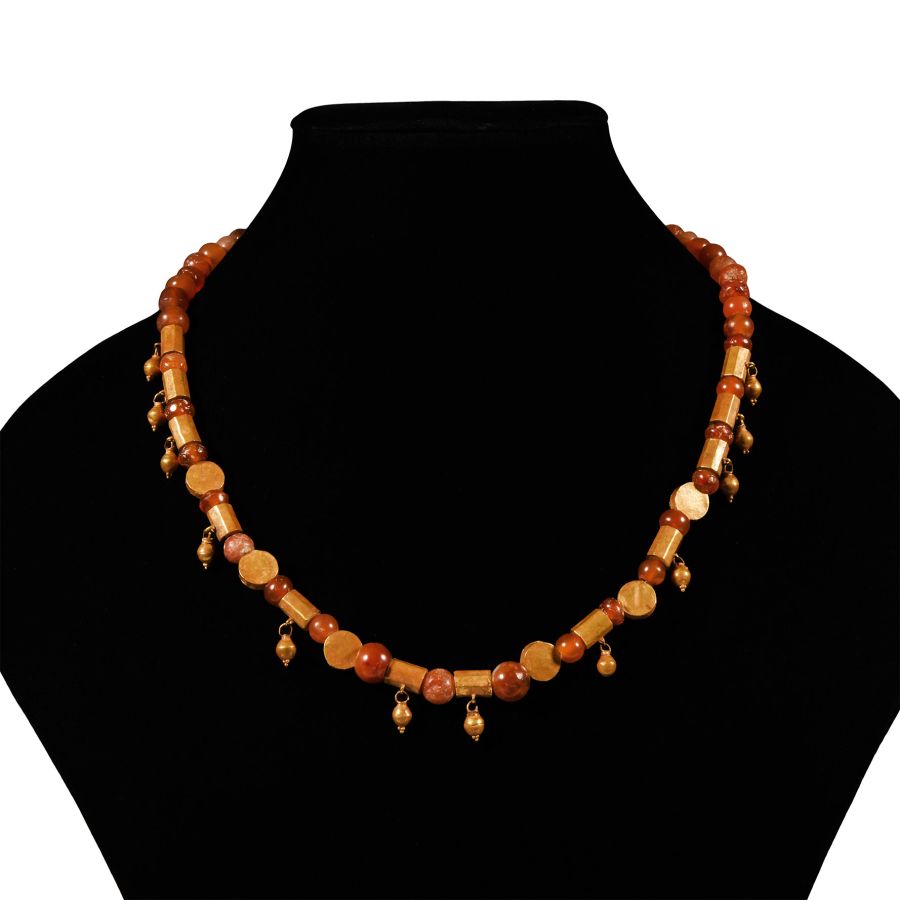
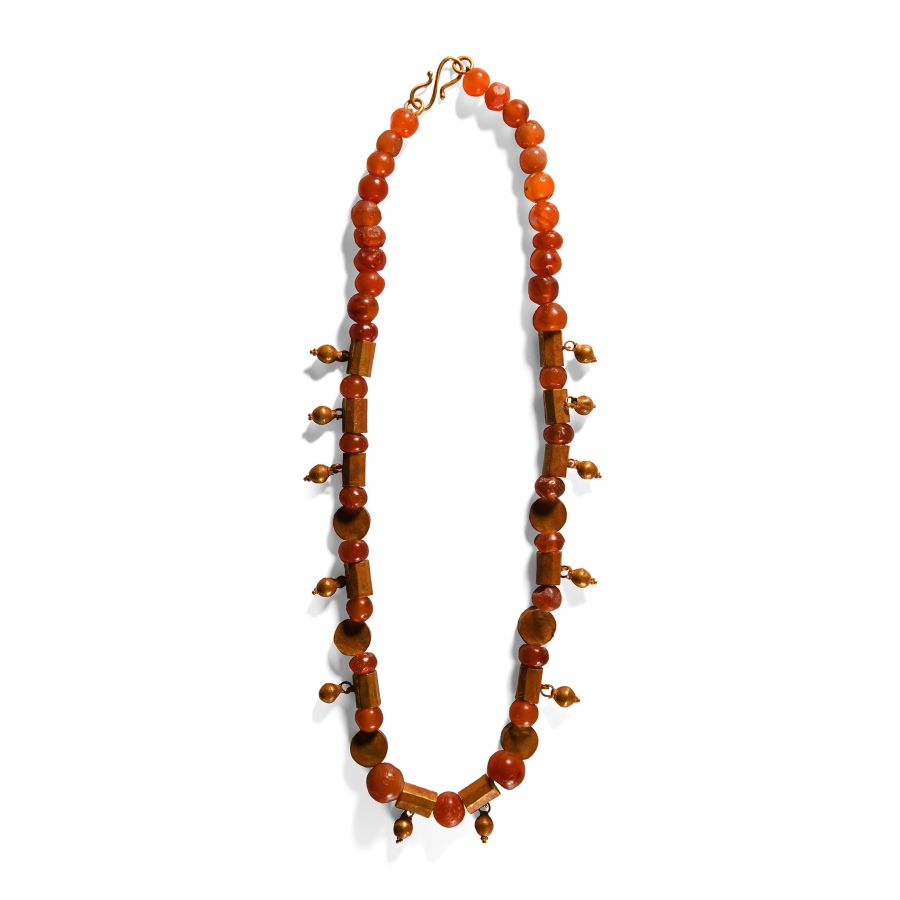
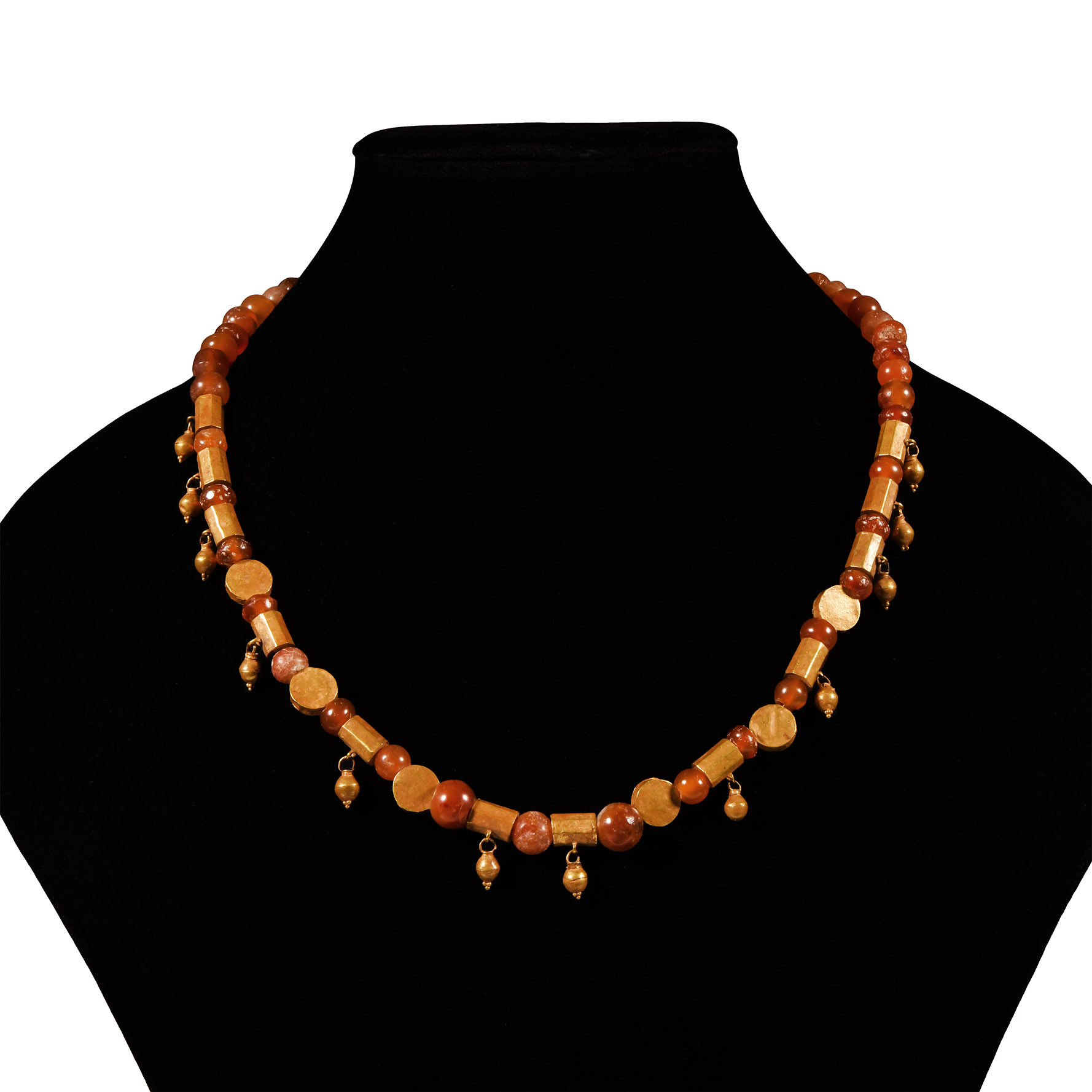
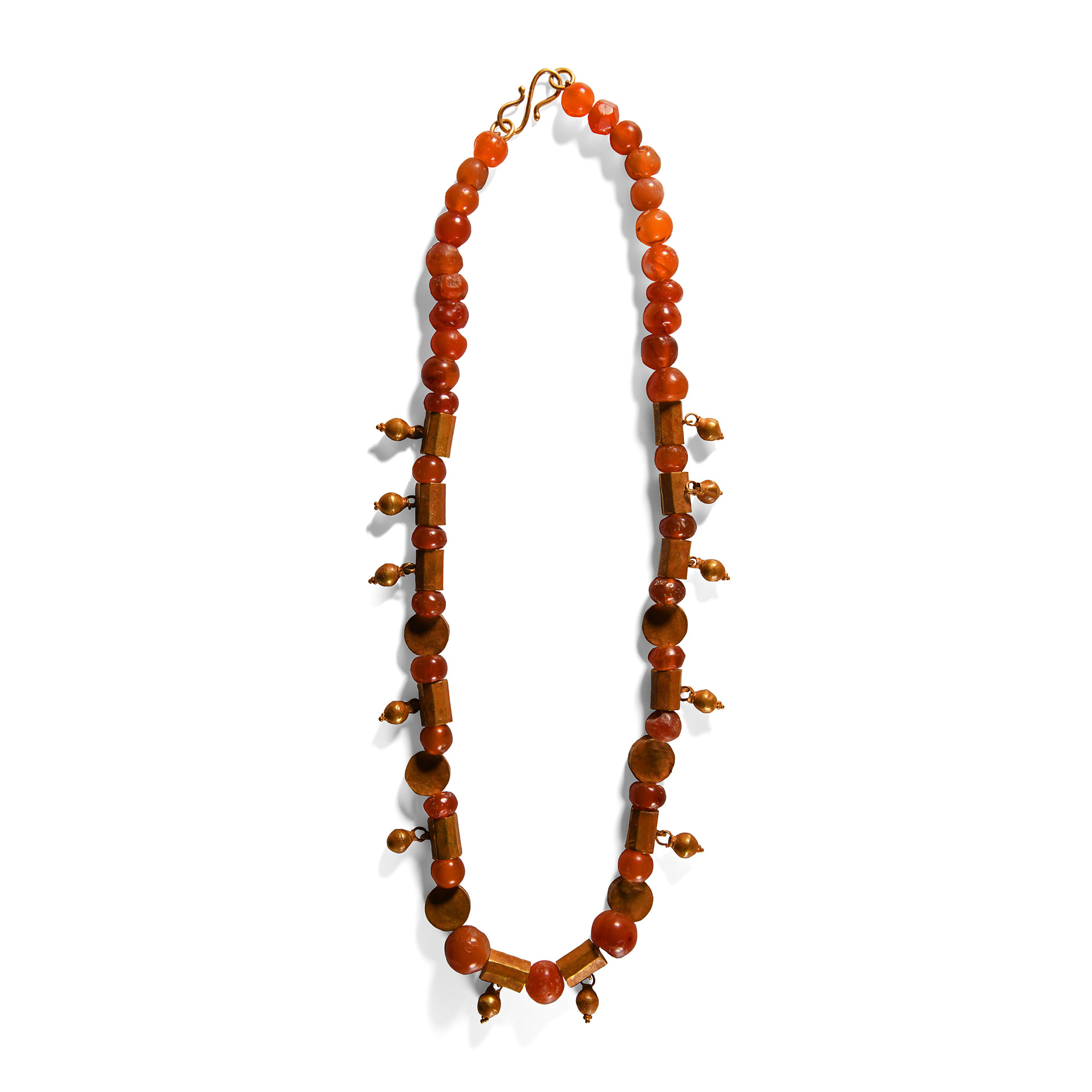
Parthian Carnelian and Gold Bead Necklace
1ST CENTURY B.C.-1ST CENTURY A.D.
18 1/4 in. (44 grams, 46.5 cm long).
Comprising: sheet-gold drum-shaped and octagonal-section beads with spherical pendants, graduated interstitial spherical or oblate carnelian beads; restrung with modern clasp.
ProvenanceAcquired 1970s-1996.
Property of a North American collector.
London collection, 2016.
Cf. Marshall, F.H., Catalogue of the Jewellery, Greek, Etruscan and Roman, in the Department of Antiquities, British Museum, London, 1911, pl.XXIV (1545).
CONDITIONTimeLine Auctions follows a vetting process to ensure the authenticity and legality of all items, reinforcing our commitment to integrity and responsible trading. Each antiquity, antique, and coin lot undergoes thorough examination by a vetting committee of at least ten external specialists, professional trade association members, scientists, and archaeologists: Our Vetting Process
AUCTIONS:
TimeLine is a leading auction house specialising in antiquities, ancient art, collectables, natural history, coins, medals, and books. Our auctions offer museums, collectors, historians, and enthusiasts the opportunity to acquire unique and historically significant pieces.
-
Western Asiatic Bronze Flask
2nd-1st millennium B.C.Sold for (Inc. bp): £65
Squat and with sloping sidewall, carinated foot and flat basal disc. 80 grams, 83 mm
Acquired 1980-2015. Ex Abelita family collection. -
Islamic Manuscript, 'Explanation of the Astrolabe Al-Manadam' by Al-Hakim the Physician Muhammad bin Ahmad Al-Iskandarani
1289 A.H. (1872 A.D.)Estimate: £1,500 - 2,000 (+bp*)
Opening Bid: £750
Hardback with quarter-calf binding and cloth-covered boards; title page with naskh script text in a triangular block; text pages typically 18 lines of loose black-ink script inside hand-drawn bilinear frames with red titles and diacritics, ru'qah script headings, text figures, diagrams, numerical and text tables, perpendicular text-blocks; usage wear. 468 grams, 20.3 x 25.6 cm
From an important family collection started in the late 1950s. Property of a West London, UK, gentleman. This lot has been checked against the Interpol Database of stolen works of art and is accompanied by a search certificate number no.12276-220409.
Astrolabes were used to make astronomical measurements, specifically to determine the altitudes of celestial bodies, but over time astrologers and travellers devised many different uses for the instrument. They were especially useful to navigators in order to determine position when out of sight of land. This text explains the book 'The Astrolabe' and several ways in which the device could be deployed. -
.jpg)
Trans-Jordan Polished Terracotta Bowl
Early Bronze Age, 3rd-2nd millennium B.C.Sold for (Inc. bp): £98
Hemispherical in profile with small foot, dimple to the underside; rim chipped. 145 grams, 65 mm high
From a family collection pre 1988.
