
Loading, please wait...
LOT 0327
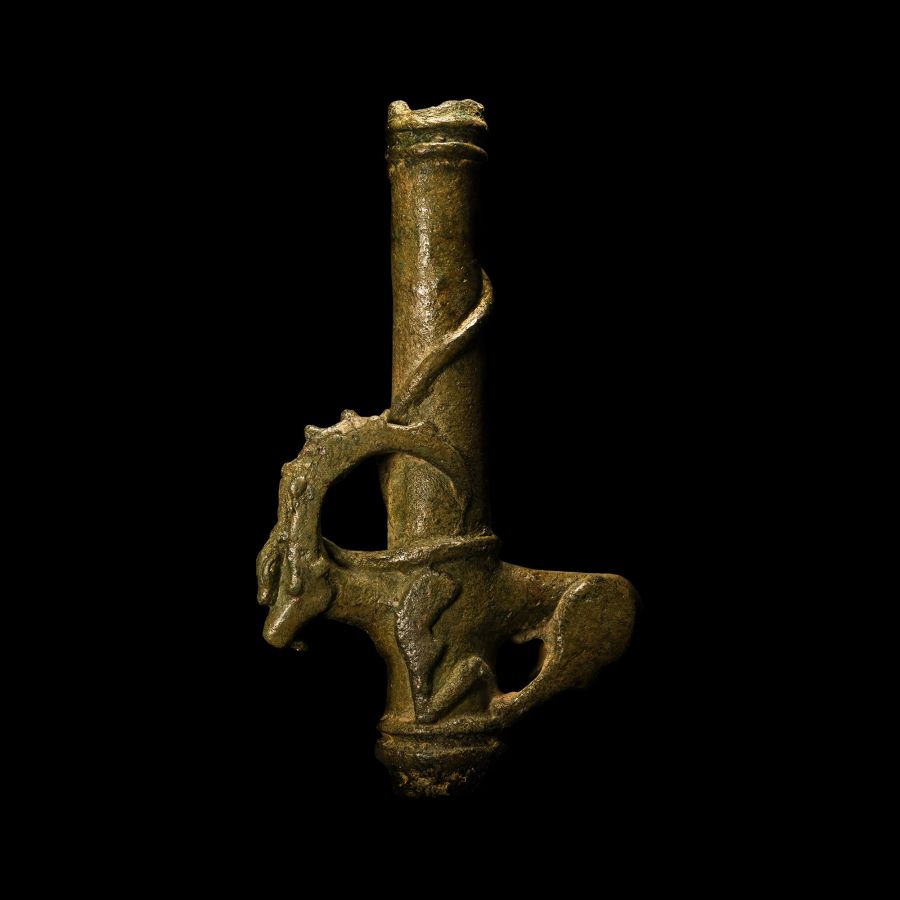
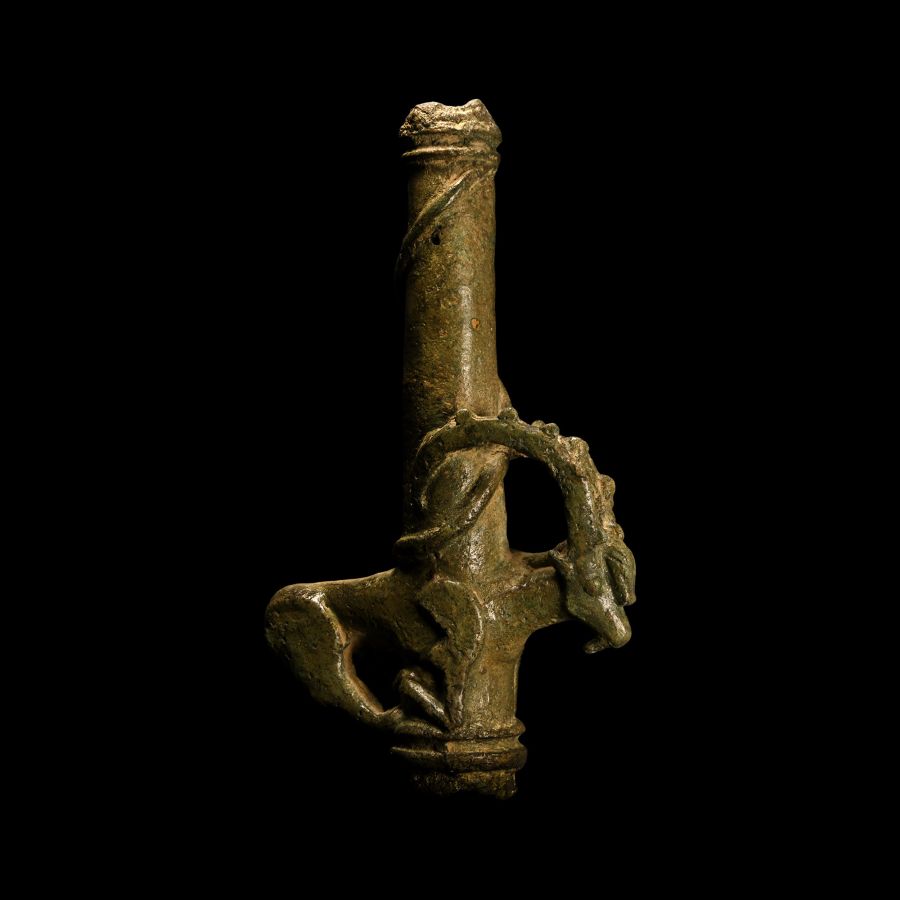
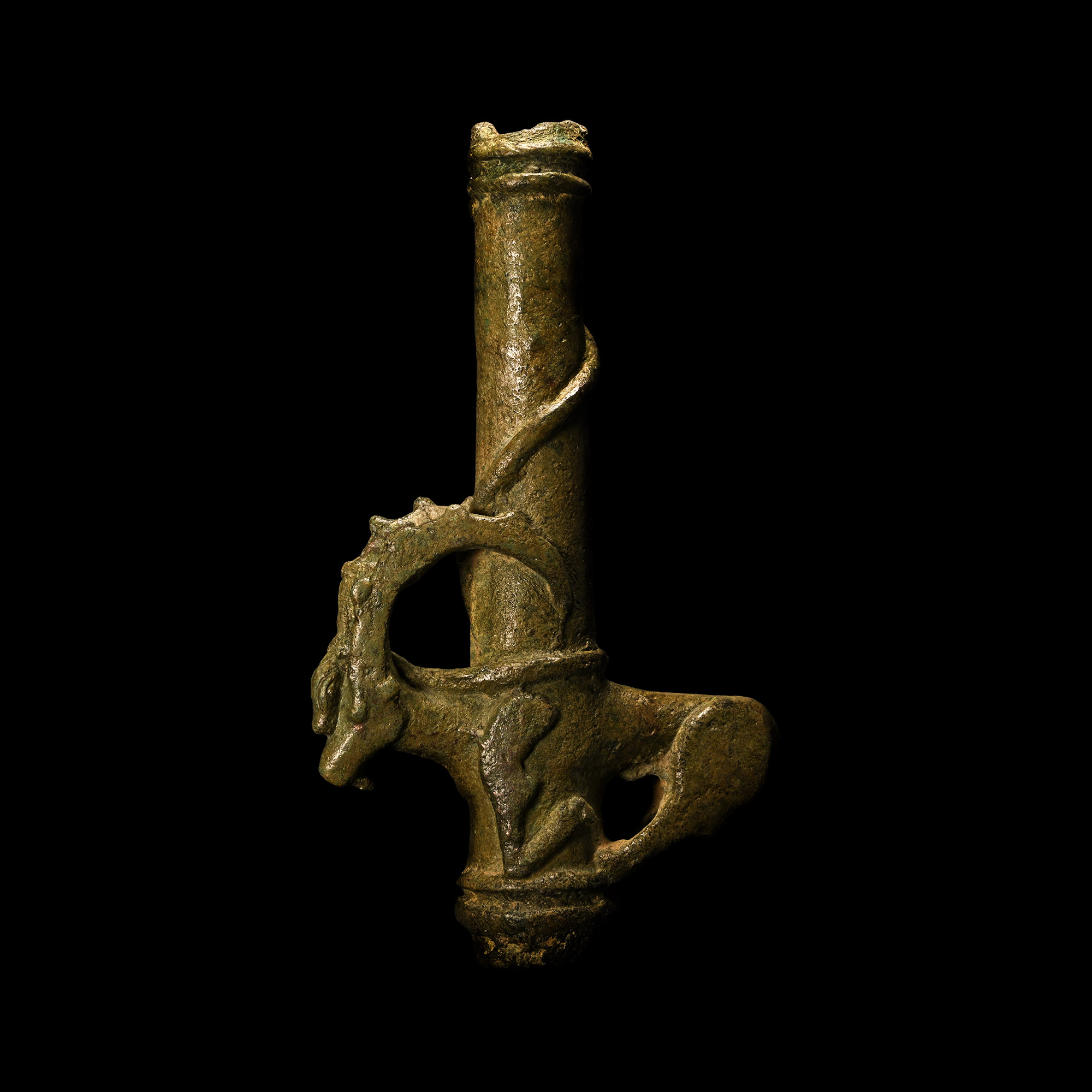
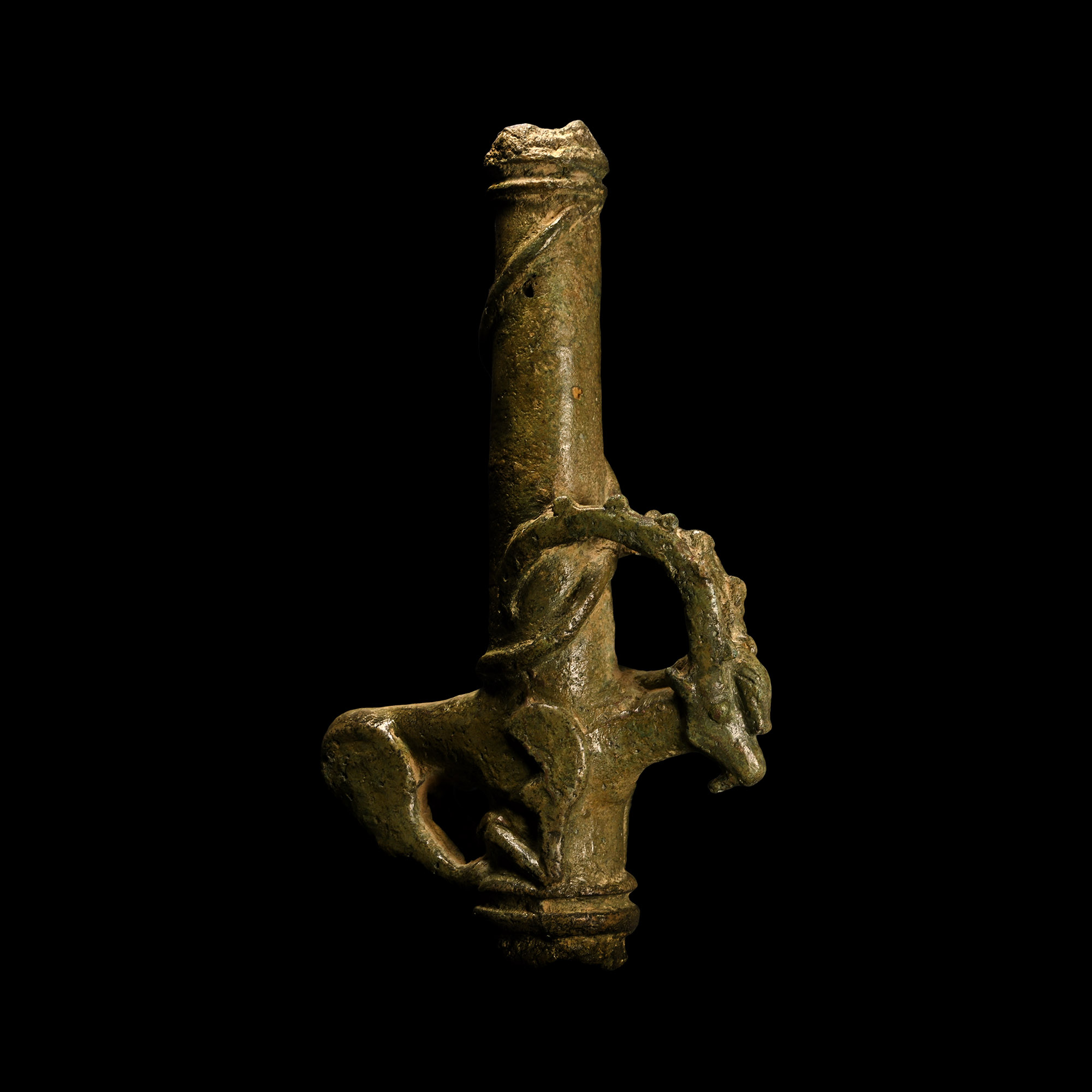
Parthian Bronze Macehead with Ibex
1ST-3RD CENTURY A.D.
7 7/8 in. (1.02 kg, 20 cm).
Tubular in form with ornamental features of a kneeling ibex with a rope coiling around the stem.
ProvenanceAcquired before 1983.
Ex London gallery, 1990s.
This lot has been checked against the Interpol Database of stolen works of art and is accompanied by a search certificate number no.12725-236258.
This lot has been cleared against the Art Loss Register database, and is accompanied by an illustrated lot declaration signed by the Head of the Antiquities Department, Dr Raffaele D'Amato.
TimeLine Auctions follows a vetting process to ensure the authenticity and legality of all items, reinforcing our commitment to integrity and responsible trading. Each antiquity, antique, and coin lot undergoes thorough examination by a vetting committee of at least ten external specialists, professional trade association members, scientists, and archaeologists: Our Vetting Process
AUCTIONS:
TimeLine is a leading auction house specialising in antiquities, ancient art, collectables, natural history, coins, medals, and books. Our auctions offer museums, collectors, historians, and enthusiasts the opportunity to acquire unique and historically significant pieces.
LOT 0327
Parthian Bronze Macehead with Ibex
Estimate £2,000 - 3,000€2,320 - 3,480 (for guidance only)$2,700 - 4,050 (for guidance only)
-
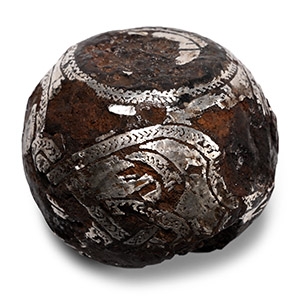
Viking Silver Inlaid Iron Weight
9th-11th century A.D.Sold for (Inc. bp): £338
Polyhedral weight bearing Insular Style inlaid decoration in the form of serpentine creatures in tondos, on a silver inlaid background. 176 grams, 38 mm
Private collection formed in Europe in the 1980s. Westminster collection, central London, UK. This lot is accompanied by an illustrated lot declaration signed by the Head of the Antiquities Department, Dr Raffaele D'Amato.
These weights were adopted by the Vikings from Middle Eastern examples and appear to have become a typical weight standard for traders. They are, in archaeology, an important form of evidence for the Viking commerce. Many of them, like those found in Ireland and of Arabic type, suggest a standardised system of weights in different areas. -
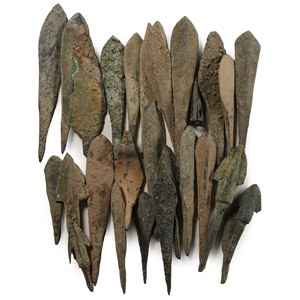
Western Asiatic Bronze Arrowhead Collection
19th-6th century B.C.Estimate: £100 - 140 (+bp*)
Opening Bid: £56
Including triangular, leaf-shaped, barbed, paddle-shaped with a flat, comparatively wide mid-rib, and others. 176 grams total, 25-77 mm
Ex London art market, 1980-1990s. This lot is accompanied by an illustrated lot declaration signed by the Head of the Antiquities Department, Dr Raffaele D'Amato.
Some of the represented arrowheads (paddle-shaped) were typical of the Old Babylonian Empire. The shoulders were pronounced and the arrowhead had a rectangular-section tapering tang. This simple form was popular throughout and are comparatively common finds in the Holy Land. -
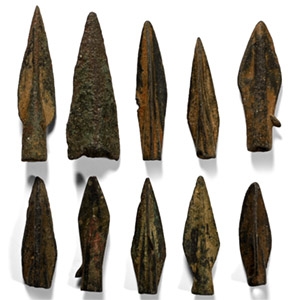
Greek Period High Quality Large Bronze Arrowhead Collection
5th-3rd century B.C.Sold for (Inc. bp): £65
Mostly long leaf-shaped types with short socket. 50 grams total, 30-45 mm
From an English collection formed before 2000. This lot is accompanied by an illustrated lot declaration signed by the Head of the Antiquities Department, Dr Raffaele D'Amato.
