
Loading, please wait...
LOT 0270
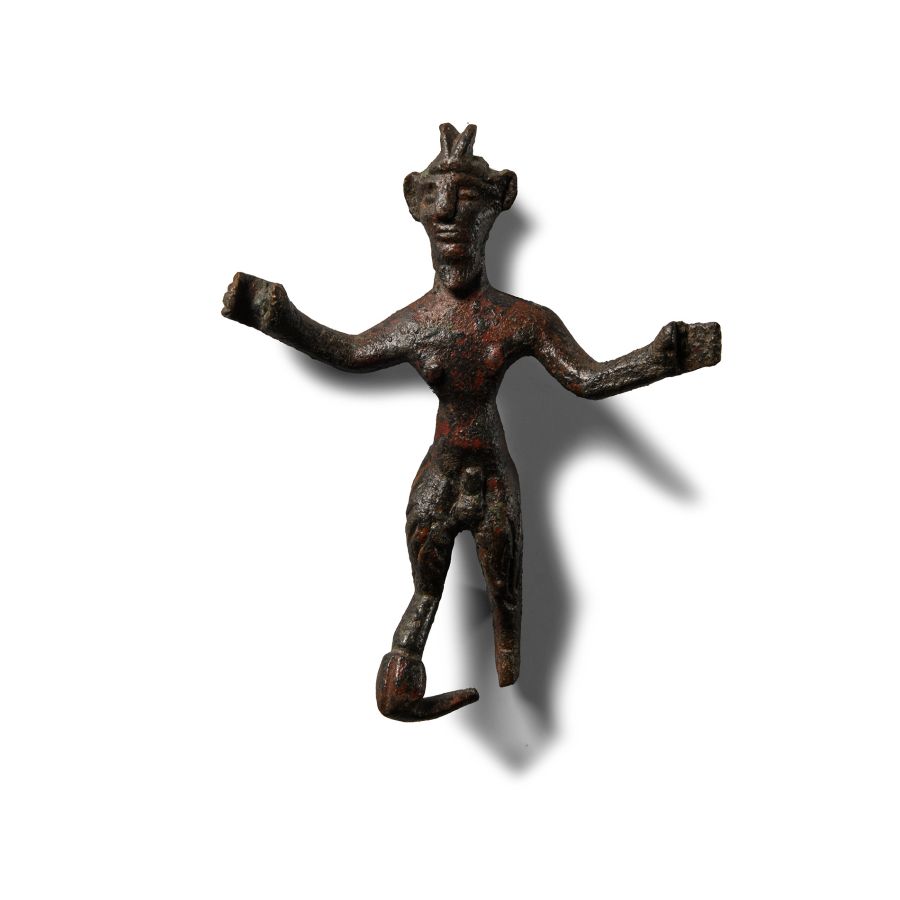
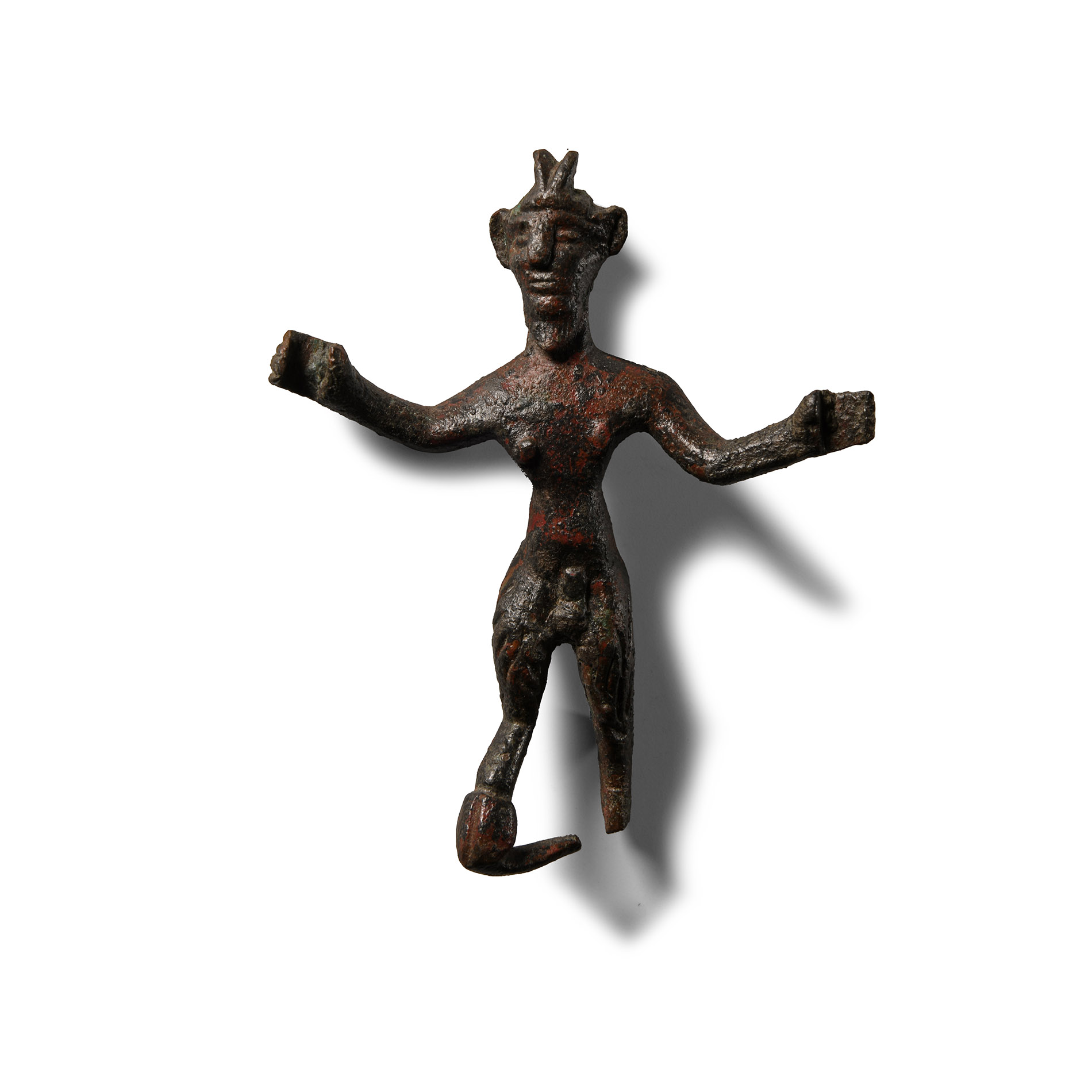
Parthian Bronze Bestial Figure
1ST CENTURY B.C.-1ST CENTURY A.D.
4 1/2 in. (186 grams, 11.6 cm).
Modelled in the round advancing nude satyr with arms outstretched, long triangular face with goatee beard and two short horns above the brow, fur texture to the legs and cloven hooves, strap to the right hoof; hands opened to grip a frame or vertical bars; pellet nipples, incised Y representing the backbone to reverse. [No Reserve]
ProvenanceFrom a collection acquired on the UK art market from various auction houses and collections mostly before 2000.
From an important Cambridgeshire estate; thence by descent.
TimeLine Auctions follows a vetting process to ensure the authenticity and legality of all items, reinforcing our commitment to integrity and responsible trading. Each antiquity, antique, and coin lot undergoes thorough examination by a vetting committee of at least ten external specialists, professional trade association members, scientists, and archaeologists: Our Vetting Process
AUCTIONS:
TimeLine is a leading auction house specialising in antiquities, ancient art, collectables, natural history, coins, medals, and books. Our auctions offer museums, collectors, historians, and enthusiasts the opportunity to acquire unique and historically significant pieces.
-
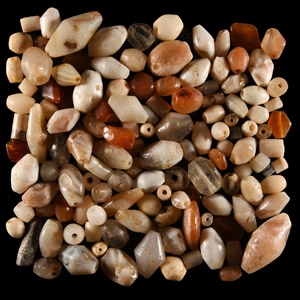
Western Asiatic Mixed Agate and Carnelian Bead Group
1st millennium B.C. and laterEstimate: £500 - 700 (+bp*)
Opening Bid: £250
Mainly bicones, spheres and oblate shapes. 280 grams total, 6-34 mm
Acquired 1980-2015. Ex Abelita family collection. -
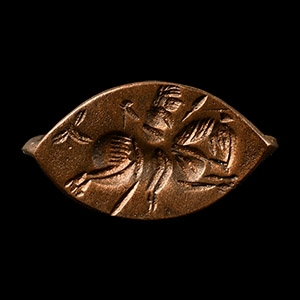
Western Asiatic Ring with Horse and Rider
2nd century B.C.-1st century A.D.Sold for (Inc. bp): £124
Scaphoid bezel with intaglio profile figure of a horseman with spear. 3.42 grams, 22.61 mm overall, 20.12 x 18.96 mm internal diameter (approximate size British U, USA 10, Europe 22.52, Japan 21)
UK private collection before 2000. UK art market. Property of a London gentleman. -
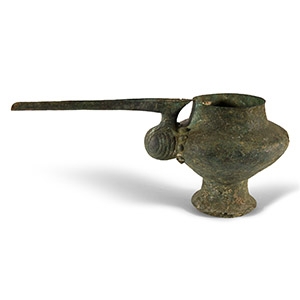
Large Amlash Bronze Spouted Libation Vessel
Circa 1200-1000 B.C.Estimate: £4,000 - 6,000 (+bp*)
Opening Bid: £2,000
With a thin-walled body and flaring foot, a separately made long spout rivetted to the body; the U-shaped spout resembling the beak of a bird with stylised linear feather detailing to the gracefully curving neck, eleven domed rivets to the edges; the base of the foot with concentric circle decoration. 736 grams, 47 cm
Acquired in the 1960s. From the collection of Mr Jay Gluck (1927-2000) & Mrs Sumi Hiramoto Gluck. This lot has been checked against the Interpol Database of stolen works of art and is accompanied by search certificate no.12061-214190.
Jay Gluck was an American archaeologist and specialist in the history of Persian art. He graduated from the University of California, Berkeley in 1949 in Archaeology and Middle Eastern Studies. In 1966 he became director of the Asia Institute of the Pahlavi University in Iran. He is also well known for republishing the work of Arthur Upham Pope, A Survey of Persian Art.
