
Loading, please wait...
LOT 0069
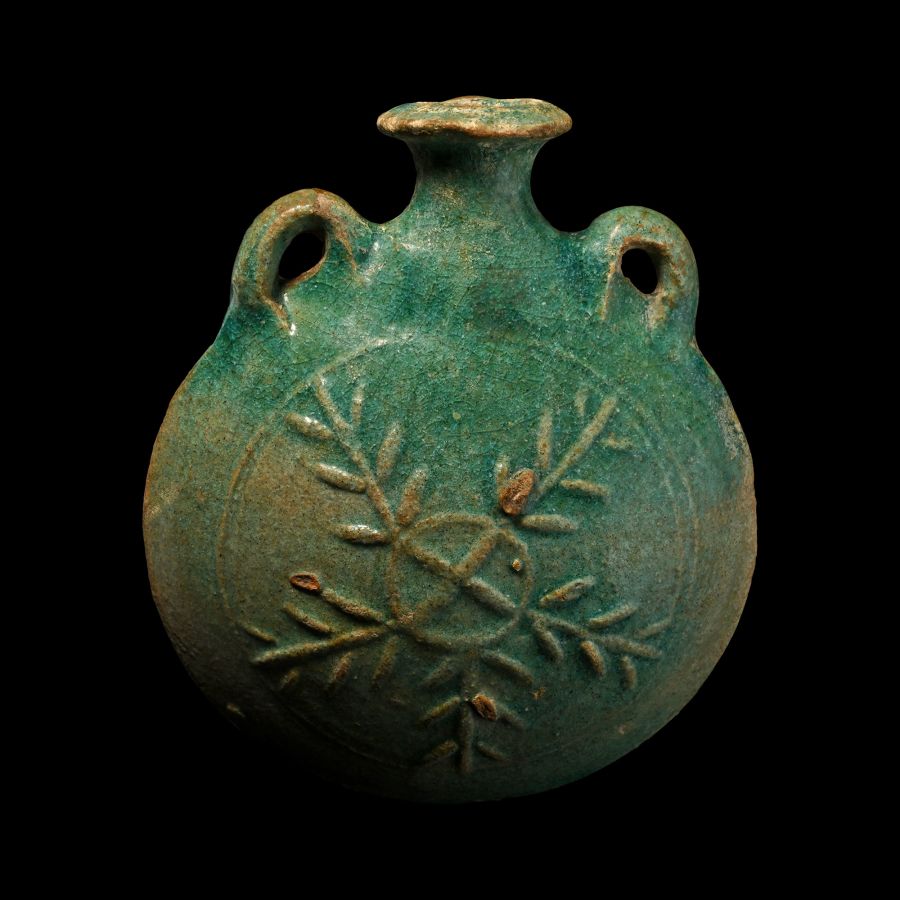
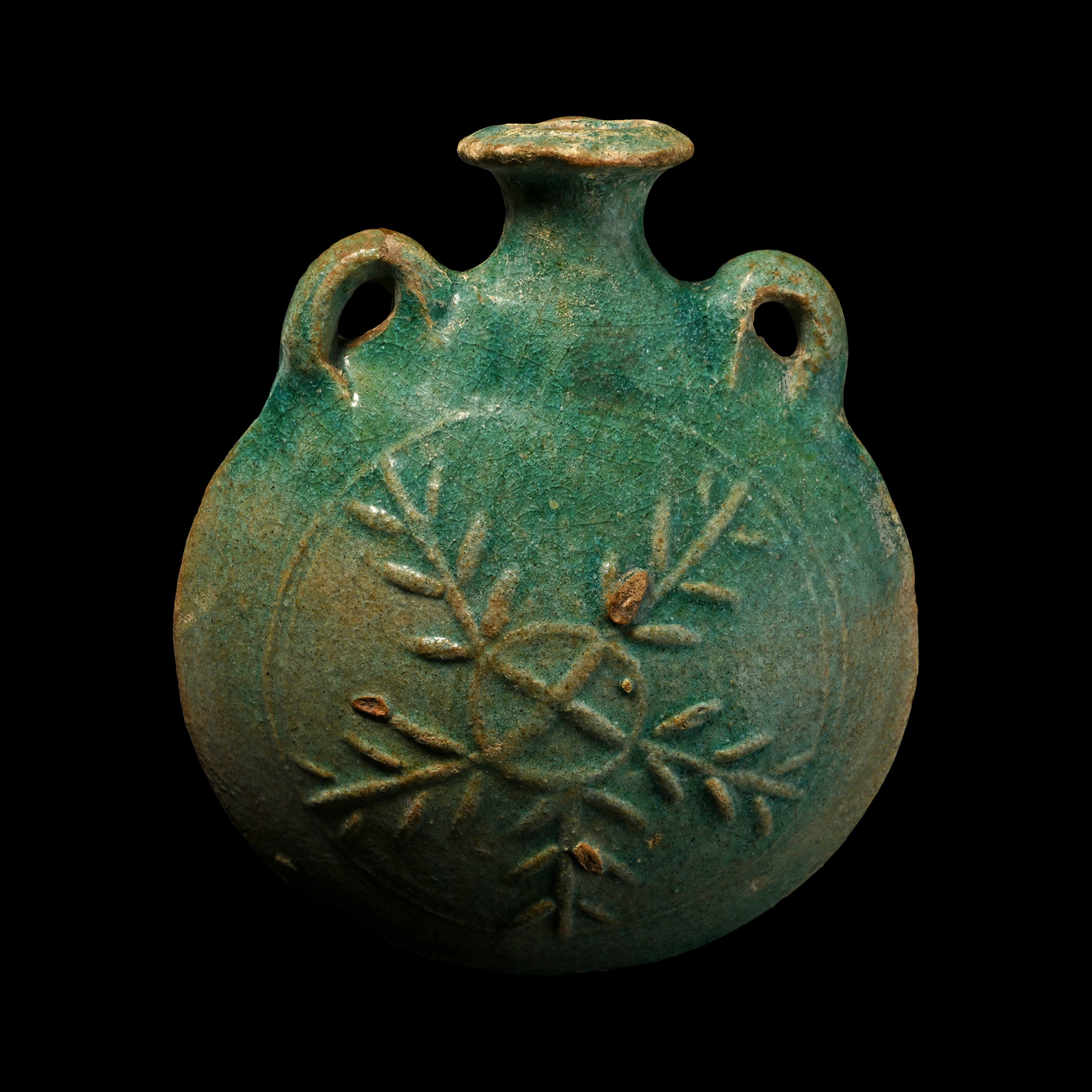
Parthian Blue-Glazed Water Vessel
2ND CENTURY B.C.
5 1/2 in. (278 grams, 14.1 cm).
Discoid in plan and biconvex in section with trumpet-shaped spout and loop to each shoulder; radiating fronds to tondo on each face.
ProvenanceEx London, UK gallery, 1971-early 2000s.
Private collection, London, UK.
TimeLine Auctions follows a vetting process to ensure the authenticity and legality of all items, reinforcing our commitment to integrity and responsible trading. Each antiquity, antique, and coin lot undergoes thorough examination by a vetting committee of at least ten external specialists, professional trade association members, scientists, and archaeologists: Our Vetting Process
AUCTIONS:
TimeLine is a leading auction house specialising in antiquities, ancient art, collectables, natural history, coins, medals, and books. Our auctions offer museums, collectors, historians, and enthusiasts the opportunity to acquire unique and historically significant pieces.
-
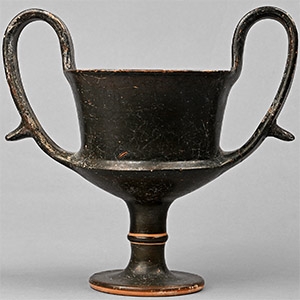
Boeotian Black-Glazed Terracotta Kantharos
Circa 5th century B.C.Sold for (Inc. bp): £1,040
The high-handled drinking cup with carinated lower body and a tall offset foot with a collar. 310 grams, 19 cm wide
Ex Galleria Serodine, Arte Antichità, Fritz Huchelmann-Tieche, Ascona 13 November 1987. Private collection, Bern, Switzerland. -
.jpg)
Scythian Gold Repoussé Animal Mount
Early 1st millennium B.C.Sold for (Inc. bp): £468
Formed as an advancing lion, hatching to hips and shoulders; mounted on a custom-made stand. 29.63 grams total, 22 mm wide (62 mm high including stand)
From the Robin Symes Mayfair gallery before 1999, and part of a collection exhibited at the gallery. Ex London, UK, collection. This lot is accompanied by an illustrated lot declaration signed by the Head of the Antiquities Department, Dr Raffaele D'Amato. -
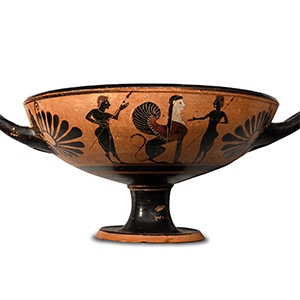
Greek Black-Figure Kylix with Warriors and Sphinxes
Attic, circa 530 B.C.Estimate: £9,000 - 12,000 (+bp*)
Opening Bid: £4,500
Comprising: a broad shallow bowl with two loop handles curving up towards the rim, short stem and broad foot with chamfered outer edge; the bowl with reserved central disc to inner face, palmette motifs at the junctions of the handles, frieze depicting two standing nude males flanking a crouching sphinx in profile; restored and with old dealer's labels beneath base. 414 grams, 27.3 cm wide
Ex Prof. F.S., Villingen-Schwenningen, Germany, 1991. with Gallery Drees Archeo S.P.R.L., Brussels. Acquired from the above, 16 December 2017. Accompanied by a copy of an Art Loss Register certificate, no.S00041086. Accompanied by a Gallery Drees Archeo certificate of authenticity. Accompanied by a thermoluminescence report no.0102 0910 from Laboratory Ralf Kotalla, 6 September 2010. This lot has been checked against the Interpol Database of stolen works of art and is accompanied by search certificate number no.12945-246388.
