
Loading, please wait...
LOT 2034
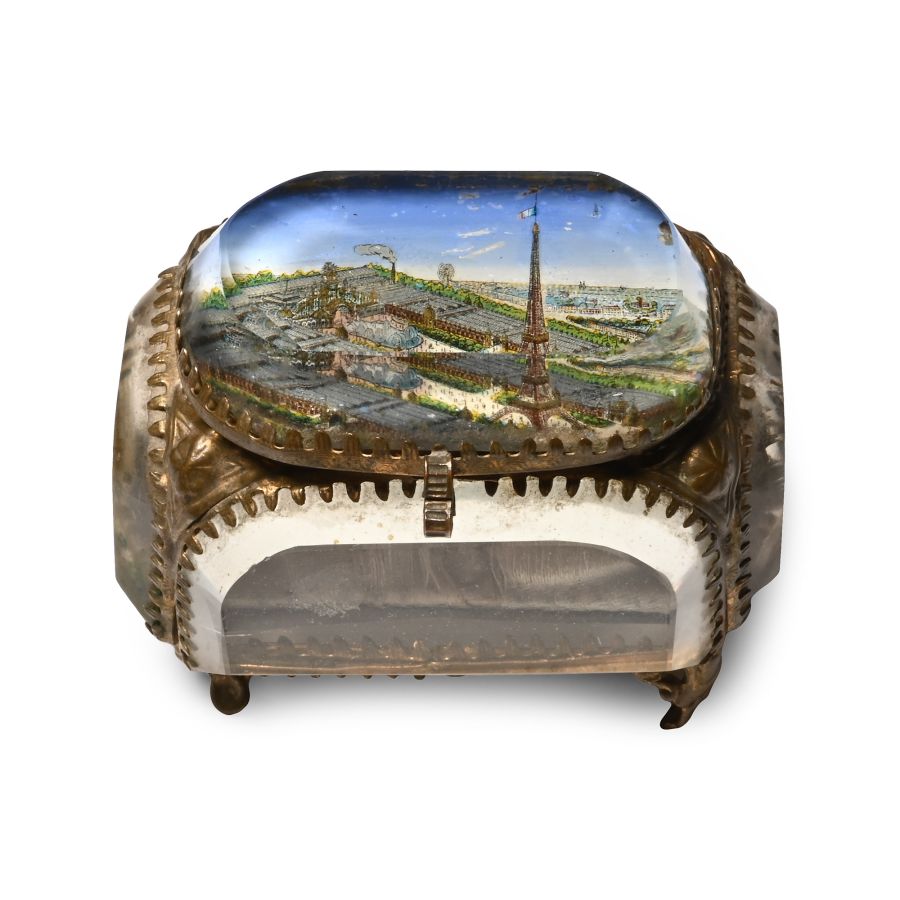
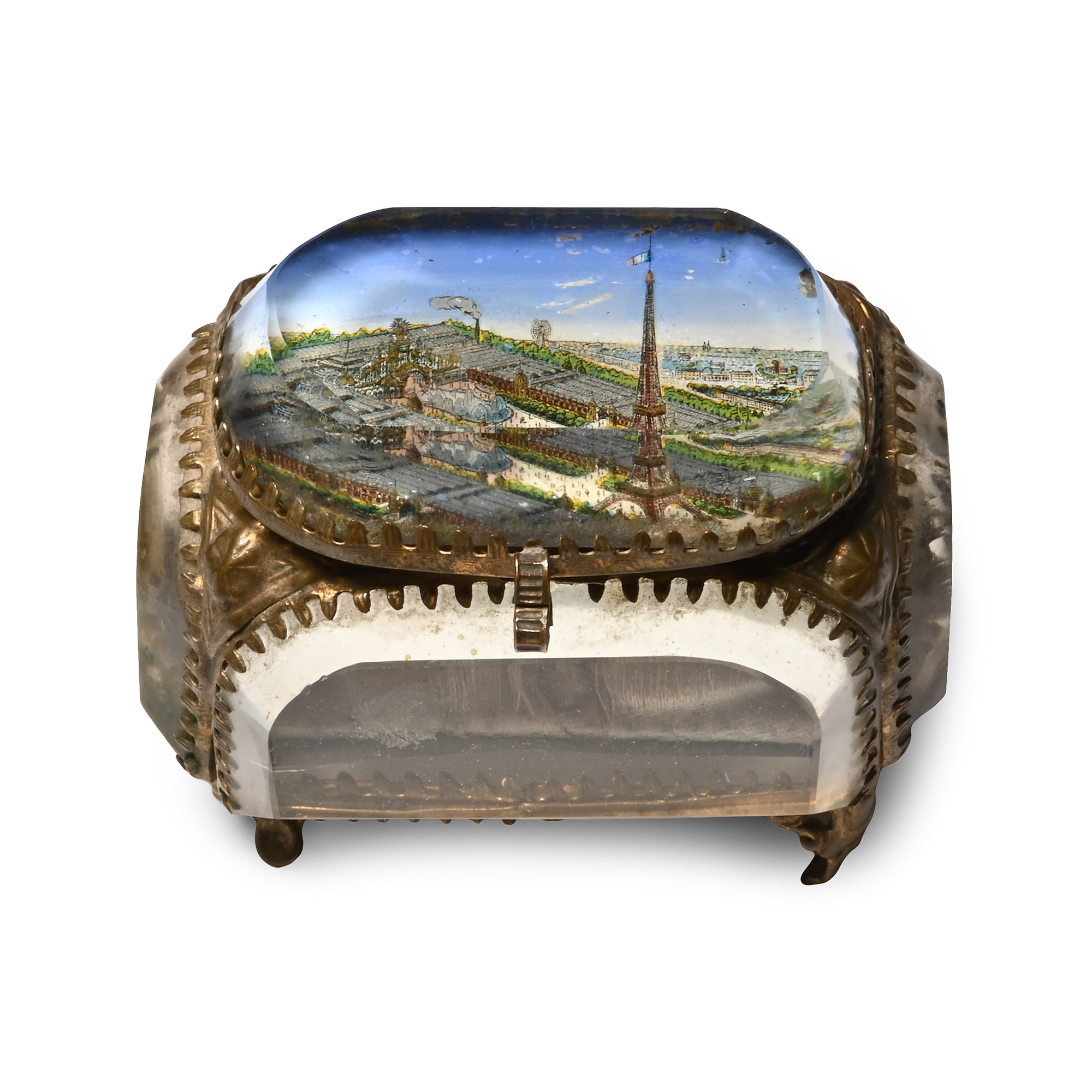
Parisian Lidded Ring Box
20TH CENTURY A.D.
3 in. (176 grams, 78 mm).
A small lidded box with brass frame and silk lined cushion, the lid with a painted Eiffel Tower scene. [No Reserve]
ProvenanceFrom a private Tyneside collection, formed since the early 2000s.
CONDITIONTimeLine Auctions follows a vetting process to ensure the authenticity and legality of all items, reinforcing our commitment to integrity and responsible trading. Each antiquity, antique, and coin lot undergoes thorough examination by a vetting committee of at least ten external specialists, professional trade association members, scientists, and archaeologists: Our Vetting Process
AUCTIONS:
TimeLine is a leading auction house specialising in antiquities, ancient art, collectables, natural history, coins, medals, and books. Our auctions offer museums, collectors, historians, and enthusiasts the opportunity to acquire unique and historically significant pieces.
-

Stuart Period Bronze Four-Way Seal Matrix
Circa 17th century A.D.Sold for (Inc. bp): £260
Comprising four trumpet-shaped arms radiating from a central cube, each with a discoid head; motifs comprising: an agnus dei (lamb and flag), a two-headed spread eagle, a stag passant, a cockerel, each in a beaded border. 26.2 grams, 39 mm
Found Lincolnshire, UK. -

Spanish Gold Ring with a Table-Cut Red Spinel
16th-17th century A.D.Sold for (Inc. bp): £11,700
A substantial ring with a box-shaped bezel set with a table-cut red spinel of deep purplish-red hue, the reverse of the bezel convex with chamfered ends. 6.93 grams, 24.30 mm overall, 17.05 mm internal diameter (approximate size British M 1/2 , USA 6 1/4, Europe 13.09, Japan 12)
Private English collection, formed between the late 1970s and early 1990s. Private collection, UK. This lot has been checked against the Interpol Database of stolen works of art and is accompanied by search certificate number no.12996-245986.
The box bezel is typical of both Spanish and Islamic goldsmithing traditions. The small pointed projection at the rear of the hoop, however, is not a common feature in Spanish rings but is a distinctive hallmark of Islamic goldwork — a form ultimately rooted in Middle Eastern traditions of the Sasanian, Fatimid, and Mamluk periods. This detail likely reached Spain through the transmission of techniques from the Middle East into Islamic North Africa, and subsequently into the goldsmithing repertoire of al-Andalus. These forms were adapted by Spanish goldsmiths to accommodate the tastes of a Christian clientele, reflecting the deep and enduring influence of Islamic craftsmanship in post-Reconquista Spain. -

Ethiopian Painted Parchment of Virgin Watching Christ being Nailed to the Cross
Circa 1780 A.D.Sold for (Inc. bp): £221
Rectangular vellum fragment with painted image of the Crucifixion to obverse, five lines of Ge'ez script above; reverse with sixteen lines of script. 10 grams, 27.7 cm
Private collection, Los Angeles, USA, until 1999.
