
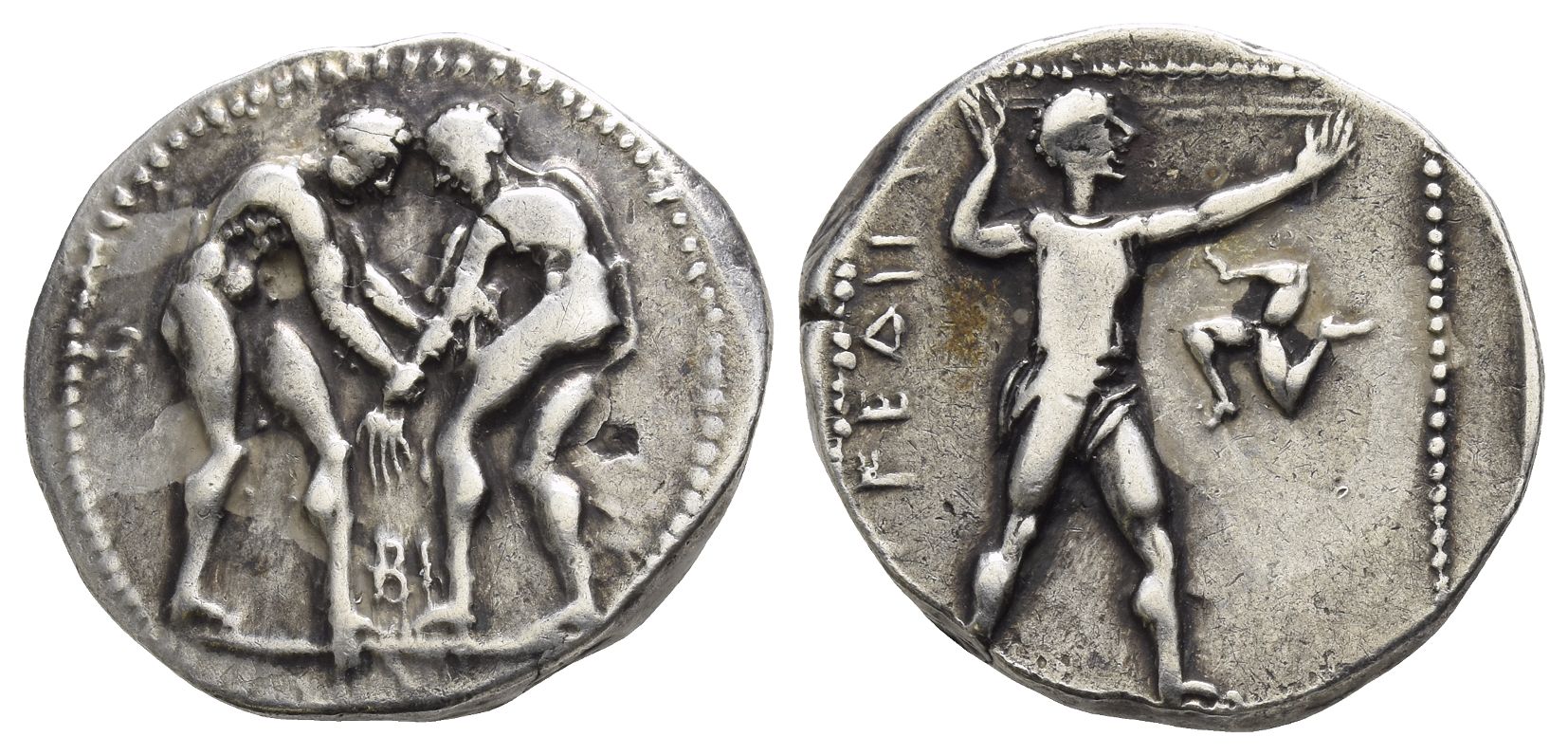
LOT 2959
Pamphylia, Aspendos AR Stater. Circa 380/75-330/25 BC.
Two nude wrestlers, standing and grappling with each other; between them, BI / [ΕΣΤ]FΕΔΙΙ[ΥΣ], slinger standing to right, about to shoot from his sling; to right, triskeles running to left. Tekin Series 4; SNG BnF -; SNG von Aulock -. Near Very Fine. Toned. Small area of delamination on obverse.(10.85gr, 24mm, 12h.).
ProvenanceFrom the private collection of a Canadian gentleman living in Essex, UK, formed since the 1920s-circa 1990.
Property of an Essex lady until the the late 1990s; thence by descent.
From the private collection of an Essex gentleman since the late 1990s.
TimeLine Auctions follows a vetting process to ensure the authenticity and legality of all items, reinforcing our commitment to integrity and responsible trading. Each antiquity, antique, and coin lot undergoes thorough examination by a vetting committee of at least ten external specialists, professional trade association members, scientists, and archaeologists: Our Vetting Process
AUCTIONS:
TimeLine is a leading auction house specialising in antiquities, ancient art, collectables, natural history, coins, medals, and books. Our auctions offer museums, collectors, historians, and enthusiasts the opportunity to acquire unique and historically significant pieces.
-
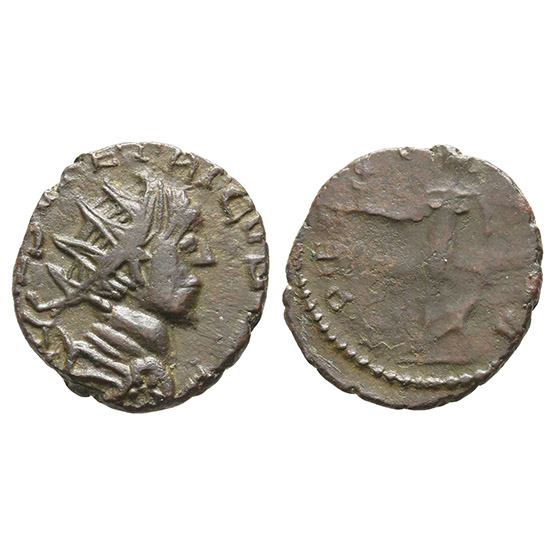
Tetricus II, as Caesar BI Antoninianus. AD 271-274. Local imitation.
Sold for (Inc. bp): £33
Radiate and draped bust to right / Spes walking to left, holding flower and raising hem of robe. Cf. RIC V.2, 272-274. 2.32gr, 17mm, 5h.
Very Fine.
Ex Spink, 1970s. Property of a North London, UK, gentleman. -
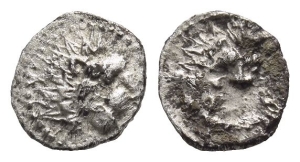
Cyprus, Amathos AR Obol. Rhoikos, circa 350 BC.
Sold for (Inc. bp): £33
Head of lion to right / Forepart of lion to right, head facing. Tziambazis -; Amandry, Amathonte 133 B, pl. 20; Zapiti & Michaelidou 20; SNG Copenhagen 4. 0.44gr, 10mm, 8h.
Very Fine.
Ex Spink, 1970s. Property of a North London, UK, gentleman. -
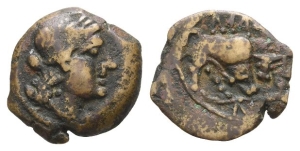
Gaul, Massalia AE 14mm. Circa 121-49 BC.
Sold for (Inc. bp): £26
Apollo head to right / Bull butting to right; ΜΑ[ΣΣΑ] above, [control letters in exergue]. Cf. SNG Copenhagen 810-821. 1.93gr, 14mm, 2h.
Near Very Fine.
Ex cgb.fr (company's ticket included). From the private collection of John Meredith, acquired since the 1990s; thence by descent.
