
Loading, please wait...
LOT 0398
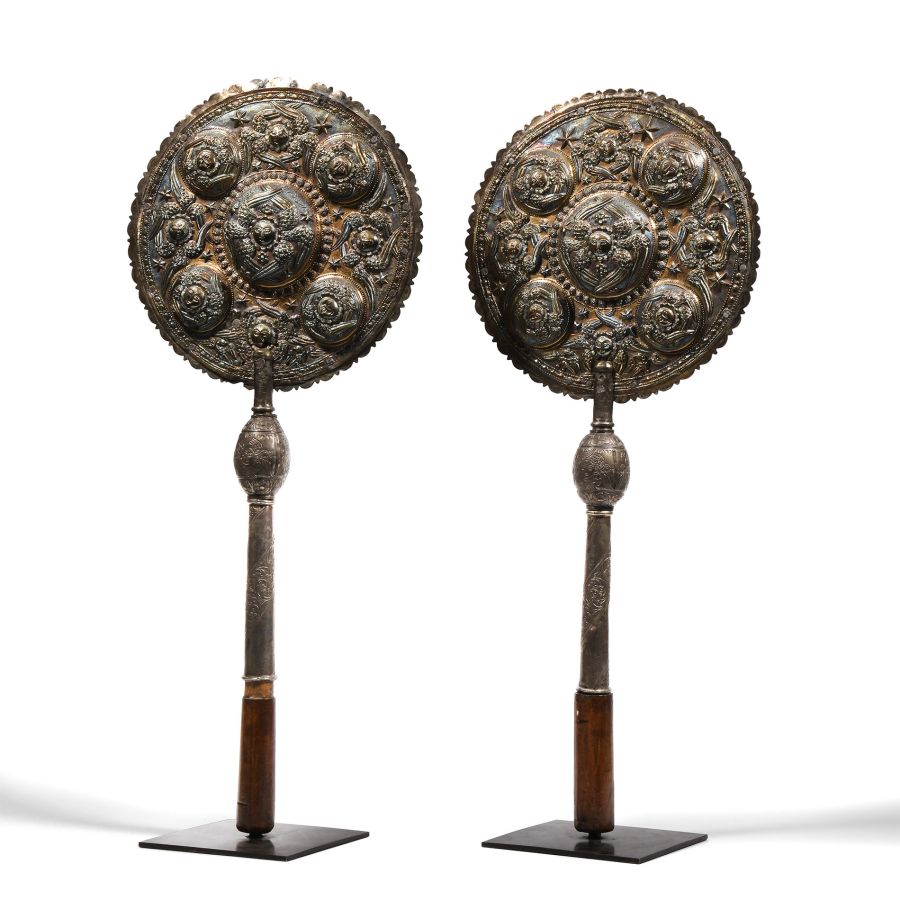
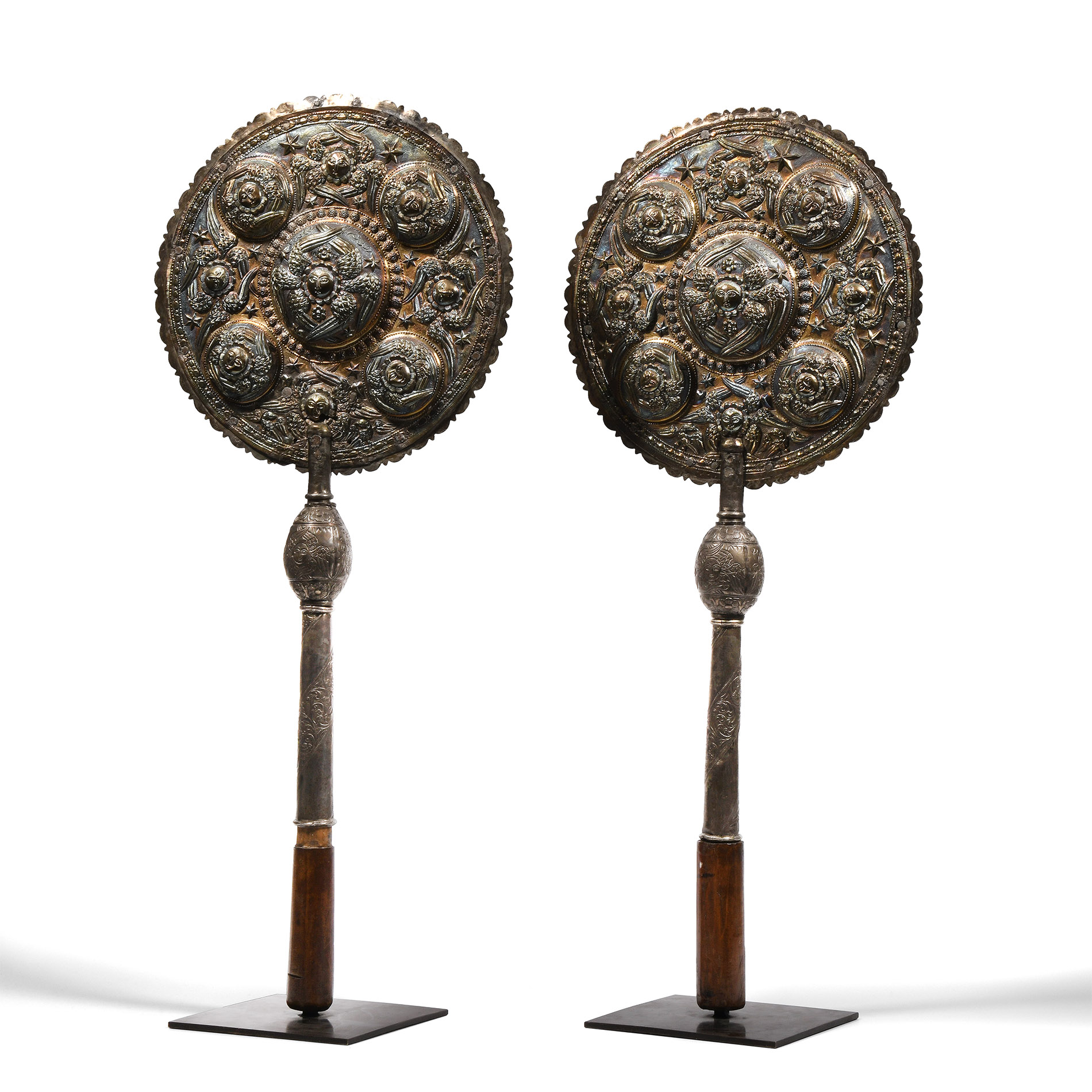
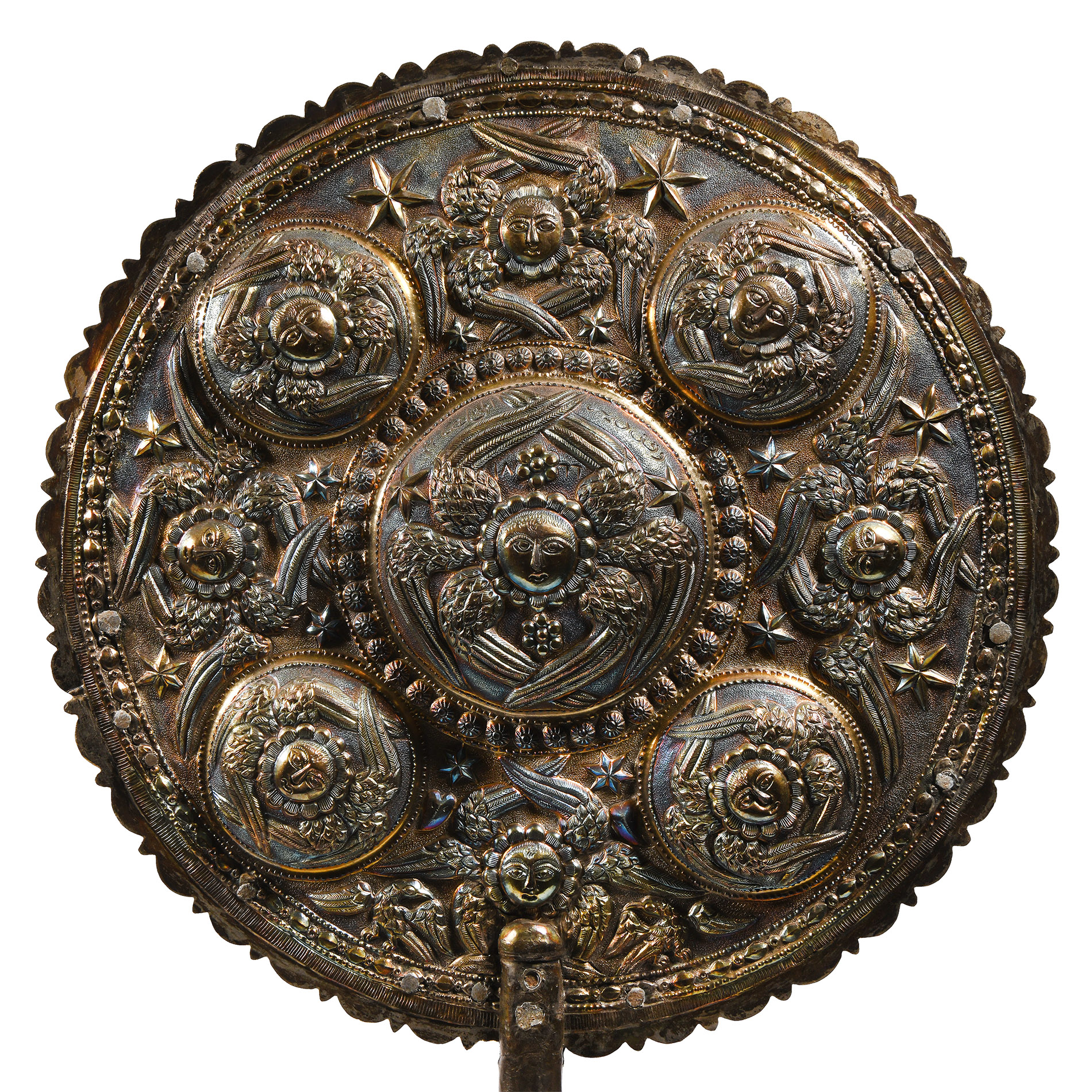
Pair of Bronze Liturgical Fans
GREECE, 17TH-18TH CENTURY A.D.
25 1/4 in. (3.45 kgs total, 64.2 cm each including base).
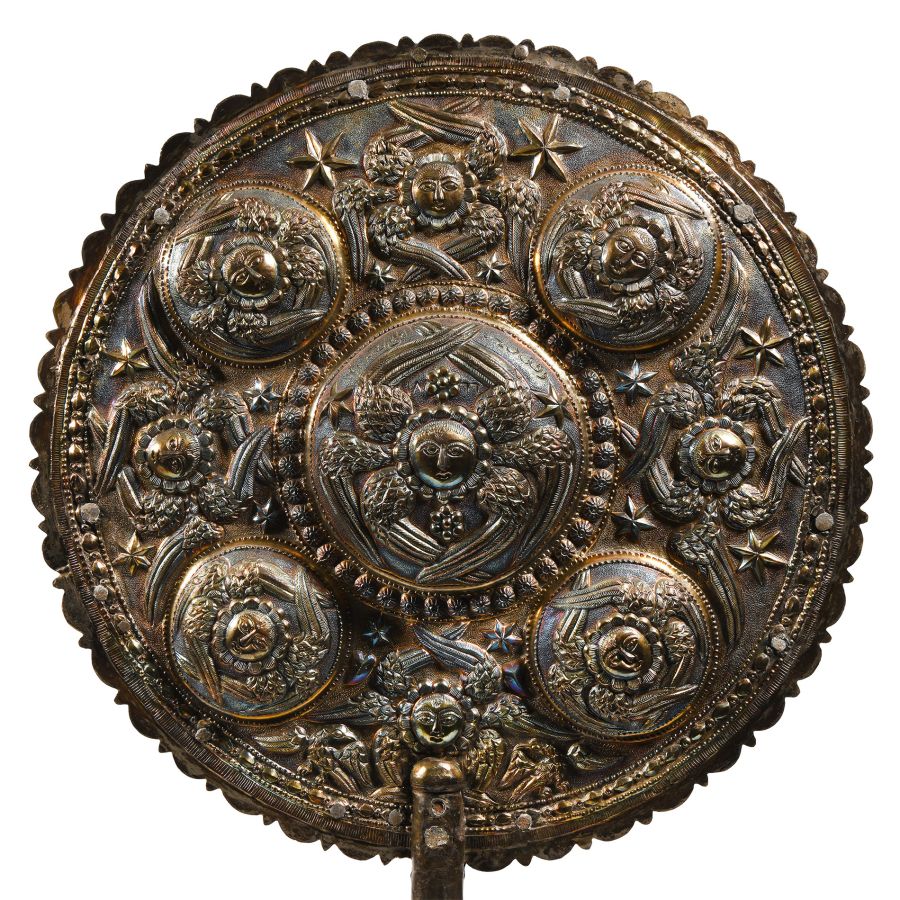
Each composed of a stem with wooden handle and tapering white metal stem with bulbous collar, all ornamented with repoussé floral and foliate tendrils and seraphims; the bifacial discoid heads with scalloped circumferences, each with five domed bosses and displaying seraphims and stars within pellet and bead borders; lettering to heads and collars; each mounted on a custom-made display stand. [No Reserve]
Provenancewith Boisgirard, 28 November 2013, lot 138.
Ex central London gallery.
This lot has been checked against the Interpol Database of stolen works of art and is accompanied by search certificate no.202063.
Cf. Brooklyn Museum, New York, inv.nos. 46.126.1 and 46.126.2, illustrated in New York, 2012, pp.72-3, nos.44A,B.
FootnotesThe shape and decorative scheme of these liturgical fans has existed since at least the 8th century A.D. These fans were likely crafted as souvenirs for pilgrims returning from Jerusalem, or for them to bring to Jerusalem as homage to the church. Seraphim are the highest-ranking angels in the traditional hierarchy, and as such are closest to God.
CONDITIONTimeLine Auctions follows a vetting process to ensure the authenticity and legality of all items, reinforcing our commitment to integrity and responsible trading. Each antiquity, antique, and coin lot undergoes thorough examination by a vetting committee of at least ten external specialists, professional trade association members, scientists, and archaeologists: Our Vetting Process
AUCTIONS:
TimeLine is a leading auction house specialising in antiquities, ancient art, collectables, natural history, coins, medals, and books. Our auctions offer museums, collectors, historians, and enthusiasts the opportunity to acquire unique and historically significant pieces.
-
.jpg)
Post Medieval Bronze Censer
20th century A.D.Sold for (Inc. bp): £20
In Renaissance style, composed of a hemispherical bowl with four fixing lobes, foot and upper body octagonal with pierced geometric design, ornamental finial and chain for suspension. 930 grams, 85 cm high
Acquired 1990s-early 2000s. East Anglian private collection. -
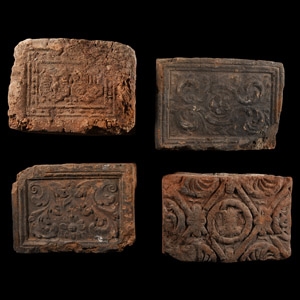
Elizabethan Period Ceramic Fire Brick Group
Circa 16th century A.D.Estimate: £120 - 170 (+bp*)
Opening Bid: £48
Each differently sized and displaying a design in relief, including scrolling foliage, an apparent bust within roundel and lozenge surrounded by floral bosses and Catherine wheels; heraldic style shields within a rectangular pelletted border. 5.58 kg total, 12.5-14.5 cm
Acquired 1990s-early 2000s. East Anglian private collection. -
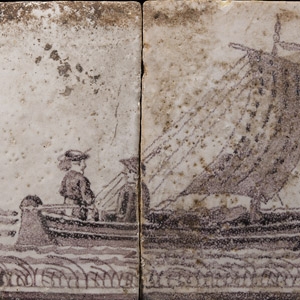
Post Medieval Dutch Ceramic Tiles with Boating Scene
Circa 17th-18th century A.D.Sold for (Inc. bp): £104
Mauve-glazed and depicting a couple in a boat on a lake, a duck in the water. 548 grams total, 13 x 13 cm each
Acquired 1990s-early 2000s. East Anglian private collection.
