
Loading, please wait...
LOT 1010
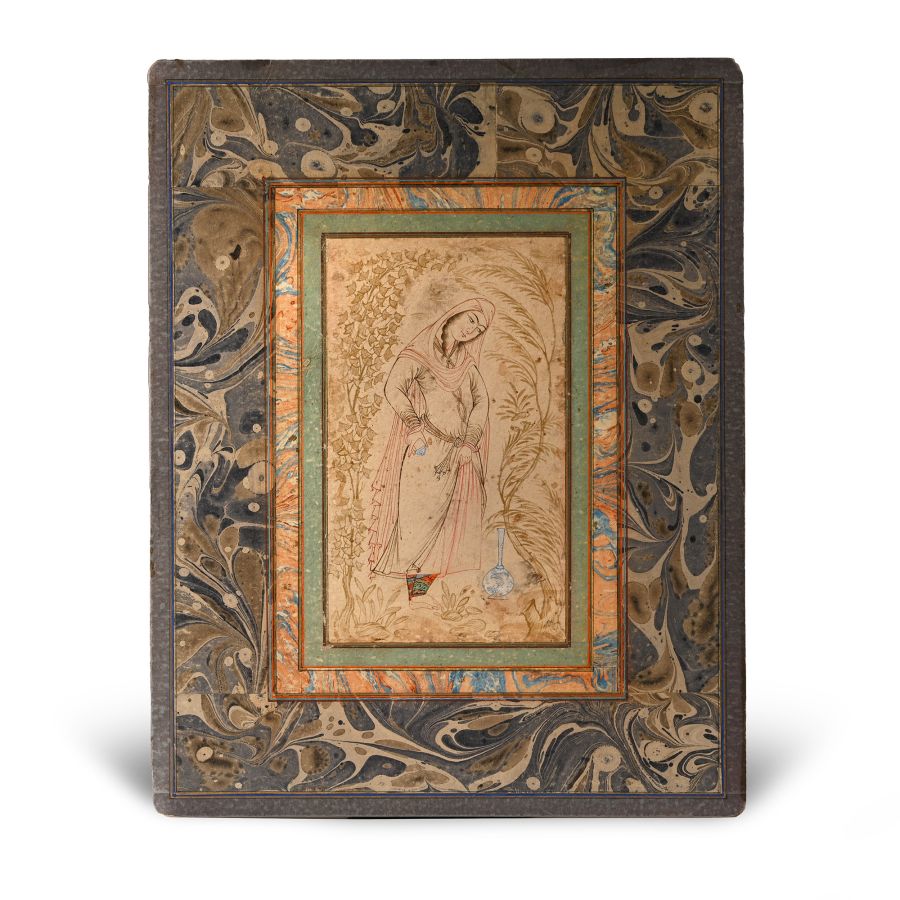
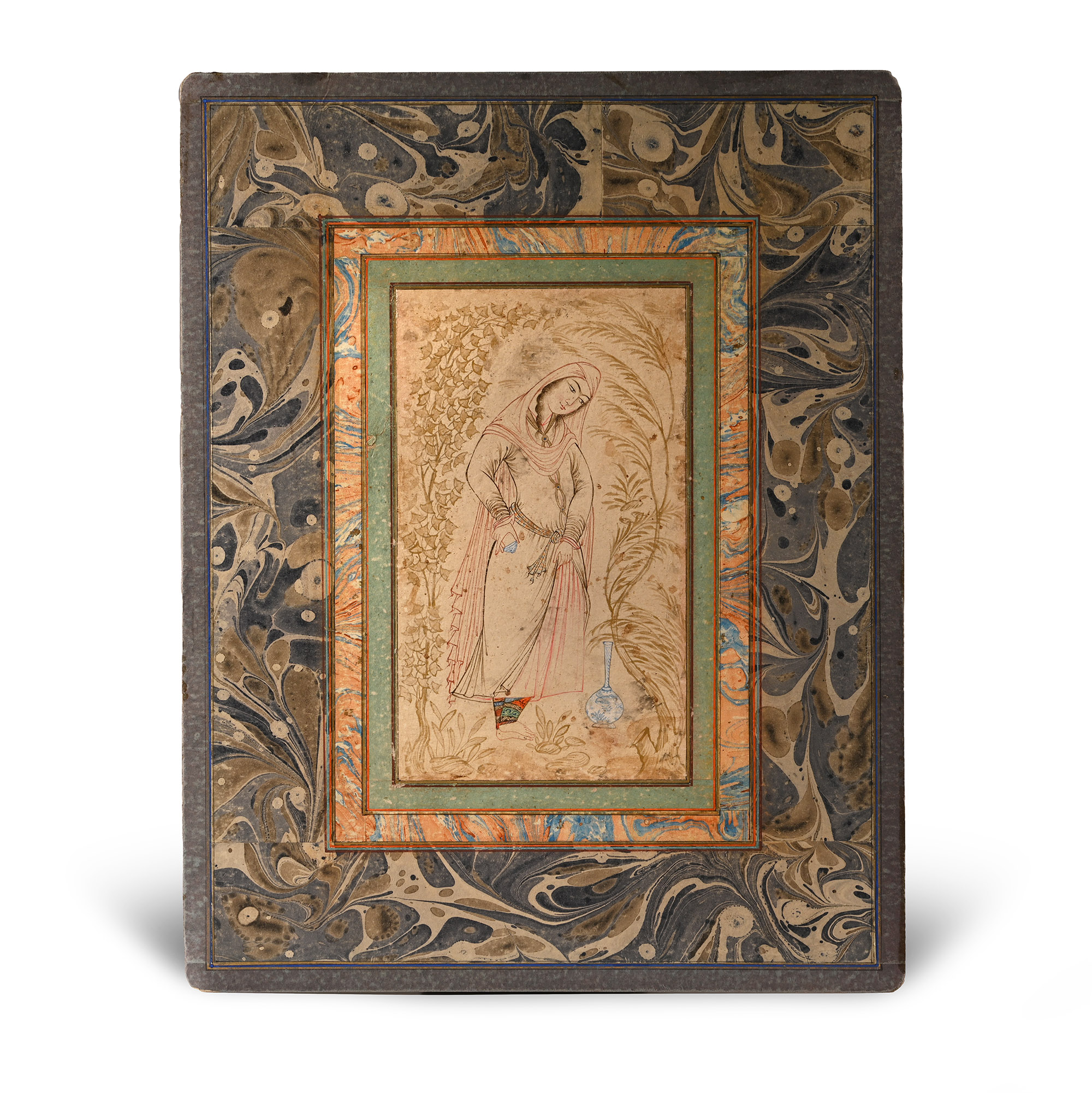
Painting of a Noble Lady
EARLY 20TH CENTURY A.D.
11 3/4 x 9 1/4 in. (46 grams, 30 x 23.5 cm).
Standing before a blue-and-white jar and holding a matching small cup in her right hand whilst lifting the hem of her dress with her left hand; colourful trouser cuffs showing from beneath the hem, densely painted vegetation surrounding; marbled borders. [No Reserve]
ProvenanceFrom the family collection of a Hampstead gentleman; formerly acquired in the 1980s.
This lot has been cleared against the Art Loss Register database, and is accompanied by an illustrated lot declaration signed by the Head of the Antiquities Department, Dr Raffaele D'Amato.
TimeLine Auctions follows a vetting process to ensure the authenticity and legality of all items, reinforcing our commitment to integrity and responsible trading. Each antiquity, antique, and coin lot undergoes thorough examination by a vetting committee of at least ten external specialists, professional trade association members, scientists, and archaeologists: Our Vetting Process
AUCTIONS:
TimeLine is a leading auction house specialising in antiquities, ancient art, collectables, natural history, coins, medals, and books. Our auctions offer museums, collectors, historians, and enthusiasts the opportunity to acquire unique and historically significant pieces.
-
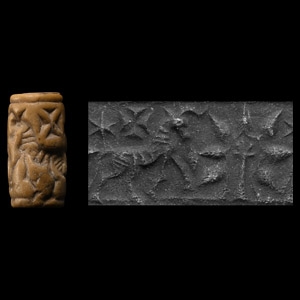
Neo-Assyrian Cream Stone Cylinder Seal with Bull
Circa 800-600 B.C.Sold for (Inc. bp): £286
Accompanied by a copy of an old scholarly note, typed and signed by W.G. Lambert, late Professor of Assyriology, University of Birmingham, 1970-1993, which states: ' Cylinder Seal of Cream Stone. 24 x 12 mm. The design, which is put between upper and lower rulings, shows a walking bull facing a stylized sacred tree: a straight trunk with five-branch crown, surrounded by scalloped line supporting seven leaves. There is a rhomb between bull and tree, and a star and Maltese cross above the bull's back. This is a Neo-Assyrian seal, c.800-600 B.C. It is one of the rarer types, deeply cut, and in good condition. The bull and the tree are both symbols of the storm god Adad, who had an important place in the Neo-Assyrian pantheon. The star is the symbol of Ishtar/Venus, also an important Assyrian deity, but the Maltese cross is so far not certainly identified.'; supplied with a museum-quality impression. 5.78 grams, 24 mm
From the private collection of a North American lady, formed 1970s-early 1990s, with collection reference no.590/2. Accompanied by a copy of a scholarly note, typed and signed by Professor Wilfrid George Lambert. This lot has been cleared against the Art Loss Register database, and is accompanied by an illustrated lot declaration signed by the Head of the Antiquities Department, Dr Raffaele D'Amato. -
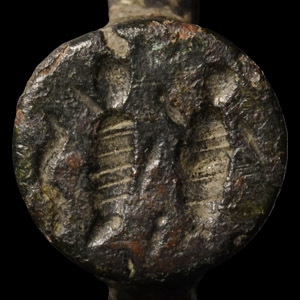
Western Asiatic Bronze Ring with Processional Figures
1st millennium B.C.Estimate: £80 - 100 (+bp*)
Opening Bid: £40
Longitudinally ribbed hoop with slightly flared bezel, two engraved figures with objects in the field. 7.10 grams, 24.85 mm overall, 18.45 mm internal diameter (approximate size British P, USA 7 1/2, Europe 16.23, Japan 15)
Acquired 1979-1999. London collection of the late Mr S.M., thence by descent. This lot has been cleared against the Art Loss Register database, and is accompanied by an illustrated lot declaration signed by the Head of the Antiquities Department, Dr Raffaele D'Amato. -
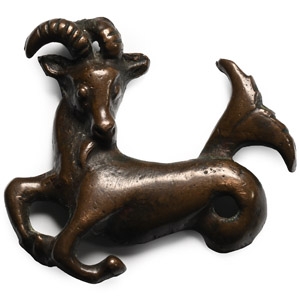
Sasanian Bronze Capricorn Mount
5th-7th century A.D.Sold for (Inc. bp): £156
Modelled in the half-round with hollow reverse, capricorn with head turned, fish-tail coiled to the rear. 12.5 grams, 40 mm
Ex London, UK, gallery, 1971-early 2000s. London, UK, collection. This lot has been cleared against the Art Loss Register database, and is accompanied by an illustrated lot declaration signed by the Head of the Antiquities Department, Dr Raffaele D'Amato.
