
Loading, please wait...
LOT 1847
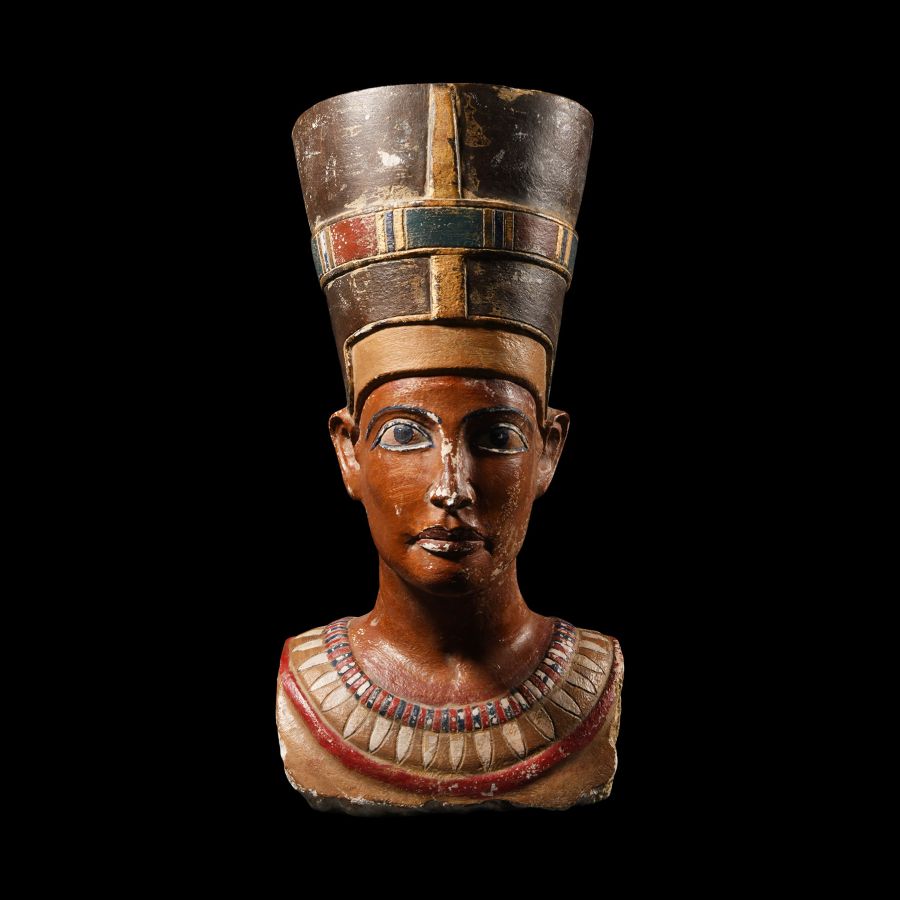
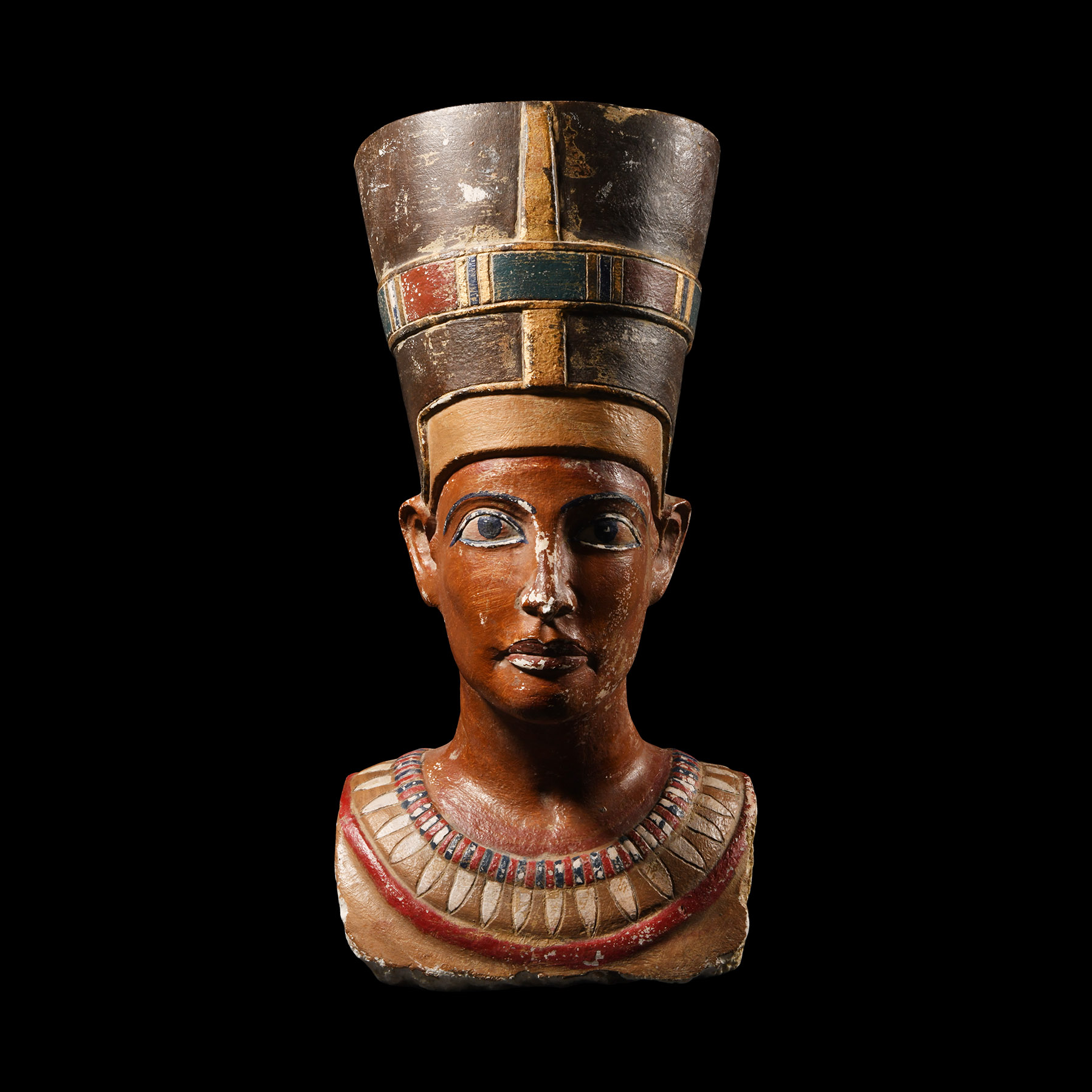
Painted Stone Bust of Queen Nefertiti
20TH CENTURY A.D.
20 in. (28.2 kg, 51 cm high).
Carved in the round with semi-naturalistic features, wearing the iconic 'Nefertiti cap crown' adorned with a golden diadem band, ornamental beaded collar around her neck and shoulders; remains of gilding and polychrome painted pigment; limestone.
ProvenanceEx French gallery, Paris.
FootnotesClosely modelled on the original held in Neues Museum, Staatliche Museen zu Berlin, created c.1340 B.C.
CONDITIONTimeLine Auctions follows a vetting process to ensure the authenticity and legality of all items, reinforcing our commitment to integrity and responsible trading. Each antiquity, antique, and coin lot undergoes thorough examination by a vetting committee of at least ten external specialists, professional trade association members, scientists, and archaeologists: Our Vetting Process
AUCTIONS:
TimeLine is a leading auction house specialising in antiquities, ancient art, collectables, natural history, coins, medals, and books. Our auctions offer museums, collectors, historians, and enthusiasts the opportunity to acquire unique and historically significant pieces.
LOT 1847
Painted Stone Bust of Queen Nefertiti
Estimate £300 - 400€350 - 460 (for guidance only)$410 - 540 (for guidance only)
-
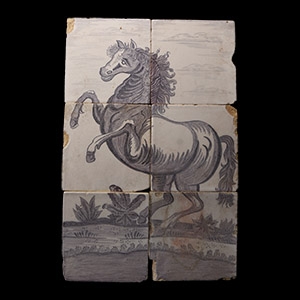
Post Medieval Glazed Ceramic Horse Tile Set
Circa 18th century A.D.Sold for (Inc. bp): £247
Displaying a mauve-coloured landscape with rearing horse; chipped. 1..27 kg total, 13 x 13 cm each
Acquired 1990s-early 2000s. East Anglian private collection. -
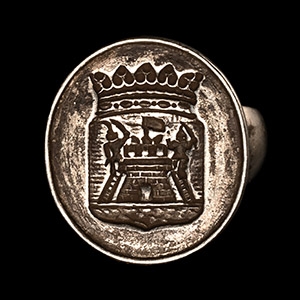
Post Medieval Silver Signet Ring
17th-18th century A.D.Sold for (Inc. bp): £364
With slightly plano-convex hoop and ribbed underside to the discoid bezel, face with raised rim and incuse motif of a heater shield surmounted by a crown with ivy-leaves; shield depicting a tower attacked by two assailants on scaling-ladders; possibly German workmanship. 14.43 grams, 25.09 mm overall, 19.19 mm internal diameter (approximate size British S, USA 9, Europe 20, Japan 19)
Acquired 1960s-1990s. Late Alison Barker collection, a retired London barrister. -
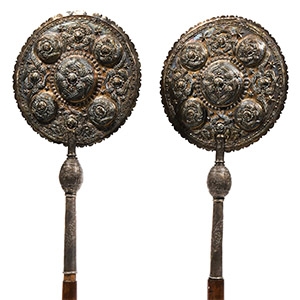
Pair of Bronze Liturgical Fans
Greece, 17th-18th century A.D.Sold for (Inc. bp): £3,120
Each composed of a stem with wooden handle and tapering white metal stem with bulbous collar, all ornamented with repoussé floral and foliate tendrils and seraphims; the bifacial discoid heads with scalloped circumferences, each with five domed bosses and displaying seraphims and stars within pellet and bead borders; lettering to heads and collars; each mounted on a custom-made display stand. 3.45 kgs total, 64.2 cm each including base
with Boisgirard, 28 November 2013, lot 138. Ex central London gallery. This lot has been checked against the Interpol Database of stolen works of art and is accompanied by search certificate no.202063.
The shape and decorative scheme of these liturgical fans has existed since at least the 8th century A.D. These fans were likely crafted as souvenirs for pilgrims returning from Jerusalem, or for them to bring to Jerusalem as homage to the church. Seraphim are the highest-ranking angels in the traditional hierarchy, and as such are closest to God.
