
Loading, please wait...
LOT 0124
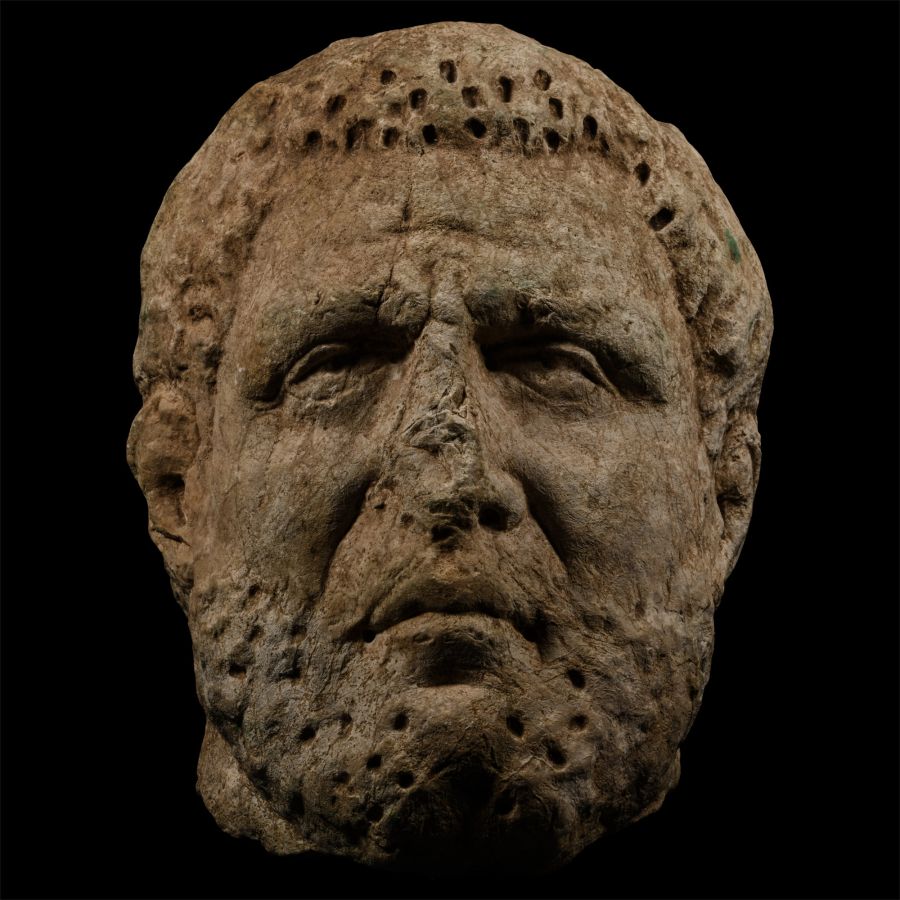
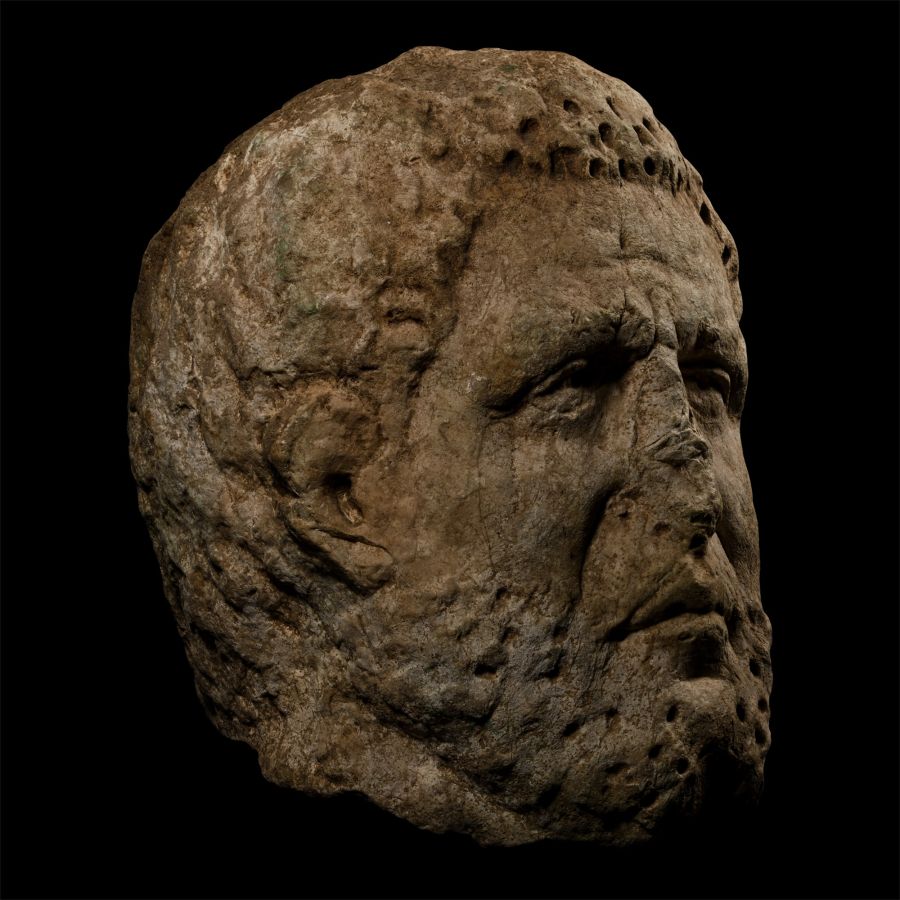
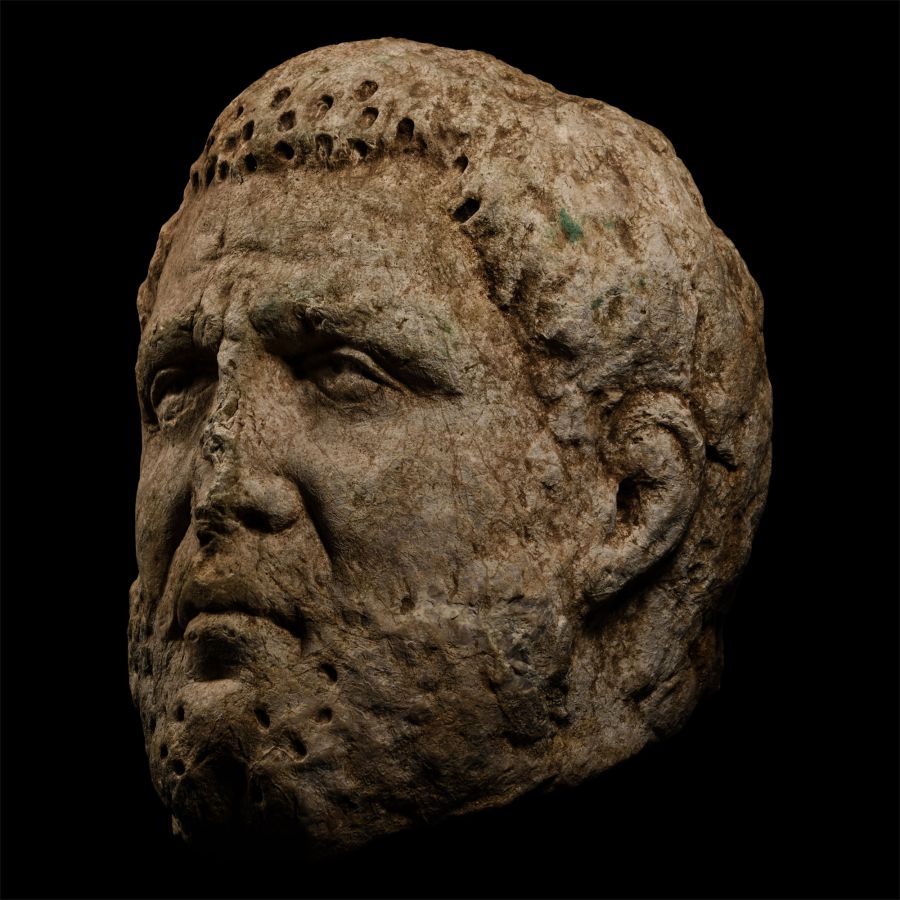
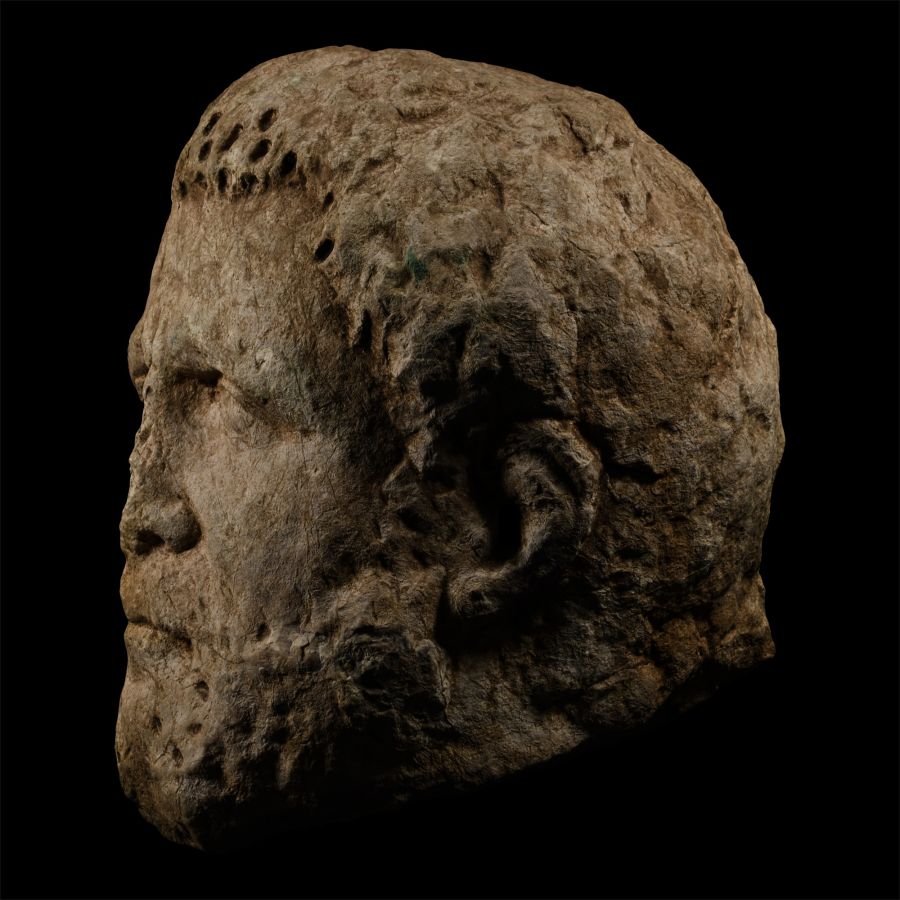
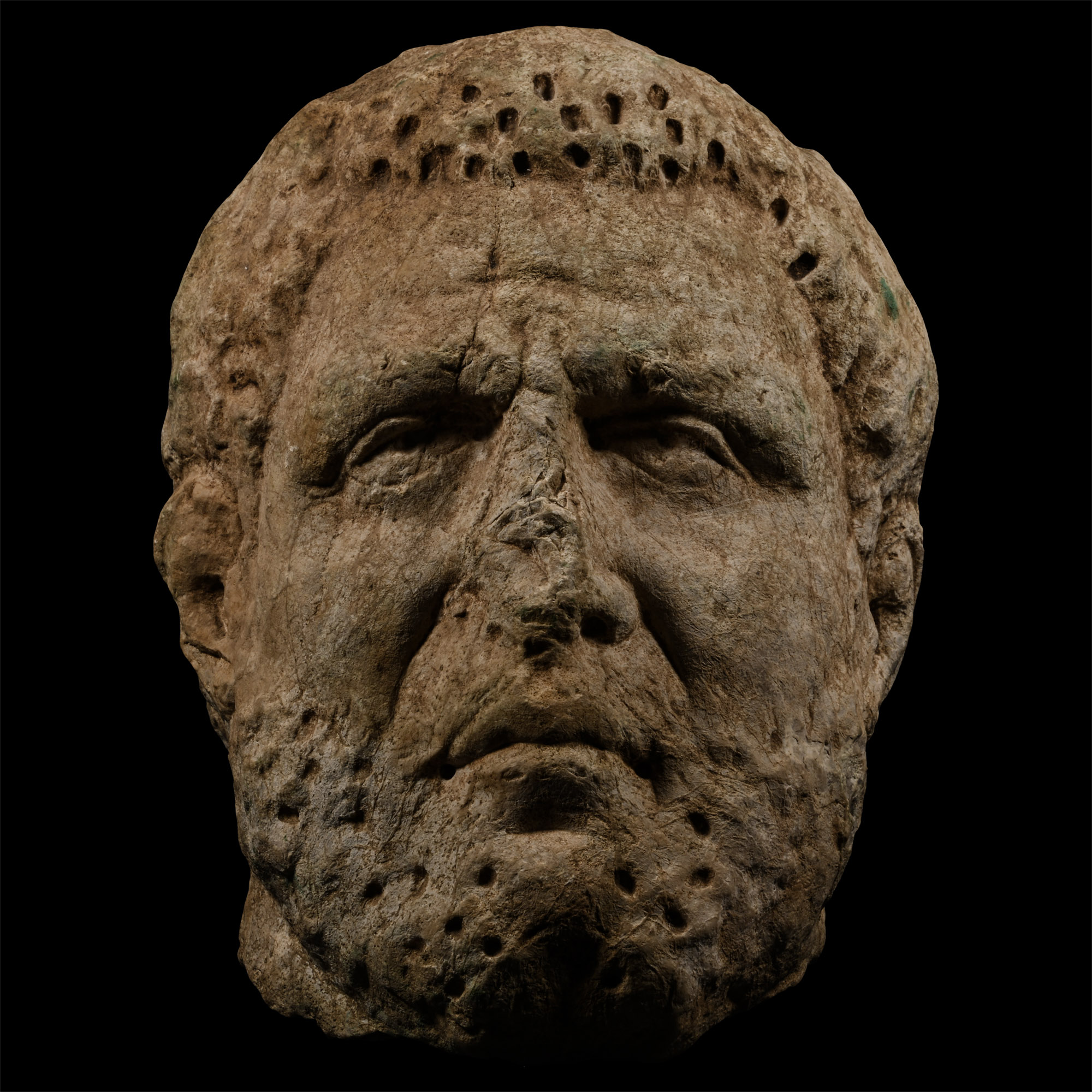
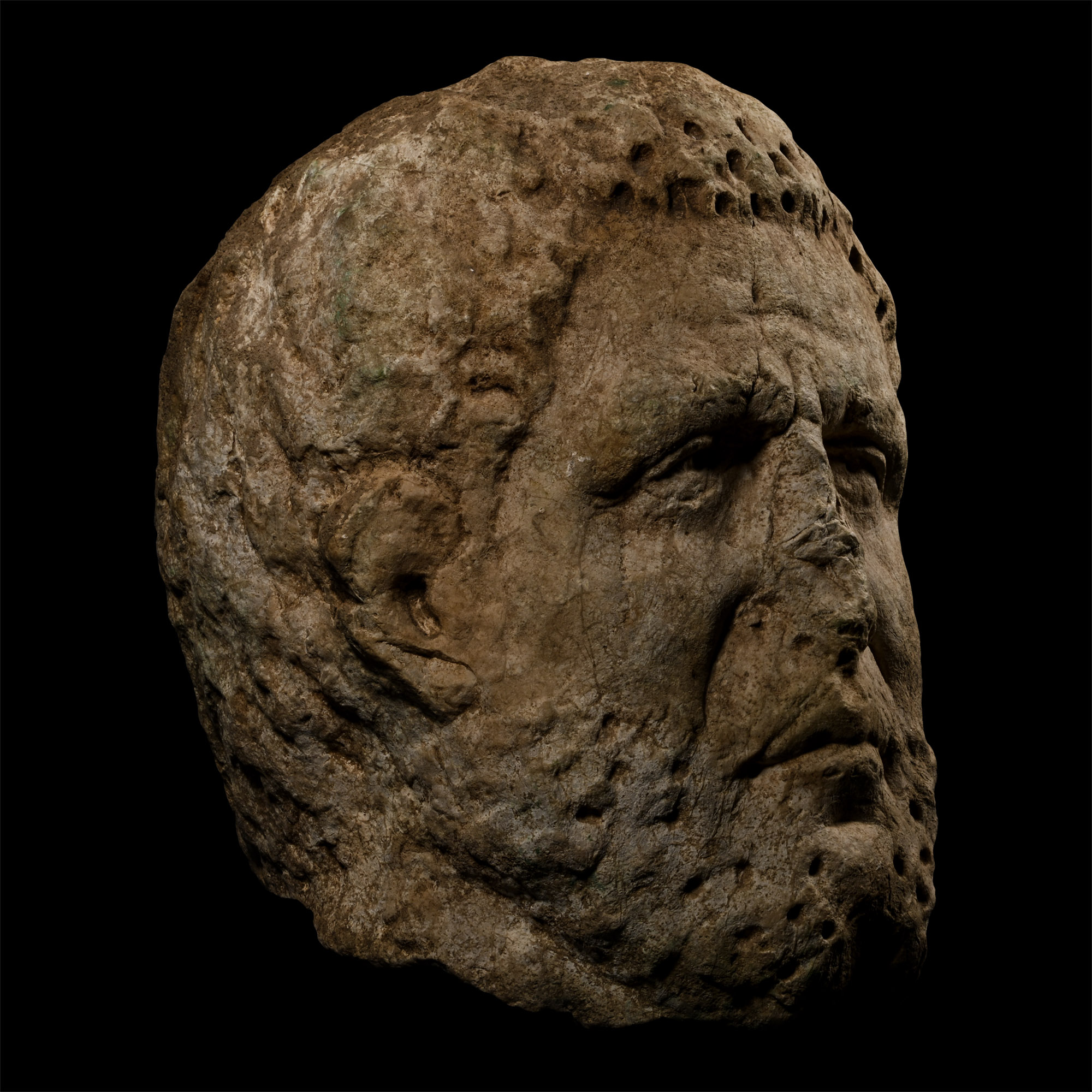
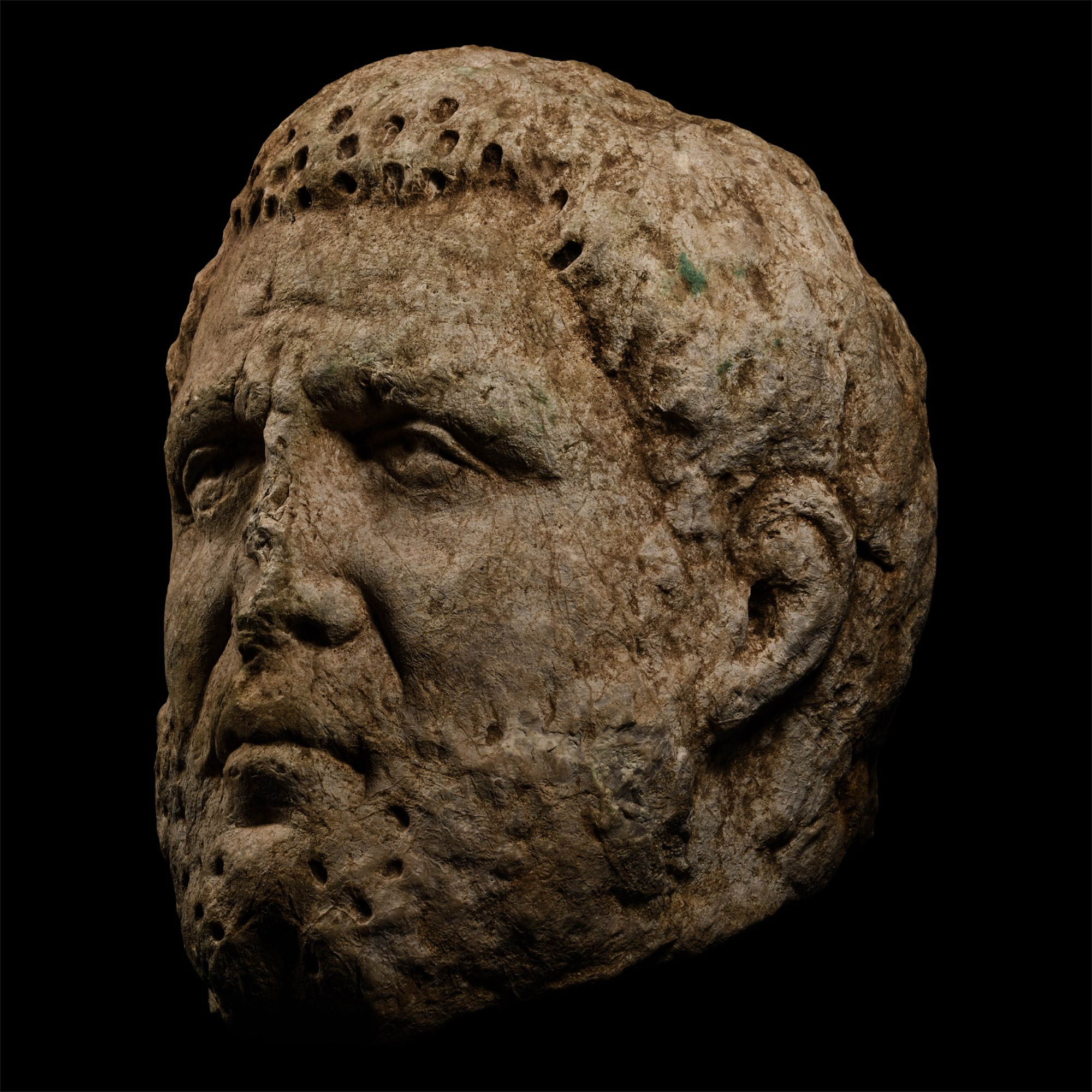
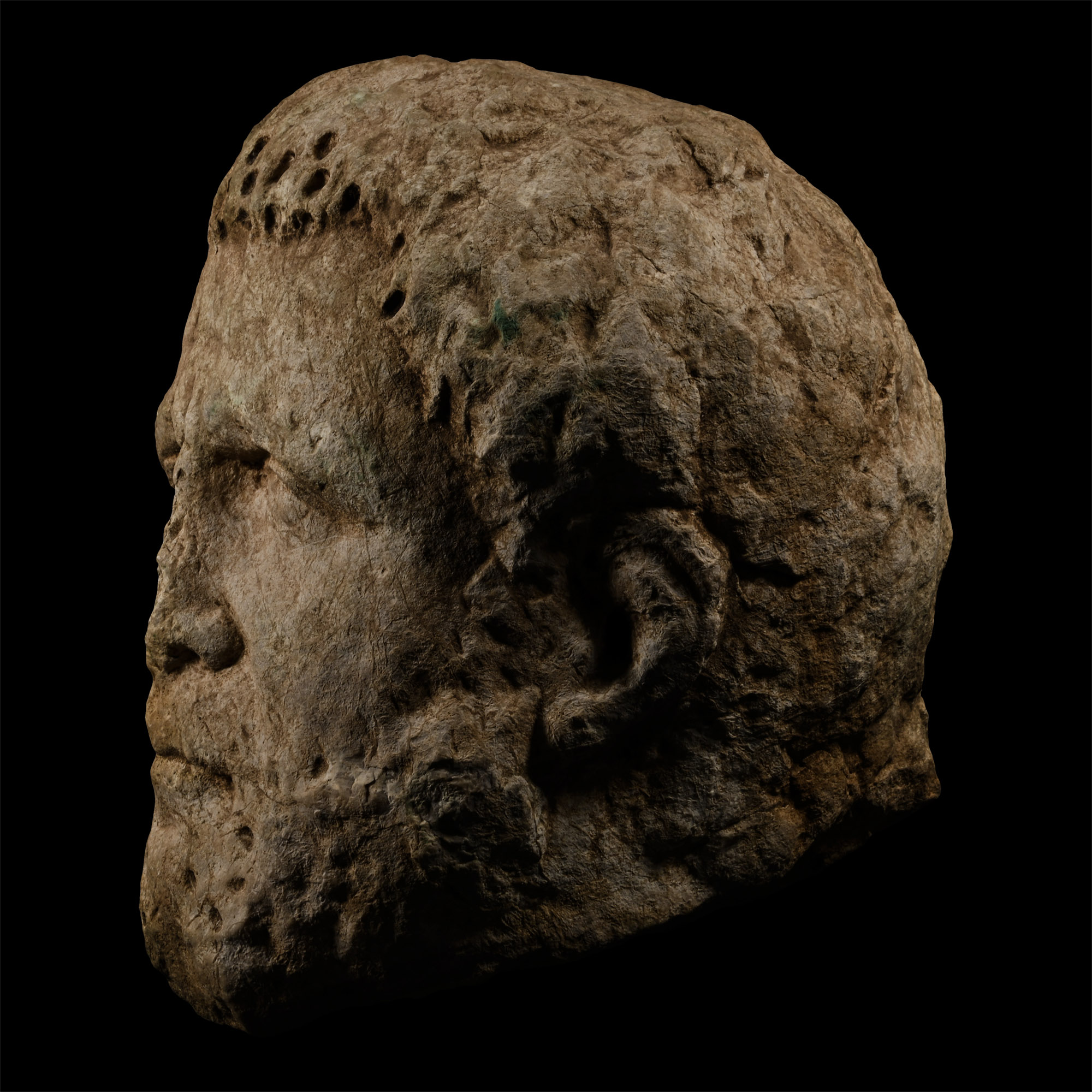
Over Life-Sized Roman Marble Head of a Tetrarch
3RD-4TH CENTURY A.D.
10 5/8 in. (26.5 kg, 27 cm high).
Carved in the round with stern facial features, short curly hair and beard with light moustache; the broad brow modelled with characterful creasing, the eyebrows slightly drooping and eyes deep-set, the nose angular and small pinched mouth; possibly an emperor or a tetrarch; possibly retouched in places.
ProvenancePrivate collection, Europe.
Acquired on the European art market, 2002.
Private Swiss collection.
Accompanied by an academic report by Dr Raffaele D’Amato.
This lot has been checked against the Interpol Database of stolen works of art and is accompanied by a search certificate number no.12574-232106.
This lot has been cleared against the Art Loss Register database, and is accompanied by an illustrated lot declaration signed by the Head of the Antiquities Department, Dr Raffaele D'Amato.
Cf. Bianchi Bandinelli, R., Roma, la fine dell'arte antica, Milano, 1970, fig.76; Frel, J., Roman Portraits in the Getty Museum,Malibu, 1981, fig.93; Cf. Donati, A., Gentili, G., Costantino Il Grande, la civilta' Antica al bivio fra Occidente ed Oriente, Milano, 2005, pp.204ff.; cf. also Biscottini, P., Sena Chiesa, G., Costantino, 313 d.C., l’Editto di Milano e il tempo della tolleranza, Milano, 2012, pp.124, 179, 182, 185, 187.
FootnotesThe portrait, for style and artistic structure, can be compared with the ones of Diocletian and his colleague Maximianus Herculius, and with most of the emperors of the so-called Tetrarchic Period. Like in the portrait of Diocletian and Maximianus, this military man is portrayed with bags under his eyes and with a harsh facial expression. The wrinkles on his forehead and around his mouth show the feelings of a man engaged in difficult times. Stylistically the face presents affinity with the portrait of Diocletian or Maximianus Herculius at the Uffizi (inv.242), some elements also recall the portrait of Decius at the Musei Capitolini (inv.482). We can therefore date the artwork in the period between the second half of the 3rd century and the first decade of the 4th century A.D.
CONDITIONTimeLine Auctions follows a vetting process to ensure the authenticity and legality of all items, reinforcing our commitment to integrity and responsible trading. Each antiquity, antique, and coin lot undergoes thorough examination by a vetting committee of at least ten external specialists, professional trade association members, scientists, and archaeologists: Our Vetting Process
AUCTIONS:
TimeLine is a leading auction house specialising in antiquities, ancient art, collectables, natural history, coins, medals, and books. Our auctions offer museums, collectors, historians, and enthusiasts the opportunity to acquire unique and historically significant pieces.
-
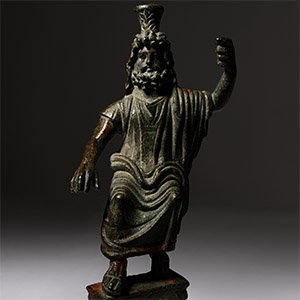
Roman Bronze Figure of Serapis
1st century B.C.-1st century A.D.Sold for (Inc. bp): £5,200
Depicted seated with his feet resting on a low stool, left hand raised and once holding sceptre or a staff; a modius crown resting on his curly hair, decorated with three incised olive sprays; dressed in a chiton and a draped himation, with his sandal-clad feet showing from beneath the folds of his garments; mounted on a custom-made display stand. 233 grams total, 12 cm high excluding stand
Private collection, Florida, USA, 1980s. European private collection, acquired in 2002. Accompanied by a copy of an Art Loss Register certificate, no.S00019356. Accompanied by an academic report by Dr Raffaele D’Amato. This lot has been checked against the Interpol Database of stolen works of art and is accompanied by search certificate number no.12611-234679. This lot has been cleared against the Art Loss Register database, and is accompanied by an illustrated lot declaration signed by the Head of the Antiquities Department, Dr Raffaele D'Amato.
The facial features are of the bearded Hellenistic type, well known by the features of the seated cult statue from the Serapeum in Alexandria and the prototypes of a number of separated heads or busts which also survive in innumerable copies in all the corners of the Roman Empire. A statue made by the Hellenistic sculptor Bryaxis was the model for this statuette and the successive iconography. -
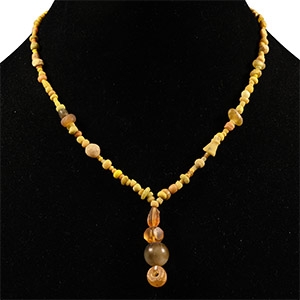
Roman Yellow Glass Bead Necklace String
1st-4th century A.D. and laterSold for (Inc. bp): £98
Restrung group of spherical, cylindrical and other beads. 10.6 grams, 34 cm
Ex London, UK, collection, 1990s. This lot is accompanied by an illustrated lot declaration signed by the Head of the Antiquities Department, Dr Raffaele D'Amato. -
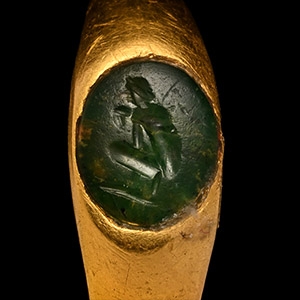
Roman Gold Ring with Green Quartz Gemstone of a Crouching Figure
2nd-3rd century A.D.Sold for (Inc. bp): £780
With tapering shank, inset cloison with intaglio crouching figure (Faunus?). 8.29 grams, 19.88 mm overall, 14.54 x 11.23 mm internal diameter (approximate size British -, USA -, Europe -, Japan -)
Acquired by the current owner's family in the 1980s. with Christie’s, New York, Ancient Jewellery, 11 December 2003, no.463. This lot has been cleared against the Art Loss Register database, and is accompanied by an illustrated lot declaration signed by the Head of the Antiquities Department, Dr Raffaele D'Amato.
