
Loading, please wait...
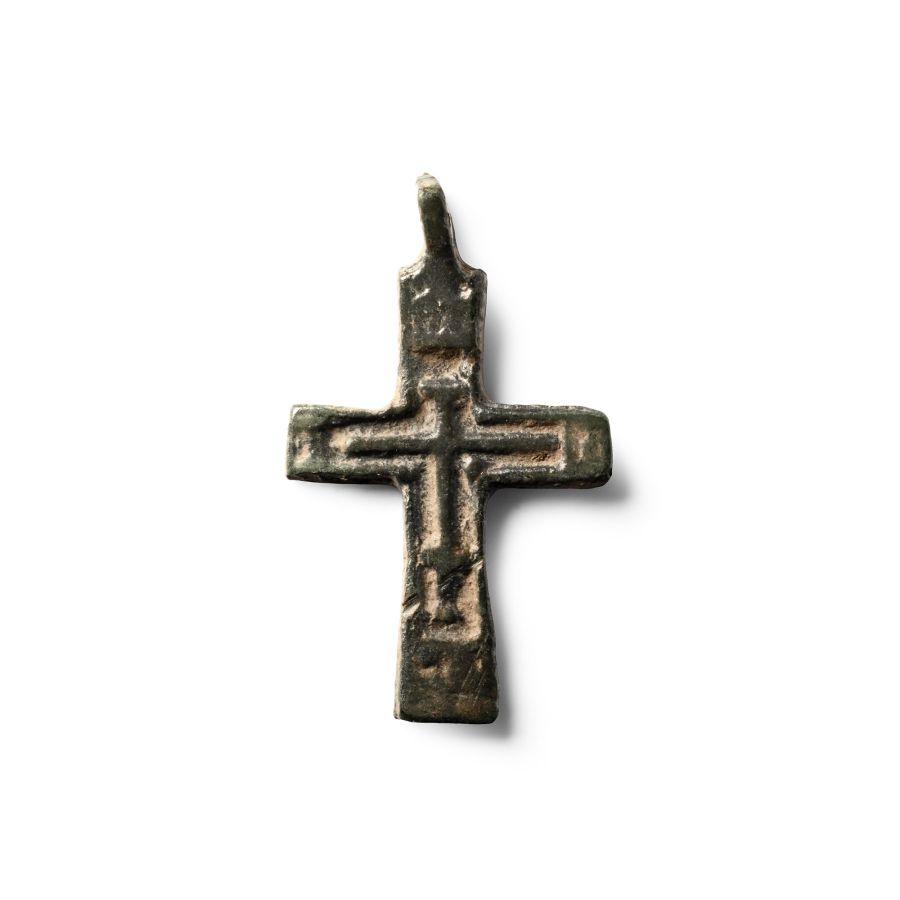
LOT 1964
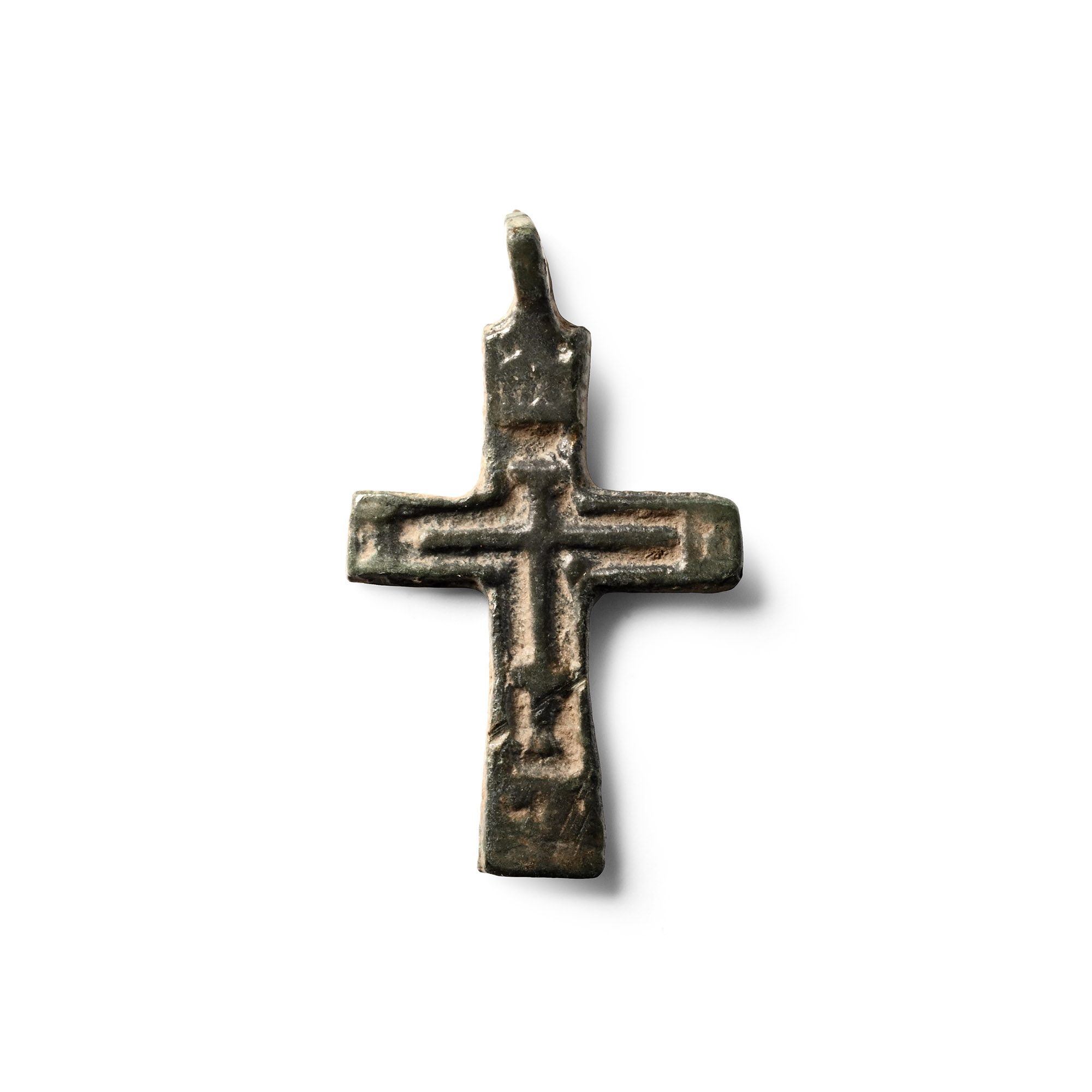
Orthodox Bronze Cross Pendant
CIRCA 17TH CENTURY A.D.
1 1/4 in. (3.08 grams, 32 mm).
Voided to the obverse with reserved low-relief inner cross motif. [No Reserve]
ProvenanceAcquired from Chris Martin-Zakheim, Iconastas, 5 Piccadilly Arcade, London SW1.
From the private collection of a West London, UK, gentleman, formed since the early 2000s.
TimeLine Auctions follows a vetting process to ensure the authenticity and legality of all items, reinforcing our commitment to integrity and responsible trading. Each antiquity, antique, and coin lot undergoes thorough examination by a vetting committee of at least ten external specialists, professional trade association members, scientists, and archaeologists: Our Vetting Process
AUCTIONS:
TimeLine is a leading auction house specialising in antiquities, ancient art, collectables, natural history, coins, medals, and books. Our auctions offer museums, collectors, historians, and enthusiasts the opportunity to acquire unique and historically significant pieces.
-
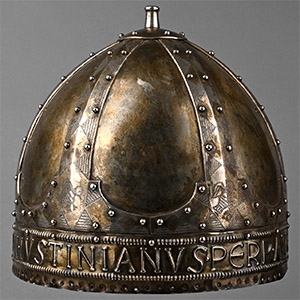
Byzantine Style Silver and Iron Spangenhelm
20th century A.D.Sold for (Inc. bp): £4,160
Conical segmented body with a tubular socket above to accept a separate crest; the surface of the fastening segments decorated with opposing triangles and an eagle at the base, the central segment decorated with an expanding arm cross at the base; the browband with an embossed inscription 'D[ominus] N[ostrum] IVSTINIANUS PERP[etuus] AVG[ustus] IN NOMINE XP[isti] VINCAS SEMP[er] = Our Lord Justinian, forever August, be always victorious; series of perforations on the lower rim, internally the lower part lined with corroded iron; supplied in a custom-made display case. 1.2 kg, 19.9 cm high
Ex property of a European gentleman. Accompanied by an academic report on this reproduction by Dr Raffaele D’Amato. This lot has been checked against the Interpol Database of stolen works of art and is accompanied by search certificate number no.12918-245690. -
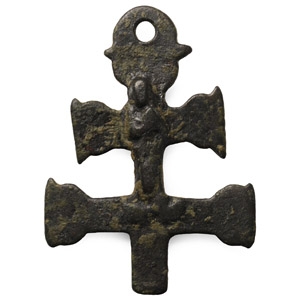
Post Medieval Bronze Cross Pendant
17th-19th century A.D.Sold for (Inc. bp): £13
Flat-section pendant of a two-barred cross with low-relief Corpus Christi to obverse; Mary to reverse. 4.64 grams, 39 mm
Ex P Chapman collection, 1980s-1990s. -
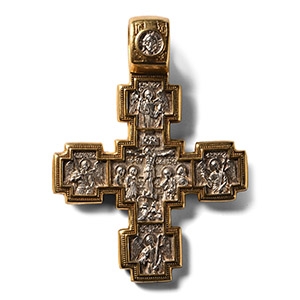
Russian Silver-Gilt Cross Pendant
21st century A.D.Sold for (Inc. bp): £46
Bifacial pendant cross with applied silver panels; obverse with central crucifixion scene surrounded by winged angels with spears and nimbate bust on the bale; reverse with central combat scene surrounded by saints; stamped '925' on reverse of bale. 13.72 grams, 45 mm
From the private collection of a West London, UK, gentleman, formed since the early 2000s.
