
Loading, please wait...
LOT 0491
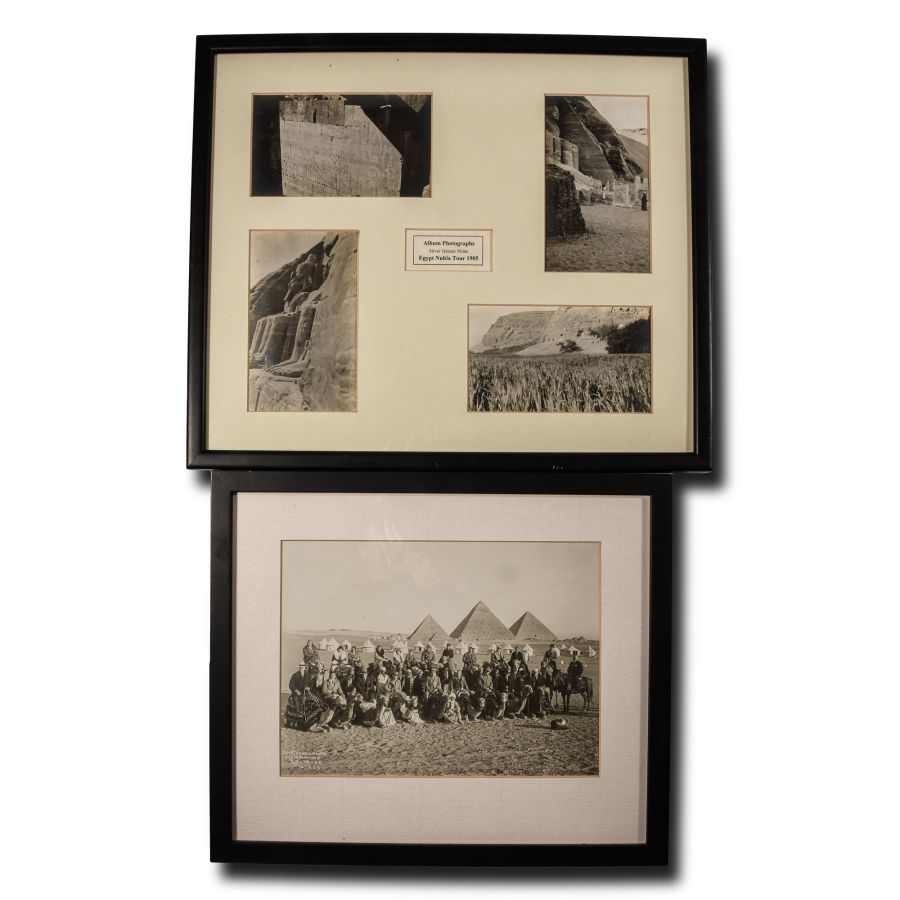
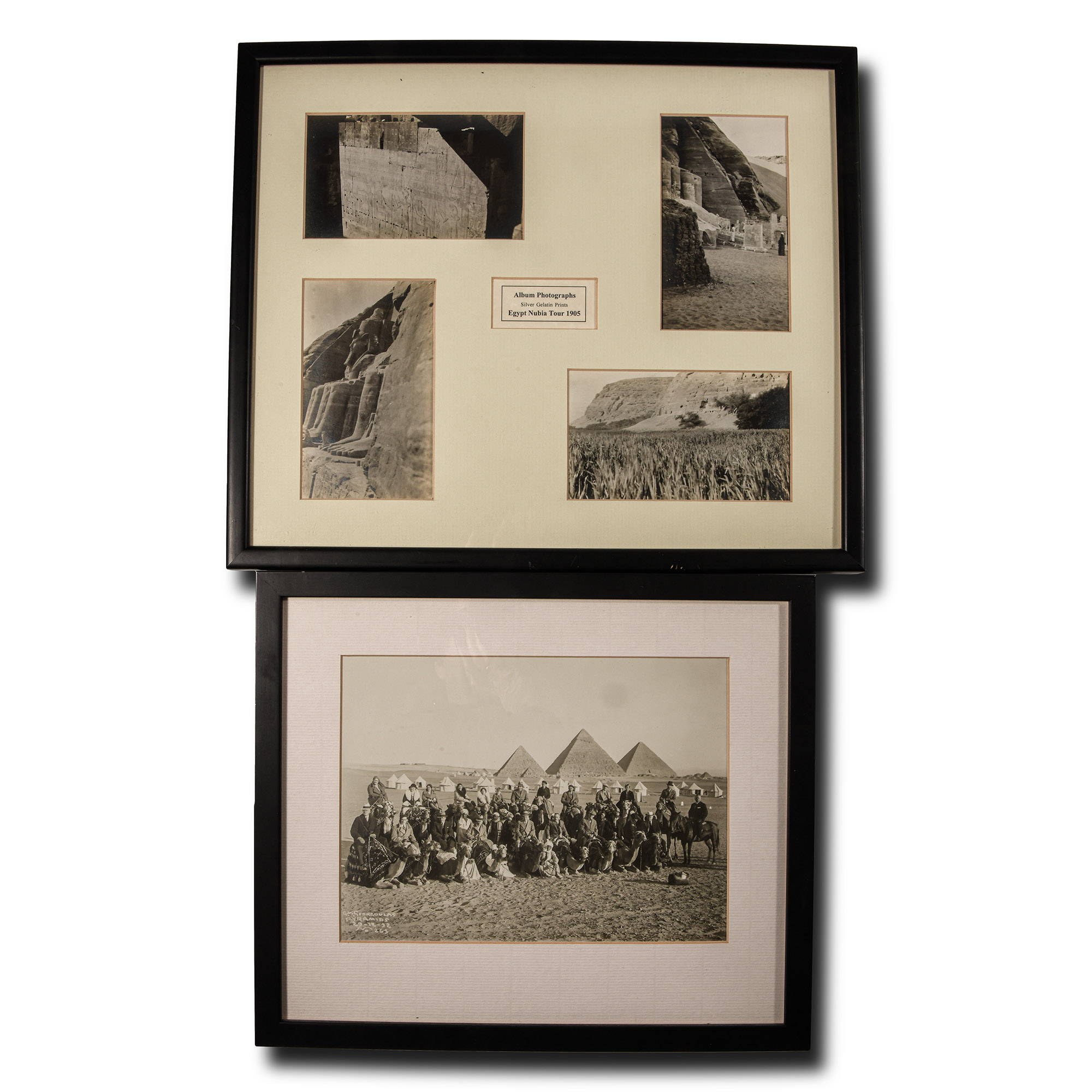
Original Photographs of Abu Simbel and Pyramids
1905 A.D.
12 5/8 x 10 3/4 - 14 1/2 x 12 3/8 in. (1.42 kg total, 32 x 27.5 - 37 x 31.5 cm).
Montage in a glazed wooden frame comprising four monochrome views of Abu Simbel with caption 'Album Photographs / Silver Gelatin Prints / Egypt Nubia Tour 1905'; plus one other framed photograph by G.M. Georgoulas of a group in front of the Old Kingdom pyramids at Giza dated 29 December 1932. [2, No Reserve]
ProvenanceProperty of a North Lincolnshire, UK, gentleman.
FootnotesThe four photographs of Abu Simbel show the original location of the magnificent rock-cut temple complex of Ramesses II before it was dismantled in 1964 and re-assembled on higher ground to rescue it from the rising waters of Lake Nassar.
CONDITIONTimeLine Auctions follows a vetting process to ensure the authenticity and legality of all items, reinforcing our commitment to integrity and responsible trading. Each antiquity, antique, and coin lot undergoes thorough examination by a vetting committee of at least ten external specialists, professional trade association members, scientists, and archaeologists: Our Vetting Process
AUCTIONS:
TimeLine is a leading auction house specialising in antiquities, ancient art, collectables, natural history, coins, medals, and books. Our auctions offer museums, collectors, historians, and enthusiasts the opportunity to acquire unique and historically significant pieces.
-

Egyptian Limestone Head of a Priest
Ptolemaic Period, 332-31 B.C. or laterSold for (Inc. bp): £2,340
With shaven head, finely modelled facial features, lined forehead; mounted on a custom-made stand. 1.8 kg total, 20 cm including stand
with J.J. Klejman, Madison Avenue, New York, USA, 1960s. UK collection, acquired from the above, 1960s.
The heads of priests in Egypt were customarily shaven for reasons of ritual purity. -
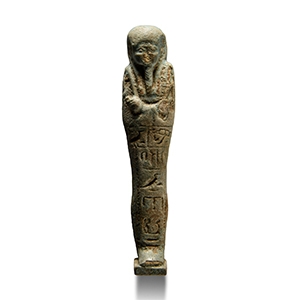
Egyptian Blue Glazed Shabti for Son of Ta-heb
30th Dynasty, 380-343 B.C.Sold for (Inc. bp): £494
Composed as a mummiform figure with tripartite wig and hands crossed at the chest, holding a pick, hoe, and seed bag; a T-shaped panel of hieroglyphic text reading: sḥḏ wsỉr tꜢ.... ms.n tꜢ ḥb mꜢʾ ḫrw, ‘The illuminated, the Osiris, Ta…. born to Ta-heb true of voice’. 36 grams, 10.7 cm
Acquired in Egypt in 1933. Ex Alexander Cameron (1897-1994) collection. -
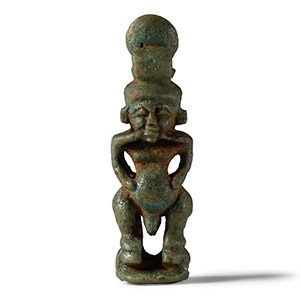
Egyptian Janiform Pataikos and Ra-Horakhty Faience Amulet
Late Period-Ptolemaic Period, 664-30 B.C.Estimate: £1,500 - 2,000 (+bp*)
Opening Bid: £800
Modelled in the round, Pataikos depicted nude with his arms resting on his rounded belly, large genitals and a suspension loop on his head; the nude Ra-Horakhty depicted falcon-headed, wearing a sun disc and a tripartite wig, his hand resting on his waist; each standing on stylised crocodiles(?) on a rounded base. 13.4 grams, 60.5 mm
Ex AH collection, London, UK, 1980s. Accompanied by a previous catalogue information slip.
Pataikos amulets were used for protection against negative forces and dangerous animals such as snakes, crocodiles, and scorpions. These amulets also symbolised rejuvenation and were often embellished with solar imagery, as seen in this example which features the sun disc headgear and Ra-Horakhty.
