
Loading, please wait...
LOT 0465
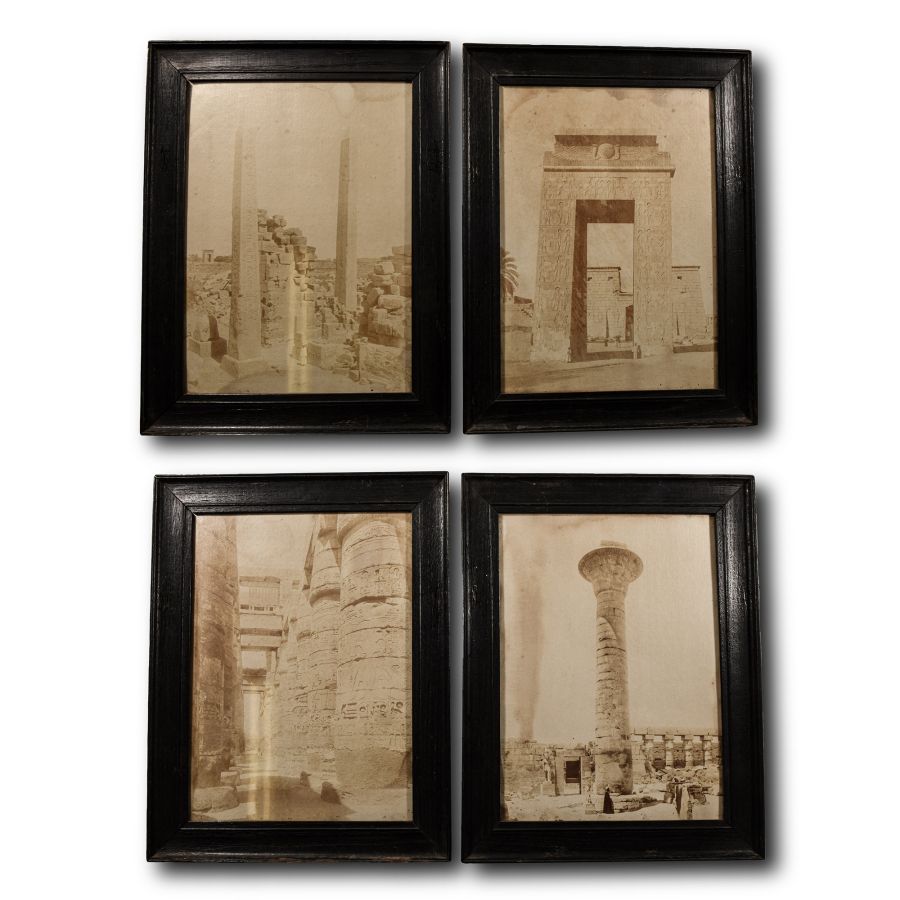
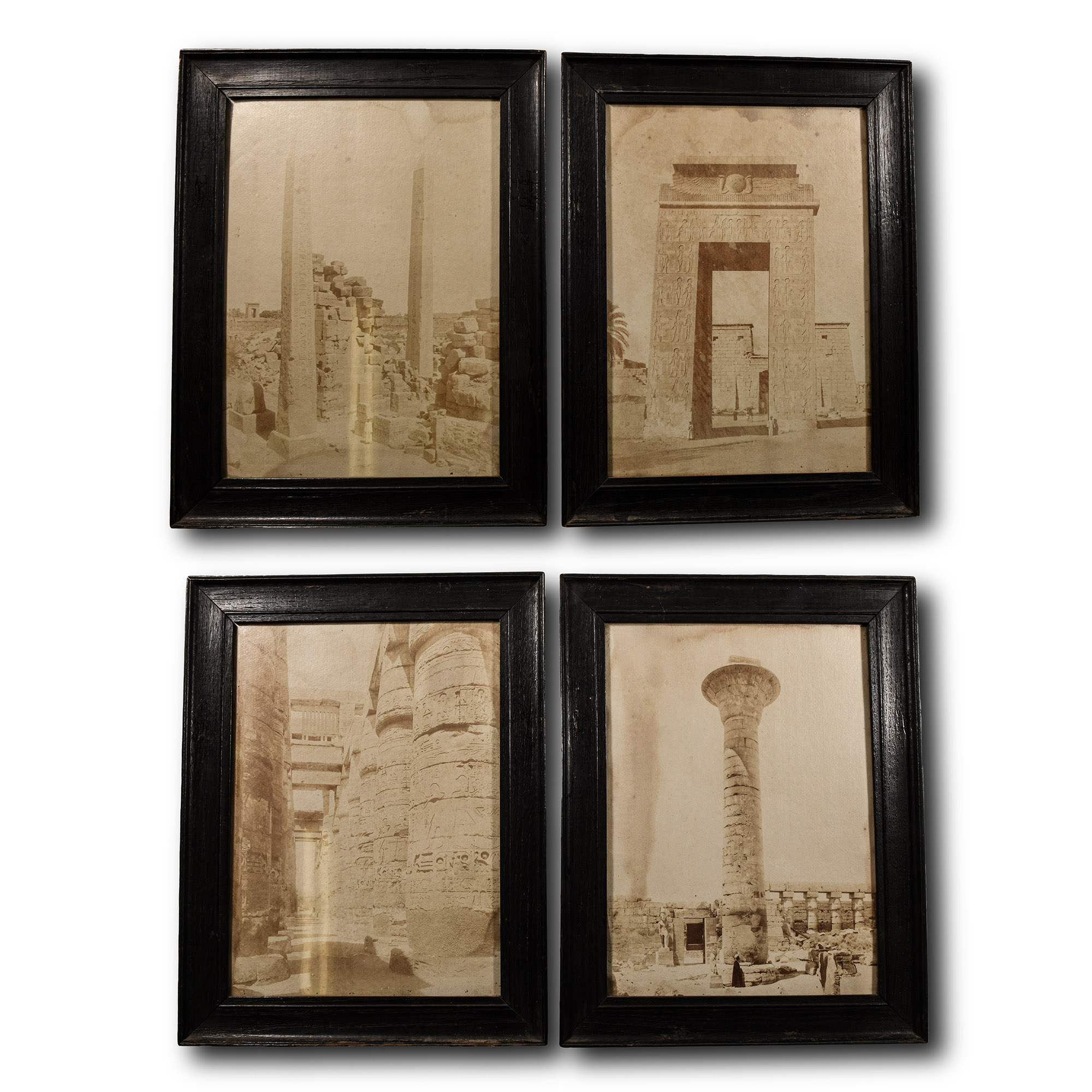
Original Framed Photographs of Egyptian Monuments
1922 A.D.
18 1/8 x 14 in. (4.6 kg total, 46 x 35.5 cm each).
Group of four original photographs, each in a glazed wooden frame: (1) Karnak: Gateway of Ptolemy III Euergetes and Ptolemy IV Philopator at the Precinct of Montu (2) Obelisks at Karnak, on the right erected by Thutmose I (reign c. 1520 - 1492 BCE) and on the left by Hatshepsut (1479-1458 BCE) (3) Column of Taharqa, Karnak Temple (4) Karnak temple columns with hieroglyphs. [4, No Reserve]
ProvenanceProperty of a North Lincolnshire, UK, gentleman.
CONDITIONTimeLine Auctions follows a vetting process to ensure the authenticity and legality of all items, reinforcing our commitment to integrity and responsible trading. Each antiquity, antique, and coin lot undergoes thorough examination by a vetting committee of at least ten external specialists, professional trade association members, scientists, and archaeologists: Our Vetting Process
AUCTIONS:
TimeLine is a leading auction house specialising in antiquities, ancient art, collectables, natural history, coins, medals, and books. Our auctions offer museums, collectors, historians, and enthusiasts the opportunity to acquire unique and historically significant pieces.
-
.jpg)
Large Egyptian Bronze Body of Horus-Harpocrates
Ptolemaic Period, 332-30 B.C.Sold for (Inc. bp): £520
An acephalic seated nude statuette of Horus-Harpocrates, legs held together and arms by his side, semi-naturalistic anatomical detailing; cleaned. 1.67 kg total, 22 cm high (26 cm high including stand)
Collection of Brugsch Pasha (1842-1930). with Hotel Drouot, Paris, 30 September 1997, no.643. Ex property of Mr Naudy. Property of a French collector.
Horus, son of Isis and Osiris, was considered a solar deity who overcame darkness and defeated the chaotic forces of his evil uncle, the god Seth. Egyptian pharaohs considered themselves to be reincarnations of Horus. In his youthful form, Horus the child embodies the new sun and all associated benefits. In Graeco-Roman Egypt he became Harpocrates, son of Serapis and Isis, the deity-symbol of rebirth and fertility, perhaps the most popular deity to be represented in Ptolemaic and Roman Egypt. -
Original Photographs of Abu Simbel and Pyramids
1905 A.D.Sold for (Inc. bp): £111
Montage in a glazed wooden frame comprising four monochrome views of Abu Simbel with caption 'Album Photographs / Silver Gelatin Prints / Egypt Nubia Tour 1905'; plus one other framed photograph by G.M. Georgoulas of a group in front of the Old Kingdom pyramids at Giza dated 29 December 1932. 1.42 kg total, 32 x 27.5 - 37 x 31.5 cm
Property of a North Lincolnshire, UK, gentleman.
The four photographs of Abu Simbel show the original location of the magnificent rock-cut temple complex of Ramesses II before it was dismantled in 1964 and re-assembled on higher ground to rescue it from the rising waters of Lake Nassar. -
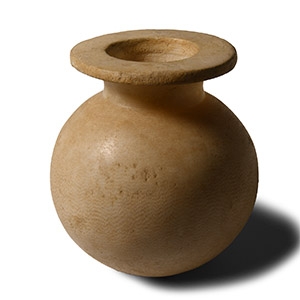
Egyptian Globular Alabaster Jar
Late Old Kingdom-First Intermediate Period, circa 2513-2165 B.C.Sold for (Inc. bp): £1,560
With globular body, short neck and thin, wide rim; part of the rim restored. 310 grams, 98 mm
Ex Waltz collection, Munich, Germany, circa 1970s. with Gorny & Mosch, Auction 206, no.12. Accompanied by copies of the relevant Gorny & Mosch catalogue pages.
Such vessels have been found at numerous sites including Naga ed-Deir, Saqqara, and Badari.
