
Loading, please wait...
LOT 2113
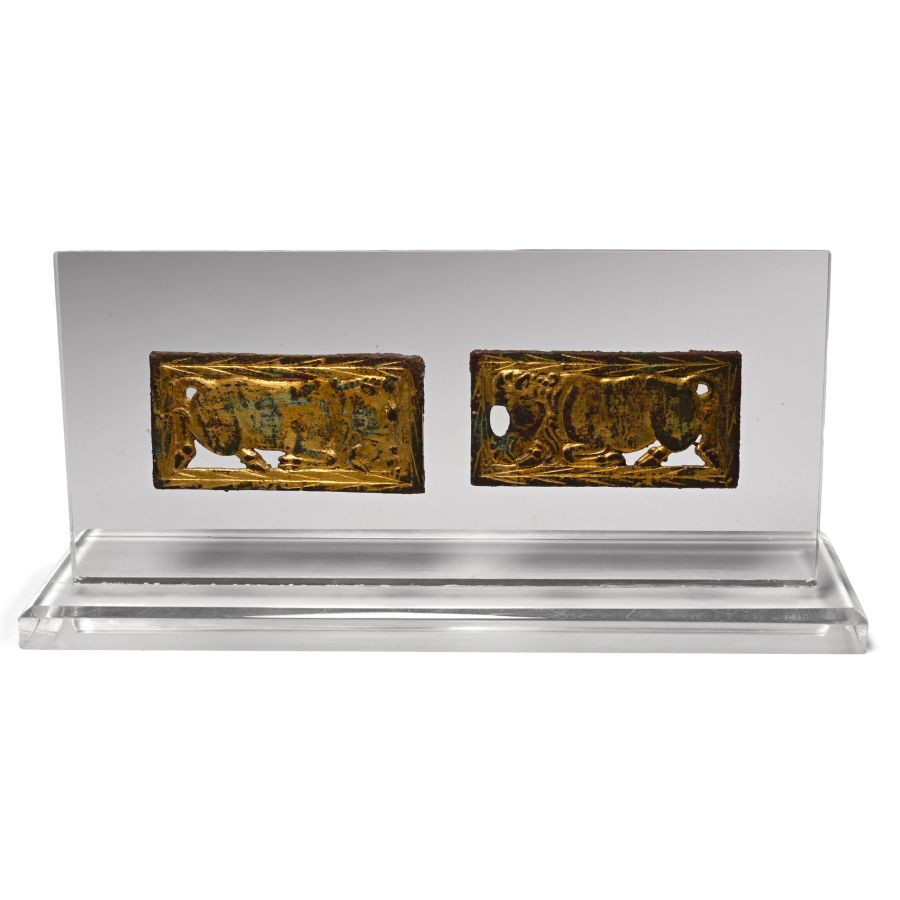
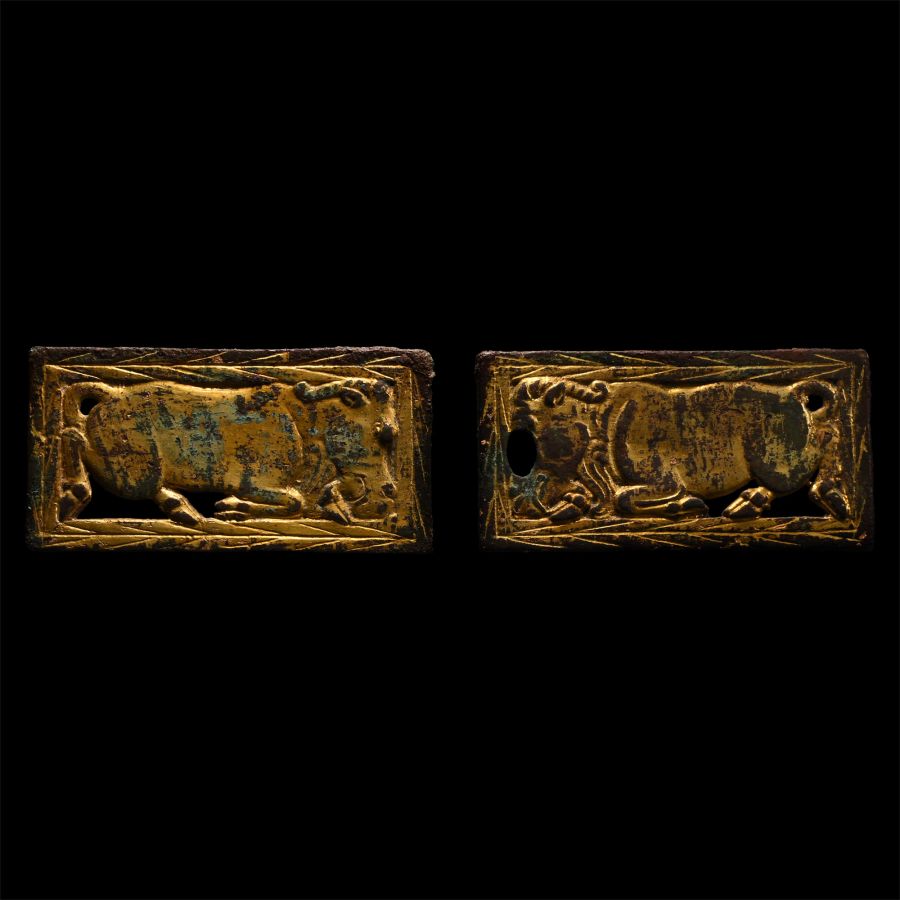
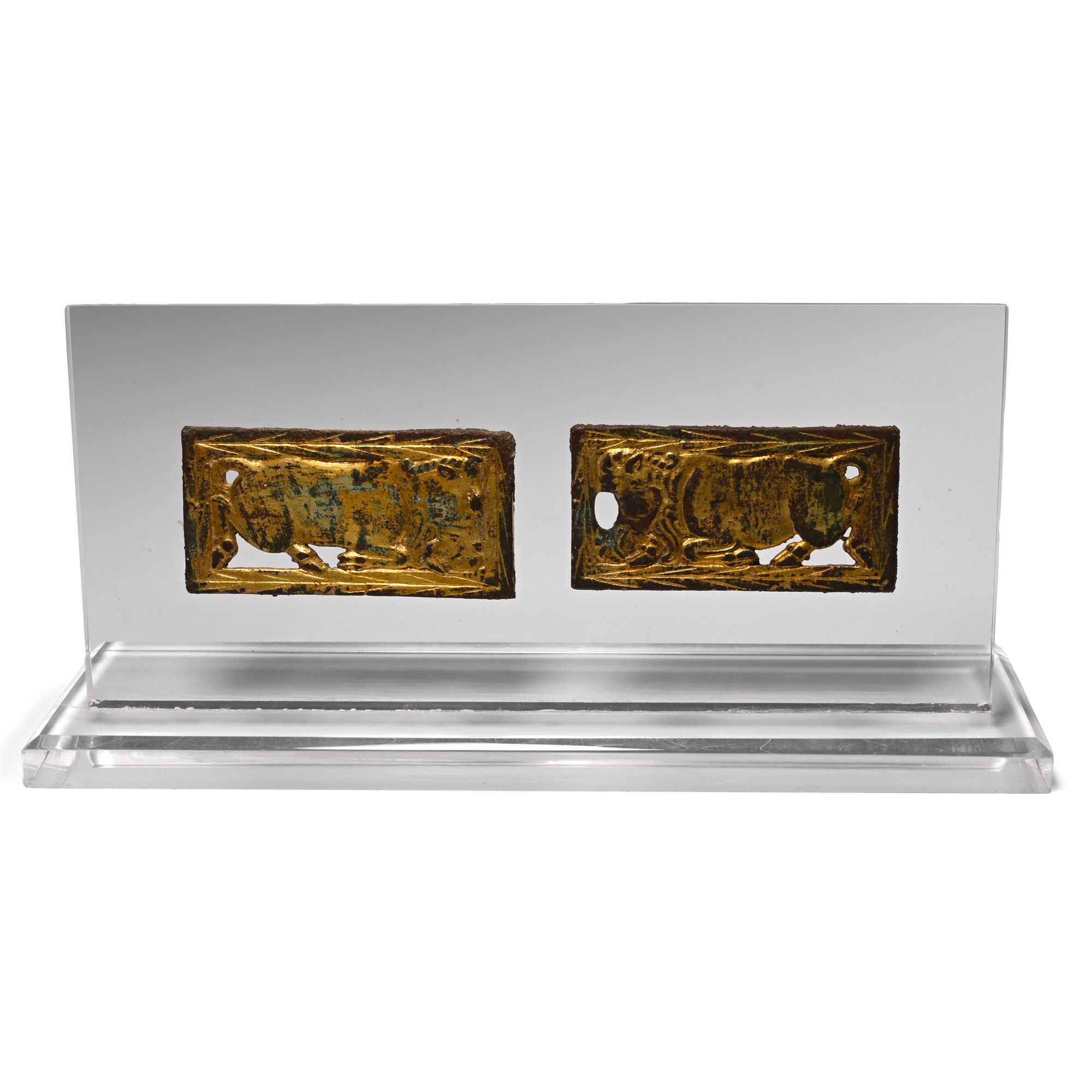
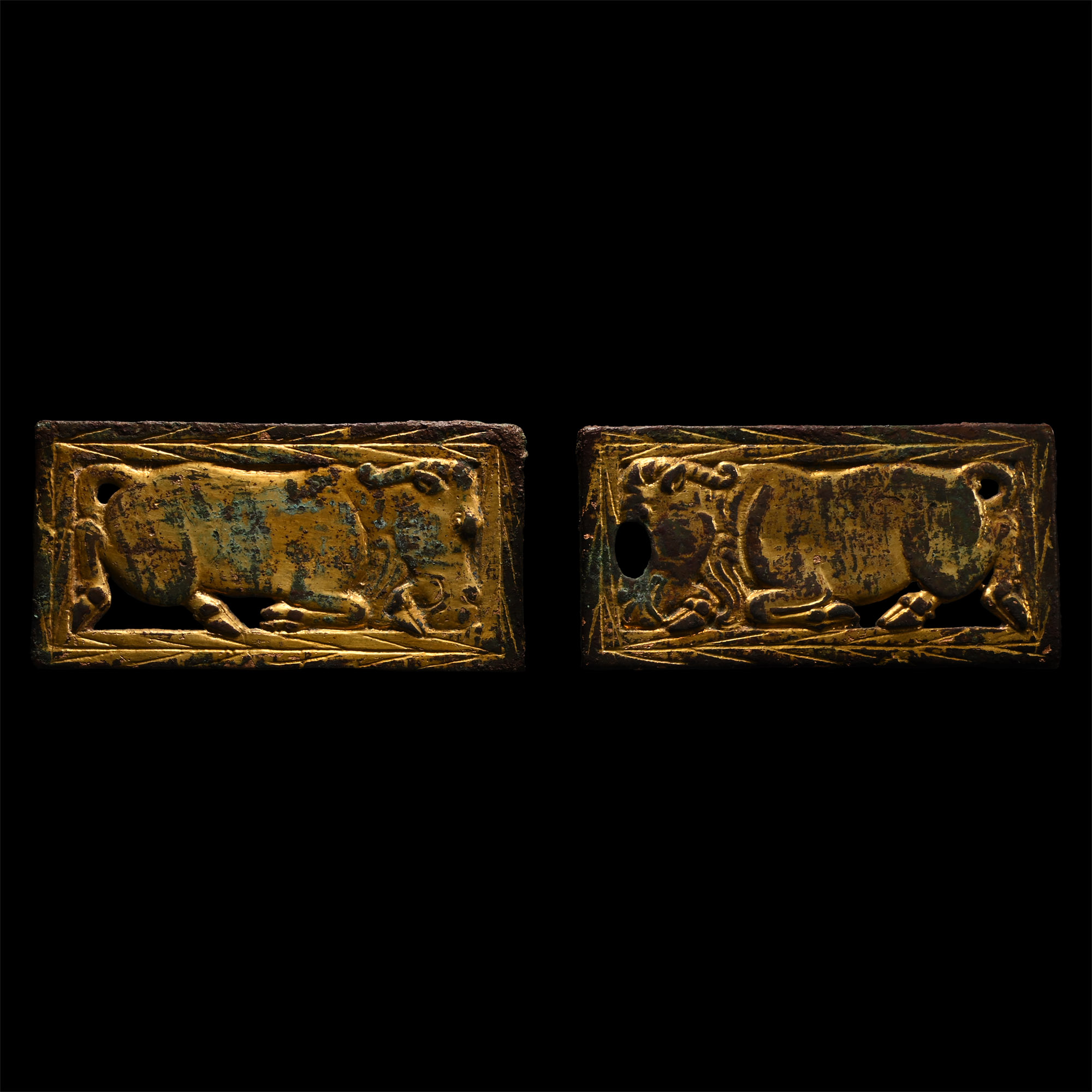
Ordos Gilt Bronze Belt Plate Pair with Bulls
4TH-3RD CENTURY B.C.
2 3/4 in. (380 grams total, plates: 72 mm long each).
A pair of matched plates, each rectangular with low-relief bull, the head facing forward and forelegs bent under the body, with scrolled linear motif to the border, attachment loops to reverse; mounted on a custom-made stand. [2]
ProvenanceShinya Tagava, Honcho, Tokyo, Japan, pre-1986.
This lot is accompanied by an illustrated lot declaration signed by the Head of the Antiquities Department, Dr Raffaele D'Amato.
The nomadic style was expressed in the openwork and embossed bronze plates that served as belt buckles and plaques. The 'Ordos bronzes' furthermore consisted mostly of decorative plaques which were sewn onto garments and horses' bridles, a frequent motif being animal combat.
CONDITIONTimeLine Auctions follows a vetting process to ensure the authenticity and legality of all items, reinforcing our commitment to integrity and responsible trading. Each antiquity, antique, and coin lot undergoes thorough examination by a vetting committee of at least ten external specialists, professional trade association members, scientists, and archaeologists: Our Vetting Process
AUCTIONS:
TimeLine is a leading auction house specialising in antiquities, ancient art, collectables, natural history, coins, medals, and books. Our auctions offer museums, collectors, historians, and enthusiasts the opportunity to acquire unique and historically significant pieces.
LOT 2113
Ordos Gilt Bronze Belt Plate Pair with Bulls
Estimate £800 - 1,000€930 - 1,160 (for guidance only)$1,080 - 1,350 (for guidance only)
-
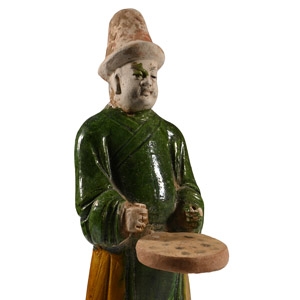
Chinese Ming Green-Glazed Musician with Drum
Ming Dynasty, 1368-1644 A.D. or laterSold for (Inc. bp): £46
Modelled standing on a tiered base; wearing a tall hat, a floor-length robe and boots; arms held in front of his body above a drum strapped to his waist; green and brown glaze. 494 grams, 24 cm
Ex H.N. collection, Milton Keynes, UK, 1990s. This lot is accompanied by an illustrated lot declaration signed by the Head of the Antiquities Department, Dr Raffaele D'Amato.
China provides some of the earliest traces of music making. These are mainly in the form of well-preserved musical instruments, the tangible evidence of music. Over several millennia, musical instruments from regional indigenous traditions as well as from India and Central and West Asia were assimilated into the mainstream of Chinese music. Some of the most ancient instruments have been retained, transformed, or revived throughout the ages and many are in common use even today, testifying to a living legacy of a durable art. This legacy is frequently celebrated in the visual arts of China, documenting rituals and celebrations, or as status symbols of those whose lives were enhanced by the resonate sounds of instruments. Ancient Chinese people believed they would go to an afterlife when they died. So they placed miniature versions of things for everyday use in tombs for the deceased, such as these musicians, hoping that the dead could enjoy the next life like when they were alive. These grave objects gradually developed into funerary artworks and reflected the social standing of the deceased. -
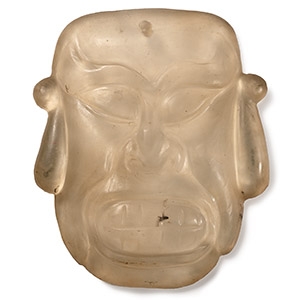
Life-Size Tibetan Style Buddhist Mask
20th century A.D.Sold for (Inc. bp): £46
Modelled as a grotesque grimacing face with exposed teeth and large eyes, pierced through the forehead; probably glass. 939 grams, 21.6 cm
From the family collection of a Hampstead gentleman; formerly acquired in the 1980s. This lot is accompanied by an illustrated lot declaration signed by the Head of the Antiquities Department, Dr Raffaele D'Amato. -
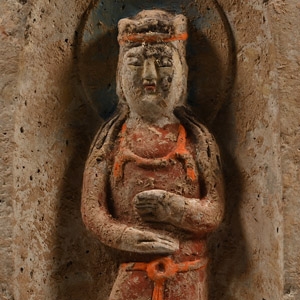
Chinese Wei Terracotta Buddha Brick
Northern Wei Dynasty, 386-534 A.D. or laterEstimate: £200 - 300 (+bp*)
Opening Bid: £100
Showing Buddha or Bodhisattva standing beneath a chaitya arch, dressed in a long robe with carved folds, hands in a mudra position. 3.3 kg, 33 cm
Ex Hong Kong collection, 1990s. This lot is accompanied by an illustrated lot declaration signed by the Head of the Antiquities Department, Dr Raffaele D'Amato.
