
Loading, please wait...
LOT 1257
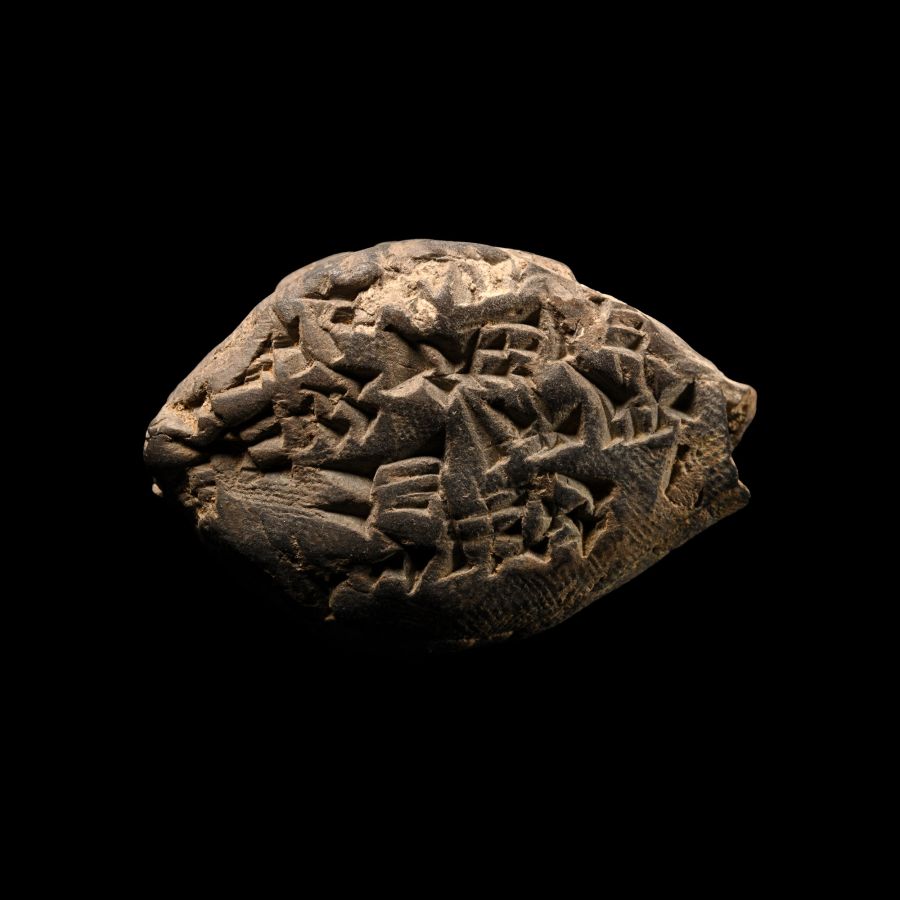
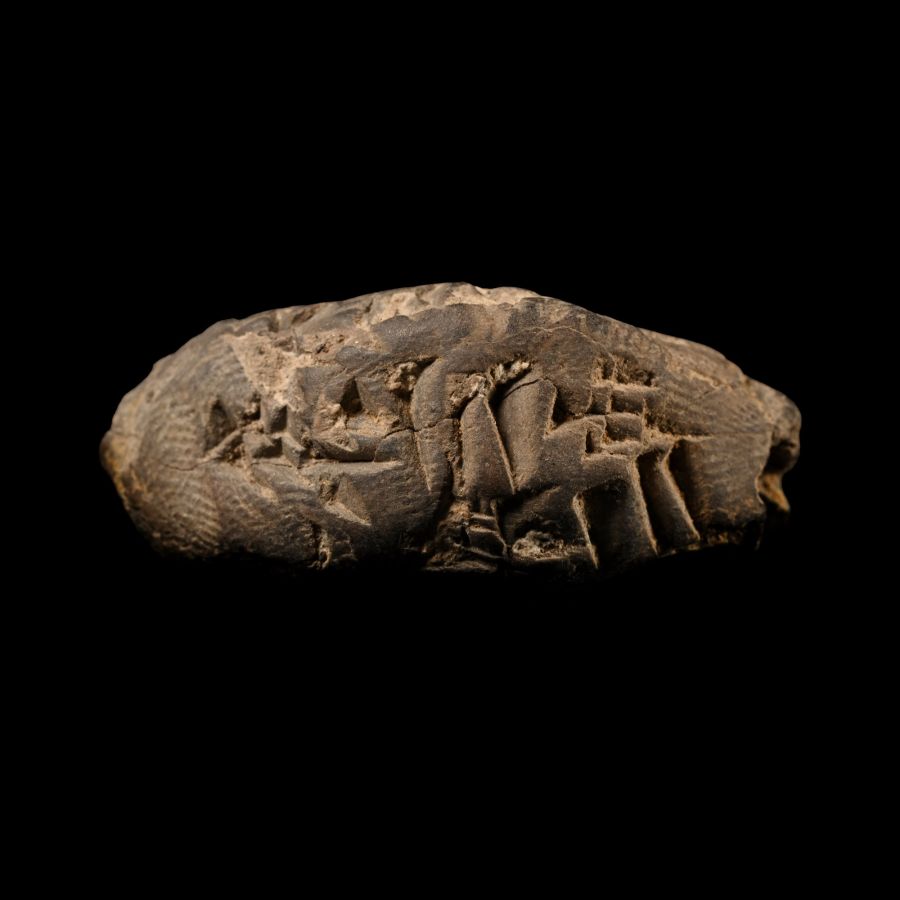
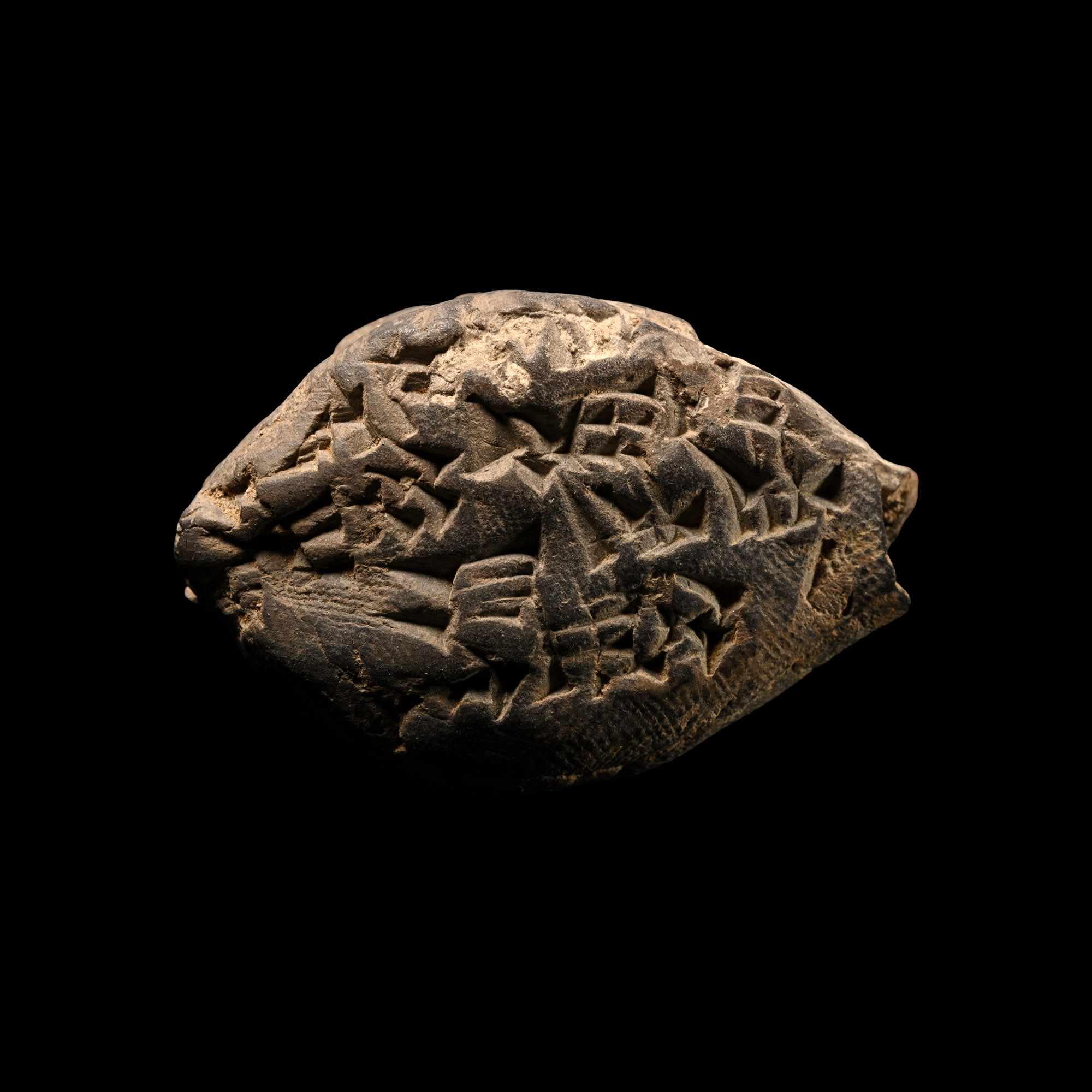
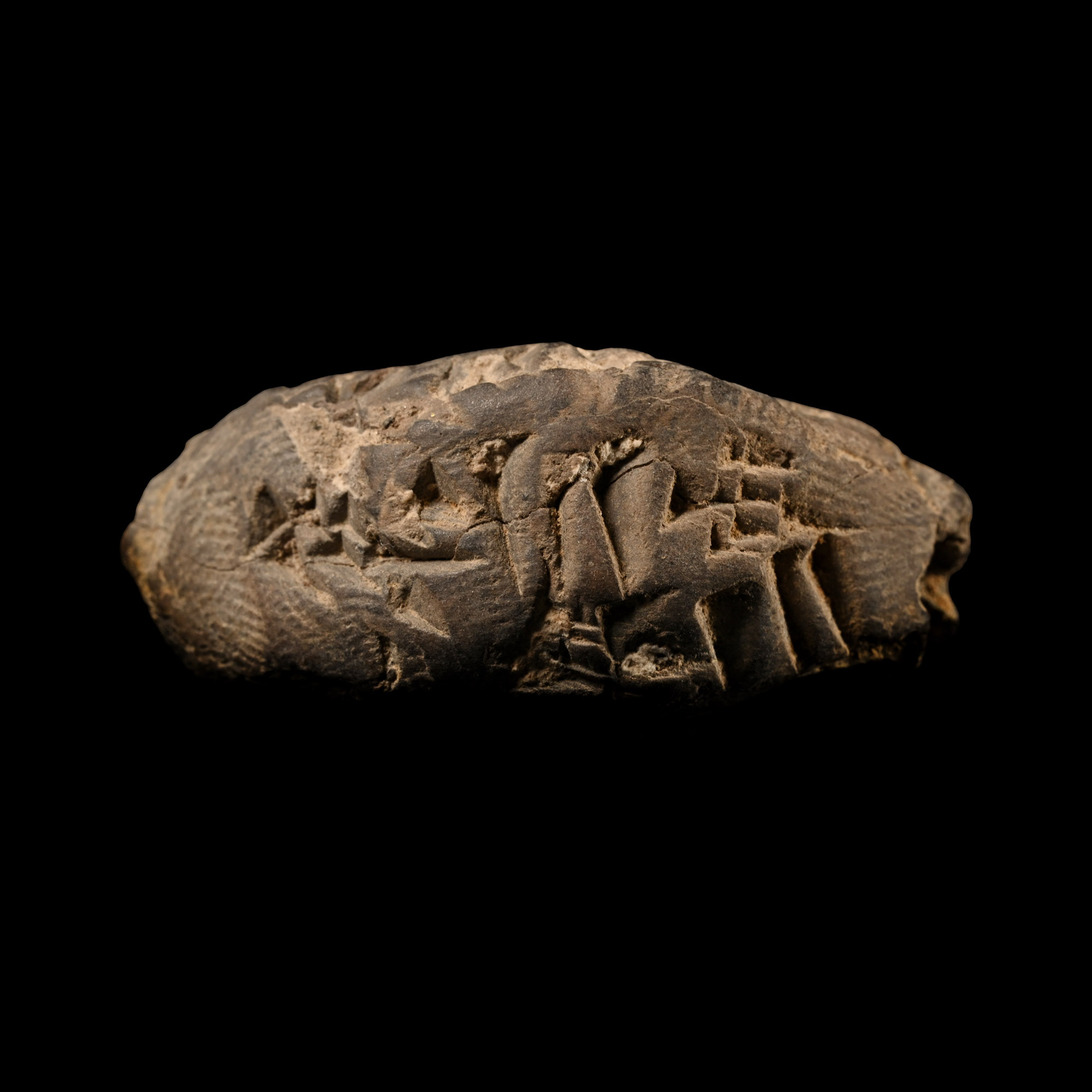
Old Babylonian Terracotta Cuneiform Tag Recording the Delivery of Sheep Carcasses
2000-1600 B.C.
1 3/8 in. (14.55 grams, 37.4 mm).
Almond-shaped with columns of cuneiform text to one broad face and one edge.
ProvenancePrivate collection, Jerusalem, assembled in the 1970s-1980s.
European private collection, acquired in 1998.
This lot has been cleared against the Art Loss Register database, and is accompanied by an illustrated lot declaration signed by the Head of the Antiquities Department, Dr Raffaele D'Amato.
TimeLine Auctions follows a vetting process to ensure the authenticity and legality of all items, reinforcing our commitment to integrity and responsible trading. Each antiquity, antique, and coin lot undergoes thorough examination by a vetting committee of at least ten external specialists, professional trade association members, scientists, and archaeologists: Our Vetting Process
AUCTIONS:
TimeLine is a leading auction house specialising in antiquities, ancient art, collectables, natural history, coins, medals, and books. Our auctions offer museums, collectors, historians, and enthusiasts the opportunity to acquire unique and historically significant pieces.
LOT 1257
Old Babylonian Terracotta Cuneiform Tag Recording the Delivery of Sheep Carcasses
Sold for (Inc. bp): £468
-

Western Asiatic Silver-Coloured Metal Bead Group
Circa 18th-19th century A.D.Sold for (Inc. bp): £20
Comprising eleven oval beads with central filigree collar and beaded collar to each end. 42 grams total, 20-21 mm
Ex collection of a late London, UK, collector, 1970s. This lot has been cleared against the Art Loss Register database, and is accompanied by an illustrated lot declaration signed by the Head of the Antiquities Department, Dr Raffaele D'Amato. -
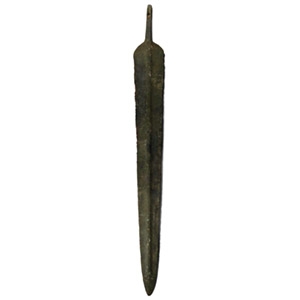
Very Large Luristan Bronze Sword
Early 1st millennium B.C.Sold for (Inc. bp): £157
Tapering leaf-shaped blade with a raised midrib developing to a short rectangular-section tang, pierced at the end. 482 grams, 49 cm
Ex London art market, 1980-1990s. This lot has been cleared against the Art Loss Register database, and is accompanied by an illustrated lot declaration signed by the Head of the Antiquities Department, Dr Raffaele D'Amato.
The Luri people produced a quantity of fine metalwork, which according to Dr. Khorasani, could be due to a settled period which arose as a result of the defeat of the Elamites by the Babylonians, leaving the Luristani people in relative peace for a period of time after 1200 BC. According to Khorasani 'A culture of innovation and experimentation flourished, and the repertoire of the Luristan smiths expanded in the period between 1150-1050 B.C.' -
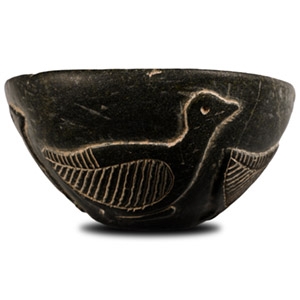
Western Asiatic Stone Bowl with Birds
3rd millennium B.C.Estimate: £4,000 - 6,000 (‡+bp*)
Opening Bid: £1,800
Hemispherical in profile with narrow rim, frieze of perching birds in relief, each with a pellet eye, stub beak, large comma-shaped hatched wing and leg held horizontally beneath the body; rim chipped. 273 grams, 11.2 cm
with Holy Lands House, Israel, 1960s. Private collection, 2005. This lot has been checked against the Interpol Database of stolen works of art and is accompanied by a search certificate no.12595-232195. This lot has been cleared against the Art Loss Register database, and is accompanied by an illustrated lot declaration signed by the Head of the Antiquities Department, Dr Raffaele D'Amato.
The chlorite stone vessels of early Bactria were kidney-shaped vessels with simple geometric decoration or, like our specimen, semi-circular. Small cylindrical vases were used as cosmetic containers, together with chlorite cosmetic flasks.
