
Loading, please wait...
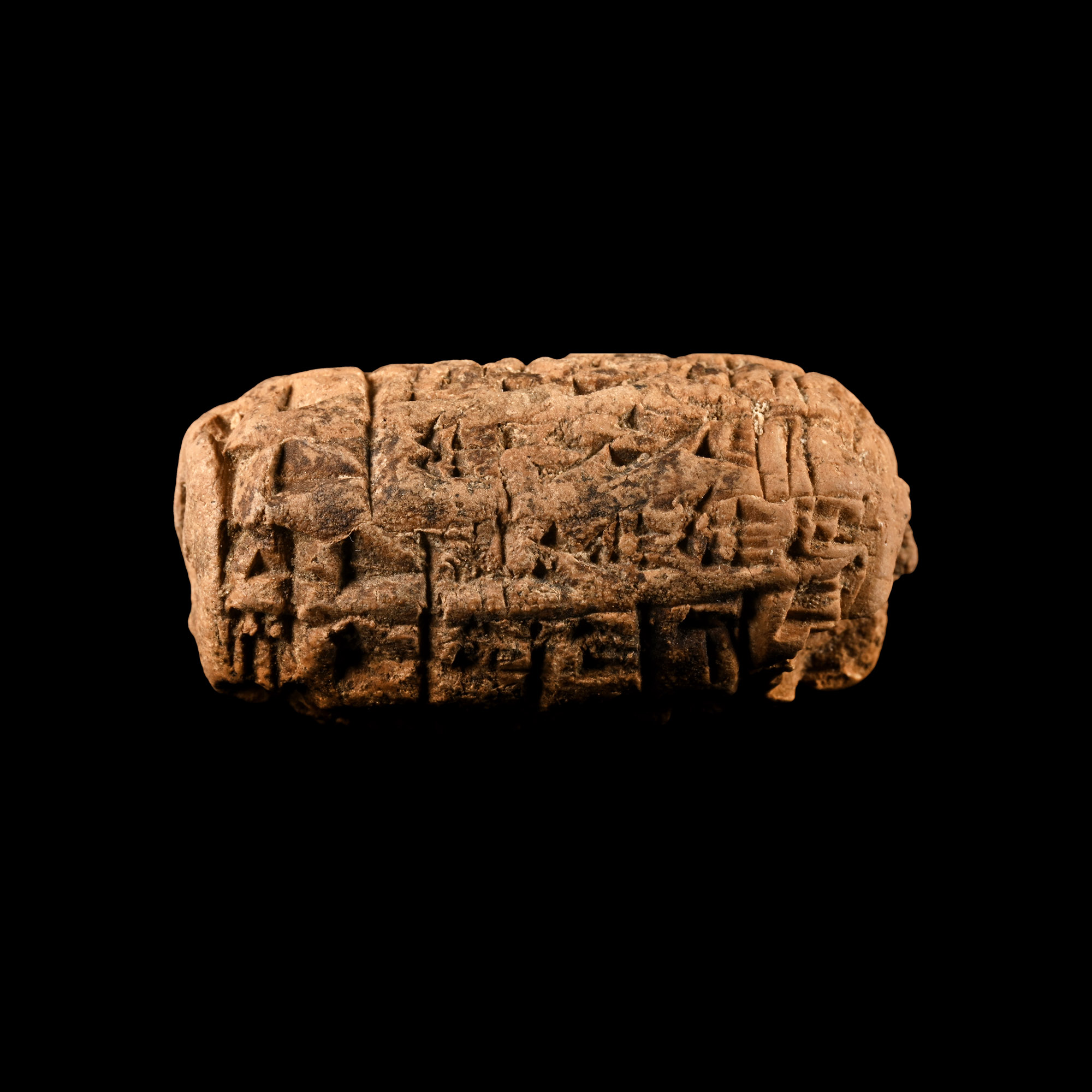
LOT 0211
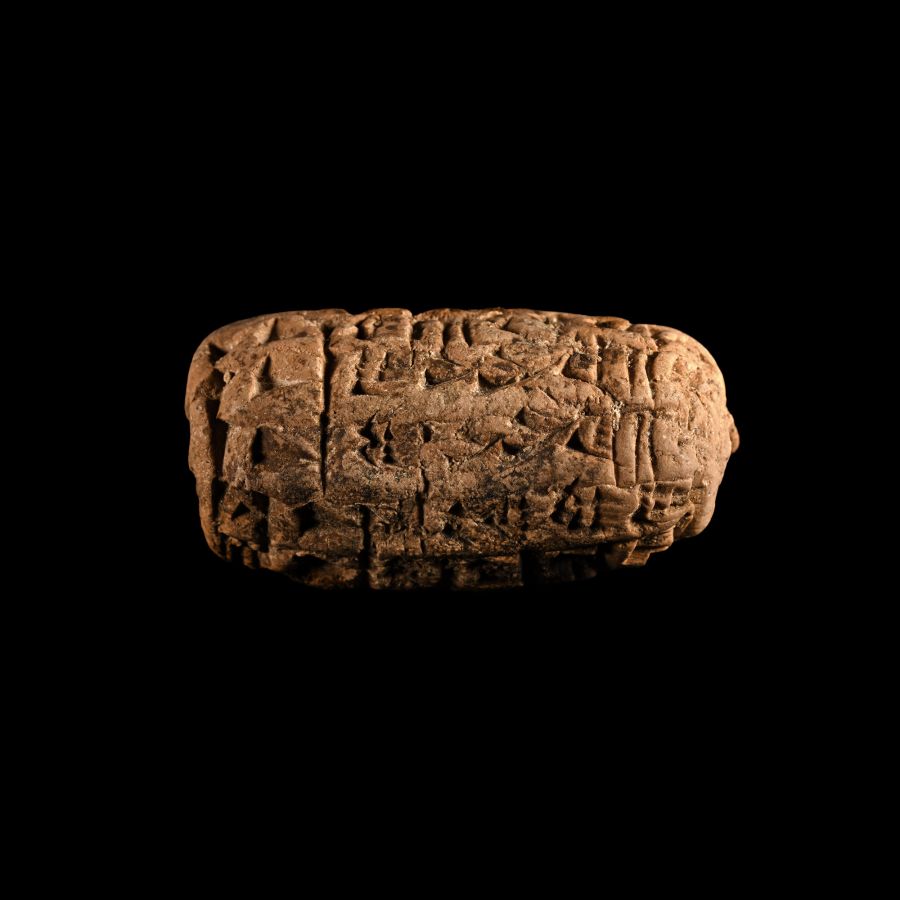
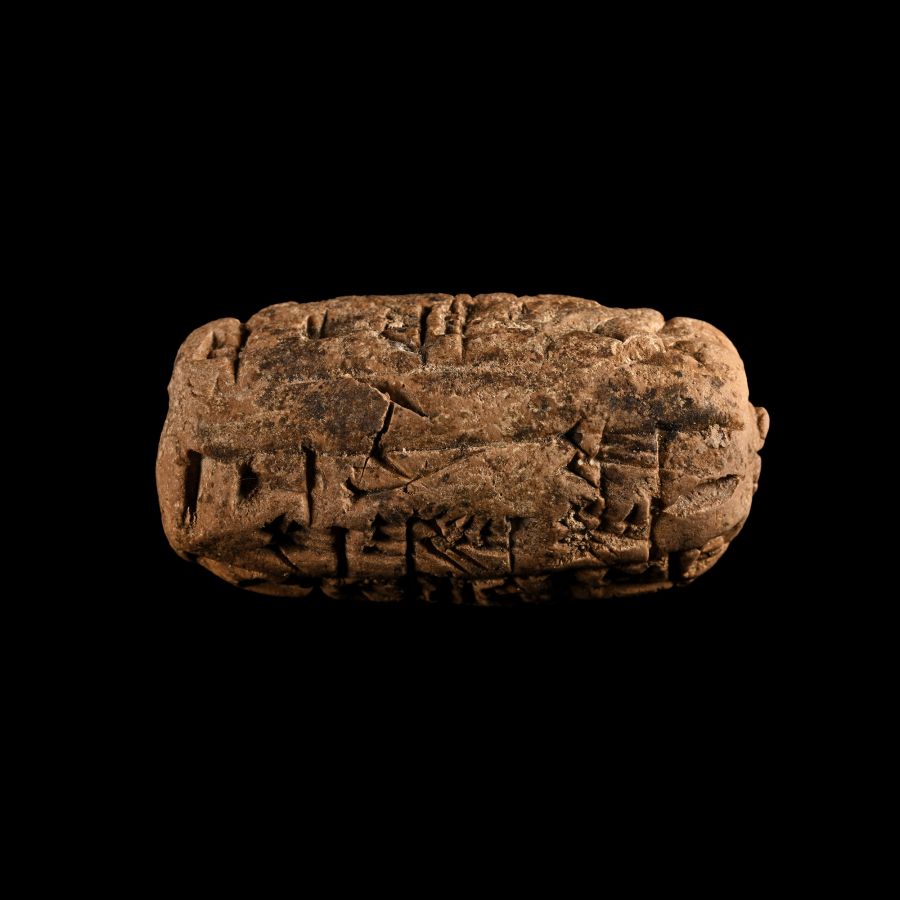
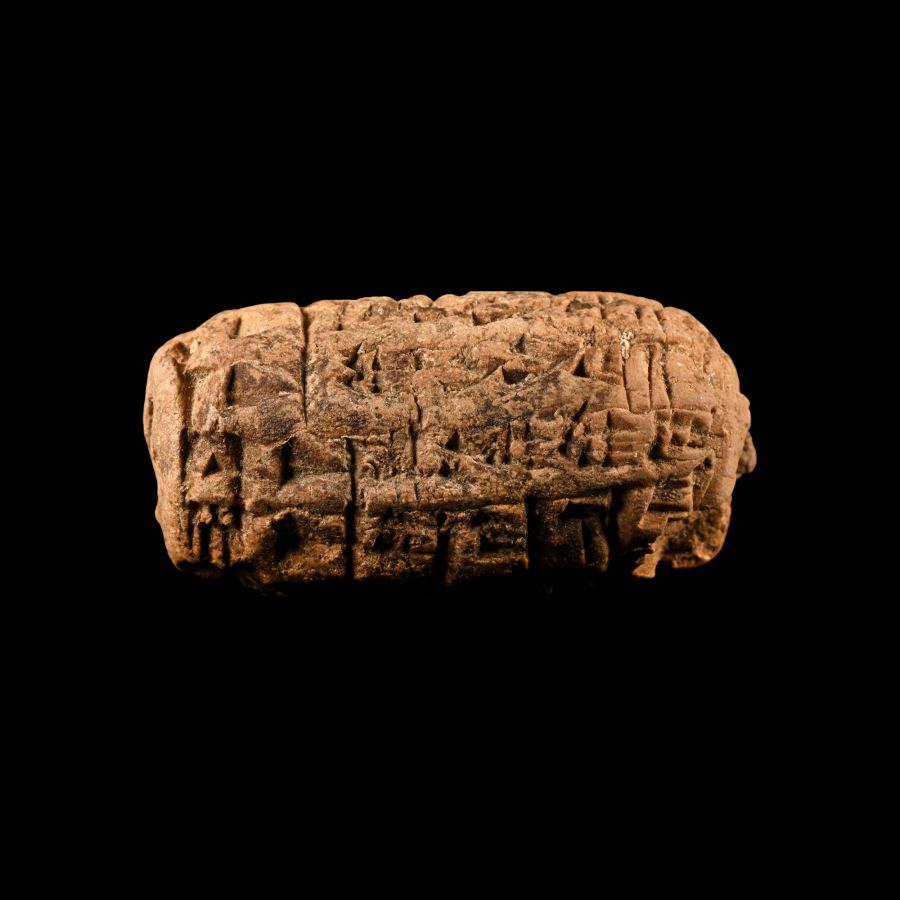
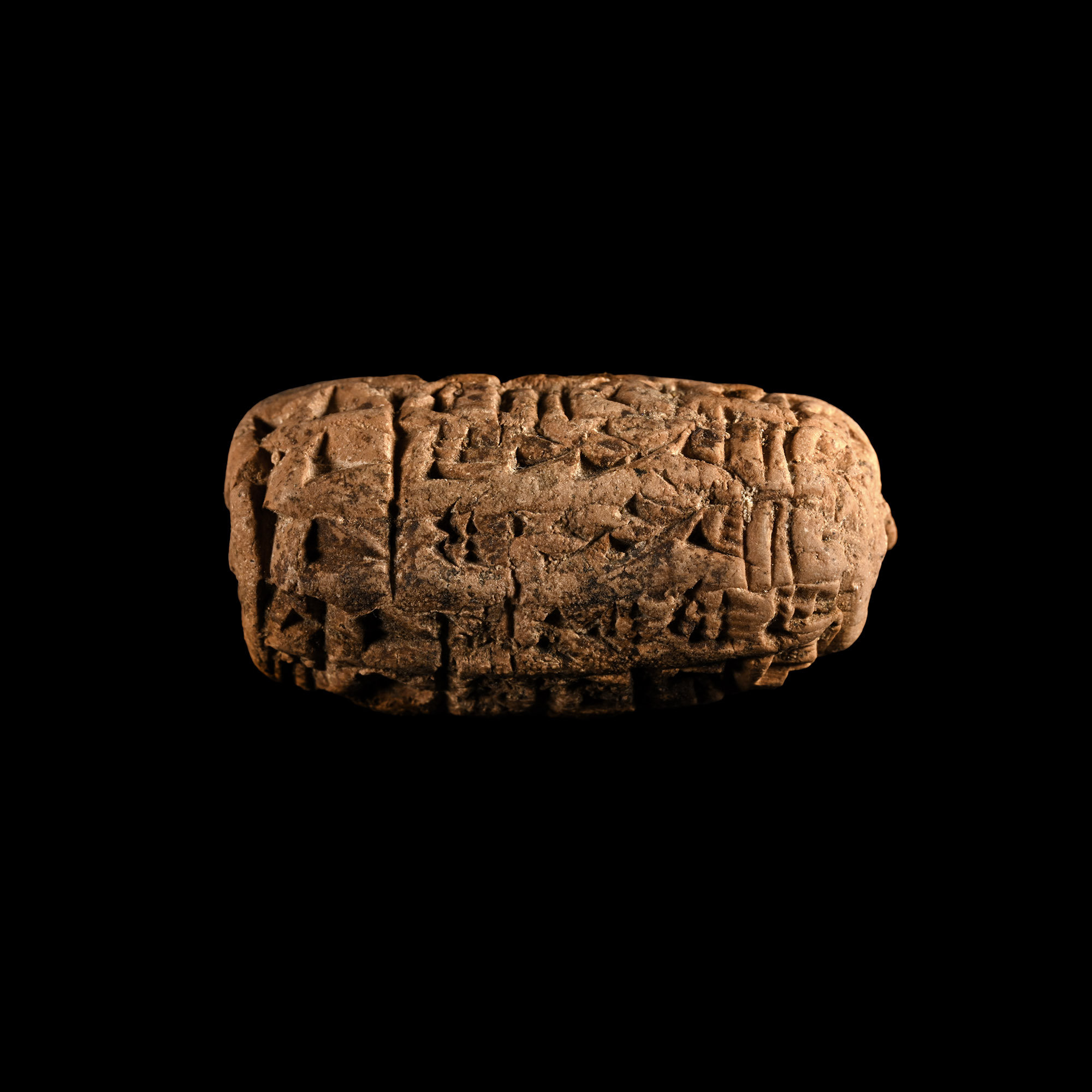
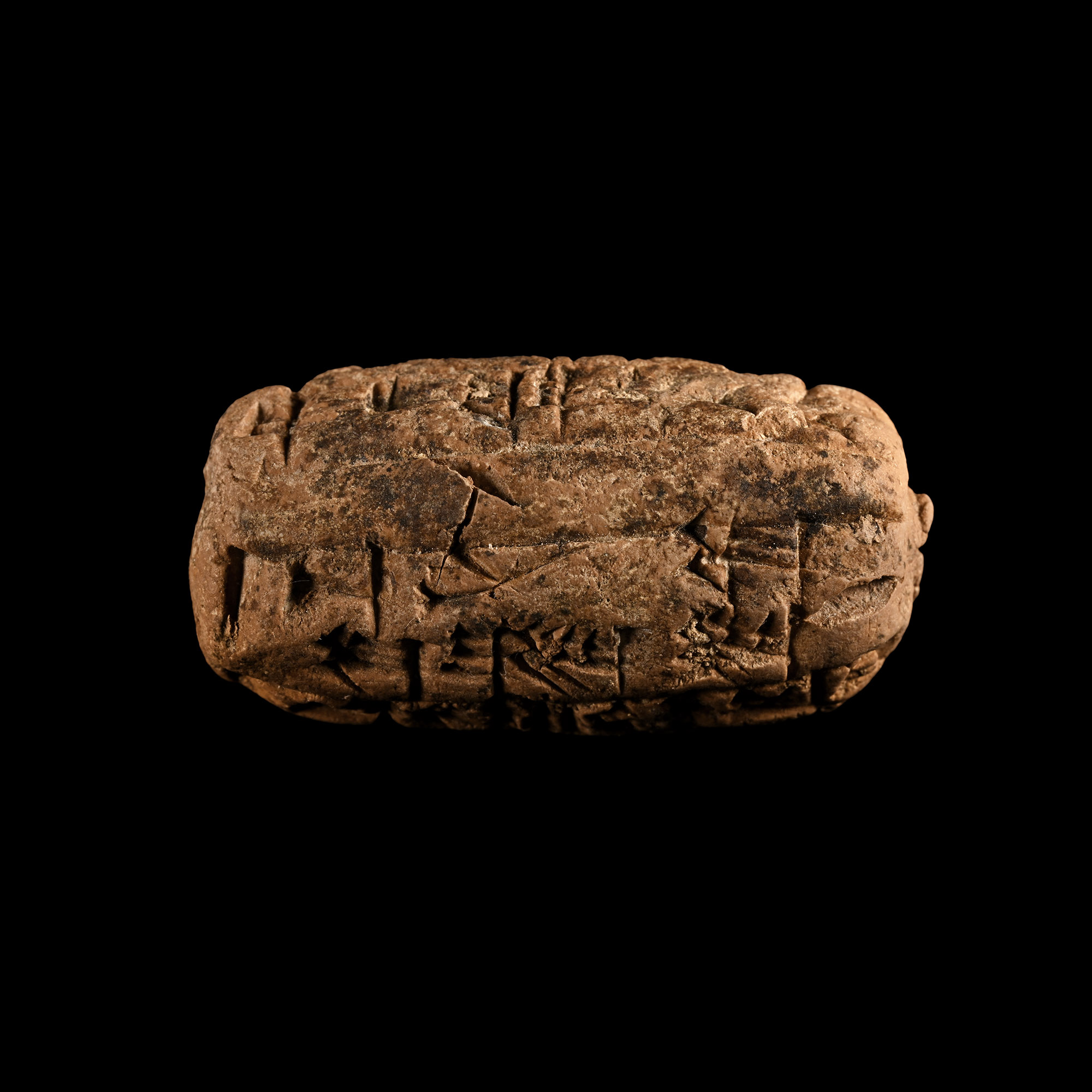
Old Babylonian Terracotta Bulla Recording the Rations of Vegetable Oil to Named Individuals
1900-1800 B.C.
1 5/8 in. (20 grams, 40 mm).
Barrel-shaped with vertical perforation, columns of cuneiform text to the sidewall.
ProvenanceAcquired in 1997.
Private collection, Switzerland, thence by descent.
Private collection, since the late 1990s.
This lot has been cleared against the Art Loss Register database, and is accompanied by an illustrated lot declaration signed by the Head of the Antiquities Department, Dr Raffaele D'Amato.
TimeLine Auctions follows a vetting process to ensure the authenticity and legality of all items, reinforcing our commitment to integrity and responsible trading. Each antiquity, antique, and coin lot undergoes thorough examination by a vetting committee of at least ten external specialists, professional trade association members, scientists, and archaeologists: Our Vetting Process
AUCTIONS:
TimeLine is a leading auction house specialising in antiquities, ancient art, collectables, natural history, coins, medals, and books. Our auctions offer museums, collectors, historians, and enthusiasts the opportunity to acquire unique and historically significant pieces.
LOT 0211
Old Babylonian Terracotta Bulla Recording the Rations of Vegetable Oil to Named Individuals
Sold for (Inc. bp): £780
-
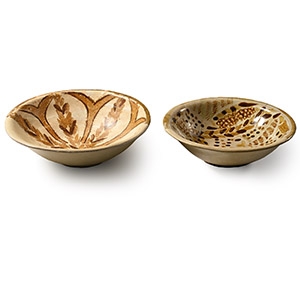
Abbasid Three-Colour Lustre Pottery Bowl Group
10th century A.D.Estimate: £2,000 - 3,000 (+bp*)
Opening Bid: £900
Of rounded form on short foot with everted lip, each with hatched decoration on the reverse; one with stylised palmettes on dense dotted and hatched ground; the other with radial composition with floral branches; restored. 598 grams total, 18-19.2 cm
with Christie's, South Kensington, Art & Textiles of The Islamic & Indian Worlds, 8 April 2011, no.142. Private collection, UK. This lot has been checked against the Interpol Database of stolen works of art and is accompanied by a search certificate number no.12723-235153. This lot has been cleared against the Art Loss Register database, and is accompanied by an illustrated lot declaration signed by the Head of the Antiquities Department, Dr Raffaele D'Amato. -
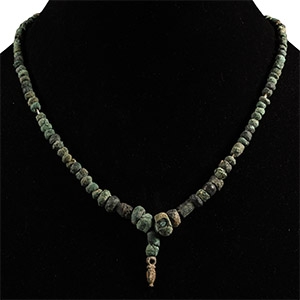
Western Asiatic Bronze Bead Necklace String
2nd-1st millennium B.C.Sold for (Inc. bp): £72
Restrung group of oblate and other beads. 28.8 grams, 36.2 cm
Ex London, UK, collection, 1990s. This lot has been cleared against the Art Loss Register database, and is accompanied by an illustrated lot declaration signed by the Head of the Antiquities Department, Dr Raffaele D'Amato. -
.jpg)
Hittite Terracotta Fertility Figure
12th-8th century B.C.Sold for (Inc. bp): £1,300
D-section figurine with elaborate pierced headdress and navel, applied annular eyes, pinched nose, applied segmented collar and pointillé detailing to the hips; mounted on a custom-made stand. 52.3 grams, 16 cm (515 grams total, 20 cm including stand)
Ex collection of the late Mr S.M., London, UK, 1970-1990s. Accompanied by a copy of a thermoluminescence test report from Oxford Authentication with sample no.N124j52. This lot has been cleared against the Art Loss Register database, and is accompanied by an illustrated lot declaration signed by the Head of the Antiquities Department, Dr Raffaele D'Amato.
