
Loading, please wait...
LOT 1353
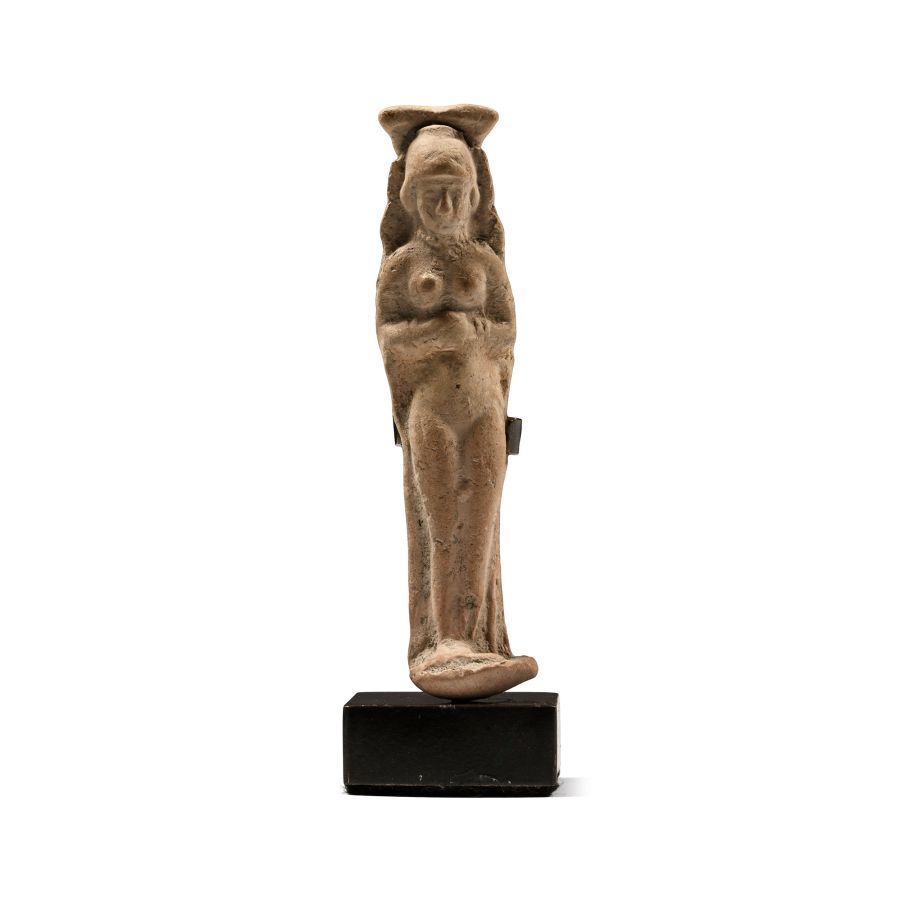
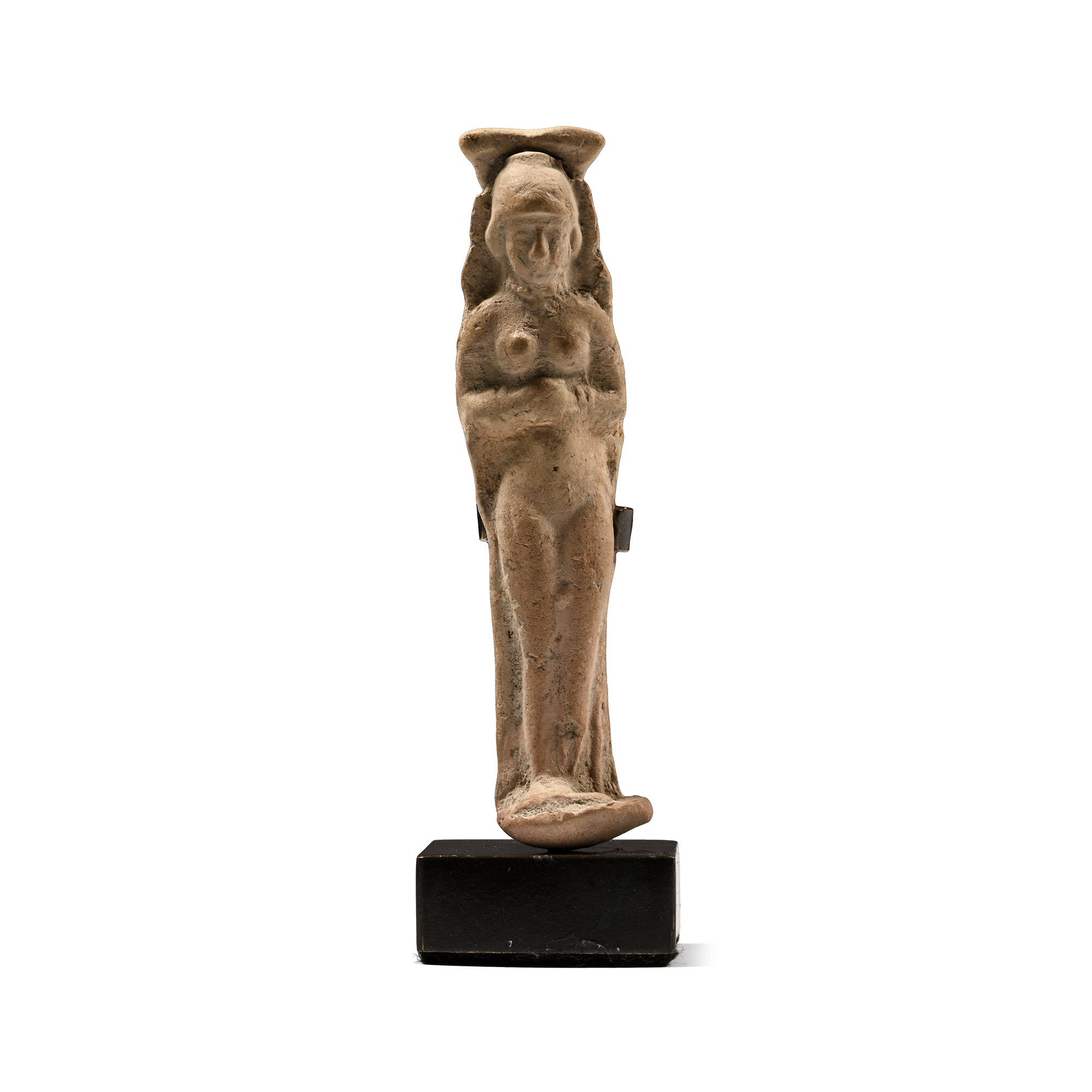
Old Babylonian Terracotta Astarte Figure
19TH-16TH CENTURY B.C.
4 1/2 in. (59 grams total, 11.5 cm high including stand).
Standing nude with arms folded across the midriff; mounted on a custom-made display stand.
ProvenanceAudrey Davies, Astarte Gallery, London, UK, 1986.
Ex private UK collection.
This lot has been cleared against the Art Loss Register database, and is accompanied by an illustrated lot declaration signed by the Head of the Antiquities Department, Dr Raffaele D'Amato.
TimeLine Auctions follows a vetting process to ensure the authenticity and legality of all items, reinforcing our commitment to integrity and responsible trading. Each antiquity, antique, and coin lot undergoes thorough examination by a vetting committee of at least ten external specialists, professional trade association members, scientists, and archaeologists: Our Vetting Process
AUCTIONS:
TimeLine is a leading auction house specialising in antiquities, ancient art, collectables, natural history, coins, medals, and books. Our auctions offer museums, collectors, historians, and enthusiasts the opportunity to acquire unique and historically significant pieces.
-
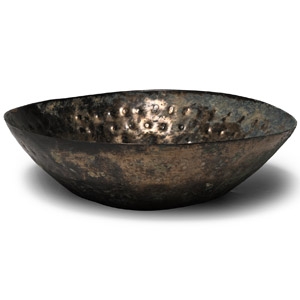
Sasanian Punch-Decorated Bronze Bowl
3rd-7th century A.D.Estimate: £180 - 240 (+bp*)
Opening Bid: £100
Wide-bodied with two bands of punched pellets to the upper body and piecrust decoration to the lower body; the base with a circumferential band of punched pellets and concentric circles to the inner face. 141 grams, 17.1 cm
Acquired 1980-2015. Ex Abelita family collection. This lot has been cleared against the Art Loss Register database, and is accompanied by an illustrated lot declaration signed by the Head of the Antiquities Department, Dr Raffaele D'Amato. -
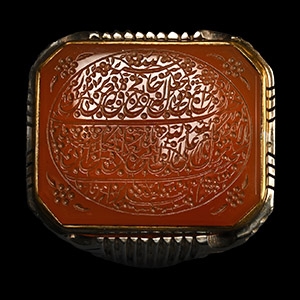
Large Western Asiatic Silver-Coloured Metal Ring with Calligraphic Agate Gemstone
20th century A.D.Sold for (Inc. bp): £1,300
Comprising a wide hoop with striated shoulders, openwork flower beneath the bezel, octagonal bezel set with an orange agate intaglio engraved with densely arranged calligraphic text in an oval medallion. 20.52 grams, 29.22 mm overall, 21.86 mm internal diameter (approximate size British Y 1/2, USA 12 1/4, Europe 28.2, Japan 27)
From the family collection of a Hampstead gentleman; formerly acquired in the 1980s. This lot has been cleared against the Art Loss Register database, and is accompanied by an illustrated lot declaration signed by the Head of the Antiquities Department, Dr Raffaele D'Amato. -
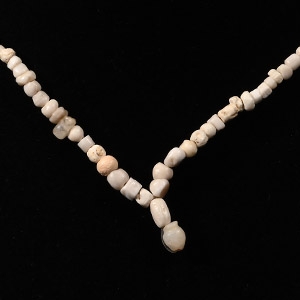
Ancient Bead Necklace String
1st millennium B.C. and laterSold for (Inc. bp): £20
Restrung group of graduated oblate and other beads in stone, ceramic and shell. 7.94 grams, 42 cm
UK gallery, early 2000s. This lot has been cleared against the Art Loss Register database, and is accompanied by an illustrated lot declaration signed by the Head of the Antiquities Department, Dr Raffaele D'Amato.
Similar beads were found in the excavations of the royal tombs of Nimrud. Thousands of beads were discovered in the sarcophagi (for example those of Nimrud’s Queens) probably originally composed as wide collars with multiple strands.
