
Loading, please wait...
LOT 1128
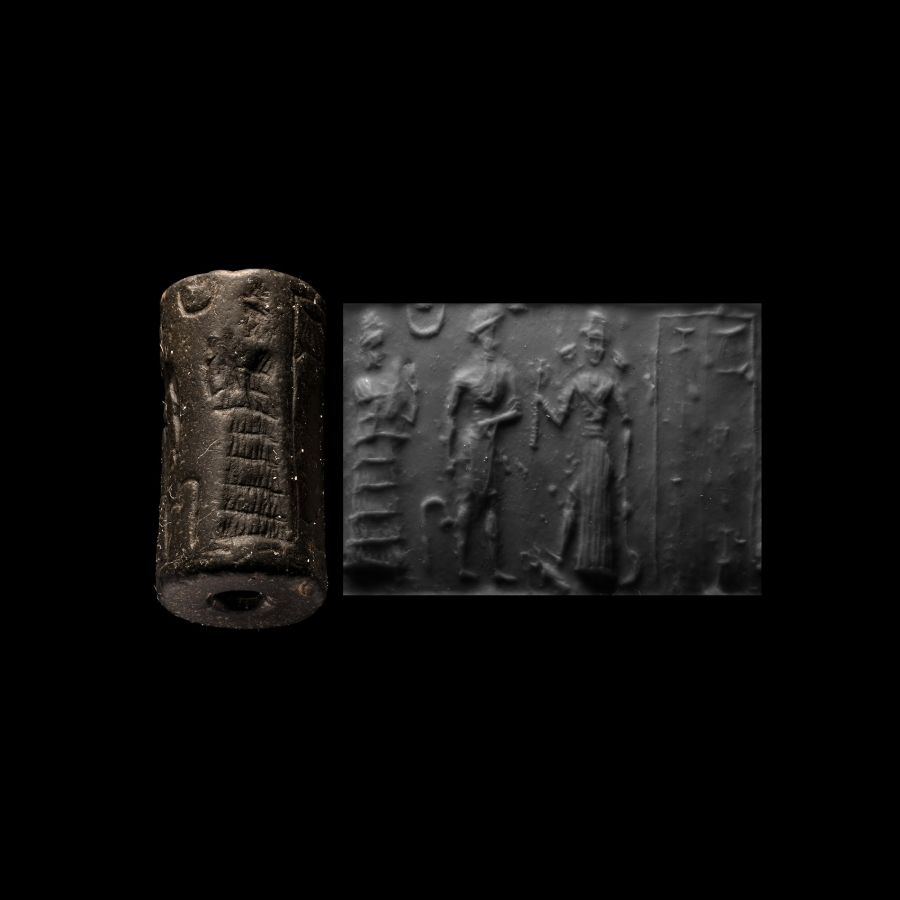
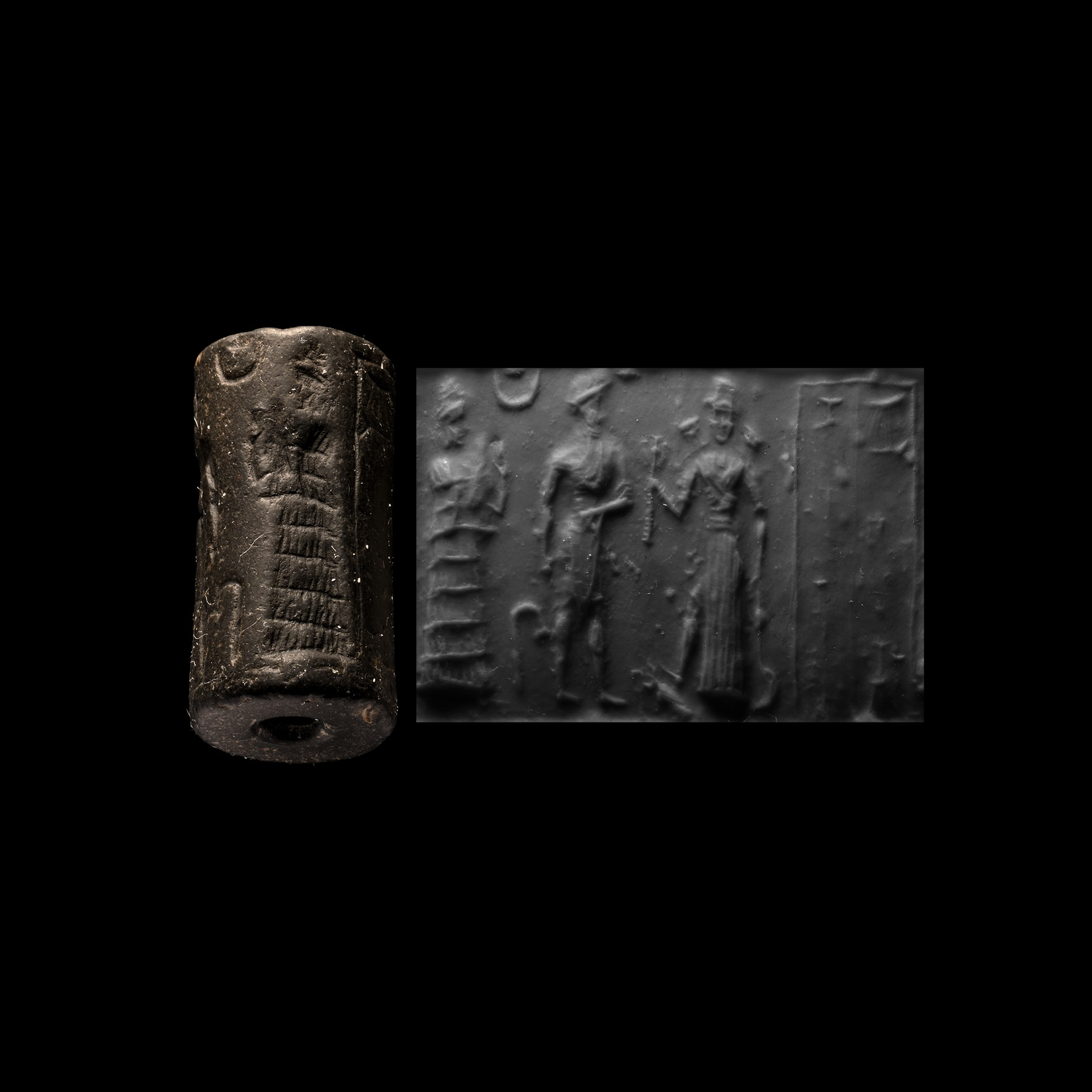
Old Babylonian Stone Cylinder Seal with Ishtar Presentation Scene
2ND MILLENNIUM B.C.
1 in. (10.6 grams, 28 mm).
With frieze depicting a king and a suppliant goddess approaching the goddess Ishtar and a faint two-lined cuneiform inscription; supplied with a museum-quality impression. [No Reserve]
ProvenanceAnonymous sale; Christie's, London, 25 April 2001, lot 504 (haematite) and 513 (part).
with Petit Musée, Montreal, acquired at the above sale; thence by descent.
Property of an East Sussex, UK, gentleman.
TimeLine Auctions follows a vetting process to ensure the authenticity and legality of all items, reinforcing our commitment to integrity and responsible trading. Each antiquity, antique, and coin lot undergoes thorough examination by a vetting committee of at least ten external specialists, professional trade association members, scientists, and archaeologists: Our Vetting Process
AUCTIONS:
TimeLine is a leading auction house specialising in antiquities, ancient art, collectables, natural history, coins, medals, and books. Our auctions offer museums, collectors, historians, and enthusiasts the opportunity to acquire unique and historically significant pieces.
LOT 1128
Old Babylonian Stone Cylinder Seal with Ishtar Presentation Scene
Sold for (Inc. bp): £442
-
.jpg)
Western Asiatic Gold Bead Group
7th-6th century B.C.Estimate: £500 - 700 (+bp*)
Opening Bid: £275
Mixed group beads of melon, oblate, and other types. 9.90 grams, 7-13 mm
Collected from 1969-1999. From the collection of the late Mr S.M., London, UK.
In the Phoenician civilization, there are numerous necklaces documenting a varied range of combinations of multiform beads with a prevalence of gold and silver pendants. -
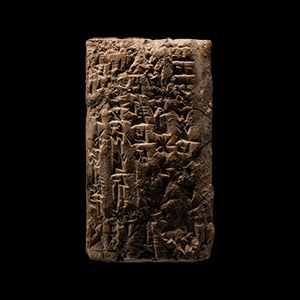
Old Babylonian Cuneiform Tablet with Royal Sumerian Text
Circa 18th century B.C.Sold for (Inc. bp): £1,560
Pillow-shaped in form with cuneiform text in dense rows to one face. 146 grams, 90 mm
Specialised collection of cuneiform texts, the property of a London gentleman and housed in London before 1992. Thence by descent to family members. Examined by Professor Wilfrid George Lambert FBA (1926-2011), historian, archaeologist, and specialist in Assyriology and Near Eastern archaeology, in the late 1980s and early 1990s. The collection is exceptional for the variety of types, including some very rare and well preserved examples. -
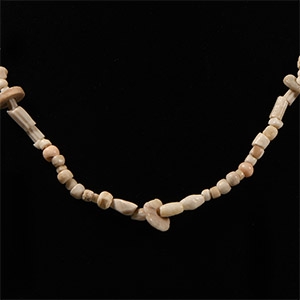
Western Asiatic Bead Necklace String
2nd-1st millennium B.C. and laterSold for (Inc. bp): £20
Restrung; composed primarily of shell and ceramic beads of various types, including decoratively ribbed examples. 23 grams, 50 cm long
UK gallery, early 2000s.
Similar beads were found during the excavations of the royal tombs of Nimrud. Thousands of beads were discovered in the sarcophagi, including those of Nimrud’s Queens; they probably originally formed part of wide collars with multiple strands.
