
Loading, please wait...

LOT 0203
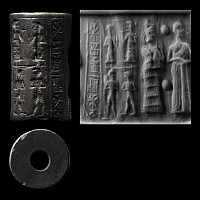
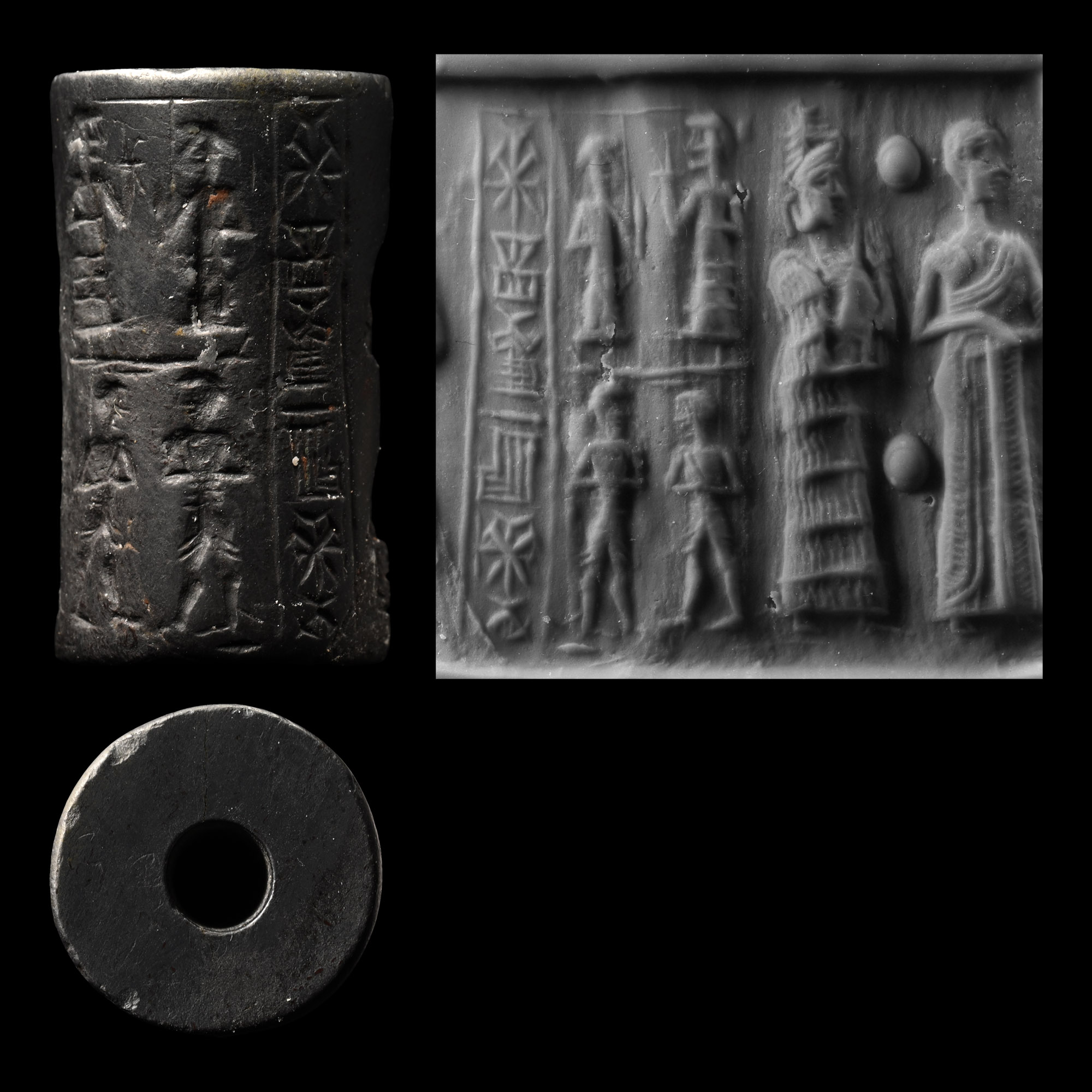
Old Babylonian Stone Cylinder Seal with Inscription
EARLY 2ND MILLENNIUM B.C.
1 in. (17 grams, 26 mm).
With frieze depicting a worshipper and a goddess both facing an enthroned king holding a cup in one hand, sun-disc and crescent above; the king wearing a cap and tiered robe, the throne raised on a dais and covered with a fringed cloth; the worshipper youthful with hands clasped before his chest, wearing a floor-length garment over his shoulder; the goddess wearing a tiered headdress and flounced floor-length robe, with hands raised in salutation; two pairs of smaller figures, one with a toothed weapon; column of cuneiform text reading 'ᵈNin-subur, sukkal an-na' ('Ninshubur, the approved vizier', or 'heavenly vizier'); supplied with a museum-quality impression.
ProvenanceFrom an important London, UK, collection, 1980-1990s.
Accompanied by a previous two page illustrated catalogue report.
This lot has been checked against the Interpol Database of stolen works of art and is accompanied by search certificate number no.12249-222296.
TimeLine Auctions follows a vetting process to ensure the authenticity and legality of all items, reinforcing our commitment to integrity and responsible trading. Each antiquity, antique, and coin lot undergoes thorough examination by a vetting committee of at least ten external specialists, professional trade association members, scientists, and archaeologists: Our Vetting Process
AUCTIONS:
TimeLine is a leading auction house specialising in antiquities, ancient art, collectables, natural history, coins, medals, and books. Our auctions offer museums, collectors, historians, and enthusiasts the opportunity to acquire unique and historically significant pieces.
-
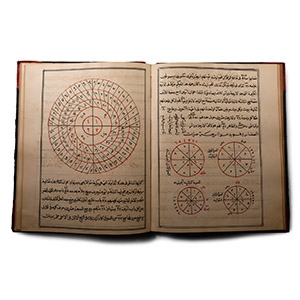
Islamic Manuscript, 'Explanation of the Astrolabe Al-Manadam' by Al-Hakim the Physician Muhammad bin Ahmad Al-Iskandarani
1289 A.H. (1872 A.D.)Estimate: £1,500 - 2,000 (+bp*)
Opening Bid: £750
Hardback with quarter-calf binding and cloth-covered boards; title page with naskh script text in a triangular block; text pages typically 18 lines of loose black-ink script inside hand-drawn bilinear frames with red titles and diacritics, ru'qah script headings, text figures, diagrams, numerical and text tables, perpendicular text-blocks; usage wear. 468 grams, 20.3 x 25.6 cm
From an important family collection started in the late 1950s. Property of a West London, UK, gentleman. This lot has been checked against the Interpol Database of stolen works of art and is accompanied by a search certificate number no.12276-220409.
Astrolabes were used to make astronomical measurements, specifically to determine the altitudes of celestial bodies, but over time astrologers and travellers devised many different uses for the instrument. They were especially useful to navigators in order to determine position when out of sight of land. This text explains the book 'The Astrolabe' and several ways in which the device could be deployed. -
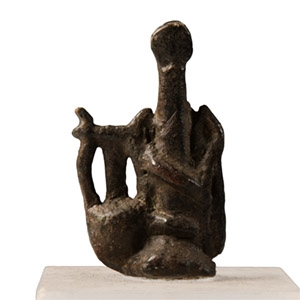
Western Asiatic Bronze Anthropomorphic Idol
1st millennium B.C.Sold for (Inc. bp): £416
Modelled in the round figure with flared foot, stylised anthropomorphic or theriomorphic figure with amphora and mounting peg to reverse; mounted on a custom-made stand. 163 grams total, 92 mm high including stand
From a collection acquired on the UK art market from various auction houses and collections mostly before 2000. From an important Cambridgeshire estate; thence by descent. -
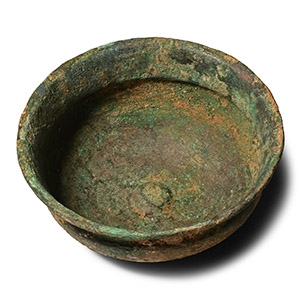
Achaemenid Bronze Flared Phiale Mesomphalos
Circa 6th-4th century B.C.Sold for (Inc. bp): £59
Squat in profile with flared rime to the mouth and carination to the sidewall, central repoussé dome to the underside. 169 grams, 13.5 cm
Acquired 1980-2015. Ex Abelita family collection.
